
અ Gujarati
Concept of limits, Evaluation of algebric limits Questions in Gujarati
Class 11 Mathematics · Limits · Concept of limits, Evaluation of algebric limits
508+
Questions
Gujarati
Language
100%
With Solutions
Showing 49 of 508 questions in Gujarati
1
DifficultMCQ
$R$ ત્રિજ્યા ધરાવતા વર્તુળમાં અંતર્ગત નિયમિત $n$-બાજુવાળા બહુકોણની પરિમિતિની મર્યાદા જ્યારે $n \to \infty$ હોય ત્યારે શું થાય?
A
$2\pi R$
B
$\pi R$
C
$4R$
D
$\pi R^2$
Solution
(A) $R$ ત્રિજ્યા ધરાવતા વર્તુળમાં અંતર્ગત નિયમિત $n$-બાજુવાળા બહુકોણની પરિમિતિ $P_n = 2nR \sin(\frac{\pi}{n})$ દ્વારા આપવામાં આવે છે.
જ્યારે $n \to \infty$ થાય,ત્યારે આપણે મર્યાદા $\lim_{x \to 0} \frac{\sin x}{x} = 1$ નો ઉપયોગ કરીએ છીએ.
$x = \frac{\pi}{n}$ લેતા,જેમ $n \to \infty$,તેમ $x \to 0$ થાય છે.
આમ,$\lim_{n \to \infty} P_n = \lim_{n \to \infty} 2nR \sin(\frac{\pi}{n}) = \lim_{n \to \infty} 2\pi R \frac{\sin(\pi/n)}{\pi/n} = 2\pi R(1) = 2\pi R$.
તેથી,પરિમિતિ વર્તુળના પરિઘની નજીક પહોંચે છે,જે $2\pi R$ છે.
જ્યારે $n \to \infty$ થાય,ત્યારે આપણે મર્યાદા $\lim_{x \to 0} \frac{\sin x}{x} = 1$ નો ઉપયોગ કરીએ છીએ.
$x = \frac{\pi}{n}$ લેતા,જેમ $n \to \infty$,તેમ $x \to 0$ થાય છે.
આમ,$\lim_{n \to \infty} P_n = \lim_{n \to \infty} 2nR \sin(\frac{\pi}{n}) = \lim_{n \to \infty} 2\pi R \frac{\sin(\pi/n)}{\pi/n} = 2\pi R(1) = 2\pi R$.
તેથી,પરિમિતિ વર્તુળના પરિઘની નજીક પહોંચે છે,જે $2\pi R$ છે.
0 likes
View Solution2
EasyMCQ
$\mathop {\lim }\limits_{x \to 0} \frac{{x({e^x} - 1)}}{{1 - \cos x}} = $
A
$0$
B
$\infty$
C
$-2$
D
$2$
Solution
(D) આપણે લક્ષની કિંમત શોધવાની છે: $\mathop {\lim }\limits_{x \to 0} \frac{{x({e^x} - 1)}}{{1 - \cos x}}$.
પ્રમાણિત લક્ષ $\mathop {\lim }\limits_{x \to 0} \frac{{{e^x} - 1}}{x} = 1$ અને નિત્યસમ $1 - \cos x = 2 \sin^2(x/2)$ નો ઉપયોગ કરતા:
$\mathop {\lim }\limits_{x \to 0} \frac{{x({e^x} - 1)}}{{2 \sin^2(x/2)}}$.
$x$ અને $(x/2)^2$ વડે ગુણતા અને ભાગતા:
$= \mathop {\lim }\limits_{x \to 0} \left( \frac{{{e^x} - 1}}{x} \right) \cdot \frac{x^2}{2 \sin^2(x/2)}$.
$= 1 \cdot \mathop {\lim }\limits_{x \to 0} \frac{x^2}{2 (x/2)^2 \cdot (\frac{\sin(x/2)}{x/2})^2}$.
$= \mathop {\lim }\limits_{x \to 0} \frac{x^2}{2 (x^2/4) \cdot 1^2} = \frac{1}{2/4} = 2$.
પ્રમાણિત લક્ષ $\mathop {\lim }\limits_{x \to 0} \frac{{{e^x} - 1}}{x} = 1$ અને નિત્યસમ $1 - \cos x = 2 \sin^2(x/2)$ નો ઉપયોગ કરતા:
$\mathop {\lim }\limits_{x \to 0} \frac{{x({e^x} - 1)}}{{2 \sin^2(x/2)}}$.
$x$ અને $(x/2)^2$ વડે ગુણતા અને ભાગતા:
$= \mathop {\lim }\limits_{x \to 0} \left( \frac{{{e^x} - 1}}{x} \right) \cdot \frac{x^2}{2 \sin^2(x/2)}$.
$= 1 \cdot \mathop {\lim }\limits_{x \to 0} \frac{x^2}{2 (x/2)^2 \cdot (\frac{\sin(x/2)}{x/2})^2}$.
$= \mathop {\lim }\limits_{x \to 0} \frac{x^2}{2 (x^2/4) \cdot 1^2} = \frac{1}{2/4} = 2$.
0 likes
View Solution3
MediumMCQ
$\mathop {\lim }\limits_{x \to 1} \frac{1}{|1 - x|} = $
A
$0$
B
$1$
C
$2$
D
$\infty$
Solution
(D) લક્ષ $\mathop {\lim }\limits_{x \to 1} \frac{1}{|1 - x|}$ શોધવા માટે,આપણે ડાબી બાજુનું લક્ષ અને જમણી બાજુનું લક્ષ ચકાસીએ.
ડાબી બાજુનું લક્ષ: $\mathop {\lim }\limits_{x \to 1^-} \frac{1}{|1 - x|} = \mathop {\lim }\limits_{h \to 0^+} \frac{1}{|1 - (1 - h)|} = \mathop {\lim }\limits_{h \to 0^+} \frac{1}{|h|} = \infty$.
જમણી બાજુનું લક્ષ: $\mathop {\lim }\limits_{x \to 1^+} \frac{1}{|1 - x|} = \mathop {\lim }\limits_{h \to 0^+} \frac{1}{|1 - (1 + h)|} = \mathop {\lim }\limits_{h \to 0^+} \frac{1}{|-h|} = \mathop {\lim }\limits_{h \to 0^+} \frac{1}{h} = \infty$.
બંને બાજુના લક્ષ $\infty$ હોવાથી,આપેલ લક્ષ $\infty$ છે.
ડાબી બાજુનું લક્ષ: $\mathop {\lim }\limits_{x \to 1^-} \frac{1}{|1 - x|} = \mathop {\lim }\limits_{h \to 0^+} \frac{1}{|1 - (1 - h)|} = \mathop {\lim }\limits_{h \to 0^+} \frac{1}{|h|} = \infty$.
જમણી બાજુનું લક્ષ: $\mathop {\lim }\limits_{x \to 1^+} \frac{1}{|1 - x|} = \mathop {\lim }\limits_{h \to 0^+} \frac{1}{|1 - (1 + h)|} = \mathop {\lim }\limits_{h \to 0^+} \frac{1}{|-h|} = \mathop {\lim }\limits_{h \to 0^+} \frac{1}{h} = \infty$.
બંને બાજુના લક્ષ $\infty$ હોવાથી,આપેલ લક્ષ $\infty$ છે.
0 likes
View Solution4
MediumMCQ
$\mathop {\lim }\limits_{n \to \infty } \frac{{n{{(2n + 1)}^2}}}{{(n + 2)({n^2} + 3n - 1)}} = $
A
$0$
B
$2$
C
$4$
D
$\infty $
Solution
(C) આપણે લક્ષ્યની કિંમત શોધવાની છે: $\mathop {\lim }\limits_{n \to \infty } \frac{{n{{(2n + 1)}^2}}}{{(n + 2)({n^2} + 3n - 1)}}$.
અંશનું વિસ્તરણ કરતા: $n(2n+1)^2 = n(4n^2 + 4n + 1) = 4n^3 + 4n^2 + n$.
છેદનું વિસ્તરણ કરતા: $(n+2)(n^2 + 3n - 1) = n^3 + 3n^2 - n + 2n^2 + 6n - 2 = n^3 + 5n^2 + 5n - 2$.
હવે,લક્ષ્ય આ મુજબ થશે: $\mathop {\lim }\limits_{n \to \infty } \frac{{4n^3 + 4n^2 + n}}{{n^3 + 5n^2 + 5n - 2}}$.
અંશ અને છેદ બંનેને $n^3$ વડે ભાગતા:
$= \mathop {\lim }\limits_{n \to \infty } \frac{{4 + \frac{4}{n} + \frac{1}{n^2}}}{{1 + \frac{5}{n} + \frac{5}{n^2} - \frac{2}{n^3}}}$.
જેમ $n \to \infty$,તેમ છેદમાં $n$ વાળા તમામ પદો $0$ ની નજીક પહોંચશે:
$= \frac{{4 + 0 + 0}}{{1 + 0 + 0 - 0}} = 4$.
અંશનું વિસ્તરણ કરતા: $n(2n+1)^2 = n(4n^2 + 4n + 1) = 4n^3 + 4n^2 + n$.
છેદનું વિસ્તરણ કરતા: $(n+2)(n^2 + 3n - 1) = n^3 + 3n^2 - n + 2n^2 + 6n - 2 = n^3 + 5n^2 + 5n - 2$.
હવે,લક્ષ્ય આ મુજબ થશે: $\mathop {\lim }\limits_{n \to \infty } \frac{{4n^3 + 4n^2 + n}}{{n^3 + 5n^2 + 5n - 2}}$.
અંશ અને છેદ બંનેને $n^3$ વડે ભાગતા:
$= \mathop {\lim }\limits_{n \to \infty } \frac{{4 + \frac{4}{n} + \frac{1}{n^2}}}{{1 + \frac{5}{n} + \frac{5}{n^2} - \frac{2}{n^3}}}$.
જેમ $n \to \infty$,તેમ છેદમાં $n$ વાળા તમામ પદો $0$ ની નજીક પહોંચશે:
$= \frac{{4 + 0 + 0}}{{1 + 0 + 0 - 0}} = 4$.
0 likes
View Solution5
MediumMCQ
$\mathop {\lim }\limits_{n \to \infty } \frac{{\sqrt n }}{{\sqrt n + \sqrt {n + 1} }} = $
A
$1$
B
$\frac{1}{2}$
C
$0$
D
$\infty $
Solution
(B) લક્ષ $\mathop {\lim }\limits_{n \to \infty } \frac{{\sqrt n }}{{\sqrt n + \sqrt {n + 1} }}$ ની ગણતરી કરવા માટે,અંશ અને છેદ બંનેને $\sqrt{n}$ વડે ભાગો:
$\mathop {\lim }\limits_{n \to \infty } \frac{\frac{\sqrt{n}}{\sqrt{n}}}{\frac{\sqrt{n}}{\sqrt{n}} + \frac{\sqrt{n+1}}{\sqrt{n}}} = \mathop {\lim }\limits_{n \to \infty } \frac{1}{1 + \sqrt{1 + \frac{1}{n}}}$
જેમ $n \to \infty$,તેમ પદ $\frac{1}{n} \to 0$ થાય છે.
તેથી,લક્ષ $\frac{1}{1 + \sqrt{1 + 0}} = \frac{1}{1 + 1} = \frac{1}{2}$ થાય છે.
$\mathop {\lim }\limits_{n \to \infty } \frac{\frac{\sqrt{n}}{\sqrt{n}}}{\frac{\sqrt{n}}{\sqrt{n}} + \frac{\sqrt{n+1}}{\sqrt{n}}} = \mathop {\lim }\limits_{n \to \infty } \frac{1}{1 + \sqrt{1 + \frac{1}{n}}}$
જેમ $n \to \infty$,તેમ પદ $\frac{1}{n} \to 0$ થાય છે.
તેથી,લક્ષ $\frac{1}{1 + \sqrt{1 + 0}} = \frac{1}{1 + 1} = \frac{1}{2}$ થાય છે.
0 likes
View Solution6
EasyMCQ
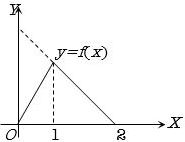
જો $f(x) = \begin{cases} x, & \text{જ્યારે } 0 \le x \le 1 \\ 2 - x, & \text{જ્યારે } 1 < x \le 2 \end{cases}$,હોય તો $\lim_{x \to 1} f(x) = $
A
$1$
B
$2$
C
$0$
D
અસ્તિત્વ ધરાવતું નથી
Solution
(A) $\lim_{x \to 1} f(x)$ શોધવા માટે,આપણે $x = 1$ આગળ ડાબી બાજુનું લક્ષ $(LHL)$ અને જમણી બાજુનું લક્ષ $(RHL)$ શોધીશું.
ડાબી બાજુનું લક્ષ $(LHL)$:
$\lim_{x \to 1^-} f(x) = \lim_{x \to 1^-} (x) = 1$
જમણી બાજુનું લક્ષ $(RHL)$:
$\lim_{x \to 1^+} f(x) = \lim_{x \to 1^+} (2 - x) = 2 - 1 = 1$
કારણ કે ડાબી બાજુનું લક્ષ અને જમણી બાજુનું લક્ષ સમાન છે,તેથી લક્ષનું અસ્તિત્વ છે અને તે $1$ છે.
ડાબી બાજુનું લક્ષ $(LHL)$:
$\lim_{x \to 1^-} f(x) = \lim_{x \to 1^-} (x) = 1$
જમણી બાજુનું લક્ષ $(RHL)$:
$\lim_{x \to 1^+} f(x) = \lim_{x \to 1^+} (2 - x) = 2 - 1 = 1$
કારણ કે ડાબી બાજુનું લક્ષ અને જમણી બાજુનું લક્ષ સમાન છે,તેથી લક્ષનું અસ્તિત્વ છે અને તે $1$ છે.
0 likes
View Solution7
EasyMCQ
જો $\mathop {\lim }\limits_{x \to 2} \frac{{{x^n} - {2^n}}}{{x - 2}} = 80$,જ્યાં $n$ એ ધન પૂર્ણાંક છે,તો $n = $
A
$3$
B
$5$
C
$2$
D
આમાંથી કોઈ નહીં
Solution
(B) આપણે પ્રમાણિત લક્ષનું સૂત્ર જાણીએ છીએ: $\mathop {\lim }\limits_{x \to a} \frac{{{x^n} - {a^n}}}{{x - a}} = n \cdot a^{n-1}$.
આપેલ પદાવલિ: $\mathop {\lim }\limits_{x \to 2} \frac{{{x^n} - {2^n}}}{{x - 2}} = 80$.
$a = 2$ સાથે સૂત્રનો ઉપયોગ કરતા,આપણને મળે છે: $n \cdot 2^{n-1} = 80$.
આપણે $80$ ને $5 \cdot 16 = 5 \cdot 2^4$ તરીકે લખી શકીએ છીએ.
$n \cdot 2^{n-1} = 5 \cdot 2^4$ ની સરખામણી કરતા,આપણને $n = 5$ મળે છે.
આપેલ પદાવલિ: $\mathop {\lim }\limits_{x \to 2} \frac{{{x^n} - {2^n}}}{{x - 2}} = 80$.
$a = 2$ સાથે સૂત્રનો ઉપયોગ કરતા,આપણને મળે છે: $n \cdot 2^{n-1} = 80$.
આપણે $80$ ને $5 \cdot 16 = 5 \cdot 2^4$ તરીકે લખી શકીએ છીએ.
$n \cdot 2^{n-1} = 5 \cdot 2^4$ ની સરખામણી કરતા,આપણને $n = 5$ મળે છે.
0 likes
View Solution8
MediumMCQ
$\mathop {\lim }\limits_{x \to \infty } {\left( {1 + \frac{2}{x}} \right)^x} = $
A
$e$
B
$\frac{1}{e}$
C
$e^2$
D
આમાંથી કોઈ નહીં
Solution
(C) આપણે પ્રમાણિત લક્ષના સૂત્રનો ઉપયોગ કરીએ છીએ: $\mathop {\lim }\limits_{x \to \infty } {\left( {1 + \frac{a}{x}} \right)^x} = e^a$.
આપેલ પદ $\mathop {\lim }\limits_{x \to \infty } {\left( {1 + \frac{2}{x}} \right)^x}$ સાથે સરખાવતા,આપણને $a = 2$ મળે છે.
તેથી,લક્ષનું મૂલ્ય $e^2$ છે.
આપેલ પદ $\mathop {\lim }\limits_{x \to \infty } {\left( {1 + \frac{2}{x}} \right)^x}$ સાથે સરખાવતા,આપણને $a = 2$ મળે છે.
તેથી,લક્ષનું મૂલ્ય $e^2$ છે.
0 likes
View Solution9
EasyMCQ
$\mathop {\lim }\limits_{x \to 1} \frac{(2x - 3)(\sqrt{x} - 1)}{2x^2 + x - 3} = $
A
$-1/10$
B
$1/10$
C
$-1/8$
D
આમાંથી કોઈ નહીં
Solution
(A) આપણે લક્ષની કિંમત શોધવાની છે: $\mathop {\lim }\limits_{x \to 1} \frac{(2x - 3)(\sqrt{x} - 1)}{2x^2 + x - 3}$.
પ્રથમ,છેદના અવયવ પાડો: $2x^2 + x - 3 = (2x + 3)(x - 1)$.
આને લક્ષમાં મૂકતા: $\mathop {\lim }\limits_{x \to 1} \frac{(2x - 3)(\sqrt{x} - 1)}{(2x + 3)(x - 1)}$.
કારણ કે $(x - 1) = (\sqrt{x} - 1)(\sqrt{x} + 1)$,પદાવલિ આ મુજબ બનશે: $\mathop {\lim }\limits_{x \to 1} \frac{(2x - 3)(\sqrt{x} - 1)}{(2x + 3)(\sqrt{x} - 1)(\sqrt{x} + 1)}$.
સામાન્ય અવયવ $(\sqrt{x} - 1)$ ને દૂર કરતા: $\mathop {\lim }\limits_{x \to 1} \frac{2x - 3}{(2x + 3)(\sqrt{x} + 1)}$.
હવે,$x = 1$ મૂકતા: $\frac{2(1) - 3}{(2(1) + 3)(\sqrt{1} + 1)} = \frac{-1}{(5)(2)} = -\frac{1}{10}$.
પ્રથમ,છેદના અવયવ પાડો: $2x^2 + x - 3 = (2x + 3)(x - 1)$.
આને લક્ષમાં મૂકતા: $\mathop {\lim }\limits_{x \to 1} \frac{(2x - 3)(\sqrt{x} - 1)}{(2x + 3)(x - 1)}$.
કારણ કે $(x - 1) = (\sqrt{x} - 1)(\sqrt{x} + 1)$,પદાવલિ આ મુજબ બનશે: $\mathop {\lim }\limits_{x \to 1} \frac{(2x - 3)(\sqrt{x} - 1)}{(2x + 3)(\sqrt{x} - 1)(\sqrt{x} + 1)}$.
સામાન્ય અવયવ $(\sqrt{x} - 1)$ ને દૂર કરતા: $\mathop {\lim }\limits_{x \to 1} \frac{2x - 3}{(2x + 3)(\sqrt{x} + 1)}$.
હવે,$x = 1$ મૂકતા: $\frac{2(1) - 3}{(2(1) + 3)(\sqrt{1} + 1)} = \frac{-1}{(5)(2)} = -\frac{1}{10}$.
0 likes
View Solution10
MediumMCQ
$\mathop {\lim }\limits_{x \to 0} \frac{{{e^{1/x}} - 1}}{{{e^{1/x}} + 1}} = $
A
$0$
B
$1$
C
$-1$
D
$\text{અસ્તિત્વ ધરાવતું નથી}$
Solution
(D) ધારો કે $f(x) = \frac{e^{1/x} - 1}{e^{1/x} + 1}$.
જમણી બાજુના લક્ષ માટે $(x \to 0^+)$:
$\mathop {\lim }\limits_{x \to 0^+} \frac{e^{1/x} - 1}{e^{1/x} + 1} = \mathop {\lim }\limits_{h \to 0} \frac{e^{1/h} - 1}{e^{1/h} + 1} = \mathop {\lim }\limits_{h \to 0} \frac{1 - e^{-1/h}}{1 + e^{-1/h}} = \frac{1 - 0}{1 + 0} = 1$.
ડાબી બાજુના લક્ષ માટે $(x \to 0^-)$:
$\mathop {\lim }\limits_{x \to 0^-} \frac{e^{1/x} - 1}{e^{1/x} + 1} = \mathop {\lim }\limits_{h \to 0} \frac{e^{-1/h} - 1}{e^{-1/h} + 1} = \frac{0 - 1}{0 + 1} = -1$.
જમણી બાજુનું લક્ષ $(1)$ અને ડાબી બાજુનું લક્ષ $(-1)$ સમાન ન હોવાથી,લક્ષનું અસ્તિત્વ નથી.
જમણી બાજુના લક્ષ માટે $(x \to 0^+)$:
$\mathop {\lim }\limits_{x \to 0^+} \frac{e^{1/x} - 1}{e^{1/x} + 1} = \mathop {\lim }\limits_{h \to 0} \frac{e^{1/h} - 1}{e^{1/h} + 1} = \mathop {\lim }\limits_{h \to 0} \frac{1 - e^{-1/h}}{1 + e^{-1/h}} = \frac{1 - 0}{1 + 0} = 1$.
ડાબી બાજુના લક્ષ માટે $(x \to 0^-)$:
$\mathop {\lim }\limits_{x \to 0^-} \frac{e^{1/x} - 1}{e^{1/x} + 1} = \mathop {\lim }\limits_{h \to 0} \frac{e^{-1/h} - 1}{e^{-1/h} + 1} = \frac{0 - 1}{0 + 1} = -1$.
જમણી બાજુનું લક્ષ $(1)$ અને ડાબી બાજુનું લક્ષ $(-1)$ સમાન ન હોવાથી,લક્ષનું અસ્તિત્વ નથી.
0 likes
View Solution11
EasyMCQ
$\mathop {\lim }\limits_{x \to 0} \frac{|x|}{x} = $
A
$1$
B
$-1$
C
$0$
D
અસ્તિત્વ ધરાવતું નથી
Solution
(D) સીમા ત્યારે જ અસ્તિત્વ ધરાવે છે જો ડાબી બાજુની સીમા અને જમણી બાજુની સીમા સમાન હોય.
ડાબી બાજુની સીમા માટે: $\mathop {\lim }\limits_{x \to 0^-} \frac{|x|}{x} = \mathop {\lim }\limits_{x \to 0^-} \frac{-x}{x} = -1$.
જમણી બાજુની સીમા માટે: $\mathop {\lim }\limits_{x \to 0^+} \frac{|x|}{x} = \mathop {\lim }\limits_{x \to 0^+} \frac{x}{x} = 1$.
કારણ કે ડાબી બાજુની સીમા $(-1)$ અને જમણી બાજુની સીમા $(1)$ સમાન નથી,તેથી સીમાનું અસ્તિત્વ નથી.
ડાબી બાજુની સીમા માટે: $\mathop {\lim }\limits_{x \to 0^-} \frac{|x|}{x} = \mathop {\lim }\limits_{x \to 0^-} \frac{-x}{x} = -1$.
જમણી બાજુની સીમા માટે: $\mathop {\lim }\limits_{x \to 0^+} \frac{|x|}{x} = \mathop {\lim }\limits_{x \to 0^+} \frac{x}{x} = 1$.
કારણ કે ડાબી બાજુની સીમા $(-1)$ અને જમણી બાજુની સીમા $(1)$ સમાન નથી,તેથી સીમાનું અસ્તિત્વ નથી.
0 likes
View Solution12
EasyMCQ
$\mathop {\lim }\limits_{x \to \infty } \sqrt x (\sqrt {x + 5} - \sqrt x ) = $
A
$5$
B
$3$
C
$5/2$
D
$3/2$
Solution
(C) લક્ષ $\mathop {\lim }\limits_{x \to \infty } \sqrt x (\sqrt {x + 5} - \sqrt x )$ ની ગણતરી કરવા માટે,આપણે પદનું સંમેયીકરણ કરીએ:
$\mathop {\lim }\limits_{x \to \infty } \sqrt x (\sqrt {x + 5} - \sqrt x ) \times \frac{\sqrt {x + 5} + \sqrt x}{\sqrt {x + 5} + \sqrt x}$
$= \mathop {\lim }\limits_{x \to \infty } \frac{\sqrt x (x + 5 - x)}{\sqrt {x + 5} + \sqrt x}$
$= \mathop {\lim }\limits_{x \to \infty } \frac{5\sqrt x}{\sqrt x(\sqrt {1 + 5/x} + 1)}$
$= \mathop {\lim }\limits_{x \to \infty } \frac{5}{\sqrt {1 + 5/x} + 1}$
જેમ $x \to \infty$,તેમ $5/x \to 0$,તેથી પદ $\frac{5}{\sqrt{1+0} + 1} = \frac{5}{2}$ થાય છે.
$\mathop {\lim }\limits_{x \to \infty } \sqrt x (\sqrt {x + 5} - \sqrt x ) \times \frac{\sqrt {x + 5} + \sqrt x}{\sqrt {x + 5} + \sqrt x}$
$= \mathop {\lim }\limits_{x \to \infty } \frac{\sqrt x (x + 5 - x)}{\sqrt {x + 5} + \sqrt x}$
$= \mathop {\lim }\limits_{x \to \infty } \frac{5\sqrt x}{\sqrt x(\sqrt {1 + 5/x} + 1)}$
$= \mathop {\lim }\limits_{x \to \infty } \frac{5}{\sqrt {1 + 5/x} + 1}$
જેમ $x \to \infty$,તેમ $5/x \to 0$,તેથી પદ $\frac{5}{\sqrt{1+0} + 1} = \frac{5}{2}$ થાય છે.
0 likes
View Solution13
EasyMCQ
$\mathop {\lim }\limits_{x \to 1} \frac{x - 1}{2x^2 - 7x + 5} = $
A
$1/3$
B
$1/11$
C
$-1/3$
D
આમાંથી કોઈ નહીં
Solution
(C) આપેલ લક્ષ: $\mathop {\lim }\limits_{x \to 1} \frac{x - 1}{2x^2 - 7x + 5}$.
$x = 1$ મૂકતા,આપણને $\frac{0}{0}$ સ્વરૂપ મળે છે.
છેદના અવયવ પાડતા: $2x^2 - 7x + 5 = (x - 1)(2x - 5)$.
તેથી,$\mathop {\lim }\limits_{x \to 1} \frac{x - 1}{(x - 1)(2x - 5)} = \mathop {\lim }\limits_{x \to 1} \frac{1}{2x - 5}$.
$x = 1$ મૂકતા: $\frac{1}{2(1) - 5} = \frac{1}{-3} = -\frac{1}{3}$.
વૈકલ્પિક રીતે,$L$-Hospital ના નિયમનો ઉપયોગ કરતા: $\mathop {\lim }\limits_{x \to 1} \frac{\frac{d}{dx}(x - 1)}{\frac{d}{dx}(2x^2 - 7x + 5)} = \mathop {\lim }\limits_{x \to 1} \frac{1}{4x - 7} = \frac{1}{4(1) - 7} = -\frac{1}{3}$.
$x = 1$ મૂકતા,આપણને $\frac{0}{0}$ સ્વરૂપ મળે છે.
છેદના અવયવ પાડતા: $2x^2 - 7x + 5 = (x - 1)(2x - 5)$.
તેથી,$\mathop {\lim }\limits_{x \to 1} \frac{x - 1}{(x - 1)(2x - 5)} = \mathop {\lim }\limits_{x \to 1} \frac{1}{2x - 5}$.
$x = 1$ મૂકતા: $\frac{1}{2(1) - 5} = \frac{1}{-3} = -\frac{1}{3}$.
વૈકલ્પિક રીતે,$L$-Hospital ના નિયમનો ઉપયોગ કરતા: $\mathop {\lim }\limits_{x \to 1} \frac{\frac{d}{dx}(x - 1)}{\frac{d}{dx}(2x^2 - 7x + 5)} = \mathop {\lim }\limits_{x \to 1} \frac{1}{4x - 7} = \frac{1}{4(1) - 7} = -\frac{1}{3}$.
0 likes
View Solution14
EasyMCQ
જો $n$ એક પૂર્ણાંક હોય,તો $\mathop {\lim }\limits_{x \to n + 0} (x - [x]) = $
A
$0$
B
$1$
C
$-1$
D
આમાંથી કોઈ નહીં
Solution
(A) આપણે $\mathop {\lim }\limits_{x \to n + 0} (x - [x])$ લક્ષની કિંમત શોધીએ છીએ.
જ્યારે $x \to n + 0$,ત્યારે $x$ એ $n$ કરતા સહેજ મોટું છે.
કોઈપણ $x$ માટે જ્યાં $n < x < n + 1$,મહત્તમ પૂર્ણાંક વિધેય $[x] = n$ થાય.
તેથી,$\mathop {\lim }\limits_{x \to n + 0} (x - [x]) = \mathop {\lim }\limits_{x \to n + 0} (x - n) = n - n = 0$.
જ્યારે $x \to n + 0$,ત્યારે $x$ એ $n$ કરતા સહેજ મોટું છે.
કોઈપણ $x$ માટે જ્યાં $n < x < n + 1$,મહત્તમ પૂર્ણાંક વિધેય $[x] = n$ થાય.
તેથી,$\mathop {\lim }\limits_{x \to n + 0} (x - [x]) = \mathop {\lim }\limits_{x \to n + 0} (x - n) = n - n = 0$.
0 likes
View Solution15
EasyMCQ
$\mathop {\lim }\limits_{x \to 0} \frac{x}{|x| + {x^2}} = $
A
$1$
B
$-1$
C
$0$
D
અસ્તિત્વ ધરાવતું નથી
Solution
(D) ધારો કે $f(x) = \frac{x}{|x| + x^2}$.
ડાબી બાજુની સીમા $(LHL)$ માટે:
$\mathop {\lim }\limits_{x \to 0^-} f(x) = \mathop {\lim }\limits_{h \to 0} \frac{-h}{|-h| + (-h)^2} = \mathop {\lim }\limits_{h \to 0} \frac{-h}{h + h^2} = \mathop {\lim }\limits_{h \to 0} \frac{-1}{1 + h} = -1$.
જમણી બાજુની સીમા $(RHL)$ માટે:
$\mathop {\lim }\limits_{x \to 0^+} f(x) = \mathop {\lim }\limits_{h \to 0} \frac{h}{|h| + h^2} = \mathop {\lim }\limits_{h \to 0} \frac{h}{h + h^2} = \mathop {\lim }\limits_{h \to 0} \frac{1}{1 + h} = 1$.
અહીં $LHL \neq RHL$ હોવાથી,સીમાનું અસ્તિત્વ નથી.
ડાબી બાજુની સીમા $(LHL)$ માટે:
$\mathop {\lim }\limits_{x \to 0^-} f(x) = \mathop {\lim }\limits_{h \to 0} \frac{-h}{|-h| + (-h)^2} = \mathop {\lim }\limits_{h \to 0} \frac{-h}{h + h^2} = \mathop {\lim }\limits_{h \to 0} \frac{-1}{1 + h} = -1$.
જમણી બાજુની સીમા $(RHL)$ માટે:
$\mathop {\lim }\limits_{x \to 0^+} f(x) = \mathop {\lim }\limits_{h \to 0} \frac{h}{|h| + h^2} = \mathop {\lim }\limits_{h \to 0} \frac{h}{h + h^2} = \mathop {\lim }\limits_{h \to 0} \frac{1}{1 + h} = 1$.
અહીં $LHL \neq RHL$ હોવાથી,સીમાનું અસ્તિત્વ નથી.
0 likes
View Solution16
MediumMCQ
$\mathop {\lim }\limits_{x \to a} \frac{{{x^2} - {a^2}}}{{x - a}} = $
A
$4a$
B
$1$
C
$2a$
D
$0$
Solution
(C) આપણે બીજગણિતીય નિત્યસમ $x^2 - a^2 = (x - a)(x + a)$ નો ઉપયોગ કરીએ છીએ.
$\mathop {\lim }\limits_{x \to a} \frac{{{x^2} - {a^2}}}{{x - a}} = \mathop {\lim }\limits_{x \to a} \frac{(x - a)(x + a)}{x - a}$
કારણ કે $x \to a$,તેથી $x - a \neq 0$,તેથી આપણે $(x - a)$ પદને છેદ ઉડાડી શકીએ છીએ.
$= \mathop {\lim }\limits_{x \to a} (x + a) = a + a = 2a.$
$\mathop {\lim }\limits_{x \to a} \frac{{{x^2} - {a^2}}}{{x - a}} = \mathop {\lim }\limits_{x \to a} \frac{(x - a)(x + a)}{x - a}$
કારણ કે $x \to a$,તેથી $x - a \neq 0$,તેથી આપણે $(x - a)$ પદને છેદ ઉડાડી શકીએ છીએ.
$= \mathop {\lim }\limits_{x \to a} (x + a) = a + a = 2a.$
0 likes
View Solution17
EasyMCQ
$\mathop {\lim }\limits_{x \to a} \frac{{{{(x + 2)}^{5/3}} - {{(a + 2)}^{5/3}}}}{{x - a}} = $
A
$\frac{5}{3}{(a + 2)^{2/3}}$
B
$\frac{5}{3}{(a + 2)^{5/3}}$
C
$\frac{5}{3}{a^{2/3}}$
D
$\frac{5}{3}{a^{5/3}}$
Solution
(A) અમે પ્રમાણિત લક્ષના સૂત્રનો ઉપયોગ કરીએ છીએ: $\mathop {\lim }\limits_{x \to a} \frac{{x^n - a^n}}{{x - a}} = na^{n-1}$.
ધારો કે $u = x + 2$. જેમ $x \to a$,તેમ $u \to a + 2$.
પદાવલિ આ મુજબ બનશે: $\mathop {\lim }\limits_{u \to a+2} \frac{{u^{5/3} - (a+2)^{5/3}}}{{u - (a+2)}}$.
$n = 5/3$ અને ચલ $u$ એ $a+2$ ને અનુલક્ષે છે તે સૂત્રનો ઉપયોગ કરતા,આપણને મળે છે:
$\frac{5}{3}(a+2)^{(5/3) - 1} = \frac{5}{3}(a+2)^{2/3}$.
ધારો કે $u = x + 2$. જેમ $x \to a$,તેમ $u \to a + 2$.
પદાવલિ આ મુજબ બનશે: $\mathop {\lim }\limits_{u \to a+2} \frac{{u^{5/3} - (a+2)^{5/3}}}{{u - (a+2)}}$.
$n = 5/3$ અને ચલ $u$ એ $a+2$ ને અનુલક્ષે છે તે સૂત્રનો ઉપયોગ કરતા,આપણને મળે છે:
$\frac{5}{3}(a+2)^{(5/3) - 1} = \frac{5}{3}(a+2)^{2/3}$.
0 likes
View Solution18
EasyMCQ
જો $f(x) = \begin{cases} \frac{2}{5-x}, & x < 3 \\ 5-x, & x > 3 \end{cases}$,તો:
A
$\lim_{x \to 3^+} f(x) = 0$
B
$\lim_{x \to 3^-} f(x) = 0$
C
$\lim_{x \to 3^+} f(x) \neq \lim_{x \to 3^-} f(x)$
D
આમાંથી કોઈ નહીં
Solution
(C) $x = 3$ આગળ લક્ષ શોધવા માટે,આપણે ડાબી બાજુનું લક્ષ અને જમણી બાજુનું લક્ષ અલગથી મેળવીશું.
જમણી બાજુના લક્ષ $(x \to 3^+)$ માટે,આપણે $f(x) = 5 - x$ વ્યાખ્યાનો ઉપયોગ કરીએ છીએ:
$\lim_{x \to 3^+} f(x) = 5 - 3 = 2$.
ડાબી બાજુના લક્ષ $(x \to 3^-)$ માટે,આપણે $f(x) = \frac{2}{5-x}$ વ્યાખ્યાનો ઉપયોગ કરીએ છીએ:
$\lim_{x \to 3^-} f(x) = \frac{2}{5 - 3} = \frac{2}{2} = 1$.
કારણ કે $2 \neq 1$,તેથી $\lim_{x \to 3^+} f(x) \neq \lim_{x \to 3^-} f(x)$.
જમણી બાજુના લક્ષ $(x \to 3^+)$ માટે,આપણે $f(x) = 5 - x$ વ્યાખ્યાનો ઉપયોગ કરીએ છીએ:
$\lim_{x \to 3^+} f(x) = 5 - 3 = 2$.
ડાબી બાજુના લક્ષ $(x \to 3^-)$ માટે,આપણે $f(x) = \frac{2}{5-x}$ વ્યાખ્યાનો ઉપયોગ કરીએ છીએ:
$\lim_{x \to 3^-} f(x) = \frac{2}{5 - 3} = \frac{2}{2} = 1$.
કારણ કે $2 \neq 1$,તેથી $\lim_{x \to 3^+} f(x) \neq \lim_{x \to 3^-} f(x)$.
0 likes
View Solution19
EasyMCQ
$\mathop {\lim }\limits_{\theta \to \pi /6} \frac{{\cot^2 \theta - 3}}{{\csc \theta - 2}} = $
A
$2$
B
$4$
C
$6$
D
$0$
Solution
(B) આપેલ લક્ષ: $\mathop {\lim }\limits_{\theta \to \pi /6} \frac{{\cot^2 \theta - 3}}{{\csc \theta - 2}}$.
નિત્યસમ $\cot^2 \theta = \csc^2 \theta - 1$ નો ઉપયોગ કરતા:
$\mathop {\lim }\limits_{\theta \to \pi /6} \frac{{\csc^2 \theta - 1 - 3}}{{\csc \theta - 2}} = \mathop {\lim }\limits_{\theta \to \pi /6} \frac{{\csc^2 \theta - 4}}{{\csc \theta - 2}}$.
અંશના અવયવ પાડતા:
$\mathop {\lim }\limits_{\theta \to \pi /6} \frac{{(\csc \theta - 2)(\csc \theta + 2)}}{{\csc \theta - 2}}$.
સમાન પદ $(\csc \theta - 2)$ ને દૂર કરતા:
$\mathop {\lim }\limits_{\theta \to \pi /6} (\csc \theta + 2) = \csc(\pi /6) + 2$.
$\csc(\pi /6) = 2$ હોવાથી,$2 + 2 = 4$ મળે.
નિત્યસમ $\cot^2 \theta = \csc^2 \theta - 1$ નો ઉપયોગ કરતા:
$\mathop {\lim }\limits_{\theta \to \pi /6} \frac{{\csc^2 \theta - 1 - 3}}{{\csc \theta - 2}} = \mathop {\lim }\limits_{\theta \to \pi /6} \frac{{\csc^2 \theta - 4}}{{\csc \theta - 2}}$.
અંશના અવયવ પાડતા:
$\mathop {\lim }\limits_{\theta \to \pi /6} \frac{{(\csc \theta - 2)(\csc \theta + 2)}}{{\csc \theta - 2}}$.
સમાન પદ $(\csc \theta - 2)$ ને દૂર કરતા:
$\mathop {\lim }\limits_{\theta \to \pi /6} (\csc \theta + 2) = \csc(\pi /6) + 2$.
$\csc(\pi /6) = 2$ હોવાથી,$2 + 2 = 4$ મળે.
0 likes
View Solution20
EasyMCQ
$\mathop {\lim }\limits_{x \to 0} \frac{{{{(1 + x)}^5} - 1}}{{{{(1 + x)}^3} - 1}} = $
A
$0$
B
$1$
C
$5/3$
D
$3/5$
Solution
(C) પ્રમાણિત લક્ષના સૂત્ર $\mathop {\lim }\limits_{u \to a} \frac{u^n - a^n}{u - a} = n a^{n-1}$ નો ઉપયોગ કરતા:
ધારો કે $u = 1 + x$. જ્યારે $x \to 0$,ત્યારે $u \to 1$.
પદાવલિ $\mathop {\lim }\limits_{u \to 1} \frac{u^5 - 1^5}{u^3 - 1^3}$ બને છે.
અંશ અને છેદને $(u - 1)$ વડે ભાગતા:
$\mathop {\lim }\limits_{u \to 1} \frac{(u^5 - 1^5)/(u - 1)}{(u^3 - 1^3)/(u - 1)} = \frac{5(1)^{5-1}}{3(1)^{3-1}} = \frac{5}{3}$.
વૈકલ્પિક રીતે,$L$-Hospital ના નિયમનો ઉપયોગ કરતા:
$\mathop {\lim }\limits_{x \to 0} \frac{\frac{d}{dx}((1+x)^5 - 1)}{\frac{d}{dx}((1+x)^3 - 1)} = \mathop {\lim }\limits_{x \to 0} \frac{5(1+x)^4}{3(1+x)^2} = \frac{5(1)^4}{3(1)^2} = \frac{5}{3}$.
ધારો કે $u = 1 + x$. જ્યારે $x \to 0$,ત્યારે $u \to 1$.
પદાવલિ $\mathop {\lim }\limits_{u \to 1} \frac{u^5 - 1^5}{u^3 - 1^3}$ બને છે.
અંશ અને છેદને $(u - 1)$ વડે ભાગતા:
$\mathop {\lim }\limits_{u \to 1} \frac{(u^5 - 1^5)/(u - 1)}{(u^3 - 1^3)/(u - 1)} = \frac{5(1)^{5-1}}{3(1)^{3-1}} = \frac{5}{3}$.
વૈકલ્પિક રીતે,$L$-Hospital ના નિયમનો ઉપયોગ કરતા:
$\mathop {\lim }\limits_{x \to 0} \frac{\frac{d}{dx}((1+x)^5 - 1)}{\frac{d}{dx}((1+x)^3 - 1)} = \mathop {\lim }\limits_{x \to 0} \frac{5(1+x)^4}{3(1+x)^2} = \frac{5(1)^4}{3(1)^2} = \frac{5}{3}$.
0 likes
View Solution21
EasyMCQ
જો $\mathop {\lim }\limits_{x \to a} \frac{{{x^9} + {a^9}}}{{x + a}} = 9$ હોય,તો $a = $
A
$9^{1/8}$
B
$\pm 2$
C
$\pm 3$
D
આમાંથી કોઈ નહીં
Solution
(A) આપેલ લક્ષ: $\mathop {\lim }\limits_{x \to a} \frac{{{x^9} + {a^9}}}{{x + a}} = 9$
અહીં પદાવલિ $x = a$ આગળ સતત હોવાથી,આપણે સીધી કિંમત $x = a$ મૂકી શકીએ:
$\frac{{{a^9} + {a^9}}}{{a + a}} = 9$
$\frac{{2{a^9}}}{{2a}} = 9$
${a^8} = 9$
$a = \pm 9^{1/8}$
અહીં પદાવલિ $x = a$ આગળ સતત હોવાથી,આપણે સીધી કિંમત $x = a$ મૂકી શકીએ:
$\frac{{{a^9} + {a^9}}}{{a + a}} = 9$
$\frac{{2{a^9}}}{{2a}} = 9$
${a^8} = 9$
$a = \pm 9^{1/8}$
0 likes
View Solution22
EasyMCQ
$\mathop {\lim }\limits_{x \to 0^ + } \frac{x e^{1/x}}{1 + e^{1/x}} = $
A
$0$
B
$1$
C
$\infty$
D
$\text{આમાંથી કોઈ નહીં}$
Solution
(A) લક્ષ $\mathop {\lim }\limits_{x \to 0^ + } \frac{x e^{1/x}}{1 + e^{1/x}}$ ની ગણતરી કરવા માટે,આપણે અંશ અને છેદને $e^{1/x}$ વડે ભાગીએ છીએ:
$\mathop {\lim }\limits_{x \to 0^ + } \frac{x}{\frac{1}{e^{1/x}} + 1} = \mathop {\lim }\limits_{x \to 0^ + } \frac{x}{e^{-1/x} + 1}$
જેમ $x \to 0^ +$,તેમ $1/x \to \infty$,તેથી $e^{-1/x} \to 0$.
આ કિંમતો મૂકતા,આપણને $\frac{0}{0 + 1} = 0$ મળે છે.
$\mathop {\lim }\limits_{x \to 0^ + } \frac{x}{\frac{1}{e^{1/x}} + 1} = \mathop {\lim }\limits_{x \to 0^ + } \frac{x}{e^{-1/x} + 1}$
જેમ $x \to 0^ +$,તેમ $1/x \to \infty$,તેથી $e^{-1/x} \to 0$.
આ કિંમતો મૂકતા,આપણને $\frac{0}{0 + 1} = 0$ મળે છે.
0 likes
View Solution23
MediumMCQ
$\mathop {\lim }\limits_{x \to 1} [x] = $
A
$0$
B
$1$
C
અસ્તિત્વ ધરાવતું નથી
D
આમાંથી કોઈ નહીં
Solution
(C) લક્ષ $\mathop {\lim }\limits_{x \to 1} [x]$ શોધવા માટે,આપણે ડાબી બાજુનું લક્ષ અને જમણી બાજુનું લક્ષ મેળવીએ.
ડાબી બાજુનું લક્ષ: $\mathop {\lim }\limits_{x \to 1^-} [x] = \mathop {\lim }\limits_{h \to 0} [1 - h] = 0$.
જમણી બાજુનું લક્ષ: $\mathop {\lim }\limits_{x \to 1^+} [x] = \mathop {\lim }\limits_{h \to 0} [1 + h] = 1$.
અહીં ડાબી બાજુનું લક્ષ $(0)$ અને જમણી બાજુનું લક્ષ $(1)$ સમાન ન હોવાથી,લક્ષનું અસ્તિત્વ નથી.
ડાબી બાજુનું લક્ષ: $\mathop {\lim }\limits_{x \to 1^-} [x] = \mathop {\lim }\limits_{h \to 0} [1 - h] = 0$.
જમણી બાજુનું લક્ષ: $\mathop {\lim }\limits_{x \to 1^+} [x] = \mathop {\lim }\limits_{h \to 0} [1 + h] = 1$.
અહીં ડાબી બાજુનું લક્ષ $(0)$ અને જમણી બાજુનું લક્ષ $(1)$ સમાન ન હોવાથી,લક્ષનું અસ્તિત્વ નથી.
0 likes
View Solution24
MediumMCQ
$\mathop {\lim }\limits_{x \to \infty } \left( {\frac{{{x^2} + bx + 4}}{{{x^2} + ax + 5}}} \right)$ ની કિંમત શોધો.
A
$b/a$
B
$1$
C
$0$
D
$4/5$
Solution
(B) લક્ષ $\mathop {\lim }\limits_{x \to \infty } \left( {\frac{{{x^2} + bx + 4}}{{{x^2} + ax + 5}}} \right)$ શોધવા માટે,અંશ અને છેદને $x^2$ વડે ભાગો:
$\mathop {\lim }\limits_{x \to \infty } \left( {\frac{{1 + \frac{b}{x} + \frac{4}{{{x^2}}}}}{{1 + \frac{a}{x} + \frac{5}{{{x^2}}}}}} \right)$
જેમ $x \to \infty$,તેમ પદો $\frac{b}{x}$,$\frac{4}{x^2}$,$\frac{a}{x}$,અને $\frac{5}{x^2}$ બધા $0$ ની નજીક પહોંચે છે.
તેથી,લક્ષ $\frac{1 + 0 + 0}{1 + 0 + 0} = 1$ થાય છે.
$\mathop {\lim }\limits_{x \to \infty } \left( {\frac{{1 + \frac{b}{x} + \frac{4}{{{x^2}}}}}{{1 + \frac{a}{x} + \frac{5}{{{x^2}}}}}} \right)$
જેમ $x \to \infty$,તેમ પદો $\frac{b}{x}$,$\frac{4}{x^2}$,$\frac{a}{x}$,અને $\frac{5}{x^2}$ બધા $0$ ની નજીક પહોંચે છે.
તેથી,લક્ષ $\frac{1 + 0 + 0}{1 + 0 + 0} = 1$ થાય છે.
0 likes
View Solution25
EasyMCQ
$\mathop {\lim }\limits_{x \to 0} \left( {\frac{{{a^x} - {b^x}}}{x}} \right) = $
A
$\log \left( {\frac{b}{a}} \right)$
B
$\log \left( {\frac{a}{b}} \right)$
C
$\frac{a}{b}$
D
$\log {a^b}$
Solution
(B) અમને આપેલ લક્ષ: $\mathop {\lim }\limits_{x \to 0} \frac{{{a^x} - {b^x}}}{x}$.
આને ઉકેલવા માટે,અંશમાં $1$ ઉમેરીએ અને બાદ કરીએ:
$\mathop {\lim }\limits_{x \to 0} \frac{{{a^x} - 1 - ({b^x} - 1)}}{x} = \mathop {\lim }\limits_{x \to 0} \left( \frac{{{a^x} - 1}}{x} - \frac{{{b^x} - 1}}{x} \right)$.
પ્રમાણિત લક્ષના સૂત્ર $\mathop {\lim }\limits_{x \to 0} \frac{{{k^x} - 1}}{x} = \log k$ નો ઉપયોગ કરતા:
$= \log a - \log b$.
લઘુગણકના ગુણધર્મ $\log m - \log n = \log \left( \frac{m}{n} \right)$ નો ઉપયોગ કરતા:
$= \log \left( \frac{a}{b} \right)$.
આને ઉકેલવા માટે,અંશમાં $1$ ઉમેરીએ અને બાદ કરીએ:
$\mathop {\lim }\limits_{x \to 0} \frac{{{a^x} - 1 - ({b^x} - 1)}}{x} = \mathop {\lim }\limits_{x \to 0} \left( \frac{{{a^x} - 1}}{x} - \frac{{{b^x} - 1}}{x} \right)$.
પ્રમાણિત લક્ષના સૂત્ર $\mathop {\lim }\limits_{x \to 0} \frac{{{k^x} - 1}}{x} = \log k$ નો ઉપયોગ કરતા:
$= \log a - \log b$.
લઘુગણકના ગુણધર્મ $\log m - \log n = \log \left( \frac{m}{n} \right)$ નો ઉપયોગ કરતા:
$= \log \left( \frac{a}{b} \right)$.
0 likes
View Solution26
EasyMCQ
લક્ષની કિંમત શોધો: $\mathop {\lim }\limits_{x \to \infty } [x({a^{1/x}} - 1)]$,જ્યાં $a > 1$.
A
$\log x$
B
$1$
C
$0$
D
$\log a$
0 likes
View Solution27
MediumMCQ
$\mathop {\lim }\limits_{n \to \infty } \left[ {\frac{{\sum_{k=1}^{n} {k^2}}}{{{n^3}}}} \right] = $
A
$ - \frac{1}{6}$
B
$\frac{1}{6}$
C
$\frac{1}{3}$
D
$ - \frac{1}{3}$
Solution
(C) આપણે જાણીએ છીએ કે પ્રથમ $n$ પ્રાકૃતિક સંખ્યાઓના વર્ગોનો સરવાળો $\sum_{k=1}^{n} k^2 = \frac{n(n+1)(2n+1)}{6}$ છે.
આ કિંમતને લક્ષમાં મૂકતા:
$\mathop {\lim }\limits_{n \to \infty } \left[ {\frac{{n(n + 1)(2n + 1)}}{{6{n^3}}}} \right]$
$= \mathop {\lim }\limits_{n \to \infty } \frac{n}{n} \cdot \frac{(n + 1)}{n} \cdot \frac{(2n + 1)}{n} \cdot \frac{1}{6}$
$= \mathop {\lim }\limits_{n \to \infty } \left( 1 \right) \left( 1 + \frac{1}{n} \right) \left( 2 + \frac{1}{n} \right) \cdot \frac{1}{6}$
$= 1 \cdot (1 + 0) \cdot (2 + 0) \cdot \frac{1}{6} = \frac{2}{6} = \frac{1}{3}$.
આમ,સાચો વિકલ્પ $C$ છે.
આ કિંમતને લક્ષમાં મૂકતા:
$\mathop {\lim }\limits_{n \to \infty } \left[ {\frac{{n(n + 1)(2n + 1)}}{{6{n^3}}}} \right]$
$= \mathop {\lim }\limits_{n \to \infty } \frac{n}{n} \cdot \frac{(n + 1)}{n} \cdot \frac{(2n + 1)}{n} \cdot \frac{1}{6}$
$= \mathop {\lim }\limits_{n \to \infty } \left( 1 \right) \left( 1 + \frac{1}{n} \right) \left( 2 + \frac{1}{n} \right) \cdot \frac{1}{6}$
$= 1 \cdot (1 + 0) \cdot (2 + 0) \cdot \frac{1}{6} = \frac{2}{6} = \frac{1}{3}$.
આમ,સાચો વિકલ્પ $C$ છે.
0 likes
View Solution28
EasyMCQ
$\mathop {\lim }\limits_{x \to \infty } \frac{{\sqrt {{x^2} + {a^2}} - \sqrt {{x^2} + {b^2}} }}{{\sqrt {{x^2} + {c^2}} - \sqrt {{x^2} + {d^2}} }} = $
A
$\frac{{{a^2} - {b^2}}}{{{c^2} - {d^2}}}$
B
$\frac{{{a^2} + {b^2}}}{{{c^2} - {d^2}}}$
C
$\frac{{{a^2} + {b^2}}}{{{c^2} + {d^2}}}$
D
આમાંથી કોઈ નહીં
Solution
(A) લક્ષ $\mathop {\lim }\limits_{x \to \infty } \frac{{\sqrt {{x^2} + {a^2}} - \sqrt {{x^2} + {b^2}} }}{{\sqrt {{x^2} + {c^2}} - \sqrt {{x^2} + {d^2}} }}$ ની કિંમત શોધવા માટે,આપણે અંશ અને છેદનું સંમેયીકરણ કરીએ:
અંશ અને છેદને તેમના અનુબદ્ધ પદો વડે ગુણતા:
$= \mathop {\lim }\limits_{x \to \infty } \frac{(\sqrt {x^2 + a^2} - \sqrt {x^2 + b^2})(\sqrt {x^2 + a^2} + \sqrt {x^2 + b^2})}{(\sqrt {x^2 + c^2} - \sqrt {x^2 + d^2})(\sqrt {x^2 + c^2} + \sqrt {x^2 + d^2})} \times \frac{(\sqrt {x^2 + c^2} + \sqrt {x^2 + d^2})}{(\sqrt {x^2 + a^2} + \sqrt {x^2 + b^2})} $
$= \mathop {\lim }\limits_{x \to \infty } \frac{(x^2 + a^2) - (x^2 + b^2)}{(x^2 + c^2) - (x^2 + d^2)} \times \frac{\sqrt {x^2 + c^2} + \sqrt {x^2 + d^2}}{\sqrt {x^2 + a^2} + \sqrt {x^2 + b^2}} $
$= \mathop {\lim }\limits_{x \to \infty } \frac{a^2 - b^2}{c^2 - d^2} \times \frac{x\sqrt {1 + c^2/x^2} + x\sqrt {1 + d^2/x^2}}{x\sqrt {1 + a^2/x^2} + x\sqrt {1 + b^2/x^2}} $
જેમ $x \to \infty$,તેમ $a^2/x^2, b^2/x^2, c^2/x^2, d^2/x^2$ પદો $0$ ને અનુલક્ષે છે.
$= \frac{a^2 - b^2}{c^2 - d^2} \times \frac{1 + 1}{1 + 1} = \frac{a^2 - b^2}{c^2 - d^2}$.
અંશ અને છેદને તેમના અનુબદ્ધ પદો વડે ગુણતા:
$= \mathop {\lim }\limits_{x \to \infty } \frac{(\sqrt {x^2 + a^2} - \sqrt {x^2 + b^2})(\sqrt {x^2 + a^2} + \sqrt {x^2 + b^2})}{(\sqrt {x^2 + c^2} - \sqrt {x^2 + d^2})(\sqrt {x^2 + c^2} + \sqrt {x^2 + d^2})} \times \frac{(\sqrt {x^2 + c^2} + \sqrt {x^2 + d^2})}{(\sqrt {x^2 + a^2} + \sqrt {x^2 + b^2})} $
$= \mathop {\lim }\limits_{x \to \infty } \frac{(x^2 + a^2) - (x^2 + b^2)}{(x^2 + c^2) - (x^2 + d^2)} \times \frac{\sqrt {x^2 + c^2} + \sqrt {x^2 + d^2}}{\sqrt {x^2 + a^2} + \sqrt {x^2 + b^2}} $
$= \mathop {\lim }\limits_{x \to \infty } \frac{a^2 - b^2}{c^2 - d^2} \times \frac{x\sqrt {1 + c^2/x^2} + x\sqrt {1 + d^2/x^2}}{x\sqrt {1 + a^2/x^2} + x\sqrt {1 + b^2/x^2}} $
જેમ $x \to \infty$,તેમ $a^2/x^2, b^2/x^2, c^2/x^2, d^2/x^2$ પદો $0$ ને અનુલક્ષે છે.
$= \frac{a^2 - b^2}{c^2 - d^2} \times \frac{1 + 1}{1 + 1} = \frac{a^2 - b^2}{c^2 - d^2}$.
0 likes
View Solution29
EasyMCQ
$\mathop {\lim }\limits_{x \to 3} \left\{ {\frac{{x - 3}}{{\sqrt {x - 2} - \sqrt {4 - x} }}} \right\} = $
A
$1$
B
$2$
C
$-1$
D
$-2$
Solution
(A) લક્ષ $\mathop {\lim }\limits_{x \to 3} \frac{x - 3}{\sqrt{x - 2} - \sqrt{4 - x}}$ ની ગણતરી કરવા માટે,છેદનું સંમેયીકરણ કરતા:
$\mathop {\lim }\limits_{x \to 3} \frac{(x - 3)(\sqrt{x - 2} + \sqrt{4 - x})}{(\sqrt{x - 2} - \sqrt{4 - x})(\sqrt{x - 2} + \sqrt{4 - x})}$
$= \mathop {\lim }\limits_{x \to 3} \frac{(x - 3)(\sqrt{x - 2} + \sqrt{4 - x})}{(x - 2) - (4 - x)}$
$= \mathop {\lim }\limits_{x \to 3} \frac{(x - 3)(\sqrt{x - 2} + \sqrt{4 - x})}{2x - 6}$
$= \mathop {\lim }\limits_{x \to 3} \frac{(x - 3)(\sqrt{x - 2} + \sqrt{4 - x})}{2(x - 3)}$
$= \mathop {\lim }\limits_{x \to 3} \frac{\sqrt{x - 2} + \sqrt{4 - x}}{2}$
$= \frac{\sqrt{3 - 2} + \sqrt{4 - 3}}{2} = \frac{1 + 1}{2} = 1$.
વૈકલ્પિક રીતે,$L$-Hospital નો નિયમ વાપરતા:
$\mathop {\lim }\limits_{x \to 3} \frac{\frac{d}{dx}(x - 3)}{\frac{d}{dx}(\sqrt{x - 2} - \sqrt{4 - x})} = \mathop {\lim }\limits_{x \to 3} \frac{1}{\frac{1}{2\sqrt{x - 2}} - \frac{-1}{2\sqrt{4 - x}}} = \frac{1}{\frac{1}{2} + \frac{1}{2}} = 1$.
$\mathop {\lim }\limits_{x \to 3} \frac{(x - 3)(\sqrt{x - 2} + \sqrt{4 - x})}{(\sqrt{x - 2} - \sqrt{4 - x})(\sqrt{x - 2} + \sqrt{4 - x})}$
$= \mathop {\lim }\limits_{x \to 3} \frac{(x - 3)(\sqrt{x - 2} + \sqrt{4 - x})}{(x - 2) - (4 - x)}$
$= \mathop {\lim }\limits_{x \to 3} \frac{(x - 3)(\sqrt{x - 2} + \sqrt{4 - x})}{2x - 6}$
$= \mathop {\lim }\limits_{x \to 3} \frac{(x - 3)(\sqrt{x - 2} + \sqrt{4 - x})}{2(x - 3)}$
$= \mathop {\lim }\limits_{x \to 3} \frac{\sqrt{x - 2} + \sqrt{4 - x}}{2}$
$= \frac{\sqrt{3 - 2} + \sqrt{4 - 3}}{2} = \frac{1 + 1}{2} = 1$.
વૈકલ્પિક રીતે,$L$-Hospital નો નિયમ વાપરતા:
$\mathop {\lim }\limits_{x \to 3} \frac{\frac{d}{dx}(x - 3)}{\frac{d}{dx}(\sqrt{x - 2} - \sqrt{4 - x})} = \mathop {\lim }\limits_{x \to 3} \frac{1}{\frac{1}{2\sqrt{x - 2}} - \frac{-1}{2\sqrt{4 - x}}} = \frac{1}{\frac{1}{2} + \frac{1}{2}} = 1$.
0 likes
View Solution30
EasyMCQ
$\mathop {\lim }\limits_{x \to \infty } \frac{{(x - 1)(2x + 3)}}{{{x^2}}} = $
A
$1$
B
$-1$
C
$2$
D
આમાંથી કોઈ નહીં
Solution
(C) આપણે લક્ષની કિંમત શોધવાની છે: $\mathop {\lim }\limits_{x \to \infty } \frac{{(x - 1)(2x + 3)}}{{{x^2}}}$.
પ્રથમ,અંશનું વિસ્તરણ કરો: $(x - 1)(2x + 3) = 2x^2 + 3x - 2x - 3 = 2x^2 + x - 3$.
હવે,આ કિંમતને લક્ષમાં મૂકો: $\mathop {\lim }\limits_{x \to \infty } \frac{{2x^2 + x - 3}}{{x^2}}$.
અંશના દરેક પદને $x^2$ વડે ભાગો: $\mathop {\lim }\limits_{x \to \infty } (\frac{{2x^2}}{{x^2}} + \frac{x}{{x^2}} - \frac{3}{{x^2}}) = \mathop {\lim }\limits_{x \to \infty } (2 + \frac{1}{x} - \frac{3}{{x^2}})$.
જેમ $x \to \infty$,તેમ $\frac{1}{x} \to 0$ અને $\frac{3}{{x^2}} \to 0$.
તેથી,લક્ષની કિંમત $2 + 0 - 0 = 2$ છે.
પ્રથમ,અંશનું વિસ્તરણ કરો: $(x - 1)(2x + 3) = 2x^2 + 3x - 2x - 3 = 2x^2 + x - 3$.
હવે,આ કિંમતને લક્ષમાં મૂકો: $\mathop {\lim }\limits_{x \to \infty } \frac{{2x^2 + x - 3}}{{x^2}}$.
અંશના દરેક પદને $x^2$ વડે ભાગો: $\mathop {\lim }\limits_{x \to \infty } (\frac{{2x^2}}{{x^2}} + \frac{x}{{x^2}} - \frac{3}{{x^2}}) = \mathop {\lim }\limits_{x \to \infty } (2 + \frac{1}{x} - \frac{3}{{x^2}})$.
જેમ $x \to \infty$,તેમ $\frac{1}{x} \to 0$ અને $\frac{3}{{x^2}} \to 0$.
તેથી,લક્ષની કિંમત $2 + 0 - 0 = 2$ છે.
0 likes
View Solution31
EasyMCQ
$\mathop {\lim }\limits_{n \to \infty } \left[ {\frac{{{1^3} + {2^3} + {3^3} + \dots + {n^3}}}{{{n^4}}}} \right] = $
A
$\frac{1}{2}$
B
$\frac{1}{3}$
C
$\frac{1}{4}$
D
$\text{આમાંથી કોઈ નહીં}$
Solution
(C) પ્રથમ $n$ પ્રાકૃતિક સંખ્યાઓના ઘનનો સરવાળો નીચેના સૂત્ર દ્વારા મળે છે: $\sum_{k=1}^{n} k^3 = \left[ \frac{n(n+1)}{2} \right]^2 = \frac{n^2(n+1)^2}{4}$.
આ કિંમતને લક્ષના પદમાં મૂકતા:
$\mathop {\lim }\limits_{n \to \infty } \frac{n^2(n+1)^2}{4n^4} = \mathop {\lim }\limits_{n \to \infty } \frac{n^2(n^2 + 2n + 1)}{4n^4}$.
$= \mathop {\lim }\limits_{n \to \infty } \frac{n^4 + 2n^3 + n^2}{4n^4}$.
અંશ અને છેદને $n^4$ વડે ભાગતા:
$= \mathop {\lim }\limits_{n \to \infty } \frac{1 + \frac{2}{n} + \frac{1}{n^2}}{4} = \frac{1 + 0 + 0}{4} = \frac{1}{4}$.
આ કિંમતને લક્ષના પદમાં મૂકતા:
$\mathop {\lim }\limits_{n \to \infty } \frac{n^2(n+1)^2}{4n^4} = \mathop {\lim }\limits_{n \to \infty } \frac{n^2(n^2 + 2n + 1)}{4n^4}$.
$= \mathop {\lim }\limits_{n \to \infty } \frac{n^4 + 2n^3 + n^2}{4n^4}$.
અંશ અને છેદને $n^4$ વડે ભાગતા:
$= \mathop {\lim }\limits_{n \to \infty } \frac{1 + \frac{2}{n} + \frac{1}{n^2}}{4} = \frac{1 + 0 + 0}{4} = \frac{1}{4}$.
0 likes
View Solution32
EasyMCQ
$\mathop {\lim }\limits_{x \to 0} \frac{{{y^2}}}{x}$ ની કિંમત શોધો,જ્યાં ${y^2} = ax + b{x^2} + c{x^3}$.
A
$0$
B
$1$
C
$a$
D
આમાંથી કોઈ નહીં
Solution
(C) આપેલ પદ $\mathop {\lim }\limits_{x \to 0} \frac{{{y^2}}}{x}$ જ્યાં ${y^2} = ax + b{x^2} + c{x^3}$.
લિમિટમાં ${y^2}$ ની કિંમત મૂકતા:
$\mathop {\lim }\limits_{x \to 0} \frac{{ax + b{x^2} + c{x^3}}}{x}$
અંશના દરેક પદને $x$ વડે ભાગતા:
$\mathop {\lim }\limits_{x \to 0} (a + bx + c{x^2})$
હવે,લિમિટ $x \to 0$ લાગુ પાડતા:
$a + b(0) + c(0)^2 = a$.
લિમિટમાં ${y^2}$ ની કિંમત મૂકતા:
$\mathop {\lim }\limits_{x \to 0} \frac{{ax + b{x^2} + c{x^3}}}{x}$
અંશના દરેક પદને $x$ વડે ભાગતા:
$\mathop {\lim }\limits_{x \to 0} (a + bx + c{x^2})$
હવે,લિમિટ $x \to 0$ લાગુ પાડતા:
$a + b(0) + c(0)^2 = a$.
0 likes
View Solution33
EasyMCQ
$\mathop {\lim }\limits_{x \to 1} \frac{{{x^3} - 1}}{{{x^2} + 5x - 6}} = $
A
$0$
B
$\frac{3}{7}$
C
$\frac{1}{2}$
D
$-\frac{1}{6}$
Solution
(B) લક્ષ $\mathop {\lim }\limits_{x \to 1} \frac{{{x^3} - 1}}{{{x^2} + 5x - 6}}$ ની કિંમત શોધવા માટે,આપણે પહેલા $x = 1$ મૂકીને સ્વરૂપ તપાસીએ.
$x = 1$ મૂકતા $\frac{1^3 - 1}{1^2 + 5(1) - 6} = \frac{0}{0}$ મળે છે,જે અનિશ્ચિત સ્વરૂપ છે.
આપણે અંશ અને છેદના અવયવો પાડીએ:
અંશ: $x^3 - 1 = (x - 1)(x^2 + x + 1)$
છેદ: $x^2 + 5x - 6 = (x - 1)(x + 6)$
હવે,લક્ષ $\mathop {\lim }\limits_{x \to 1} \frac{(x - 1)(x^2 + x + 1)}{(x - 1)(x + 6)}$ બને છે.
સામાન્ય અવયવ $(x - 1)$ ને દૂર કરતા,આપણને $\mathop {\lim }\limits_{x \to 1} \frac{x^2 + x + 1}{x + 6}$ મળે છે.
$x = 1$ મૂકતા $\frac{1^2 + 1 + 1}{1 + 6} = \frac{3}{7}$ મળે છે.
$x = 1$ મૂકતા $\frac{1^3 - 1}{1^2 + 5(1) - 6} = \frac{0}{0}$ મળે છે,જે અનિશ્ચિત સ્વરૂપ છે.
આપણે અંશ અને છેદના અવયવો પાડીએ:
અંશ: $x^3 - 1 = (x - 1)(x^2 + x + 1)$
છેદ: $x^2 + 5x - 6 = (x - 1)(x + 6)$
હવે,લક્ષ $\mathop {\lim }\limits_{x \to 1} \frac{(x - 1)(x^2 + x + 1)}{(x - 1)(x + 6)}$ બને છે.
સામાન્ય અવયવ $(x - 1)$ ને દૂર કરતા,આપણને $\mathop {\lim }\limits_{x \to 1} \frac{x^2 + x + 1}{x + 6}$ મળે છે.
$x = 1$ મૂકતા $\frac{1^2 + 1 + 1}{1 + 6} = \frac{3}{7}$ મળે છે.
0 likes
View Solution34
EasyMCQ
$\mathop {\lim }\limits_{x \to a} \frac{{\sqrt {a + 2x} - \sqrt {3x} }}{{\sqrt {3a + x} - 2\sqrt x }} = \dots$ (જ્યાં $a \ne 0$)
A
$\frac{1}{{\sqrt 3 }}$
B
$\frac{2}{{3\sqrt 3 }}$
C
$\frac{2}{{\sqrt 3 }}$
D
$\frac{2}{3}$
Solution
(A) આપેલ લક્ષ: $L = \mathop {\lim }\limits_{x \to a} \frac{{\sqrt {a + 2x} - \sqrt {3x} }}{{\sqrt {3a + x} - 2\sqrt x }}$
અંશ અને છેદનું સંમેયીકરણ કરતા:
$L = \mathop {\lim }\limits_{x \to a} \frac{a - x}{3(a - x)} \times \frac{\sqrt {3a + x} + 2\sqrt x}{\sqrt {a + 2x} + \sqrt {3x}}$
$L = \frac{1}{3} \times \frac{2\sqrt{4a} + 2\sqrt{a}}{2\sqrt{3a}} = \frac{1}{\sqrt{3}}$.
અંશ અને છેદનું સંમેયીકરણ કરતા:
$L = \mathop {\lim }\limits_{x \to a} \frac{a - x}{3(a - x)} \times \frac{\sqrt {3a + x} + 2\sqrt x}{\sqrt {a + 2x} + \sqrt {3x}}$
$L = \frac{1}{3} \times \frac{2\sqrt{4a} + 2\sqrt{a}}{2\sqrt{3a}} = \frac{1}{\sqrt{3}}$.
0 likes
View Solution35
EasyMCQ
$\mathop {\lim }\limits_{x \to 1} \frac{{1 - {x^{ - 1/3}}}}{{1 - {x^{ - 2/3}}}} = $
A
$\frac{1}{3}$
B
$\frac{1}{2}$
C
$\frac{2}{3}$
D
$-\frac{2}{3}$
Solution
(B) આપેલ લક્ષ: $\mathop {\lim }\limits_{x \to 1} \frac{{1 - {x^{ - 1/3}}}}{{1 - {x^{ - 2/3}}}}$.
છેદને અવયવ પાડતા: $1 - {x^{ - 2/3}} = (1 - {x^{ - 1/3}})(1 + {x^{ - 1/3}})$.
લક્ષમાં કિંમત મુકતા:
$\mathop {\lim }\limits_{x \to 1} \frac{{1 - {x^{ - 1/3}}}}{{(1 - {x^{ - 1/3}})(1 + {x^{ - 1/3}})}}$.
સામાન્ય પદ $(1 - {x^{ - 1/3}})$ ઉડાડતા:
$\mathop {\lim }\limits_{x \to 1} \frac{1}{{1 + {x^{ - 1/3}}}} = \frac{1}{{1 + 1^{ - 1/3}}} = \frac{1}{{1 + 1}} = \frac{1}{2}$.
વૈકલ્પિક રીતે,$L$-Hospital ના નિયમનો ઉપયોગ કરતા:
$\mathop {\lim }\limits_{x \to 1} \frac{\frac{d}{dx}(1 - x^{-1/3})}{\frac{d}{dx}(1 - x^{-2/3})} = \mathop {\lim }\limits_{x \to 1} \frac{\frac{1}{3}x^{-4/3}}{\frac{2}{3}x^{-5/3}} = \mathop {\lim }\limits_{x \to 1} \frac{1}{2}x^{1/3} = \frac{1}{2}$.
છેદને અવયવ પાડતા: $1 - {x^{ - 2/3}} = (1 - {x^{ - 1/3}})(1 + {x^{ - 1/3}})$.
લક્ષમાં કિંમત મુકતા:
$\mathop {\lim }\limits_{x \to 1} \frac{{1 - {x^{ - 1/3}}}}{{(1 - {x^{ - 1/3}})(1 + {x^{ - 1/3}})}}$.
સામાન્ય પદ $(1 - {x^{ - 1/3}})$ ઉડાડતા:
$\mathop {\lim }\limits_{x \to 1} \frac{1}{{1 + {x^{ - 1/3}}}} = \frac{1}{{1 + 1^{ - 1/3}}} = \frac{1}{{1 + 1}} = \frac{1}{2}$.
વૈકલ્પિક રીતે,$L$-Hospital ના નિયમનો ઉપયોગ કરતા:
$\mathop {\lim }\limits_{x \to 1} \frac{\frac{d}{dx}(1 - x^{-1/3})}{\frac{d}{dx}(1 - x^{-2/3})} = \mathop {\lim }\limits_{x \to 1} \frac{\frac{1}{3}x^{-4/3}}{\frac{2}{3}x^{-5/3}} = \mathop {\lim }\limits_{x \to 1} \frac{1}{2}x^{1/3} = \frac{1}{2}$.
0 likes
View Solution36
EasyMCQ
$\mathop {\lim }\limits_{x \to 0} \frac{{x({2^x} - 1)}}{{1 - \cos x}} = $
A
$0$
B
$\log 4$
C
$\log 2$
D
$\text{આમાંથી કોઈ નહીં}$
Solution
(B) આપેલ લક્ષ: $L = \mathop {\lim }\limits_{x \to 0} \frac{{x({2^x} - 1)}}{{1 - \cos x}}$
પ્રમાણિત લક્ષો $\mathop {\lim }\limits_{x \to 0} \frac{{{2^x} - 1}}{x} = \log 2$ અને $1 - \cos x = 2\sin^2(\frac{x}{2})$ નો ઉપયોગ કરતા:
$L = \mathop {\lim }\limits_{x \to 0} \frac{{x({2^x} - 1)}}{{2\sin^2(\frac{x}{2})}}$
$L = \mathop {\lim }\limits_{x \to 0} \left( \frac{{{2^x} - 1}}{x} \right) \cdot \left( \frac{x^2}{2\sin^2(\frac{x}{2})} \right)$
$L = (\log 2) \cdot \mathop {\lim }\limits_{x \to 0} \frac{1}{2 \left( \frac{\sin(x/2)}{x} \right)^2}$
કારણ કે $\mathop {\lim }\limits_{x \to 0} \frac{\sin(x/2)}{x/2} = 1$,તેથી $\mathop {\lim }\limits_{x \to 0} \frac{\sin(x/2)}{x} = \frac{1}{2}$:
$L = (\log 2) \cdot \frac{1}{2 \cdot (1/2)^2} = (\log 2) \cdot \frac{1}{2 \cdot (1/4)} = (\log 2) \cdot 2 = 2\log 2 = \log 4$.
પ્રમાણિત લક્ષો $\mathop {\lim }\limits_{x \to 0} \frac{{{2^x} - 1}}{x} = \log 2$ અને $1 - \cos x = 2\sin^2(\frac{x}{2})$ નો ઉપયોગ કરતા:
$L = \mathop {\lim }\limits_{x \to 0} \frac{{x({2^x} - 1)}}{{2\sin^2(\frac{x}{2})}}$
$L = \mathop {\lim }\limits_{x \to 0} \left( \frac{{{2^x} - 1}}{x} \right) \cdot \left( \frac{x^2}{2\sin^2(\frac{x}{2})} \right)$
$L = (\log 2) \cdot \mathop {\lim }\limits_{x \to 0} \frac{1}{2 \left( \frac{\sin(x/2)}{x} \right)^2}$
કારણ કે $\mathop {\lim }\limits_{x \to 0} \frac{\sin(x/2)}{x/2} = 1$,તેથી $\mathop {\lim }\limits_{x \to 0} \frac{\sin(x/2)}{x} = \frac{1}{2}$:
$L = (\log 2) \cdot \frac{1}{2 \cdot (1/2)^2} = (\log 2) \cdot \frac{1}{2 \cdot (1/4)} = (\log 2) \cdot 2 = 2\log 2 = \log 4$.
0 likes
View Solution37
EasyMCQ
$\mathop {\lim }\limits_{x \to 0} \frac{{\tan x - \sin x}}{{{x^3}}} = $
A
$\frac{1}{2}$
B
$-\frac{1}{2}$
C
$\frac{2}{3}$
D
આમાંથી કોઈ નહીં
Solution
(A) આપણી પાસે $\mathop {\lim }\limits_{x \to 0} \frac{{\tan x - \sin x}}{{{x^3}}}$ છે.
$\tan x = x + \frac{x^3}{3} + \dots$ અને $\sin x = x - \frac{x^3}{6} + \dots$ ના વિસ્તરણનો ઉપયોગ કરતા:
$\mathop {\lim }\limits_{x \to 0} \frac{{(x + \frac{x^3}{3} + \dots) - (x - \frac{x^3}{6} + \dots)}}{{{x^3}}}$
$= \mathop {\lim }\limits_{x \to 0} \frac{{\frac{x^3}{3} + \frac{x^3}{6}}}{{{x^3}}}$
$= \mathop {\lim }\limits_{x \to 0} \frac{{\frac{3x^3}{6}}}{{{x^3}}} = \frac{1}{2}$.
$\tan x = x + \frac{x^3}{3} + \dots$ અને $\sin x = x - \frac{x^3}{6} + \dots$ ના વિસ્તરણનો ઉપયોગ કરતા:
$\mathop {\lim }\limits_{x \to 0} \frac{{(x + \frac{x^3}{3} + \dots) - (x - \frac{x^3}{6} + \dots)}}{{{x^3}}}$
$= \mathop {\lim }\limits_{x \to 0} \frac{{\frac{x^3}{3} + \frac{x^3}{6}}}{{{x^3}}}$
$= \mathop {\lim }\limits_{x \to 0} \frac{{\frac{3x^3}{6}}}{{{x^3}}} = \frac{1}{2}$.
0 likes
View Solution38
EasyMCQ
$\mathop {\lim }\limits_{x \to 0} \frac{{\sin (2 + x) - \sin (2 - x)}}{x} = $
A
$\sin 2$
B
$2\sin 2$
C
$2\cos 2$
D
$2$
Solution
(C) ત્રિકોણમિતીય નિત્યસમ $\sin C - \sin D = 2 \cos \left( \frac{C+D}{2} \right) \sin \left( \frac{C-D}{2} \right)$ નો ઉપયોગ કરતા:
ધારો કે $C = 2+x$ અને $D = 2-x$.
તેથી $\sin(2+x) - \sin(2-x) = 2 \cos \left( \frac{2+x+2-x}{2} \right) \sin \left( \frac{2+x-(2-x)}{2} \right) = 2 \cos(2) \sin(x)$.
આ કિંમત લક્ષમાં મૂકતા:
$\mathop {\lim }\limits_{x \to 0} \frac{2 \cos 2 \sin x}{x} = 2 \cos 2 \cdot \mathop {\lim }\limits_{x \to 0} \frac{\sin x}{x}$.
કારણ કે $\mathop {\lim }\limits_{x \to 0} \frac{\sin x}{x} = 1$,તેથી પરિણામ $2 \cos 2 \cdot 1 = 2 \cos 2$ મળે છે.
ધારો કે $C = 2+x$ અને $D = 2-x$.
તેથી $\sin(2+x) - \sin(2-x) = 2 \cos \left( \frac{2+x+2-x}{2} \right) \sin \left( \frac{2+x-(2-x)}{2} \right) = 2 \cos(2) \sin(x)$.
આ કિંમત લક્ષમાં મૂકતા:
$\mathop {\lim }\limits_{x \to 0} \frac{2 \cos 2 \sin x}{x} = 2 \cos 2 \cdot \mathop {\lim }\limits_{x \to 0} \frac{\sin x}{x}$.
કારણ કે $\mathop {\lim }\limits_{x \to 0} \frac{\sin x}{x} = 1$,તેથી પરિણામ $2 \cos 2 \cdot 1 = 2 \cos 2$ મળે છે.
0 likes
View Solution39
EasyMCQ
$\mathop {\lim }\limits_{x \to \infty } \frac{{2{x^2} - 3x + 1}}{{{x^2} - 1}} = $
A
$1$
B
$2$
C
$-2$
D
આમાંથી કોઈ નહીં
Solution
(B) લક્ષ $\mathop {\lim }\limits_{x \to \infty } \frac{{2{x^2} - 3x + 1}}{{{x^2} - 1}}$ ની ગણતરી કરવા માટે,આપણે અંશ અને છેદને $x$ ની મહત્તમ ઘાત,એટલે કે ${x^2}$ વડે ભાગીએ છીએ.
$\mathop {\lim }\limits_{x \to \infty } \frac{{2 - (3/x) + (1/{x^2})}}{{1 - (1/{x^2})}}$
જેમ $x \to \infty$,પદો $(3/x)$,$(1/{x^2})$,અને $(1/{x^2})$ એ $0$ ની નજીક પહોંચે છે.
તેથી,લક્ષ $\frac{{2 - 0 + 0}}{{1 - 0}} = \frac{2}{1} = 2$ થાય છે.
$\mathop {\lim }\limits_{x \to \infty } \frac{{2 - (3/x) + (1/{x^2})}}{{1 - (1/{x^2})}}$
જેમ $x \to \infty$,પદો $(3/x)$,$(1/{x^2})$,અને $(1/{x^2})$ એ $0$ ની નજીક પહોંચે છે.
તેથી,લક્ષ $\frac{{2 - 0 + 0}}{{1 - 0}} = \frac{2}{1} = 2$ થાય છે.
0 likes
View Solution40
EasyMCQ
$\mathop {\lim }\limits_{x \to \infty } \frac{{3{x^2} + 2x - 1}}{{2{x^2} - 3x - 3}} = $
A
$1$
B
$3$
C
$\frac{3}{2}$
D
$-\frac{3}{2}$
Solution
(C) લક્ષ $\mathop {\lim }\limits_{x \to \infty } \frac{{3{x^2} + 2x - 1}}{{2{x^2} - 3x - 3}}$ ની ગણતરી કરવા માટે,અંશ અને છેદને $x$ ની સૌથી મોટી ઘાત એટલે કે $x^2$ વડે ભાગો.
$\mathop {\lim }\limits_{x \to \infty } \frac{{3 + \frac{2}{x} - \frac{1}{{{x^2}}}}}{{2 - \frac{3}{x} - \frac{3}{{{x^2}}}}}$
જેમ $x \to \infty$,તેમ પદો $\frac{2}{x}$,$\frac{1}{{{x^2}}}$,$\frac{3}{x}$,અને $\frac{3}{{{x^2}}}$ એ $0$ ની નજીક જાય છે.
તેથી,લક્ષ $\frac{{3 + 0 - 0}}{{2 - 0 - 0}} = \frac{3}{2}$ થાય છે.
$\mathop {\lim }\limits_{x \to \infty } \frac{{3 + \frac{2}{x} - \frac{1}{{{x^2}}}}}{{2 - \frac{3}{x} - \frac{3}{{{x^2}}}}}$
જેમ $x \to \infty$,તેમ પદો $\frac{2}{x}$,$\frac{1}{{{x^2}}}$,$\frac{3}{x}$,અને $\frac{3}{{{x^2}}}$ એ $0$ ની નજીક જાય છે.
તેથી,લક્ષ $\frac{{3 + 0 - 0}}{{2 - 0 - 0}} = \frac{3}{2}$ થાય છે.
0 likes
View Solution41
EasyMCQ
$\mathop {\lim }\limits_{x \to 2} \frac{|x - 2|}{x - 2} = $
A
$1$
B
$-1$
C
અસ્તિત્વ ધરાવતું નથી
D
આમાંથી કોઈ નહીં
Solution
(C) લક્ષ $\mathop {\lim }\limits_{x \to 2} \frac{|x - 2|}{x - 2}$ શોધવા માટે,આપણે ડાબી બાજુનું લક્ષ અને જમણી બાજુનું લક્ષ મેળવીએ.
ડાબી બાજુનું લક્ષ $(LHL)$: $\mathop {\lim }\limits_{x \to 2^-} \frac{|x - 2|}{x - 2} = \mathop {\lim }\limits_{h \to 0} \frac{|2 - h - 2|}{2 - h - 2} = \mathop {\lim }\limits_{h \to 0} \frac{|-h|}{-h} = \mathop {\lim }\limits_{h \to 0} \frac{h}{-h} = -1$.
જમણી બાજુનું લક્ષ $(RHL)$: $\mathop {\lim }\limits_{x \to 2^+} \frac{|x - 2|}{x - 2} = \mathop {\lim }\limits_{h \to 0} \frac{|2 + h - 2|}{2 + h - 2} = \mathop {\lim }\limits_{h \to 0} \frac{|h|}{h} = \mathop {\lim }\limits_{h \to 0} \frac{h}{h} = 1$.
અહીં ડાબી બાજુનું લક્ષ $(-1)$ અને જમણી બાજુનું લક્ષ $(1)$ સમાન નથી,તેથી લક્ષનું અસ્તિત્વ નથી.
ડાબી બાજુનું લક્ષ $(LHL)$: $\mathop {\lim }\limits_{x \to 2^-} \frac{|x - 2|}{x - 2} = \mathop {\lim }\limits_{h \to 0} \frac{|2 - h - 2|}{2 - h - 2} = \mathop {\lim }\limits_{h \to 0} \frac{|-h|}{-h} = \mathop {\lim }\limits_{h \to 0} \frac{h}{-h} = -1$.
જમણી બાજુનું લક્ષ $(RHL)$: $\mathop {\lim }\limits_{x \to 2^+} \frac{|x - 2|}{x - 2} = \mathop {\lim }\limits_{h \to 0} \frac{|2 + h - 2|}{2 + h - 2} = \mathop {\lim }\limits_{h \to 0} \frac{|h|}{h} = \mathop {\lim }\limits_{h \to 0} \frac{h}{h} = 1$.
અહીં ડાબી બાજુનું લક્ષ $(-1)$ અને જમણી બાજુનું લક્ષ $(1)$ સમાન નથી,તેથી લક્ષનું અસ્તિત્વ નથી.
0 likes
View Solution42
MediumMCQ
$\mathop {\lim }\limits_{x \to \infty } \frac{{{{(2x + 1)}^{40}}{{(4x - 1)}^5}}}{{{{(2x + 3)}^{45}}}} = $
A
$16$
B
$24$
C
$32$
D
$8$
Solution
(C) લક્ષ $\mathop {\lim }\limits_{x \to \infty } \frac{{{{(2x + 1)}^{40}}{{(4x - 1)}^5}}}{{{{(2x + 3)}^{45}}}}$ ની ગણતરી કરવા માટે,આપણે દરેક પદમાંથી $x$ ની મહત્તમ ઘાત સામાન્ય કાઢીશું:
$= \mathop {\lim }\limits_{x \to \infty } \frac{{{{[x(2 + \frac{1}{x})]}^{40}}{{[x(4 - \frac{1}{x})]}^5}}}{{{{[x(2 + \frac{3}{x})]}^{45}}}}$
$= \mathop {\lim }\limits_{x \to \infty } \frac{{{x^{45}}{{(2 + \frac{1}{x})}^{40}}{{(4 - \frac{1}{x})}^5}}}{{{x^{45}}{{(2 + \frac{3}{x})}^{45}}}}$
$= \frac{{{2^{40}} \cdot {4^5}}}{{{2^{45}}}} = \frac{{{2^{40}} \cdot {2^{10}}}}{{{2^{45}}}} = {2^5} = 32$
$= \mathop {\lim }\limits_{x \to \infty } \frac{{{{[x(2 + \frac{1}{x})]}^{40}}{{[x(4 - \frac{1}{x})]}^5}}}{{{{[x(2 + \frac{3}{x})]}^{45}}}}$
$= \mathop {\lim }\limits_{x \to \infty } \frac{{{x^{45}}{{(2 + \frac{1}{x})}^{40}}{{(4 - \frac{1}{x})}^5}}}{{{x^{45}}{{(2 + \frac{3}{x})}^{45}}}}$
$= \frac{{{2^{40}} \cdot {4^5}}}{{{2^{45}}}} = \frac{{{2^{40}} \cdot {2^{10}}}}{{{2^{45}}}} = {2^5} = 32$
0 likes
View Solution43
MediumMCQ
$\mathop {\lim }\limits_{x \to 0} \left( \frac{x}{\tan^{-1} 2x} \right) = $
A
$0$
B
$\frac{1}{2}$
C
$1$
D
$\infty$
Solution
(B) ધારો કે $\tan^{-1} 2x = \theta$.
તેથી $2x = \tan \theta$,જેનો અર્થ છે કે $x = \frac{1}{2} \tan \theta$.
જેમ $x \to 0$,તેમ $\theta \to 0$.
આ કિંમતોને લક્ષમાં મૂકતા:
$\mathop {\lim }\limits_{x \to 0} \frac{x}{\tan^{-1} 2x} = \mathop {\lim }\limits_{\theta \to 0} \frac{\frac{1}{2} \tan \theta}{\theta} = \frac{1}{2} \mathop {\lim }\limits_{\theta \to 0} \frac{\tan \theta}{\theta}$.
કારણ કે $\mathop {\lim }\limits_{\theta \to 0} \frac{\tan \theta}{\theta} = 1$,તેથી પરિણામ $\frac{1}{2} \times 1 = \frac{1}{2}$ મળે છે.
તેથી $2x = \tan \theta$,જેનો અર્થ છે કે $x = \frac{1}{2} \tan \theta$.
જેમ $x \to 0$,તેમ $\theta \to 0$.
આ કિંમતોને લક્ષમાં મૂકતા:
$\mathop {\lim }\limits_{x \to 0} \frac{x}{\tan^{-1} 2x} = \mathop {\lim }\limits_{\theta \to 0} \frac{\frac{1}{2} \tan \theta}{\theta} = \frac{1}{2} \mathop {\lim }\limits_{\theta \to 0} \frac{\tan \theta}{\theta}$.
કારણ કે $\mathop {\lim }\limits_{\theta \to 0} \frac{\tan \theta}{\theta} = 1$,તેથી પરિણામ $\frac{1}{2} \times 1 = \frac{1}{2}$ મળે છે.
0 likes
View Solution44
EasyMCQ
$\mathop {\lim }\limits_{x \to \pi /2} \frac{{1 + \cos 2x}}{{{{(\pi - 2x)}^2}}} = $
A
$1$
B
$2$
C
$3$
D
$\frac{1}{2}$
Solution
(D) ધારો કે $\theta = \pi - 2x$. જેમ $x \to \frac{\pi}{2}$,તેમ $\theta \to 0$.
તેથી $2x = \pi - \theta$,તેથી $\cos 2x = \cos(\pi - \theta) = -\cos \theta$.
પદાવલિ $\mathop {\lim }\limits_{\theta \to 0} \frac{1 - \cos \theta}{\theta^2}$ બને છે.
નિત્યસમ $1 - \cos \theta = 2 \sin^2(\frac{\theta}{2})$ નો ઉપયોગ કરતા,આપણને $\mathop {\lim }\limits_{\theta \to 0} \frac{2 \sin^2(\frac{\theta}{2})}{\theta^2}$ મળે છે.
આનું સાદું રૂપ $\mathop {\lim }\limits_{\theta \to 0} 2 \cdot \frac{\sin^2(\frac{\theta}{2})}{4(\frac{\theta}{2})^2} = 2 \cdot \frac{1}{4} = \frac{1}{2}$ થાય છે.
તેથી $2x = \pi - \theta$,તેથી $\cos 2x = \cos(\pi - \theta) = -\cos \theta$.
પદાવલિ $\mathop {\lim }\limits_{\theta \to 0} \frac{1 - \cos \theta}{\theta^2}$ બને છે.
નિત્યસમ $1 - \cos \theta = 2 \sin^2(\frac{\theta}{2})$ નો ઉપયોગ કરતા,આપણને $\mathop {\lim }\limits_{\theta \to 0} \frac{2 \sin^2(\frac{\theta}{2})}{\theta^2}$ મળે છે.
આનું સાદું રૂપ $\mathop {\lim }\limits_{\theta \to 0} 2 \cdot \frac{\sin^2(\frac{\theta}{2})}{4(\frac{\theta}{2})^2} = 2 \cdot \frac{1}{4} = \frac{1}{2}$ થાય છે.
0 likes
View Solution45
MediumMCQ
$\mathop {\lim }\limits_{x \to \pi /2} \frac{\tan 3x}{x} = $
A
$\infty $
B
$3$
C
$\frac{1}{3}$
D
$0$
Solution
(A) આપણે લક્ષની કિંમત શોધવાની છે: $\mathop {\lim }\limits_{x \to \pi /2} \frac{\tan 3x}{x}$.
જેમ $x \to \pi /2$,અંશ $\tan 3x$ એ $\tan(3\pi / 2)$ તરફ જાય છે,જે અવ્યાખ્યાયિત છે.
છેદ $x$ એ $\pi / 2$ તરફ જાય છે.
તેથી,સાચો વિકલ્પ $A$ છે.
જેમ $x \to \pi /2$,અંશ $\tan 3x$ એ $\tan(3\pi / 2)$ તરફ જાય છે,જે અવ્યાખ્યાયિત છે.
છેદ $x$ એ $\pi / 2$ તરફ જાય છે.
તેથી,સાચો વિકલ્પ $A$ છે.
0 likes
View Solution46
DifficultMCQ
$\mathop {\lim }\limits_{x \to 0} \frac{{\sqrt {3 + x} - \sqrt {3 - x} }}{x} = $
A
$-1$
B
$0$
C
$\sqrt{3}$
D
$\frac{1}{\sqrt{3}}$
Solution
(D) લક્ષ $\mathop {\lim }\limits_{x \to 0} \frac{{\sqrt {3 + x} - \sqrt {3 - x} }}{x}$ ની કિંમત શોધવા માટે,આપણે અંશનું સંમેયીકરણ કરીશું:
અંશ અને છેદને $(\sqrt{3+x} + \sqrt{3-x})$ વડે ગુણતા:
$= \mathop {\lim }\limits_{x \to 0} \frac{(\sqrt{3+x} - \sqrt{3-x})(\sqrt{3+x} + \sqrt{3-x})}{x(\sqrt{3+x} + \sqrt{3-x})}$
$= \mathop {\lim }\limits_{x \to 0} \frac{(3+x) - (3-x)}{x(\sqrt{3+x} + \sqrt{3-x})}$
$= \mathop {\lim }\limits_{x \to 0} \frac{2x}{x(\sqrt{3+x} + \sqrt{3-x})}$
$= \mathop {\lim }\limits_{x \to 0} \frac{2}{\sqrt{3+x} + \sqrt{3-x}}$
$= \frac{2}{\sqrt{3+0} + \sqrt{3-0}} = \frac{2}{2\sqrt{3}} = \frac{1}{\sqrt{3}}$.
અંશ અને છેદને $(\sqrt{3+x} + \sqrt{3-x})$ વડે ગુણતા:
$= \mathop {\lim }\limits_{x \to 0} \frac{(\sqrt{3+x} - \sqrt{3-x})(\sqrt{3+x} + \sqrt{3-x})}{x(\sqrt{3+x} + \sqrt{3-x})}$
$= \mathop {\lim }\limits_{x \to 0} \frac{(3+x) - (3-x)}{x(\sqrt{3+x} + \sqrt{3-x})}$
$= \mathop {\lim }\limits_{x \to 0} \frac{2x}{x(\sqrt{3+x} + \sqrt{3-x})}$
$= \mathop {\lim }\limits_{x \to 0} \frac{2}{\sqrt{3+x} + \sqrt{3-x}}$
$= \frac{2}{\sqrt{3+0} + \sqrt{3-0}} = \frac{2}{2\sqrt{3}} = \frac{1}{\sqrt{3}}$.
0 likes
View Solution47
MediumMCQ
જો $\mathop {\lim }\limits_{x \to 0} \frac{{\log (a + x) - \log a}}{x} + k\mathop {\lim }\limits_{x \to e} \frac{{\log x - 1}}{{x - e}} = 1$ હોય,તો
A
$k = e\left( {1 - \frac{1}{a}} \right)$
B
$k = e(1 + a)$
C
$k = e(2 - a)$
D
સમાનતા શક્ય નથી
Solution
(A) ધારો કે $f(x) = \log x$. તો $f'(x) = \frac{1}{x}$.
પ્રથમ લક્ષ $\mathop {\lim }\limits_{x \to 0} \frac{{\log (a + x) - \log a}}{x} = f'(a) = \frac{1}{a}$ છે.
બીજું લક્ષ $\mathop {\lim }\limits_{x \to e} \frac{{\log x - 1}}{{x - e}}$ છે. કારણ કે $\log e = 1$,આ $\mathop {\lim }\limits_{x \to e} \frac{{\log x - \log e}}{{x - e}} = f'(e) = \frac{1}{e}$ થાય.
આ કિંમતો આપેલ સમીકરણમાં મૂકતા: $\frac{1}{a} + k \cdot \frac{1}{e} = 1$.
$\frac{k}{e} = 1 - \frac{1}{a} = \frac{a - 1}{a}$.
તેથી,$k = e \left( \frac{a - 1}{a} \right) = e \left( 1 - \frac{1}{a} \right)$.
પ્રથમ લક્ષ $\mathop {\lim }\limits_{x \to 0} \frac{{\log (a + x) - \log a}}{x} = f'(a) = \frac{1}{a}$ છે.
બીજું લક્ષ $\mathop {\lim }\limits_{x \to e} \frac{{\log x - 1}}{{x - e}}$ છે. કારણ કે $\log e = 1$,આ $\mathop {\lim }\limits_{x \to e} \frac{{\log x - \log e}}{{x - e}} = f'(e) = \frac{1}{e}$ થાય.
આ કિંમતો આપેલ સમીકરણમાં મૂકતા: $\frac{1}{a} + k \cdot \frac{1}{e} = 1$.
$\frac{k}{e} = 1 - \frac{1}{a} = \frac{a - 1}{a}$.
તેથી,$k = e \left( \frac{a - 1}{a} \right) = e \left( 1 - \frac{1}{a} \right)$.
0 likes
View Solution48
MediumMCQ
$\mathop {\lim }\limits_{x \to 0} \frac{{\sqrt {\frac{1}{2}(1 - \cos 2x)} }}{x} = $
A
$1$
B
$-1$
C
$0$
D
$\text{અસ્તિત્વ ધરાવતું નથી}$
Solution
(D) આપણે જાણીએ છીએ કે $1 - \cos 2x = 2 \sin^2 x$.
આ કિંમત પદાવલિમાં મૂકતા,આપણને $\sqrt{\frac{1}{2}(2 \sin^2 x)} = \sqrt{\sin^2 x} = |\sin x|$ મળે છે.
આમ,લક્ષ $\mathop {\lim }\limits_{x \to 0} \frac{|\sin x|}{x}$ બને છે.
જમણી બાજુના લક્ષ માટે $(x \to 0^+)$,$|\sin x| = \sin x$,તેથી $\mathop {\lim }\limits_{x \to 0^+} \frac{\sin x}{x} = 1$.
ડાબી બાજુના લક્ષ માટે $(x \to 0^-)$,$|\sin x| = -\sin x$,તેથી $\mathop {\lim }\limits_{x \to 0^-} \frac{-\sin x}{x} = -1$.
ડાબી બાજુનું લક્ષ અને જમણી બાજુનું લક્ષ સમાન ન હોવાથી,લક્ષનું અસ્તિત્વ નથી.
આ કિંમત પદાવલિમાં મૂકતા,આપણને $\sqrt{\frac{1}{2}(2 \sin^2 x)} = \sqrt{\sin^2 x} = |\sin x|$ મળે છે.
આમ,લક્ષ $\mathop {\lim }\limits_{x \to 0} \frac{|\sin x|}{x}$ બને છે.
જમણી બાજુના લક્ષ માટે $(x \to 0^+)$,$|\sin x| = \sin x$,તેથી $\mathop {\lim }\limits_{x \to 0^+} \frac{\sin x}{x} = 1$.
ડાબી બાજુના લક્ષ માટે $(x \to 0^-)$,$|\sin x| = -\sin x$,તેથી $\mathop {\lim }\limits_{x \to 0^-} \frac{-\sin x}{x} = -1$.
ડાબી બાજુનું લક્ષ અને જમણી બાજુનું લક્ષ સમાન ન હોવાથી,લક્ષનું અસ્તિત્વ નથી.
0 likes
View Solution49
EasyMCQ
$\mathop {\lim }\limits_{x \to 0} \frac{{{e^{\alpha x}} - {e^{\beta x}}}}{x} = $
A
$\alpha + \beta $
B
$\frac{1}{\alpha } + \beta $
C
${\alpha ^2} - {\beta ^2}$
D
$\alpha - \beta $
Solution
(D) આપણે પ્રમાણિત લક્ષના સૂત્ર $\mathop {\lim }\limits_{u \to 0} \frac{e^u - 1}{u} = 1$ નો ઉપયોગ કરીએ છીએ.
$\mathop {\lim }\limits_{x \to 0} \frac{{{e^{\alpha x}} - {e^{\beta x}}}}{x} = \mathop {\lim }\limits_{x \to 0} \frac{{{e^{\alpha x}} - 1 - ({e^{\beta x}} - 1)}}{x}$
$= \mathop {\lim }\limits_{x \to 0} \left( \frac{{{e^{\alpha x}} - 1}}{x} - \frac{{{e^{\beta x}} - 1}}{x} \right)$
$= \mathop {\lim }\limits_{x \to 0} \left( \alpha \cdot \frac{{{e^{\alpha x}} - 1}}{{\alpha x}} - \beta \cdot \frac{{{e^{\beta x}} - 1}}{{\beta x}} \right)$
$= \alpha(1) - \beta(1) = \alpha - \beta$.
$\mathop {\lim }\limits_{x \to 0} \frac{{{e^{\alpha x}} - {e^{\beta x}}}}{x} = \mathop {\lim }\limits_{x \to 0} \frac{{{e^{\alpha x}} - 1 - ({e^{\beta x}} - 1)}}{x}$
$= \mathop {\lim }\limits_{x \to 0} \left( \frac{{{e^{\alpha x}} - 1}}{x} - \frac{{{e^{\beta x}} - 1}}{x} \right)$
$= \mathop {\lim }\limits_{x \to 0} \left( \alpha \cdot \frac{{{e^{\alpha x}} - 1}}{{\alpha x}} - \beta \cdot \frac{{{e^{\beta x}} - 1}}{{\beta x}} \right)$
$= \alpha(1) - \beta(1) = \alpha - \beta$.
0 likes
View SolutionLimits — Concept of limits, Evaluation of algebric limits · Frequently Asked Questions
1Are these Limits questions useful for JEE and NEET?
Yes. All questions in this section are mapped to JEE Main and NEET exam patterns. Previous year questions from JEE Main, NEET, GUJCET and state-level exams are included with full solutions.
2Can I switch to Hindi or Gujarati for these questions?
Yes. Use the language tabs in the hero section or the sidebar to view the same questions and solutions in English, Hindi or Gujarati.
3How do I generate a question paper from this subtopic?
Use the Vedclass Exam Paper Generator — select the chapter and subtopic, set difficulty, and generate Sets A, B, C, D automatically. First 3 chapters of every subject are free.
Vedclass Products
For Students
Vedclass Test Series
Mock tests in real JEE/NEET style with performance analysis. 5-day free trial.
Start Free TrialFor Teachers
Exam Paper Generator
Generate Set A/B/C/D papers from this chapter in 2 minutes. 3 chapters free.
Try FreeFor Institutes
Online Exam Module
Live online exams with unlimited students, 360° analytics & white-label branding.
See DemoFor Teachers & Institutes
Generate a Limits Exam Paper in 2 Minutes
Select subtopic & difficulty — Sets A, B, C, D auto-generated with No Repeat logic.
First 3 chapters of every subject are free — no payment required.