
BiologyQ1–28 of 28 questions
Page 1 of 1 · English
1
BiologyMediumMCQAIIMS · 1985
In which of the following groups would you place a plant that produces seeds but lacks flowers and fruits?
A
Fungi
B
Bryophytes
C
Pteridophytes
D
Gymnosperms
Solution
(D) Plants that produce seeds but lack flowers and fruits are classified as $Gymnosperms$.
In $Gymnosperms$,the ovules are not enclosed by any ovary wall and remain exposed,both before and after fertilization.
Since there is no ovary,there is no fruit formation,and since they lack floral structures,they are referred to as naked-seeded plants.
In $Gymnosperms$,the ovules are not enclosed by any ovary wall and remain exposed,both before and after fertilization.
Since there is no ovary,there is no fruit formation,and since they lack floral structures,they are referred to as naked-seeded plants.
0 likesView Solution
2
BiologyMediumMCQAIIMS · 1985
Pneumatophores or breathing roots occur in
A
Hydrophytes
B
Epiphytes
C
Mangrove plants
D
Both $(A)$ and $(C)$
Solution
(C) Pneumatophores are specialized roots that grow vertically upwards from the soil into the air to facilitate gaseous exchange.
These are commonly found in plants growing in swampy or saline areas,such as mangroves (e.g.,$Rhizophora$ and $Avicennia$).
In these waterlogged,oxygen-deficient soils,the roots cannot obtain sufficient oxygen,so they develop these specialized structures to breathe.
Therefore,the correct answer is $C$.
These are commonly found in plants growing in swampy or saline areas,such as mangroves (e.g.,$Rhizophora$ and $Avicennia$).
In these waterlogged,oxygen-deficient soils,the roots cannot obtain sufficient oxygen,so they develop these specialized structures to breathe.
Therefore,the correct answer is $C$.
0 likesView Solution
3
BiologyMediumMCQAIIMS · 1985
The typical floral formula of Papilionaceae is
A
B
C
D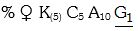
Solution
(C) The family Papilionaceae (now a subfamily of Fabaceae,known as Faboideae) is characterized by zygomorphic flowers (represented by the symbol $\text{\%}$),bisexual flowers $(\text{♀})$,a calyx with $5$ gamosepalous sepals $(K_{(5)})$,a corolla with $5$ petals showing vexillary aestivation ($1$ standard,$2$ wings,$2$ fused keel petals,denoted as $C_{1+2+(2)}$),an androecium with $10$ stamens in a diadelphous condition $(A_{1+(9)})$,and a superior ovary with a single carpel $(\underline{G}_1)$.
0 likesView Solution
4
BiologyMediumMCQAIIMS · 1985
If there is more than one tunica layer in a stem apex,which among the following is most likely to happen?
A
All the layers will develop into epidermal cells
B
Only the outer layer will develop into epidermal cells
C
All the layers will develop into cortex
D
Inner layer develops into cortex
Solution
(B) According to the Tunica-Corpus theory,the tunica layers undergo only anticlinal divisions,which increase the surface area of the shoot apex.
Since the tunica layers are responsible for surface growth,only the outermost layer of the tunica differentiates into the epidermis of the stem.
The inner layers of the tunica and the corpus contribute to the formation of the internal tissues,such as the cortex and vascular tissues.
Since the tunica layers are responsible for surface growth,only the outermost layer of the tunica differentiates into the epidermis of the stem.
The inner layers of the tunica and the corpus contribute to the formation of the internal tissues,such as the cortex and vascular tissues.
0 likesView Solution
5
BiologyMediumMCQAIIMS · 1985
The study of chromosomes at the meiotic diplotene stage shows that:
A
The intimately paired chromosomes repel each other and begin to separate.
B
The pairing of homologous chromosomes which had initiated in the earlier stage is completed.
C
The homologous chromosomes remain united by chiasmata.
D
None of the above.
Solution
(C) During the $diplotene$ stage of $Meiosis-I$,the synaptonemal complex dissolves,and the homologous chromosomes of the bivalents start to separate from each other except at the sites of crossovers. These $X$-shaped structures are called $chiasmata$. Thus,the homologous chromosomes remain united by $chiasmata$ during this stage.
0 likesView Solution
6
BiologyMediumMCQAIIMS · 1985
When a cell is fully turgid,which of the following will be zero?
A
Turgor pressure
B
Wall pressure
C
Suction pressure
D
Osmotic pressure
Solution
(C) In a fully turgid cell,the water potential is in equilibrium with the surroundings,meaning no net water enters the cell.
The relationship between these pressures is given by the equation: $SP = OP - TP$.
Where $SP$ is Suction Pressure (also known as Diffusion Pressure Deficit or $DPD$),$OP$ is Osmotic Pressure,and $TP$ is Turgor Pressure.
When a cell is fully turgid,the Turgor Pressure $(TP)$ becomes equal to the Osmotic Pressure $(OP)$.
Therefore,$SP = OP - OP = 0$.
Thus,the Suction Pressure $(SP)$ of a fully turgid cell is zero.
The relationship between these pressures is given by the equation: $SP = OP - TP$.
Where $SP$ is Suction Pressure (also known as Diffusion Pressure Deficit or $DPD$),$OP$ is Osmotic Pressure,and $TP$ is Turgor Pressure.
When a cell is fully turgid,the Turgor Pressure $(TP)$ becomes equal to the Osmotic Pressure $(OP)$.
Therefore,$SP = OP - OP = 0$.
Thus,the Suction Pressure $(SP)$ of a fully turgid cell is zero.
0 likesView Solution
7
BiologyMediumMCQAIIMS · 1985
The thylakoids are removed and kept in a culture medium containing $CO_2$ and $H_2O$. If the setup is exposed to light,hexose sugars are not formed as the end product. The most appropriate reason for this is that
A
Carbon assimilation cannot take place
B
The pigments ($P-700$ and $P-680$) are not linked
C
Enzymes are not available
D
The light trapping device is not functional
Solution
(C) The synthesis of hexose sugars (glucose) occurs during the biosynthetic phase (Calvin cycle) of photosynthesis,which takes place in the stroma of the chloroplast.
Thylakoids are primarily responsible for the light-dependent reactions (photophosphorylation),where $ATP$ and $NADPH$ are produced.
The enzymes required for the Calvin cycle (such as $RuBisCO$) are located in the stroma,not within the thylakoids.
When thylakoids are removed and placed in a medium with $CO_2$ and $H_2O$,the light-dependent reactions may occur,but the enzymes necessary for carbon fixation and sugar synthesis are absent in the medium. Therefore,hexose sugars are not formed.
Thylakoids are primarily responsible for the light-dependent reactions (photophosphorylation),where $ATP$ and $NADPH$ are produced.
The enzymes required for the Calvin cycle (such as $RuBisCO$) are located in the stroma,not within the thylakoids.
When thylakoids are removed and placed in a medium with $CO_2$ and $H_2O$,the light-dependent reactions may occur,but the enzymes necessary for carbon fixation and sugar synthesis are absent in the medium. Therefore,hexose sugars are not formed.
0 likesView Solution
8
BiologyMediumMCQAIIMS · 1985
Which of the following observations most strongly supports the view that mitochondria contain electron transfer enzymes aggregated into compact associations?
A
$A$ contractile protein capable of utilizing $ATP$ has been obtained from mitochondria.
B
Mitochondria have a highly folded inner wall.
C
Disruption of mitochondria yields membrane fragments which are able to synthesize $ATP$.
D
Mitochondria in animal embryos have a tendency to concentrate in cells which are to become part of locomotory structures.
Solution
(C) The electron transport system $(ETS)$ is located in the inner mitochondrial membrane.
When mitochondria are disrupted,the inner membrane breaks into smaller vesicles called submitochondrial particles or $F_1-F_0$ particles.
These fragments retain the structural integrity of the electron transport chain and the $ATP$ synthase complex.
Because these fragments are still capable of synthesizing $ATP$ in the presence of substrates and oxygen,it provides strong evidence that the enzymes involved in electron transfer and oxidative phosphorylation are organized into compact,functional associations within the membrane.
When mitochondria are disrupted,the inner membrane breaks into smaller vesicles called submitochondrial particles or $F_1-F_0$ particles.
These fragments retain the structural integrity of the electron transport chain and the $ATP$ synthase complex.
Because these fragments are still capable of synthesizing $ATP$ in the presence of substrates and oxygen,it provides strong evidence that the enzymes involved in electron transfer and oxidative phosphorylation are organized into compact,functional associations within the membrane.
0 likesView Solution
9
BiologyEasyMCQAIIMS · 1985
Etiolation in plants is caused when they
A
Are grown in dark
B
Have mineral deficiency
C
Are grown in intense light
D
Are grown in blue light
Solution
(A) Etiolation is a process in flowering plants grown in partial or complete absence of light.
It is characterized by long,weak stems,smaller leaves due to longer internodes,and a pale yellow color (chlorosis).
This occurs because chlorophyll,the green pigment required for photosynthesis,is not synthesized in the absence of light.
Therefore,plants grown in the dark exhibit etiolation.
It is characterized by long,weak stems,smaller leaves due to longer internodes,and a pale yellow color (chlorosis).
This occurs because chlorophyll,the green pigment required for photosynthesis,is not synthesized in the absence of light.
Therefore,plants grown in the dark exhibit etiolation.
0 likesView Solution
10
BiologyMediumMCQAIIMS · 1985
What is the effect on the flowering of a plant if a flash of red light is followed by a flash of far-red light?
A
Flowering is increased
B
Flowering is decreased
C
Flowering is stopped
D
Effect of red flash is reversed
Solution
(D) The flowering response in plants is regulated by the phytochrome pigment system,which exists in two interconvertible forms: $P_r$ (red light-absorbing) and $P_{fr}$ (far-red light-absorbing).
Red light $(660 \ nm)$ converts $P_r$ to the active form $P_{fr}$,which promotes flowering in long-day plants.
Far-red light $(730 \ nm)$ converts $P_{fr}$ back to the inactive form $P_r$.
Therefore,if a flash of red light is immediately followed by a flash of far-red light,the $P_{fr}$ formed by the red light is converted back to $P_r$,effectively nullifying the effect of the red light. Thus,the effect of the red flash is reversed.
Red light $(660 \ nm)$ converts $P_r$ to the active form $P_{fr}$,which promotes flowering in long-day plants.
Far-red light $(730 \ nm)$ converts $P_{fr}$ back to the inactive form $P_r$.
Therefore,if a flash of red light is immediately followed by a flash of far-red light,the $P_{fr}$ formed by the red light is converted back to $P_r$,effectively nullifying the effect of the red light. Thus,the effect of the red flash is reversed.
0 likesView Solution
11
BiologyMediumMCQAIIMS · 1985
When a person is suffering from poor renal reabsorption,which of the following will not help in the maintenance of blood volume?
A
Decreased glomerular filtration
B
Increased $ADH$ secretion
C
Decreased arterial pressure in kidney
D
Increased arterial pressure in kidney
Solution
(D) The correct answer is $D$.
Renal reabsorption is the process by which the kidney recovers water and solutes from the filtrate back into the blood.
If a person suffers from poor renal reabsorption,they are already losing excessive fluid through urine.
Increasing the arterial pressure in the kidney would increase the glomerular filtration rate $(GFR)$,leading to even more filtrate production and further loss of fluid,which exacerbates the loss of blood volume.
Conversely,decreased $GFR$ (via decreased arterial pressure) or increased $ADH$ secretion (which promotes water reabsorption) would help in conserving water and maintaining blood volume.
Renal reabsorption is the process by which the kidney recovers water and solutes from the filtrate back into the blood.
If a person suffers from poor renal reabsorption,they are already losing excessive fluid through urine.
Increasing the arterial pressure in the kidney would increase the glomerular filtration rate $(GFR)$,leading to even more filtrate production and further loss of fluid,which exacerbates the loss of blood volume.
Conversely,decreased $GFR$ (via decreased arterial pressure) or increased $ADH$ secretion (which promotes water reabsorption) would help in conserving water and maintaining blood volume.
0 likesView Solution
12
BiologyMediumMCQAIIMS · 1985
Electron microscopic studies of the sarcomeres have revealed that during muscle contraction:
A
The width of $A$-band remains constant
B
The width of the $H$-zone becomes smaller
C
The width of $I$-band increases
D
The diameter of the fibre increases
Solution
(B) According to the sliding filament theory,during muscle contraction,the thin filaments slide over the thick filaments.
$1$. The $A$-band (containing myosin) maintains its length because the thick filaments do not change size.
$2$. The $I$-band (containing actin) shortens as the filaments overlap more.
$3$. The $H$-zone (the central part of the $A$-band where only myosin is present) narrows or disappears as actin filaments move into it.
$4$. Therefore,both statements $A$ and $B$ are technically correct observations of muscle contraction. However,in most standard competitive biology contexts,the reduction of the $H$-zone is a primary characteristic feature of the sliding mechanism.
$1$. The $A$-band (containing myosin) maintains its length because the thick filaments do not change size.
$2$. The $I$-band (containing actin) shortens as the filaments overlap more.
$3$. The $H$-zone (the central part of the $A$-band where only myosin is present) narrows or disappears as actin filaments move into it.
$4$. Therefore,both statements $A$ and $B$ are technically correct observations of muscle contraction. However,in most standard competitive biology contexts,the reduction of the $H$-zone is a primary characteristic feature of the sliding mechanism.
0 likesView Solution
13
BiologyMediumMCQAIIMS · 1985
Propagation of action potential is very fast in nerve fibres which have
A
Large fibre diameter
B
Small fibre diameter
C
Covering of myelin sheath
D
$(a)$ and $(c)$ both are correct
Solution
(D) The propagation of action potential is significantly faster in myelinated nerve fibres compared to non-myelinated ones.
This is due to a process called saltatory conduction,where the impulse 'jumps' from one node of Ranvier to the next.
Additionally,a larger fibre diameter reduces internal resistance,allowing for faster signal transmission.
Therefore,both a large fibre diameter and the presence of a myelin sheath contribute to rapid conduction.
This is due to a process called saltatory conduction,where the impulse 'jumps' from one node of Ranvier to the next.
Additionally,a larger fibre diameter reduces internal resistance,allowing for faster signal transmission.
Therefore,both a large fibre diameter and the presence of a myelin sheath contribute to rapid conduction.
0 likesView Solution
14
BiologyMediumMCQAIIMS · 1985
Telocentric chromosome differs from acrocentric chromosome in that
A
The former has a subterminal centromere whereas the latter has a centrally located centromere
B
The centromere in the former is terminal and in the latter is subterminal
C
The former has a terminal centromere and the latter has a medially located centromere
D
None of the above
Solution
(B) In a $Telocentric$ chromosome,the centromere is situated at the terminal end of the chromosome.
In an $Acrocentric$ chromosome,the centromere is located very close to one end,resulting in one extremely short arm and one very long arm (subterminal position).
Therefore,the correct distinction is that the former has a terminal centromere and the latter has a subterminal centromere.
In an $Acrocentric$ chromosome,the centromere is located very close to one end,resulting in one extremely short arm and one very long arm (subterminal position).
Therefore,the correct distinction is that the former has a terminal centromere and the latter has a subterminal centromere.
0 likesView Solution
15
BiologyEasyMCQAIIMS · 1985
Polytene chromosomes were first observed by
A
Batanetzky-$1980$
B
Heitz and Bauer -$1935$
C
Balbiani -$1881$
D
Stevens and Wilson -$1905$
Solution
(C) Polytene chromosomes were first discovered by $E$.$G$. Balbiani in $1881$.
They were observed in the salivary gland cells of the larvae of the midge fly,$Chironomus$ $tentans$.
They were observed in the salivary gland cells of the larvae of the midge fly,$Chironomus$ $tentans$.
0 likesView Solution
16
BiologyMediumMCQAIIMS · 1985
Mental retardation in children suffering from galactosemia can be avoided by
A
Giving them more milk
B
Giving them milk-free diet
C
Giving them milk fortified with vitamins
D
Giving them more proteinous diet
Solution
(B) Galactosemia is a genetic metabolic disorder where the body is unable to metabolize galactose,a sugar found in milk and dairy products.
If left untreated,the accumulation of galactose leads to severe health issues,including mental retardation,liver damage,and cataracts.
Therefore,the primary treatment for infants suffering from galactosemia is to provide them with a milk-free diet,effectively eliminating the source of galactose.
If left untreated,the accumulation of galactose leads to severe health issues,including mental retardation,liver damage,and cataracts.
Therefore,the primary treatment for infants suffering from galactosemia is to provide them with a milk-free diet,effectively eliminating the source of galactose.
0 likesView Solution
17
BiologyMediumMCQAIIMS · 1985
In a pregnant woman having prolonged labour pains,if childbirth has to be hastened,i.e.,to aid parturition,it is advisable to administer a hormone that can:
A
Activate the smooth muscles
B
Increase the metabolic rate
C
Release glucose into the blood
D
Stimulate the ovary
Solution
(A) The hormone $Oxytocin$ is administered to hasten childbirth. It acts on the smooth muscles of the uterus and stimulates their contraction,which helps in the expulsion of the fetus during parturition.
0 likesView Solution
18
BiologyEasyMCQAIIMS · 1985
Progesterone hormone is secreted by
A
Corpus luteum
B
Corpus callosum
C
Corpus uteri
D
Corpus albicans
Solution
(A) Progesterone is a principal female sex hormone and is a steroid.
It is secreted during the later half of the menstrual cycle in human females by a temporary endocrine tissue known as the corpus luteum.
The luteinizing hormone $(LH)$ from the anterior pituitary gland causes the rupture of the Graafian follicle to release the ovum. This process transforms the ruptured follicle into a yellow structure called the corpus luteum,which then secretes progesterone.
It is secreted during the later half of the menstrual cycle in human females by a temporary endocrine tissue known as the corpus luteum.
The luteinizing hormone $(LH)$ from the anterior pituitary gland causes the rupture of the Graafian follicle to release the ovum. This process transforms the ruptured follicle into a yellow structure called the corpus luteum,which then secretes progesterone.
0 likesView Solution
19
BiologyMediumMCQAIIMS · 1985
The permeability of the human placenta to macromolecules is evidenced by the presence of which of the following in fetal blood?
A
Globulin
B
Albumin
C
Anti-$Rh$ factor
D
None of the above
Solution
(A) The human placenta acts as a selective barrier,but it allows the passage of certain macromolecules from the maternal circulation to the fetal circulation.
Specifically,$IgG$ antibodies (a type of globulin) are known to cross the placenta via receptor-mediated endocytosis.
This passive immunity provides the fetus with protection against various pathogens.
Therefore,the presence of maternal $IgG$ antibodies in fetal blood is direct evidence of the placenta's permeability to these specific macromolecules.
Specifically,$IgG$ antibodies (a type of globulin) are known to cross the placenta via receptor-mediated endocytosis.
This passive immunity provides the fetus with protection against various pathogens.
Therefore,the presence of maternal $IgG$ antibodies in fetal blood is direct evidence of the placenta's permeability to these specific macromolecules.
0 likesView Solution
20
BiologyMediumMCQAIIMS · 1985
The monosomic condition in human beings depicted as $XO$ is referred to as
A
Criminal syndrome
B
Down's syndrome
C
Klinefelter's syndrome
D
Turner's syndrome
Solution
(D) The monosomic condition in human beings represented as $XO$ is known as Turner's syndrome.
Individuals with Turner's syndrome have a $45$ chromosome count,specifically $44 + XO$ genotype.
This condition arises due to the absence of one $X$ chromosome,which is caused by the non-disjunction of sex chromosomes during gametogenesis in the parents.
Individuals with Turner's syndrome have a $45$ chromosome count,specifically $44 + XO$ genotype.
This condition arises due to the absence of one $X$ chromosome,which is caused by the non-disjunction of sex chromosomes during gametogenesis in the parents.
0 likesView Solution
21
BiologyMediumMCQAIIMS · 1985
$A$ man known to be a victim of haemophilia marries a normal woman whose father was known to be a bleeder. Then it is expected that:
A
All their children will be bleeders
B
Half of their children will be bleeders
C
One fourth of their children will be bleeders
D
None of their children will be bleeder
Solution
(B) Haemophilia is an $X$-linked recessive disorder.
Let $X^h$ represent the haemophilic allele and $X$ represent the normal allele.
The man is a victim of haemophilia,so his genotype is $X^hY$.
The woman is normal but her father was a bleeder $(X^hY)$,which means she must have inherited the $X^h$ allele from him. Thus,her genotype is $X^hX$.
When they marry,the cross is $X^hY \times X^hX$.
The possible offspring genotypes are:
$1. X^hX^h$ (Haemophilic daughter)
$2. X^hX$ (Carrier daughter)
$3. X^hY$ (Haemophilic son)
$4. XY$ (Normal son)
Out of these four possibilities,two are affected (haemophilic). Therefore,half of their children will be bleeders.
Let $X^h$ represent the haemophilic allele and $X$ represent the normal allele.
The man is a victim of haemophilia,so his genotype is $X^hY$.
The woman is normal but her father was a bleeder $(X^hY)$,which means she must have inherited the $X^h$ allele from him. Thus,her genotype is $X^hX$.
When they marry,the cross is $X^hY \times X^hX$.
The possible offspring genotypes are:
$1. X^hX^h$ (Haemophilic daughter)
$2. X^hX$ (Carrier daughter)
$3. X^hY$ (Haemophilic son)
$4. XY$ (Normal son)
Out of these four possibilities,two are affected (haemophilic). Therefore,half of their children will be bleeders.
0 likesView Solution
22
BiologyMediumMCQAIIMS · 1985
Epistasis implies
A
One pair of genes can completely mask the expression of another pair of genes
B
One pair of genes independently controls a particular phenotype
C
One pair of genes enhances the phenotype expression of another pair of genes
D
Many genes collectively control a particular phenotype
Solution
(A) Epistasis is the phenomenon of masking or suppressing the expression of a gene by another non-allelic gene.
The gene which suppresses the expression of a non-allelic gene is termed as an epistatic gene,and a gene whose expression is masked by a non-allelic gene is termed as a hypostatic gene.
The gene which suppresses the expression of a non-allelic gene is termed as an epistatic gene,and a gene whose expression is masked by a non-allelic gene is termed as a hypostatic gene.
0 likesView Solution
23
BiologyMediumMCQAIIMS · 1985
In the Operon concept,the regulator gene regulates chemical reactions in the cell by:
A
Inactivating enzymes in the reaction
B
Inhibiting transcription of $mRNA$
C
Inhibiting migration of $mRNA$ into cytoplasm
D
Inhibiting the substrate in the reaction
Solution
(B) In the Operon model,the regulator gene codes for a protein called the repressor protein.
This repressor protein binds to the operator site of the operon.
When the repressor is bound to the operator,it physically blocks $RNA$ polymerase from transcribing the structural genes into $mRNA$.
Therefore,the regulator gene controls the expression of the operon by inhibiting the transcription of $mRNA$.
This repressor protein binds to the operator site of the operon.
When the repressor is bound to the operator,it physically blocks $RNA$ polymerase from transcribing the structural genes into $mRNA$.
Therefore,the regulator gene controls the expression of the operon by inhibiting the transcription of $mRNA$.
0 likesView Solution
24
BiologyMediumMCQAIIMS · 1985
Initiation of polypeptide chain in eukaryotic protein synthesis is induced by
A
Methionine
B
Leucine
C
Lysine
D
Glycine
Solution
(A) In eukaryotic protein synthesis,the process of translation begins with the initiation codon $AUG$.
This codon codes for the amino acid Methionine.
Therefore,the initiation of the polypeptide chain is induced by Methionine.
This codon codes for the amino acid Methionine.
Therefore,the initiation of the polypeptide chain is induced by Methionine.
0 likesView Solution
25
BiologyMediumMCQAIIMS · 1985
In persons addicted to alcohol,the liver gets damaged because it
A
Has to detoxify the alcohol
B
Stores excess of glycogen
C
Is over stimulated to secrete more bile
D
Accumulates excess of fats
Solution
(D) Chronic alcohol consumption leads to liver damage primarily because the liver is the main site for alcohol metabolism.
When the liver metabolizes alcohol,it produces toxic byproducts like acetaldehyde.
Furthermore,alcohol metabolism alters the redox state of the liver,leading to the accumulation of fats (steatosis or fatty liver),which eventually causes inflammation and damage to liver cells (hepatocytes).
When the liver metabolizes alcohol,it produces toxic byproducts like acetaldehyde.
Furthermore,alcohol metabolism alters the redox state of the liver,leading to the accumulation of fats (steatosis or fatty liver),which eventually causes inflammation and damage to liver cells (hepatocytes).
0 likesView Solution
26
BiologyEasyMCQAIIMS · 1985
Cells obtained from cancerous tumours are known as
A
Hybridomas
B
Myelomas
C
Lymphocyte
D
Monoclonal cells
Solution
(B) Myelomas are cancerous plasma cells derived from the bone marrow. In biotechnology,specifically in the production of monoclonal antibodies,myeloma cells are fused with antibody-producing $B$-lymphocytes to create hybridomas. Hybridomas are immortalized cells that can produce specific antibodies continuously.
0 likesView Solution
27
BiologyMediumMCQAIIMS · 1985
The largest ecosystem of the world is:
A
Grasslands
B
Great lakes
C
Oceans
D
Forests
Solution
(C) The correct answer is $C$. Oceans cover approximately $71\%$ of the Earth's surface and contain the vast majority of the planet's water. Due to their immense size and the diversity of life forms they support, oceans represent the largest ecosystem on Earth.
0 likesView Solution
28
BiologyEasyMCQAIIMS · 1985
Overgrazing causes
A
Negative pollution
B
Positive pollution
C
Soil erosion
D
Reduction in crop yield
Solution
(C) Overgrazing occurs when plants are exposed to intensive grazing for extended periods of time without sufficient recovery periods.
This practice removes the protective vegetation cover from the soil surface.
As the vegetation is stripped away,the soil becomes exposed to wind and water,leading to the detachment and transport of topsoil,which is known as $Soil \ erosion$.
Therefore,overgrazing is a primary cause of land degradation and soil erosion.
This practice removes the protective vegetation cover from the soil surface.
As the vegetation is stripped away,the soil becomes exposed to wind and water,leading to the detachment and transport of topsoil,which is known as $Soil \ erosion$.
Therefore,overgrazing is a primary cause of land degradation and soil erosion.
0 likesView Solution
Vedclass Products
For Students
Vedclass Test Series
Mock tests in real AIIMS style covering Biology with performance analysis. 5-day free trial.
Start Free TrialFor Teachers
Exam Paper Generator
Generate Set A/B/C/D Biology papers from 7.5L+ questions in 2 minutes. 3 chapters free.
Try FreeFor Institutes
Online Exam Module
Run live AIIMS mock exams with unlimited students, 360° analytics & white-label branding.
See DemoFrequently Asked Questions
How many Biology questions are in AIIMS 1985?
There are 28 Biology questions from the AIIMS 1985 paper on Vedclass, each with a detailed step-by-step solution in English.
Are AIIMS 1985 Biology solutions available in English?
Yes. All solutions on this page are in English. You can also switch to English or Hindi using the language buttons above the questions.
Can I practice AIIMS 1985 Biology as a timed test?
Yes. Use the Vedclass Test Series to attempt a full AIIMS mock test covering Biology with time limits and instant score analysis.
Can teachers create Biology papers from AIIMS previous year questions?
Yes. The Vedclass Exam Paper Generator lets teachers mix AIIMS Biology questions and generate Set A/B/C/D papers in minutes.
For Teachers & Institutes
Build a Custom Biology Paper
Pick AIIMS 1985 Biology questions, set difficulty, and generate Set A/B/C/D in 2 minutes.