
A English
Biotechnological Applications in Medicine Questions in English
Class 12 Biology · Biotechnology and its Application · Biotechnological Applications in Medicine
262+
Questions
English
Language
100%
With Solutions
Showing 49 of 262 questions in English
51
EasyMCQ
Human insulin is produced from which transgenic species?
A
Mycobacterium
B
Rhizobium
C
Saccharomyces
D
Escherichia
Solution
(D) Human insulin is produced using recombinant $DNA$ technology. The gene for human insulin is inserted into the bacterium $Escherichia$ $coli$ $(E. coli)$ to produce the insulin protein. This process allows for the large-scale production of insulin that is identical to the natural human hormone.
0 likes
View Solution52
DifficultMCQ
The $ADA$ deficiency can be permanently cured by:
A
Enzyme replacement therapy
B
Periodic infusion of genetically engineered $ADA$ $cDNA$ into lymphocytes
C
Administering adenosine deaminase activators
D
Introducing bone marrow cells producing $ADA$ at an early embryonic stage
Solution
(D) The $ADA$ (Adenosine Deaminase) deficiency is caused by the deletion of the gene for adenosine deaminase.
While enzyme replacement therapy and periodic infusion of lymphocytes are treatments,they are not permanent cures as they require repeated administration.
The only permanent cure for $ADA$ deficiency is to introduce cells producing $ADA$ into the patient at an early embryonic stage.
If the gene isolated from marrow cells producing $ADA$ is introduced into cells at early embryonic stages,it can be a permanent cure.
While enzyme replacement therapy and periodic infusion of lymphocytes are treatments,they are not permanent cures as they require repeated administration.
The only permanent cure for $ADA$ deficiency is to introduce cells producing $ADA$ into the patient at an early embryonic stage.
If the gene isolated from marrow cells producing $ADA$ is introduced into cells at early embryonic stages,it can be a permanent cure.
0 likes
View Solution53
EasyMCQ
The first clinical gene therapy was given for the treatment of .........
A
Rheumatoid arthritis
B
Adenosine deaminase deficiency
C
Diabetes mellitus
D
Chickenpox
Solution
(B) The first clinical gene therapy was performed in $1990$ on a $4$-year-old girl with adenosine deaminase $(ADA)$ deficiency.
$ADA$ deficiency is caused by the deletion of the gene for adenosine deaminase,which is crucial for the proper functioning of the immune system.
In this therapy,lymphocytes from the patient's blood were grown in a culture outside the body,and a functional $ADA$ $cDNA$ was introduced into these lymphocytes using a retroviral vector.
These genetically engineered lymphocytes were then returned to the patient's body.
$ADA$ deficiency is caused by the deletion of the gene for adenosine deaminase,which is crucial for the proper functioning of the immune system.
In this therapy,lymphocytes from the patient's blood were grown in a culture outside the body,and a functional $ADA$ $cDNA$ was introduced into these lymphocytes using a retroviral vector.
These genetically engineered lymphocytes were then returned to the patient's body.
0 likes
View Solution54
MediumMCQ
$E. coli$ is useful in the production of:
A
Rifampicin
B
$LH$
C
Ecdysone
D
Interferon
Solution
(D) $E. coli$ (Escherichia coli) is a widely used bacterium in biotechnology for the production of recombinant proteins.
Among the given options,$E. coli$ is used for the production of human Interferon (specifically alpha-interferon) through recombinant $DNA$ technology.
Rifampicin is an antibiotic produced by bacteria like Amycolatopsis rifamycinica.
$LH$ (Luteinizing Hormone) is a glycoprotein hormone produced by the pituitary gland.
Ecdysone is a steroid prohormone of the insect molting hormone $20-$hydroxyecdysone.
Among the given options,$E. coli$ is used for the production of human Interferon (specifically alpha-interferon) through recombinant $DNA$ technology.
Rifampicin is an antibiotic produced by bacteria like Amycolatopsis rifamycinica.
$LH$ (Luteinizing Hormone) is a glycoprotein hormone produced by the pituitary gland.
Ecdysone is a steroid prohormone of the insect molting hormone $20-$hydroxyecdysone.
0 likes
View Solution55
EasyMCQ
The use of living organisms for human welfare is called......
A
Ecological Biology
B
Applied Biology
C
Basic Biology
D
Biophysics
Solution
(B) The use of living organisms or their components to produce products and processes that are useful to humans is known as $Applied \ Biology$ or more specifically,$Biotechnology$. Among the given options,$Applied \ Biology$ is the most appropriate term that encompasses the application of biological knowledge for human welfare.
0 likes
View Solution56
EasyMCQ
The chemical structure of human insulin was studied by .........
A
Banting
B
Kendall
C
Sanger
D
Starling
Solution
(C) The chemical structure of human insulin was determined by Frederick Sanger in $1953$. He was awarded the Nobel Prize in Chemistry in $1958$ for his work on the structure of proteins,especially that of insulin. Insulin is a peptide hormone consisting of two polypeptide chains,chain $A$ and chain $B$,linked by disulfide bridges.
0 likes
View Solution57
EasyMCQ
Which of the following is produced on an industrial scale using biotechnology?
A
Morphine
B
Quinine
C
Insulin
D
Nicotine
Solution
(C) Biotechnology,specifically recombinant $DNA$ technology,is used to produce human insulin on an industrial scale. Previously,insulin was extracted from the pancreas of slaughtered cattle and pigs,which often caused allergic reactions in some patients. By inserting the human insulin gene into $E. coli$ bacteria,scientists can produce large quantities of pure human insulin,which is safer and more effective for treating diabetes mellitus.
0 likes
View Solution58
MediumMCQ
Which disease vaccine can be developed using recombinant $DNA$ technology?
A
$SCID$
B
$Hepatitis-B$
C
Epilepsy
D
Filariasis
Solution
(B) Recombinant $DNA$ technology allows for the production of antigenic polypeptides of pathogens in bacteria or yeast.
$Hepatitis-B$ vaccine is the first commercially available human vaccine produced using recombinant $DNA$ technology.
It is produced by inserting the gene for the $Hepatitis-B$ surface antigen $(HBsAg)$ into yeast cells,which then produce the antigen for use in the vaccine.
$Hepatitis-B$ vaccine is the first commercially available human vaccine produced using recombinant $DNA$ technology.
It is produced by inserting the gene for the $Hepatitis-B$ surface antigen $(HBsAg)$ into yeast cells,which then produce the antigen for use in the vaccine.
0 likes
View Solution59
MediumMCQ
What is produced from yeast?
A
Hepatitis $B$ vaccine
B
Cholera vaccine
C
Typhoid vaccine
D
Polio vaccine
Solution
(A) The Hepatitis $B$ vaccine is a recombinant $DNA$ vaccine. It is produced by inserting the gene encoding the Hepatitis $B$ surface antigen $(HBsAg)$ into yeast cells $(Saccharomyces \, cerevisiae)$. The yeast cells then express the antigen, which is harvested and purified to create the vaccine.
0 likes
View Solution60
EasyMCQ
Which microorganisms are commonly used to produce vaccines through recombinant $DNA$ technology?
A
Yeast and bacteria
B
Yeast and protozoa
C
Yeast and Mucor
D
Protozoa and bacteria
Solution
(A) Recombinant $DNA$ technology allows for the production of safer and more effective vaccines,often referred to as second-generation vaccines.
In this process,the gene encoding the antigenic protein of a pathogen is isolated and inserted into a suitable host organism.
$Yeast$ (e.g.,$Saccharomyces$ $cerevisiae$) and $Bacteria$ (e.g.,$Escherichia$ $coli$) are the most commonly used host organisms for this purpose because they are easy to culture,grow rapidly,and can express foreign genes efficiently to produce the desired antigens.
In this process,the gene encoding the antigenic protein of a pathogen is isolated and inserted into a suitable host organism.
$Yeast$ (e.g.,$Saccharomyces$ $cerevisiae$) and $Bacteria$ (e.g.,$Escherichia$ $coli$) are the most commonly used host organisms for this purpose because they are easy to culture,grow rapidly,and can express foreign genes efficiently to produce the desired antigens.
0 likes
View Solution61
MediumMCQ
In which of the following microorganisms can vaccines be produced using recombinant $DNA$ technology?
A
Yeast
B
Bacteria
C
Protozoa
D
Both $(A)$ and $(B)$
Solution
(D) Recombinant $DNA$ technology allows for the production of vaccines by inserting specific genes into host organisms.
Both yeast (e.g.,$Saccharomyces$ $cerevisiae$) and bacteria (e.g.,$Escherichia$ $coli$) are commonly used as host systems for the expression of recombinant proteins,including antigens used in vaccines.
For example,the Hepatitis $B$ vaccine is produced using recombinant yeast cells.
Therefore,both yeast and bacteria are utilized in this technology.
Both yeast (e.g.,$Saccharomyces$ $cerevisiae$) and bacteria (e.g.,$Escherichia$ $coli$) are commonly used as host systems for the expression of recombinant proteins,including antigens used in vaccines.
For example,the Hepatitis $B$ vaccine is produced using recombinant yeast cells.
Therefore,both yeast and bacteria are utilized in this technology.
0 likes
View Solution62
EasyMCQ
Which vaccine is produced using yeast?
A
Hepatitis-$B$
B
Malaria
C
$AIDS$
D
Cancer
Solution
(A) The Hepatitis-$B$ vaccine is a recombinant vaccine produced using yeast cells.
In this process,the gene encoding the Hepatitis-$B$ surface antigen $(HBsAg)$ is inserted into the yeast genome.
The yeast cells then express this antigen,which is harvested,purified,and used as a vaccine to provide immunity against the Hepatitis-$B$ virus.
In this process,the gene encoding the Hepatitis-$B$ surface antigen $(HBsAg)$ is inserted into the yeast genome.
The yeast cells then express this antigen,which is harvested,purified,and used as a vaccine to provide immunity against the Hepatitis-$B$ virus.
0 likes
View Solution63
EasyMCQ
Which type of vaccine is produced from yeast?
A
Hepatitis-$A$
B
Hepatitis-$C$
C
Hepatitis-$D$
D
Hepatitis-$B$
Solution
(D) The vaccine for Hepatitis-$B$ is a recombinant $DNA$ vaccine.
It is produced using yeast cells $(Saccharomyces \, cerevisiae)$ as a host.
The gene encoding the Hepatitis-$B$ surface antigen $(HBsAg)$ is inserted into the yeast genome.
The yeast cells then express this antigen, which is harvested, purified, and used as a vaccine to induce an immune response in humans.
It is produced using yeast cells $(Saccharomyces \, cerevisiae)$ as a host.
The gene encoding the Hepatitis-$B$ surface antigen $(HBsAg)$ is inserted into the yeast genome.
The yeast cells then express this antigen, which is harvested, purified, and used as a vaccine to induce an immune response in humans.
0 likes
View Solution64
MediumMCQ
Which rays are used in a $CT$ scan?
A
$\gamma$-rays
B
$X$-rays
C
$UV$-rays
D
Magnetic rays
Solution
(B) $CT$ scan (Computed Tomography scan) uses $X$-rays to create detailed cross-sectional images of the body.
It rotates an $X$-ray source and detectors around the patient to capture multiple images from different angles,which are then processed by a computer to generate a $3D$ view of internal structures.
It rotates an $X$-ray source and detectors around the patient to capture multiple images from different angles,which are then processed by a computer to generate a $3D$ view of internal structures.
0 likes
View Solution65
MediumMCQ
Which of the following are used in $MRI$ to detect physiological changes in living tissues?
$(i)$ $UV$ rays $(ii)$ Strong magnetic fields $(iii)$ $\gamma$-rays $(iv)$ $X$-rays
$(i)$ $UV$ rays $(ii)$ Strong magnetic fields $(iii)$ $\gamma$-rays $(iv)$ $X$-rays
A
$(ii)$ only
B
$(i)$ and $(iv)$
C
$(ii)$ and $(iii)$
D
$(i)$ and $(iii)$
Solution
(A) $MRI$ stands for Magnetic Resonance Imaging.
It uses strong magnetic fields and non-ionizing electromagnetic waves to accurately detect pathological and physiological changes in the living tissue of the body.
Unlike $X$-rays or $\gamma$-rays,which are ionizing radiations and can cause $DNA$ damage,$MRI$ is considered safer because it does not use ionizing radiation.
Therefore,only $(ii)$ is the correct component used in $MRI$ for this purpose. Since the provided options are incomplete or potentially misleading based on standard curriculum,the most accurate choice focusing on the primary mechanism is $(ii)$.
It uses strong magnetic fields and non-ionizing electromagnetic waves to accurately detect pathological and physiological changes in the living tissue of the body.
Unlike $X$-rays or $\gamma$-rays,which are ionizing radiations and can cause $DNA$ damage,$MRI$ is considered safer because it does not use ionizing radiation.
Therefore,only $(ii)$ is the correct component used in $MRI$ for this purpose. Since the provided options are incomplete or potentially misleading based on standard curriculum,the most accurate choice focusing on the primary mechanism is $(ii)$.
0 likes
View Solution66
MediumMCQ
Through which knowledge are microbes used for human welfare?
A
Biotechnology
B
Genetic Engineering
C
Chemical Technology
D
Both $(A)$ and $(B)$
Solution
(D) Microbes are used for human welfare through the application of $Biotechnology$ and $Genetic Engineering$. $Biotechnology$ involves the use of living organisms or their products to improve human health and food systems. $Genetic Engineering$ is a branch of $Biotechnology$ that involves the manipulation of genetic material to produce desired traits or products. Therefore,both fields contribute significantly to the industrial and medical applications of microbes.
0 likes
View Solution67
MediumMCQ
Which radiations cause the destruction of proteins?
A
$ \alpha $-rays
B
$ \gamma $-rays
C
$ \beta $-rays
D
$ X $-rays
Solution
(B) Proteins are complex macromolecules that maintain their structure through various interactions like hydrogen bonds,disulfide bridges,and hydrophobic interactions.
High-energy ionizing radiations,such as $ \gamma $-rays,possess sufficient energy to break these chemical bonds and disrupt the tertiary and secondary structures of proteins.
This process,known as denaturation,leads to the loss of biological activity and the destruction of the protein molecule.
Therefore,$ \gamma $-rays are highly effective in causing the destruction of proteins.
High-energy ionizing radiations,such as $ \gamma $-rays,possess sufficient energy to break these chemical bonds and disrupt the tertiary and secondary structures of proteins.
This process,known as denaturation,leads to the loss of biological activity and the destruction of the protein molecule.
Therefore,$ \gamma $-rays are highly effective in causing the destruction of proteins.
0 likes
View Solution68
MediumMCQ
The genetic defect-adenosine deaminase $(ADA)$ deficiency may be cured permanently by
A
administering adenosine deaminase activators
B
introducing bone marrow cells producing $ADA$ into cells at early embryonic stages
C
enzyme replacement therapy
D
periodic infusion of genetically engineered lymphocytes having functional $ADA$ $cDNA$
Solution
(B) The correct answer is $(B)$.
$ADA$ deficiency is caused by the deletion of the gene for adenosine deaminase.
While enzyme replacement therapy and periodic infusion of genetically engineered lymphocytes are treatments,they are not permanent cures as they require repeated administration.
$A$ permanent cure can be achieved by gene therapy,specifically by introducing the functional $ADA$ gene isolated from bone marrow cells into cells at early embryonic stages,which allows the gene to be present in all cells of the developing organism.
$ADA$ deficiency is caused by the deletion of the gene for adenosine deaminase.
While enzyme replacement therapy and periodic infusion of genetically engineered lymphocytes are treatments,they are not permanent cures as they require repeated administration.
$A$ permanent cure can be achieved by gene therapy,specifically by introducing the functional $ADA$ gene isolated from bone marrow cells into cells at early embryonic stages,which allows the gene to be present in all cells of the developing organism.
0 likes
View Solution69
MediumMCQ
Which kind of therapy was given in $1990$ to a four-year-old girl with adenosine deaminase $(ADA)$ deficiency?
A
Gene therapy
B
Chemotherapy
C
Immunotherapy
D
Radiation therapy
Solution
(A) : Gene therapy is a technique of genetic engineering which involves the replacement of a faulty or disease-causing gene with a normal,healthy,functional gene.
In $1990$,the first clinical gene therapy was administered to a $4$-year-old girl suffering from adenosine deaminase $(ADA)$ deficiency.
This enzyme is crucial for the proper functioning of the immune system.
$A$ deficiency of this enzyme leads to severe combined immunodeficiency $(SCID)$.
In $1990$,the first clinical gene therapy was administered to a $4$-year-old girl suffering from adenosine deaminase $(ADA)$ deficiency.
This enzyme is crucial for the proper functioning of the immune system.
$A$ deficiency of this enzyme leads to severe combined immunodeficiency $(SCID)$.
0 likes
View Solution70
MediumMCQ
The two polypeptides of human insulin are linked together by
A
covalent bond
B
disulphide bridges
C
hydrogen bonds
D
phosphodiester bond
Solution
(B) Human insulin is composed of $51$ amino acids arranged in two polypeptide chains.
Chain $A$ consists of $21$ amino acids,and chain $B$ consists of $30$ amino acids.
These two polypeptide chains are interconnected by disulphide bridges (or $S-S$ linkages).
Chain $A$ consists of $21$ amino acids,and chain $B$ consists of $30$ amino acids.
These two polypeptide chains are interconnected by disulphide bridges (or $S-S$ linkages).
0 likes
View Solution71
MediumMCQ
The first human hormone produced by recombinant $DNA$ technology is
A
insulin
B
estrogen
C
thyroxin
D
progesterone
Solution
(A) : Recombinant $DNA$ technology has significantly impacted healthcare by enabling the mass production of safe and effective therapeutic drugs.
In $1983$, the American company Eli Lily first synthesized two $DNA$ sequences corresponding to the $A$ and $B$ chains of human insulin.
These sequences were introduced into plasmids of $Escherichia \text{ } coli$ to produce the insulin chains.
The $A$ and $B$ chains were produced separately, extracted, and then combined by creating disulfide bonds to form functional human insulin, known as humulin.
In $1983$, the American company Eli Lily first synthesized two $DNA$ sequences corresponding to the $A$ and $B$ chains of human insulin.
These sequences were introduced into plasmids of $Escherichia \text{ } coli$ to produce the insulin chains.
The $A$ and $B$ chains were produced separately, extracted, and then combined by creating disulfide bonds to form functional human insulin, known as humulin.
0 likes
View Solution72
MediumMCQ
Which one of the following vectors is used to replace the defective gene in gene therapy?
A
Adenovirus
B
Cosmid
C
$Ri$ plasmid
D
$Ti$ plasmid
Solution
(A) : Gene therapy is a corrective therapy used to treat diseases caused by genetic defects.
In this process,functional genes are inserted into a patient's cells or tissues to replace or compensate for the defective gene.
Viral vectors,such as $Adenovirus$ or $Retrovirus$,are commonly used to deliver the normal,functional gene into the target cells because of their high efficiency in infecting human cells.
In this process,functional genes are inserted into a patient's cells or tissues to replace or compensate for the defective gene.
Viral vectors,such as $Adenovirus$ or $Retrovirus$,are commonly used to deliver the normal,functional gene into the target cells because of their high efficiency in infecting human cells.
0 likes
View Solution73
MediumMCQ
The first clinical gene therapy was given for treating
A
diabetes mellitus
B
chicken pox
C
rheumatoid arthritis
D
adenosine deaminase deficiency
Solution
(D) The correct answer is $(d)$.
Gene therapy is a collection of methods that allows the correction of a gene defect that has been diagnosed in a child or embryo.
In this process,functional genes are inserted into a person's cells and tissues to treat a disease.
Correction of a genetic defect involves the delivery of a normal gene into the individual or embryo to take over the function of and compensate for the non-functional gene.
The first clinical gene therapy was given in $1990$ to a $4$-year-old girl suffering from adenosine deaminase $(ADA)$ deficiency.
This enzyme is crucial for the proper functioning of the immune system.
$SCID$ (Severe Combined Immunodeficiency) is caused due to a defect in the gene responsible for the enzyme adenosine deaminase.
In some children,$ADA$ deficiency can be cured by bone marrow transplantation or by introducing the functional gene into cells at early embryonic stages,which can provide a permanent cure.
Gene therapy is a collection of methods that allows the correction of a gene defect that has been diagnosed in a child or embryo.
In this process,functional genes are inserted into a person's cells and tissues to treat a disease.
Correction of a genetic defect involves the delivery of a normal gene into the individual or embryo to take over the function of and compensate for the non-functional gene.
The first clinical gene therapy was given in $1990$ to a $4$-year-old girl suffering from adenosine deaminase $(ADA)$ deficiency.
This enzyme is crucial for the proper functioning of the immune system.
$SCID$ (Severe Combined Immunodeficiency) is caused due to a defect in the gene responsible for the enzyme adenosine deaminase.
In some children,$ADA$ deficiency can be cured by bone marrow transplantation or by introducing the functional gene into cells at early embryonic stages,which can provide a permanent cure.
0 likes
View Solution74
MediumMCQ
Which one of the following is now being commercially produced by biotechnological procedures?
A
Nicotine
B
Morphine
C
Quinine
D
Insulin
Solution
(D) : Insulin is now being commercially produced by genetic engineering. Insulin consists of two short polypeptide chains: chain $A$ and chain $B$,that are linked together by disulphide bonds.
Insulin,in mammals,is synthesized as a prohormone which contains an extra stretch called the $C$-peptide. During maturation,this $C$-peptide is removed.
The production of insulin could only have been commercially possible if the maturation process of $C$-peptide was bypassed.
This problem was solved in $1983$ by Eli Lilly,an American company,which prepared functional insulin from two $DNA$ sequences corresponding to $A$ and $B$ chains of human insulin and introduced them into plasmids of $E. coli$ to produce insulin chains.
In this way,chains $A$ and $B$ were produced separately,extracted,and combined by creating disulfide bonds to obtain human insulin.
Insulin,in mammals,is synthesized as a prohormone which contains an extra stretch called the $C$-peptide. During maturation,this $C$-peptide is removed.
The production of insulin could only have been commercially possible if the maturation process of $C$-peptide was bypassed.
This problem was solved in $1983$ by Eli Lilly,an American company,which prepared functional insulin from two $DNA$ sequences corresponding to $A$ and $B$ chains of human insulin and introduced them into plasmids of $E. coli$ to produce insulin chains.
In this way,chains $A$ and $B$ were produced separately,extracted,and combined by creating disulfide bonds to obtain human insulin.
0 likes
View Solution75
EasyMCQ
Human insulin is being commercially produced from a transgenic species of
A
Rhizobium
B
Saccharomyces
C
Escherichia
D
Mycobacterium
Solution
(C) The correct answer is $(C)$.
Insulin is now being commercially produced by genetic engineering.
Human insulin consists of two short polypeptide chains, chain $A$ and chain $B$, which are linked together by disulphide bonds.
In mammals, insulin is synthesized as a prohormone containing an extra stretch called the $C$-peptide, which is removed during maturation.
In $1983$, Eli Lilly, an American company, prepared functional insulin by introducing two $DNA$ sequences corresponding to the $A$ and $B$ chains of human insulin into the plasmids of $Escherichia$ $coli$ $(E. coli)$.
These chains were produced separately, extracted, and then combined by creating disulphide bonds to form mature human insulin.
Insulin is now being commercially produced by genetic engineering.
Human insulin consists of two short polypeptide chains, chain $A$ and chain $B$, which are linked together by disulphide bonds.
In mammals, insulin is synthesized as a prohormone containing an extra stretch called the $C$-peptide, which is removed during maturation.
In $1983$, Eli Lilly, an American company, prepared functional insulin by introducing two $DNA$ sequences corresponding to the $A$ and $B$ chains of human insulin into the plasmids of $Escherichia$ $coli$ $(E. coli)$.
These chains were produced separately, extracted, and then combined by creating disulphide bonds to form mature human insulin.
0 likes
View Solution76
EasyMCQ
Hepatitis $B$ vaccine is produced by.......
A
Snake
B
$E$. coli
C
Yeast
D
Lactic acid bacteria
Solution
(C) The Hepatitis $B$ vaccine is a recombinant $DNA$ vaccine.
It is produced by inserting the gene that codes for the Hepatitis $B$ surface antigen $(HBsAg)$ into the genome of the yeast $Saccharomyces$ $cerevisiae$.
The yeast cells then express the antigen, which is purified and used as the vaccine.
Therefore, the correct answer is $C$ (Yeast).
It is produced by inserting the gene that codes for the Hepatitis $B$ surface antigen $(HBsAg)$ into the genome of the yeast $Saccharomyces$ $cerevisiae$.
The yeast cells then express the antigen, which is purified and used as the vaccine.
Therefore, the correct answer is $C$ (Yeast).
0 likes
View Solution77
MediumMCQ
In some children,$ADA$ deficiency can be cured by
A
$WBC$ Production
B
Bone marrow transplantation
C
Platelet formation
D
Vaccination
Solution
(B) $ADA$ deficiency is caused by the deletion of the gene for adenosine deaminase.
In some children,it can be cured by bone marrow transplantation,where the defective cells are replaced by healthy ones.
Another method is enzyme replacement therapy,in which functional $ADA$ is injected into the patient.
Gene therapy is also a potential cure,where functional genes are introduced into the patient's cells.
In some children,it can be cured by bone marrow transplantation,where the defective cells are replaced by healthy ones.
Another method is enzyme replacement therapy,in which functional $ADA$ is injected into the patient.
Gene therapy is also a potential cure,where functional genes are introduced into the patient's cells.
0 likes
View Solution78
MediumMCQ
$ELISA$ is based on the principle of
A
Antigen insertion
B
Antigen-antibody interaction
C
$WBC$ formation
D
Muscle contraction
Solution
(B) $ELISA$ stands for Enzyme-Linked Immunosorbent Assay.
It is a diagnostic technique used to detect the presence of specific antigens or antibodies in a sample.
The fundamental principle of $ELISA$ is the specific interaction between an antigen and its corresponding antibody.
In this process,an enzyme-linked antibody is used to detect the binding,which produces a color change indicating a positive result.
It is a diagnostic technique used to detect the presence of specific antigens or antibodies in a sample.
The fundamental principle of $ELISA$ is the specific interaction between an antigen and its corresponding antibody.
In this process,an enzyme-linked antibody is used to detect the binding,which produces a color change indicating a positive result.
0 likes
View Solution79
MediumMCQ
Which of the following is a main challenge for the production of insulin by the $r-DNA$ techniques?
A
Production of $A$ and $B$ chains
B
Production of $C$ peptide chain
C
Removal of $C$ peptide chain from $A$ and $B$ peptide chains
D
Assembling of insulin into mature insulin
Solution
(D) In humans,insulin is synthesized as a pro-hormone containing an extra stretch called the $C$-peptide.
This $C$-peptide is not present in the mature insulin and is removed during maturation.
The main challenge for the production of insulin using $r-DNA$ technology was getting insulin assembled into a mature form.
Eli Lilly,an American company,prepared two $DNA$ sequences corresponding to $A$ and $B$ chains of human insulin and introduced them in plasmids of $E. coli$ to produce insulin chains.
These chains were then extracted and combined by creating disulfide bonds to form mature human insulin.
This $C$-peptide is not present in the mature insulin and is removed during maturation.
The main challenge for the production of insulin using $r-DNA$ technology was getting insulin assembled into a mature form.
Eli Lilly,an American company,prepared two $DNA$ sequences corresponding to $A$ and $B$ chains of human insulin and introduced them in plasmids of $E. coli$ to produce insulin chains.
These chains were then extracted and combined by creating disulfide bonds to form mature human insulin.
0 likes
View Solution80
MediumMCQ
Which of the following vectors is used to transfer a functional $ADA$ $cDNA$ into the lymphocytes?
A
Retroviral vector
B
Bacteriophage
C
$TMV$ vector
D
Mosquitoes
Solution
(A) In the treatment of $ADA$ (Adenosine Deaminase) deficiency,gene therapy is used.
In this process,lymphocytes from the patient's blood are grown in a culture outside the body.
$A$ functional $ADA$ $cDNA$ is introduced into these lymphocytes using a retroviral vector.
The genetically engineered lymphocytes are then returned to the patient's body.
Retroviral vectors are preferred because they can integrate the foreign gene into the host genome,ensuring stable expression.
In this process,lymphocytes from the patient's blood are grown in a culture outside the body.
$A$ functional $ADA$ $cDNA$ is introduced into these lymphocytes using a retroviral vector.
The genetically engineered lymphocytes are then returned to the patient's body.
Retroviral vectors are preferred because they can integrate the foreign gene into the host genome,ensuring stable expression.
0 likes
View Solution81
EasyMCQ
Genetically engineered bacteria are being used in commercial production of
A
Melatonin
B
Testosterone
C
Human insulin
D
Thyroxine
Solution
(C) Genetically engineered bacteria, specifically $Escherichia coli$, are widely used in the commercial production of human insulin (also known as Humulin).
This process involves inserting the human insulin gene into the bacterial plasmid, which then directs the bacteria to synthesize the insulin protein.
This method replaced the older practice of extracting insulin from the pancreases of slaughtered cattle and pigs, which often caused allergic reactions in patients.
This process involves inserting the human insulin gene into the bacterial plasmid, which then directs the bacteria to synthesize the insulin protein.
This method replaced the older practice of extracting insulin from the pancreases of slaughtered cattle and pigs, which often caused allergic reactions in patients.
0 likes
View Solution82
EasyMCQ
Maturation of proinsulin into insulin takes place after
A
Joining of $C$-peptide
B
Removal of $C$-peptide
C
Removal of disulphide bridge
D
Removal of glycosidic bridge
Solution
(B) Proinsulin is a precursor molecule that consists of three chains: $A$,$B$,and $C$.
During the maturation process,the $C$-peptide,which is an extra stretch of amino acids,is removed from the proinsulin molecule.
This removal results in the formation of mature insulin,which consists of the $A$ and $B$ chains linked together by disulphide bridges.
Therefore,the maturation of proinsulin into insulin occurs after the removal of the $C$-peptide.
During the maturation process,the $C$-peptide,which is an extra stretch of amino acids,is removed from the proinsulin molecule.
This removal results in the formation of mature insulin,which consists of the $A$ and $B$ chains linked together by disulphide bridges.
Therefore,the maturation of proinsulin into insulin occurs after the removal of the $C$-peptide.
0 likes
View Solution83
MediumMCQ
The first clinical application of gene therapy was used in $1990$ on a four-year-old girl for:
A
Adenosine deficiency
B
Adenine deficiency
C
Growth deficiency
D
Adenosine deaminase deficiency
Solution
(D) The first clinical gene therapy was given in $1990$ to a $4$-year-old girl with Adenosine Deaminase $(ADA)$ deficiency.
$ADA$ enzyme is crucial for the immune system to function.
This deficiency leads to Severe Combined Immunodeficiency $(SCID)$.
In this therapy,lymphocytes from the patient's blood were grown in a culture outside the body,and a functional $ADA$ $cDNA$ was introduced into these lymphocytes using a retroviral vector,which were then returned to the patient.
$ADA$ enzyme is crucial for the immune system to function.
This deficiency leads to Severe Combined Immunodeficiency $(SCID)$.
In this therapy,lymphocytes from the patient's blood were grown in a culture outside the body,and a functional $ADA$ $cDNA$ was introduced into these lymphocytes using a retroviral vector,which were then returned to the patient.
0 likes
View Solution84
MediumMCQ
Match the following columns.
| Column-$I$ | Column-$II$ |
| $(A)$ Gene therapy | $(1)$ Effort to fix a functional gene |
| $(B)$ Humulin | $(2)$ $A$ single-stranded $DNA$ or $RNA$ tagged with a radioactive molecule |
| $(C)$ Probe | $(3)$ Diagnostic test |
| $(D)$ $ELISA$ | $(4)$ Diabetes |
A
$A-1, B-4, C-2, D-3$
B
$A-4, B-2, C-3, D-1$
C
$A-2, B-3, C-1, D-4$
D
$A-3, B-1, C-4, D-2$
Solution
(A) Gene therapy is a technique used to correct a defective gene by introducing a functional gene,matching with $(1)$.
$(B)$ Humulin is the first genetically engineered insulin used for the treatment of diabetes,matching with $(4)$.
$(C)$ $A$ probe is a single-stranded $DNA$ or $RNA$ molecule tagged with a radioactive molecule used to detect complementary sequences,matching with $(2)$.
$(D)$ $ELISA$ (Enzyme-Linked Immunosorbent Assay) is a diagnostic test based on antigen-antibody interactions,matching with $(3)$.
Therefore,the correct matching is $A-1, B-4, C-2, D-3$.
$(B)$ Humulin is the first genetically engineered insulin used for the treatment of diabetes,matching with $(4)$.
$(C)$ $A$ probe is a single-stranded $DNA$ or $RNA$ molecule tagged with a radioactive molecule used to detect complementary sequences,matching with $(2)$.
$(D)$ $ELISA$ (Enzyme-Linked Immunosorbent Assay) is a diagnostic test based on antigen-antibody interactions,matching with $(3)$.
Therefore,the correct matching is $A-1, B-4, C-2, D-3$.
0 likes
View Solution85
MediumMCQ
What is the meaning of $Bio-patents$?
A
Right to use an invention
B
Right to use biological resources
C
Right to use applications
D
Right to use processes
Solution
(A) $Bio-patent$ is a patent granted by a government to an inventor for biological inventions.
It grants the inventor the exclusive right to use,manufacture,or sell a biological invention for a specific period.
These inventions can include genetically modified organisms,biological processes,or products derived from biological resources.
Therefore,it is essentially the right to use an invention related to biological entities.
It grants the inventor the exclusive right to use,manufacture,or sell a biological invention for a specific period.
These inventions can include genetically modified organisms,biological processes,or products derived from biological resources.
Therefore,it is essentially the right to use an invention related to biological entities.
0 likes
View Solution86
MediumMCQ
Consider the following statements about insulin.
$I.$ Human insulin is made up of $51$ amino acids arranged in two polypeptide chains.
$II.$ The two polypeptide chains are interconnected by two disulphide bridges.
$III.$ In mammals,including humans,insulin is synthesised as a pro-hormone,which contains an extra stretch called the $C$-peptide.
$IV.$ $C$-peptide is not present in the mature insulin.
Which of the statements given above are correct?
$I.$ Human insulin is made up of $51$ amino acids arranged in two polypeptide chains.
$II.$ The two polypeptide chains are interconnected by two disulphide bridges.
$III.$ In mammals,including humans,insulin is synthesised as a pro-hormone,which contains an extra stretch called the $C$-peptide.
$IV.$ $C$-peptide is not present in the mature insulin.
Which of the statements given above are correct?
A
$I, II$ and $III$ only
B
$I, II$ and $IV$ only
C
$I, III$ and $IV$ only
D
$I, II, III$ and $IV$
Solution
(D) Statement $I$ is correct: Human insulin consists of $51$ amino acids arranged in two polypeptide chains (chain $A$ with $21$ amino acids and chain $B$ with $30$ amino acids).
Statement $II$ is correct: The two polypeptide chains are linked together by two disulphide bridges.
Statement $III$ is correct: Insulin is synthesised as a pro-hormone (pro-insulin),which contains an extra stretch of amino acids known as the $C$-peptide.
Statement $IV$ is correct: During the maturation process,the $C$-peptide is removed from the pro-insulin to form mature,functional insulin. Therefore,$C$-peptide is not present in mature insulin.
Since all statements are correct,the correct option is $D$.
Statement $II$ is correct: The two polypeptide chains are linked together by two disulphide bridges.
Statement $III$ is correct: Insulin is synthesised as a pro-hormone (pro-insulin),which contains an extra stretch of amino acids known as the $C$-peptide.
Statement $IV$ is correct: During the maturation process,the $C$-peptide is removed from the pro-insulin to form mature,functional insulin. Therefore,$C$-peptide is not present in mature insulin.
Since all statements are correct,the correct option is $D$.
0 likes
View Solution87
MediumMCQ
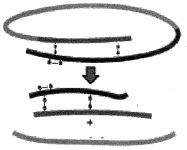
The diagram below shows:
A
Maturation of pro-insulin into insulin
B
Method of pro-insulin formation
C
Gene therapy
D
Enzyme replacement therapy
Solution
(A) The diagram illustrates the maturation of pro-insulin into functional insulin.
Pro-insulin consists of three polypeptide chains: $A$,$B$,and $C$.
The $C$-peptide is a stretch of amino acids that connects the $A$ and $B$ chains.
During the maturation process,the $C$-peptide is removed,leaving behind the $A$ and $B$ chains,which are then linked together by disulfide bonds to form mature,active insulin.
Pro-insulin consists of three polypeptide chains: $A$,$B$,and $C$.
The $C$-peptide is a stretch of amino acids that connects the $A$ and $B$ chains.
During the maturation process,the $C$-peptide is removed,leaving behind the $A$ and $B$ chains,which are then linked together by disulfide bonds to form mature,active insulin.
0 likes
View Solution88
MediumMCQ
Hybridoma cells are .....
A
Products of spore formation in bacteria
B
Hybrid cells produced from myeloma cells
C
Neurons of frogs
D
Cells containing oncogenes
Solution
(B) Hybridoma cells are created by the fusion of a specific antibody-producing $B$-cell (lymphocyte) and a myeloma cell (a type of cancer cell).
These hybrid cells combine the ability to produce a specific antibody (from the $B$-cell) with the ability to divide indefinitely in culture (from the myeloma cell).
Therefore,hybridoma cells are hybrid cells produced from myeloma cells.
These hybrid cells combine the ability to produce a specific antibody (from the $B$-cell) with the ability to divide indefinitely in culture (from the myeloma cell).
Therefore,hybridoma cells are hybrid cells produced from myeloma cells.
0 likes
View Solution89
MediumMCQ
$ELISA$ is used to detect viruses where the key reagent is . . .
A
$DNA$ probe
B
$RNA$ase
C
Alkaline phosphatase
D
Catalase
Solution
(C) $ELISA$ (Enzyme-Linked Immunosorbent Assay) is a diagnostic technique used to detect the presence of antigens or antibodies in a sample.
In the context of viral detection,$ELISA$ utilizes an enzyme-linked antibody to identify viral antigens.
The enzyme commonly used as a reporter molecule in this process is alkaline phosphatase or horseradish peroxidase.
These enzymes catalyze a reaction that produces a detectable color change,confirming the presence of the virus.
In the context of viral detection,$ELISA$ utilizes an enzyme-linked antibody to identify viral antigens.
The enzyme commonly used as a reporter molecule in this process is alkaline phosphatase or horseradish peroxidase.
These enzymes catalyze a reaction that produces a detectable color change,confirming the presence of the virus.
0 likes
View Solution90
MediumMCQ
$ELISA$ is used for the detection of viruses. The key reagent used is ......
A
Alkaline phosphatase
B
Catalase
C
$DNA$ probe
D
$RNase$
Solution
(A) $ELISA$ (Enzyme-Linked Immunosorbent Assay) is a diagnostic technique based on the principle of antigen-antibody interaction.
In this technique,an enzyme is linked to an antibody or antigen to detect the presence of a specific pathogen (like a virus).
The most commonly used enzyme as a key reagent in $ELISA$ is alkaline phosphatase or horseradish peroxidase,which produces a color change upon reacting with its substrate,indicating the presence of the virus.
In this technique,an enzyme is linked to an antibody or antigen to detect the presence of a specific pathogen (like a virus).
The most commonly used enzyme as a key reagent in $ELISA$ is alkaline phosphatase or horseradish peroxidase,which produces a color change upon reacting with its substrate,indicating the presence of the virus.
0 likes
View Solution91
DifficultMCQ
The genetic disorder Adenosine Deaminase $(ADA)$ deficiency can be cured permanently by:
A
Periodic infusion of genetically engineered lymphocytes having functional $ADA$ $cDNA$.
B
Administering adenosine deaminase activators.
C
Introducing bone marrow cells producing $ADA$ into cells at early embryonic stages.
D
Enzyme replacement therapy.
Solution
(C) Adenosine Deaminase $(ADA)$ deficiency is caused by the deletion of the gene for $ADA$.
$1$. Enzyme replacement therapy and periodic infusion of genetically engineered lymphocytes are temporary solutions because these cells are not immortal and require repeated treatment.
$2$. Gene therapy is the permanent cure.
$3$. If the gene isolate from marrow cells producing $ADA$ is introduced into cells at early embryonic stages,it provides a permanent cure because these cells become part of the individual's genome and continue to produce the functional enzyme throughout the person's life.
$1$. Enzyme replacement therapy and periodic infusion of genetically engineered lymphocytes are temporary solutions because these cells are not immortal and require repeated treatment.
$2$. Gene therapy is the permanent cure.
$3$. If the gene isolate from marrow cells producing $ADA$ is introduced into cells at early embryonic stages,it provides a permanent cure because these cells become part of the individual's genome and continue to produce the functional enzyme throughout the person's life.
0 likes
View Solution92
EasyMCQ
Which genetically modified organism is used for the commercial production of human insulin?
A
Escherichia coli
B
Mycobacterium
C
Rhizobium
D
Saccharomyces cerevisiae
Solution
(A) The commercial production of human insulin is achieved using recombinant $DNA$ technology. The gene for human insulin is inserted into the bacterium $Escherichia \ coli$ $(E. \ coli)$. This bacterium acts as a host to express the insulin protein,which is then extracted and purified for medical use. Therefore,$Escherichia \ coli$ is the correct organism used for this purpose.
0 likes
View Solution93
EasyMCQ
Which human hormone was the first to be produced using recombinant $DNA$ technology?
A
Insulin
B
Estrogen
C
Thyroxine
D
Progesterone
Solution
(A) The first human hormone produced using recombinant $DNA$ technology is $Insulin$.
In $1983$,the American company $Eli$ $Lilly$ prepared two $DNA$ sequences corresponding to $A$ and $B$ chains of human $Insulin$ and introduced them in plasmids of $E. coli$ to produce insulin chains.
These chains were extracted and combined by creating disulfide bonds to form human $Insulin$ (Humulin).
In $1983$,the American company $Eli$ $Lilly$ prepared two $DNA$ sequences corresponding to $A$ and $B$ chains of human $Insulin$ and introduced them in plasmids of $E. coli$ to produce insulin chains.
These chains were extracted and combined by creating disulfide bonds to form human $Insulin$ (Humulin).
0 likes
View Solution94
EasyMCQ
In $1990$,which therapy was given to a four-year-old girl suffering from adenosine deaminase $(ADA)$ deficiency?
A
Immunotherapy
B
Radiation therapy
C
Gene therapy
D
Chemotherapy
Solution
(C) The first clinical gene therapy was given in $1990$ to a four-year-old girl with adenosine deaminase $(ADA)$ deficiency.
In this procedure,lymphocytes from the patient's blood were grown in a culture outside the body.
$A$ functional $ADA$ cDNA (using a retroviral vector) was then introduced into these lymphocytes,which were subsequently returned to the patient.
Since these cells are not immortal,the patient requires periodic infusion of such genetically engineered lymphocytes.
In this procedure,lymphocytes from the patient's blood were grown in a culture outside the body.
$A$ functional $ADA$ cDNA (using a retroviral vector) was then introduced into these lymphocytes,which were subsequently returned to the patient.
Since these cells are not immortal,the patient requires periodic infusion of such genetically engineered lymphocytes.
0 likes
View Solution95
EasyMCQ
The two polypeptide chains of human insulin are linked together by which of the following?
A
Phosphodiester bond
B
Covalent bond
C
Disulfide bond
D
Hydrogen bond
Solution
(C) Human insulin is synthesized as a pro-hormone containing an extra stretch called the $C$-peptide.
This $C$-peptide is removed during maturation to form mature insulin.
Mature insulin consists of two short polypeptide chains,chain $A$ and chain $B$,that are linked together by disulfide bridges (disulfide bonds).
This $C$-peptide is removed during maturation to form mature insulin.
Mature insulin consists of two short polypeptide chains,chain $A$ and chain $B$,that are linked together by disulfide bridges (disulfide bonds).
0 likes
View Solution96
MediumMCQ
Which of the following is commonly used as a vector for introducing a $DNA$ fragment in human lymphocytes?
A
$pBR\,322$
B
$Ti\,plasmid$
C
$\lambda$ phage
D
Retrovirus
Solution
(D) Retroviruses have the natural ability to infect host cells and integrate their genetic material into the host genome.
In biotechnology,disarmed retroviruses are used as vectors to deliver desired genes into animal cells,including human lymphocytes.
$pBR\,322$ is a plasmid vector used in bacteria.
$Ti\,plasmid$ is used for gene transfer in plants.
$\lambda$ phage is a bacteriophage used as a cloning vector in bacteria.
Therefore,the correct option is $D$.
In biotechnology,disarmed retroviruses are used as vectors to deliver desired genes into animal cells,including human lymphocytes.
$pBR\,322$ is a plasmid vector used in bacteria.
$Ti\,plasmid$ is used for gene transfer in plants.
$\lambda$ phage is a bacteriophage used as a cloning vector in bacteria.
Therefore,the correct option is $D$.
0 likes
View Solution97
EasyMCQ
Which of the following is based upon the principle of antigen-antibody interaction?
A
$PCR$
B
$ELISA$
C
$r-DNA$ technology
D
$RNA$
Solution
(B) $ELISA$ (Enzyme-Linked Immunosorbent Assay) is a fundamental tool of clinical immunology.
It is based on the principle of antigen-antibody interaction,where specific antibodies or antigens are used to detect the presence of the target molecule.
This test is widely used as an initial screen for $HIV$ detection and allows for easy visualization of results through enzymatic color changes.
It is based on the principle of antigen-antibody interaction,where specific antibodies or antigens are used to detect the presence of the target molecule.
This test is widely used as an initial screen for $HIV$ detection and allows for easy visualization of results through enzymatic color changes.
0 likes
View Solution98
MediumMCQ
The first clinical gene therapy was given in $1990$ to a $4$-year-old girl with an enzyme deficiency of:
A
Adenosine deaminase $(ADA)$
B
Tyrosine oxidase
C
Monoamine oxidase
D
Glutamate dehydrogenase
Solution
(A) Gene therapy is an experimental technique that uses genes to treat or prevent disease.
The first clinical gene therapy was performed in $1990$ to treat adenosine deaminase deficiency.
$A$ four-year-old girl became the first patient to receive gene therapy on September $14, 1990$,at the $NIH$ Clinical Center.
Adenosine deaminase deficiency,also known as $ADA$ deficiency or $ADA-SCID$,is an autosomal recessive metabolic disorder that leads to severe combined immunodeficiency.
This condition is caused by the lack of the enzyme adenosine deaminase,which is essential for the proper functioning of the immune system.
The first clinical gene therapy was performed in $1990$ to treat adenosine deaminase deficiency.
$A$ four-year-old girl became the first patient to receive gene therapy on September $14, 1990$,at the $NIH$ Clinical Center.
Adenosine deaminase deficiency,also known as $ADA$ deficiency or $ADA-SCID$,is an autosomal recessive metabolic disorder that leads to severe combined immunodeficiency.
This condition is caused by the lack of the enzyme adenosine deaminase,which is essential for the proper functioning of the immune system.
0 likes
View Solution99
MediumMCQ
Can you list $10$ recombinant proteins which are used in medical practice? Find out where they are used as therapeutics.
A
Human insulin - Diabetes
B
Human growth hormone - Dwarfism
C
Blood clotting factor $VIII$ - Hemophilia
D
$TPA$ - Heart attack
Solution
(A) $(i)$ Human insulin - Used for the treatment of Diabetes.
$(ii)$ Human growth hormone - Used for the treatment of Dwarfism.
$(iii)$ Blood clotting factor $VIII$ - Used for the treatment of Hemophilia.
$(iv)$ $TPA$ (Tissue Plasminogen Activator) - Used for the treatment of heart attacks and strokes.
$(v)$ $PDGF$ (Platelet-Derived Growth Factor) - Used to stimulate wound healing.
$(vi)$ Interferon - Used for the treatment of viral infections and certain cancers.
$(vii)$ Interleukin - Used to enhance immune reactions.
$(viii)$ Hepatitis $B$ vaccine - Used for the prevention of infection caused by the Hepatitis $B$ virus.
$(ix)$ Erythropoietin - Used to treat anemia associated with chronic kidney disease.
$(x)$ $DNase$ $I$ - Used for the treatment of cystic fibrosis.
$(ii)$ Human growth hormone - Used for the treatment of Dwarfism.
$(iii)$ Blood clotting factor $VIII$ - Used for the treatment of Hemophilia.
$(iv)$ $TPA$ (Tissue Plasminogen Activator) - Used for the treatment of heart attacks and strokes.
$(v)$ $PDGF$ (Platelet-Derived Growth Factor) - Used to stimulate wound healing.
$(vi)$ Interferon - Used for the treatment of viral infections and certain cancers.
$(vii)$ Interleukin - Used to enhance immune reactions.
$(viii)$ Hepatitis $B$ vaccine - Used for the prevention of infection caused by the Hepatitis $B$ virus.
$(ix)$ Erythropoietin - Used to treat anemia associated with chronic kidney disease.
$(x)$ $DNase$ $I$ - Used for the treatment of cystic fibrosis.
0 likes
View SolutionBiotechnology and its Application — Biotechnological Applications in Medicine · Frequently Asked Questions
1Are these Biotechnology and its Application questions useful for JEE and NEET?
Yes. All questions in this section are mapped to JEE Main and NEET exam patterns. Previous year questions from JEE Main, NEET, GUJCET and state-level exams are included with full solutions.
2Can I switch to Hindi or Gujarati for these questions?
Yes. Use the language tabs in the hero section or the sidebar to view the same questions and solutions in English, Hindi or Gujarati.
3How do I generate a question paper from this subtopic?
Use the Vedclass Exam Paper Generator — select the chapter and subtopic, set difficulty, and generate Sets A, B, C, D automatically. First 3 chapters of every subject are free.
Vedclass Products
For Students
Vedclass Test Series
Mock tests in real JEE/NEET style with performance analysis. 5-day free trial.
Start Free TrialFor Teachers
Exam Paper Generator
Generate Set A/B/C/D papers from this chapter in 2 minutes. 3 chapters free.
Try FreeFor Institutes
Online Exam Module
Live online exams with unlimited students, 360° analytics & white-label branding.
See DemoFor Teachers & Institutes
Generate a Biotechnology and its Application Exam Paper in 2 Minutes
Select subtopic & difficulty — Sets A, B, C, D auto-generated with No Repeat logic.
First 3 chapters of every subject are free — no payment required.