
A English
Alkyne Questions in English
Class 11 Chemistry · Hydrocarbons · Alkyne
545+
Questions
English
Language
100%
With Solutions
Showing 50 of 545 questions in English
201
MediumMCQ
Acetylene reacts with dilute $H_2SO_4$ in the presence of $HgSO_4$ to produce .......
A
$CH_3COOH$
B
$CH_3CHO$
C
$CH_3COCH_3$
D
None of the above
Solution
(B) The hydration of acetylene $(HC \equiv CH)$ in the presence of dilute $H_2SO_4$ and $HgSO_4$ follows the Kucherov reaction.
First,the addition of water across the triple bond forms an unstable enol intermediate,vinyl alcohol $(CH_2=CH-OH)$.
This enol undergoes tautomerization to form a stable carbonyl compound,acetaldehyde $(CH_3CHO)$.
First,the addition of water across the triple bond forms an unstable enol intermediate,vinyl alcohol $(CH_2=CH-OH)$.
This enol undergoes tautomerization to form a stable carbonyl compound,acetaldehyde $(CH_3CHO)$.
0 likes
View Solution202
MediumMCQ
Which reagent is used to distinguish between propene and propyne?
A
Bromine water
B
Alkaline $KMnO_4$
C
Ammoniacal $AgNO_3$ (Tollens' reagent)
D
Ozone
Solution
(C) Propene is an alkene $(CH_3-CH=CH_2)$ and propyne is a terminal alkyne $(CH_3-C \equiv CH)$.
Terminal alkynes contain an acidic hydrogen atom attached to the $sp$ hybridized carbon.
Ammoniacal silver nitrate $(AgNO_3 + NH_4OH)$ reacts with terminal alkynes to form a white precipitate of silver acetylide $(CH_3-C \equiv C-Ag)$.
Propene does not react with ammoniacal $AgNO_3$.
Therefore,ammoniacal $AgNO_3$ is used to distinguish between them.
Terminal alkynes contain an acidic hydrogen atom attached to the $sp$ hybridized carbon.
Ammoniacal silver nitrate $(AgNO_3 + NH_4OH)$ reacts with terminal alkynes to form a white precipitate of silver acetylide $(CH_3-C \equiv C-Ag)$.
Propene does not react with ammoniacal $AgNO_3$.
Therefore,ammoniacal $AgNO_3$ is used to distinguish between them.
0 likes
View Solution203
MediumMCQ
In the reaction sequence $CaC_2$ $\xrightarrow{H_2O} A$ $\xrightarrow[dil. H_2SO_4]{Hg^{+2}} B$ $\xrightarrow{Ni} H_2 C$,the product $C$ is:
A
$CH_3OH$
B
$CH_3CHO$
C
$C_2H_5OH$
D
$C_2H_4$
Solution
(C) $CaC_2 + 2H_2O \rightarrow C_2H_2 (A) + Ca(OH)_2$
$C_2H_2 + H_2O \xrightarrow{Hg^{+2}, H_2SO_4} CH_3CHO (B)$
$CH_3CHO + H_2 \xrightarrow{Ni} CH_3CH_2OH (C)$
Thus,the final product $C$ is ethanol $(C_2H_5OH)$.
$C_2H_2 + H_2O \xrightarrow{Hg^{+2}, H_2SO_4} CH_3CHO (B)$
$CH_3CHO + H_2 \xrightarrow{Ni} CH_3CH_2OH (C)$
Thus,the final product $C$ is ethanol $(C_2H_5OH)$.
0 likes
View Solution204
MediumMCQ
What is formed when acetylene reacts with hypochlorous acid?
A
$CH_2Cl-CHO$
B
$ClCH_2COOH$
C
$CH_3COCl$
D
$ClCH_2CHO$
Solution
(D) The reaction of acetylene $(HC \equiv CH)$ with hypochlorous acid $(HOCl)$ involves the electrophilic addition of $HOCl$ across the triple bond.
First,one molecule of $HOCl$ adds to the triple bond to form chlorovinyl alcohol $(ClCH=CHOH)$.
This intermediate is unstable and undergoes tautomerization to form chloroacetaldehyde $(ClCH_2CHO)$.
First,one molecule of $HOCl$ adds to the triple bond to form chlorovinyl alcohol $(ClCH=CHOH)$.
This intermediate is unstable and undergoes tautomerization to form chloroacetaldehyde $(ClCH_2CHO)$.
0 likes
View Solution205
MediumMCQ
Which of the following has the shortest $C - C$ bond length?
A
$CH_3 - CH_2 - CH_3$
B
$CH_3 - CH_2 - CH_2 - CH_3$
C
$CH_2 = CH - CH = CH_2$
D
$CH \equiv C - C \equiv CH$
Solution
(D) The bond length of $C - C$ depends on the hybridization of the carbon atoms involved.
$1$. In $CH_3 - CH_2 - CH_3$ and $CH_3 - CH_2 - CH_2 - CH_3$,the $C - C$ bond is between $sp^3$ and $sp^3$ hybridized carbons.
$2$. In $CH_2 = CH - CH = CH_2$ ($1$,$3$-butadiene),the central $C - C$ bond is between $sp^2$ and $sp^2$ hybridized carbons.
$3$. In $CH \equiv C - C \equiv CH$ (butadiyne),the central $C - C$ bond is between $sp$ and $sp$ hybridized carbons.
As the $s$-character increases,the bond length decreases.
$sp^3 - sp^3$ $(25\% \ s)$ > $sp^2 - sp^2$ $(33.3\% \ s)$ > $sp - sp$ $(50\% \ s)$.
Therefore,the $C - C$ bond in $CH \equiv C - C \equiv CH$ is the shortest.
$1$. In $CH_3 - CH_2 - CH_3$ and $CH_3 - CH_2 - CH_2 - CH_3$,the $C - C$ bond is between $sp^3$ and $sp^3$ hybridized carbons.
$2$. In $CH_2 = CH - CH = CH_2$ ($1$,$3$-butadiene),the central $C - C$ bond is between $sp^2$ and $sp^2$ hybridized carbons.
$3$. In $CH \equiv C - C \equiv CH$ (butadiyne),the central $C - C$ bond is between $sp$ and $sp$ hybridized carbons.
As the $s$-character increases,the bond length decreases.
$sp^3 - sp^3$ $(25\% \ s)$ > $sp^2 - sp^2$ $(33.3\% \ s)$ > $sp - sp$ $(50\% \ s)$.
Therefore,the $C - C$ bond in $CH \equiv C - C \equiv CH$ is the shortest.
0 likes
View Solution206
MediumMCQ
Which of the following contains acidic hydrogen?
A
Ethyne
B
Ethene
C
Ethane
D
Benzene
Solution
(A) The terminal alkyne,ethyne $(CH \equiv CH)$,contains acidic hydrogen because the $sp$-hybridized carbon atom is more electronegative,pulling the electron density of the $C-H$ bond towards itself.
This allows the hydrogen to be removed by strong bases or reactive metals like sodium:
$2CH \equiv CH + 2Na \rightarrow 2CH \equiv C^{-}Na^{+} + H_2$
Thus,ethyne shows acidic character.
This allows the hydrogen to be removed by strong bases or reactive metals like sodium:
$2CH \equiv CH + 2Na \rightarrow 2CH \equiv C^{-}Na^{+} + H_2$
Thus,ethyne shows acidic character.
0 likes
View Solution207
MediumMCQ
Ethyne can be obtained from.......
A
Potassium fumarate
B
Calcium carbide
C
Ethylene dibromide
D
All of the above
Solution
(D) Ethyne $(C_2H_2)$ can be prepared by the following methods:
$1$. From Calcium carbide $(CaC_2)$: $CaC_2 + 2H_2O \rightarrow Ca(OH)_2 + C_2H_2$.
$2$. From Potassium fumarate: By Kolbe's electrolysis of potassium fumarate or maleate,ethyne is obtained.
$3$. From Ethylene dibromide: Dehydrohalogenation of ethylene dibromide $(CH_2Br-CH_2Br)$ with alcoholic $KOH$ yields ethyne.
Therefore,all the given options are correct.
$1$. From Calcium carbide $(CaC_2)$: $CaC_2 + 2H_2O \rightarrow Ca(OH)_2 + C_2H_2$.
$2$. From Potassium fumarate: By Kolbe's electrolysis of potassium fumarate or maleate,ethyne is obtained.
$3$. From Ethylene dibromide: Dehydrohalogenation of ethylene dibromide $(CH_2Br-CH_2Br)$ with alcoholic $KOH$ yields ethyne.
Therefore,all the given options are correct.
0 likes
View Solution208
MediumMCQ
Which of the following hydrocarbons reacts with sodium in liquid ammonia?
A
$CH_3-CH_2-CH_2-CH=CH-CH_2-CH_2-CH_3$
B
$CH_3-CH_2-C \equiv CH$
C
$CH_3-CH=CH-CH_3$
D
$CH_3-CH_2-C \equiv C-CH_2-CH_3$
Solution
(B) Sodium in liquid ammonia $(Na/NH_3(l))$ is a reducing agent used for the Birch reduction of alkynes to trans-alkenes.
However,terminal alkynes (alkynes with a hydrogen atom attached to the triply bonded carbon,$R-C \equiv CH$) react with sodium in liquid ammonia to form sodium acetylide $(R-C \equiv C^- Na^+)$ and release hydrogen gas $(H_2)$.
Among the given options,$CH_3-CH_2-C \equiv CH$ is a terminal alkyne,while the others are either internal alkynes or alkenes which do not undergo this specific acid-base reaction with sodium.
However,terminal alkynes (alkynes with a hydrogen atom attached to the triply bonded carbon,$R-C \equiv CH$) react with sodium in liquid ammonia to form sodium acetylide $(R-C \equiv C^- Na^+)$ and release hydrogen gas $(H_2)$.
Among the given options,$CH_3-CH_2-C \equiv CH$ is a terminal alkyne,while the others are either internal alkynes or alkenes which do not undergo this specific acid-base reaction with sodium.
0 likes
View Solution209
MediumMCQ
For the reaction $R - CH_2 - CCl_2 - R \xrightarrow{?} R - C \equiv C - R$,the suitable reagent is........
A
$Na$
B
$NaNH_2$ or $alc. KOH$
C
$KOH$ (alcoholic)
D
$Zn$
0 likes
View Solution210
MediumMCQ
Which hydrocarbon reacts with sodium in liquid ammonia?
A
$CH_3-C \equiv CH$
B
$CH_3-CH=CH-CH_3$
C
$CH_3-CH_2-C \equiv C-CH_2-CH_3$
D
$CH_3-CH_2-CH_2-C \equiv C-CH_2-CH_2-CH_3$
Solution
(A) Sodium in liquid ammonia $(Na/NH_3(l))$ is a reagent used for the reduction of alkynes to trans-alkenes. However,terminal alkynes (alkynes with a hydrogen atom attached to the triply bonded carbon) react with sodium in liquid ammonia to form sodium acetylide and release hydrogen gas because the terminal hydrogen is acidic. Among the given options,$CH_3-C \equiv CH$ (propyne) is a terminal alkyne,while the others are either internal alkynes or alkenes. Therefore,$CH_3-C \equiv CH$ reacts with sodium in liquid ammonia.
0 likes
View Solution211
MediumMCQ
In the reaction $CH_3-C \equiv C-CH_3 \xrightarrow[(ii) H_2O/Zn]{(i) X} CH_3-CO-CO-CH_3$,what is $X$?
A
$HNO_3$
B
$O_2$
C
$O_3$
D
$KMnO_4$
Solution
(C) The given reaction is the ozonolysis of an internal alkyne $(but-2-yne)$.
Ozonolysis of alkynes involves the reaction with ozone $(O_3)$ followed by reductive workup using $H_2O/Zn$.
This process cleaves the triple bond to form diketones.
$CH_3-C \equiv C-CH_3 + O_3 \rightarrow CH_3-CO-CO-CH_3 + ZnO + H_2O$.
Therefore,$X$ is $O_3$.
Ozonolysis of alkynes involves the reaction with ozone $(O_3)$ followed by reductive workup using $H_2O/Zn$.
This process cleaves the triple bond to form diketones.
$CH_3-C \equiv C-CH_3 + O_3 \rightarrow CH_3-CO-CO-CH_3 + ZnO + H_2O$.
Therefore,$X$ is $O_3$.
0 likes
View Solution212
MediumMCQ
What is the product when acetylene reacts with hypochlorous acid $(HOCl)$?
A
$CH_3COCl$
B
$ClCH_2CHO$
C
$Cl_2CHCHO$
D
$ClCH_2COOH$
Solution
(C) Acetylene $(HC \equiv CH)$ reacts with hypochlorous acid $(HOCl)$ in two steps.
In the first step,one molecule of $HOCl$ adds across the triple bond to form chlorovinyl alcohol $(ClCH=CHOH)$.
In the second step,another molecule of $HOCl$ adds to the double bond,followed by the loss of water or rearrangement to form dichloroacetaldehyde $(Cl_2CHCHO)$.
In the first step,one molecule of $HOCl$ adds across the triple bond to form chlorovinyl alcohol $(ClCH=CHOH)$.
In the second step,another molecule of $HOCl$ adds to the double bond,followed by the loss of water or rearrangement to form dichloroacetaldehyde $(Cl_2CHCHO)$.
0 likes
View Solution213
MediumMCQ
Alkynes can undergo which of the following reactions?
A
Addition
B
Substitution
C
Polymerization
D
All of the above
Solution
(D) Alkynes contain a carbon-carbon triple bond $(C \equiv C)$.
Due to the presence of $\pi$-bonds,they readily undergo addition reactions (e.g.,hydrogenation,halogenation).
Terminal alkynes have acidic hydrogen atoms,which allow them to undergo substitution reactions with strong bases (e.g.,formation of sodium acetylide).
Alkynes also undergo polymerization reactions (e.g.,ethyne to benzene).
Therefore,alkynes can undergo all three types of reactions.
Due to the presence of $\pi$-bonds,they readily undergo addition reactions (e.g.,hydrogenation,halogenation).
Terminal alkynes have acidic hydrogen atoms,which allow them to undergo substitution reactions with strong bases (e.g.,formation of sodium acetylide).
Alkynes also undergo polymerization reactions (e.g.,ethyne to benzene).
Therefore,alkynes can undergo all three types of reactions.
0 likes
View Solution214
MediumMCQ
When acetylene is passed through dilute $H_2SO_4$ in the presence of $HgSO_4$,the compound formed is .....
A
Acetic acid
B
Ketone
C
Ether
D
Acetaldehyde
Solution
(D) The reaction of acetylene $(HC \equiv CH)$ with water in the presence of dilute $H_2SO_4$ and $HgSO_4$ is a hydration reaction.
First,an unstable enol intermediate $(CH_2=CH-OH)$ is formed.
This enol undergoes tautomerization to form a stable carbonyl compound,which is acetaldehyde $(CH_3CHO)$.
First,an unstable enol intermediate $(CH_2=CH-OH)$ is formed.
This enol undergoes tautomerization to form a stable carbonyl compound,which is acetaldehyde $(CH_3CHO)$.
0 likes
View Solution215
DifficultMCQ
What is $X$ in the given reaction? $HC \equiv CH + 2AgNO_3 \xrightarrow{NH_4OH} X + 2NH_4NO_3 + 2H_2O$
A
$Ag_2C$
B
$Ag_2C_2$
C
$AgC$
D
$AgOH$
Solution
(B) The reaction of ethyne $(HC \equiv CH)$ with ammoniacal silver nitrate $(AgNO_3 + NH_4OH)$ is a characteristic test for terminal alkynes.
Terminal alkynes react to form silver acetylide precipitates.
The balanced chemical equation is:
$HC \equiv CH + 2AgNO_3 + 2NH_4OH \rightarrow Ag-C \equiv C-Ag + 2NH_4NO_3 + 2H_2O$.
Here,$X$ is silver acetylide,which is represented as $Ag_2C_2$.
Terminal alkynes react to form silver acetylide precipitates.
The balanced chemical equation is:
$HC \equiv CH + 2AgNO_3 + 2NH_4OH \rightarrow Ag-C \equiv C-Ag + 2NH_4NO_3 + 2H_2O$.
Here,$X$ is silver acetylide,which is represented as $Ag_2C_2$.
0 likes
View Solution216
MediumMCQ
The final product obtained by heating ethyne in the presence of $HgSO_4$ and dilute $H_2SO_4$ at $333 \ K$ is .........
A
Ethanol
B
Ethanal
C
Chloroethane
D
Ethene
Solution
(B) The hydration of ethyne $(HC \equiv CH)$ in the presence of $HgSO_4$ and dilute $H_2SO_4$ at $333 \ K$ proceeds via the formation of an unstable enol intermediate,vinyl alcohol $(CH_2=CH-OH)$.
This intermediate undergoes tautomerization to form the stable carbonyl compound,ethanal $(CH_3CHO)$.
This intermediate undergoes tautomerization to form the stable carbonyl compound,ethanal $(CH_3CHO)$.
0 likes
View Solution217
MediumMCQ
Which of the following does not react with ammoniacal silver nitrate solution?
A
$CH_3C \equiv CH$
B
$(CH_3)_2CH - C \equiv CH$
C
$CH_3C \equiv CCH_3$
D
$HC \equiv CH$
Solution
(C) Ammoniacal silver nitrate solution is also known as $Tollens'$ reagent.
Only terminal alkynes (alkynes with a hydrogen atom attached to the triply bonded carbon) react with $Tollens'$ reagent to form a white precipitate of silver acetylide.
This is because the terminal hydrogen in terminal alkynes is acidic in nature.
In $CH_3C \equiv CCH_3$ (but$-2-$yne),there is no terminal hydrogen atom attached to the triply bonded carbon,so it does not show acidic character and does not react with ammoniacal silver nitrate.
Only terminal alkynes (alkynes with a hydrogen atom attached to the triply bonded carbon) react with $Tollens'$ reagent to form a white precipitate of silver acetylide.
This is because the terminal hydrogen in terminal alkynes is acidic in nature.
In $CH_3C \equiv CCH_3$ (but$-2-$yne),there is no terminal hydrogen atom attached to the triply bonded carbon,so it does not show acidic character and does not react with ammoniacal silver nitrate.
0 likes
View Solution218
EasyMCQ
What is obtained by the reaction of calcium carbide with heavy water?
A
$C_2D_2$
B
$CaD_2$
C
$CaD_2O$
D
$CD_2$
Solution
(A) The reaction of calcium carbide $(CaC_2)$ with heavy water $(D_2O)$ is as follows:
$CaC_2 + 2D_2O \rightarrow C_2D_2 + Ca(OD)_2$
Thus,the product obtained is dideuteroacetylene $(C_2D_2)$.
$CaC_2 + 2D_2O \rightarrow C_2D_2 + Ca(OD)_2$
Thus,the product obtained is dideuteroacetylene $(C_2D_2)$.
0 likes
View Solution219
MediumMCQ
Which of the following compounds forms a $Na$-salt upon reaction with $NaNH_2$?
A
$C_2H_2$
B
$C_6H_6$
C
$C_2H_6$
D
$C_2H_4$
Solution
(A) The reaction with $NaNH_2$ (sodamide) is a characteristic test for terminal alkynes,which possess acidic hydrogen atoms.
$NaNH_2$ is a strong base that can abstract the acidic proton from the terminal alkyne to form a sodium acetylide salt.
Among the given options,$C_2H_2$ (acetylene or ethyne) is a terminal alkyne with the structure $HC \equiv CH$.
The reaction is: $HC \equiv CH + NaNH_2 \rightarrow HC \equiv C^-Na^+ + NH_3$.
Therefore,$C_2H_2$ forms a $Na$-salt.
$NaNH_2$ is a strong base that can abstract the acidic proton from the terminal alkyne to form a sodium acetylide salt.
Among the given options,$C_2H_2$ (acetylene or ethyne) is a terminal alkyne with the structure $HC \equiv CH$.
The reaction is: $HC \equiv CH + NaNH_2 \rightarrow HC \equiv C^-Na^+ + NH_3$.
Therefore,$C_2H_2$ forms a $Na$-salt.
0 likes
View Solution220
MediumMCQ
What product is obtained when acetylene is passed through dilute sulfuric acid containing $Hg^{2+}$ ions?
A
Acetone
B
Acetic acid
C
Acetaldehyde
D
Formaldehyde
Solution
(C) When acetylene $(CH \equiv CH)$ reacts with water in the presence of $40\% \ H_2SO_4$ and $1\% \ HgSO_4$,it undergoes hydration to form vinyl alcohol $(CH_2=CH-OH)$.
This vinyl alcohol is unstable and undergoes tautomerization (rearrangement) to form acetaldehyde $(CH_3-CHO)$.
The reaction is: $CH \equiv CH + H_2O$ $\xrightarrow{H_2SO_4, HgSO_4} [CH_2=CH-OH]$ $\rightarrow CH_3-CHO$.
This vinyl alcohol is unstable and undergoes tautomerization (rearrangement) to form acetaldehyde $(CH_3-CHO)$.
The reaction is: $CH \equiv CH + H_2O$ $\xrightarrow{H_2SO_4, HgSO_4} [CH_2=CH-OH]$ $\rightarrow CH_3-CHO$.
0 likes
View Solution221
MediumMCQ
What is formed when $CH_3C \equiv CH$ reacts with $CH_3MgX$?
A
$CH_3 - CH = CH_2$
B
$CH_3C \equiv C^{-}CH_3$
C
$CH_3 - C(H) = C(H) - CH_3$
D
$CH_4$
Solution
(D) The terminal alkyne $CH_3C \equiv CH$ contains an acidic hydrogen atom attached to the $sp$-hybridized carbon.
When it reacts with a Grignard reagent $(CH_3MgX)$,an acid-base reaction occurs.
The Grignard reagent acts as a base and abstracts the acidic proton from the alkyne to form methane $(CH_4)$ and the corresponding alkynyl magnesium halide $(CH_3C \equiv CMgX)$.
When it reacts with a Grignard reagent $(CH_3MgX)$,an acid-base reaction occurs.
The Grignard reagent acts as a base and abstracts the acidic proton from the alkyne to form methane $(CH_4)$ and the corresponding alkynyl magnesium halide $(CH_3C \equiv CMgX)$.
0 likes
View Solution222
MediumMCQ
What is formed when phenylacetylene reacts with dilute $HgSO_4$ in the presence of $H_2SO_4$?
A
$C_6H_5-CO-CH_3$
B
$C_6H_5-CH_2-CHO$
C
$C_6H_5-CHO$
D
$C_6H_5-CH_2-COOH$
Solution
(A) The reaction of phenylacetylene $(C_6H_5-C \equiv CH)$ with dilute $HgSO_4$ in the presence of $H_2SO_4$ is an example of oxymercuration-demercuration hydration of an alkyne.
This reaction follows Markovnikov's rule,where the water molecule adds across the triple bond.
The initial product is an enol,$C_6H_5-C(OH)=CH_2$.
This enol is unstable and undergoes tautomerization to form a more stable ketone,acetophenone $(C_6H_5-CO-CH_3)$.
This reaction follows Markovnikov's rule,where the water molecule adds across the triple bond.
The initial product is an enol,$C_6H_5-C(OH)=CH_2$.
This enol is unstable and undergoes tautomerization to form a more stable ketone,acetophenone $(C_6H_5-CO-CH_3)$.
0 likes
View Solution223
MediumMCQ
$HC\equiv CH + 2HOCl \rightarrow A$. What is the product $A$?
A
$1,1,2,2$-tetrachloroethane
B
$1,2$-dichloroethane
C
$1,1$-dichloro$-2,2-$dihydroxyethane
D
$1,2$-dichloro$-1,2-$dihydroxyethane
0 likes
View Solution224
EasyMCQ
Which of the following is the most acidic substance?
A
$CH_2 = CH_2$
B
$HC \equiv CH$
C
$CH_2 = CHCH_2CH = CH_2$
D
$CH_3 - CH_3$
Solution
(B) The acidity of hydrocarbons depends on the hybridization of the carbon atom to which the hydrogen is attached.
$sp$ hybridized carbon has $50\%$ $s$-character,$sp^2$ has $33.3\%$ $s$-character,and $sp^3$ has $25\%$ $s$-character.
Greater $s$-character means the electrons are held more tightly by the nucleus,making the carbon more electronegative.
Thus,the order of acidity is: $HC \equiv CH$ $(sp)$ > $CH_2 = CH_2$ $(sp^2)$ > $CH_3 - CH_3$ $(sp^3)$.
Therefore,$HC \equiv CH$ is the most acidic among the given options.
$sp$ hybridized carbon has $50\%$ $s$-character,$sp^2$ has $33.3\%$ $s$-character,and $sp^3$ has $25\%$ $s$-character.
Greater $s$-character means the electrons are held more tightly by the nucleus,making the carbon more electronegative.
Thus,the order of acidity is: $HC \equiv CH$ $(sp)$ > $CH_2 = CH_2$ $(sp^2)$ > $CH_3 - CH_3$ $(sp^3)$.
Therefore,$HC \equiv CH$ is the most acidic among the given options.
1 likes
View Solution225
EasyMCQ
Which of the following is a homologue of ethyne?
A
$C_3H_4$
B
$C_3H_6$
C
$C_3H_8$
D
$C_4H_{10}$
Solution
(A) homologous series is a group of organic compounds having the same functional group and similar chemical properties,where each successive member differs by a $-CH_2-$ group.
Ethyne is $C_2H_2$ (general formula $C_nH_{2n-2}$).
The next homologue is obtained by adding a $-CH_2-$ group to $C_2H_2$,which results in $C_3H_4$.
Ethyne is $C_2H_2$ (general formula $C_nH_{2n-2}$).
The next homologue is obtained by adding a $-CH_2-$ group to $C_2H_2$,which results in $C_3H_4$.
0 likes
View Solution226
MediumMCQ
Which of the following does not belong to the same homologous series?
A
Ethene
B
$1-Butene$
C
$2-Butene$
D
$2-Butyne$
Solution
(D) homologous series is a group of organic compounds having the same functional group and similar chemical properties,where each successive member differs by a $-CH_2-$ group.
$Ethene$ $(C_2H_4)$,$1-Butene$ $(C_4H_8)$,and $2-Butene$ $(C_4H_8)$ are all alkenes with the general formula $C_nH_{2n}$.
$2-Butyne$ $(C_4H_6)$ is an alkyne with the general formula $C_nH_{2n-2}$.
Therefore,$2-Butyne$ does not belong to the same homologous series as the others.
$Ethene$ $(C_2H_4)$,$1-Butene$ $(C_4H_8)$,and $2-Butene$ $(C_4H_8)$ are all alkenes with the general formula $C_nH_{2n}$.
$2-Butyne$ $(C_4H_6)$ is an alkyne with the general formula $C_nH_{2n-2}$.
Therefore,$2-Butyne$ does not belong to the same homologous series as the others.
0 likes
View Solution227
EasyMCQ
How many isomers are possible for pentyne $(C_5H_8)$?
A
$3$
B
$4$
C
$5$
D
$6$
Solution
(A) The possible structural isomers for pentyne $(C_5H_8)$ are:
$(i)$ $CH \equiv C - CH_2 - CH_2 - CH_3$ (Pent-$1$-yne)
$(ii)$ $CH_3 - C \equiv C - CH_2 - CH_3$ (Pent-$2$-yne)
$(iii)$ $CH \equiv C - CH(CH_3) - CH_3$ ($3$-methylbut-$1$-yne)
Thus,the total number of possible isomers is $3$.
$(i)$ $CH \equiv C - CH_2 - CH_2 - CH_3$ (Pent-$1$-yne)
$(ii)$ $CH_3 - C \equiv C - CH_2 - CH_3$ (Pent-$2$-yne)
$(iii)$ $CH \equiv C - CH(CH_3) - CH_3$ ($3$-methylbut-$1$-yne)
Thus,the total number of possible isomers is $3$.
0 likes
View Solution228
DifficultMCQ
What is the product obtained upon hydrogenation of the following compound in the presence of a poisoned palladium catalyst?
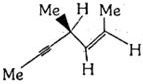
A
Optically active compound
B
Optically inactive compound
C
Racemic mixture
D
Diastereomeric mixture
Solution
(A) The hydrogenation of an alkyne using a poisoned palladium catalyst (Lindlar's catalyst) results in the formation of a $cis$-alkene.
In the given molecule,there is a chiral center adjacent to the alkyne group.
The hydrogenation process reduces the triple bond to a $cis$-double bond without affecting the existing chiral center.
Since the starting material is a single enantiomer and the reaction does not involve the chiral center,the product remains a single enantiomer.
Therefore,the resulting product is an optically active compound.
In the given molecule,there is a chiral center adjacent to the alkyne group.
The hydrogenation process reduces the triple bond to a $cis$-double bond without affecting the existing chiral center.
Since the starting material is a single enantiomer and the reaction does not involve the chiral center,the product remains a single enantiomer.
Therefore,the resulting product is an optically active compound.
0 likes
View Solution229
MediumMCQ
What is the increasing order of acidity for the following substances?
$(1)$ $CH_2=CH_2$
$(2)$ $CH_3-CH_3$
$(3)$ $HC \equiv CH$
$(4)$ $NH_3$
$(1)$ $CH_2=CH_2$
$(2)$ $CH_3-CH_3$
$(3)$ $HC \equiv CH$
$(4)$ $NH_3$
A
$2 < 1 < 4 < 3$
B
$2 < 1 < 3 < 4$
C
$4 < 3 < 1 < 2$
D
$2 < 3 < 1 < 4$
Solution
(A) The acidity of a compound depends on the stability of its conjugate base. The more stable the conjugate base,the stronger the acid.
$(1)$ $CH_2=CH_2$ (ethene): $sp^2$ hybridized carbon,conjugate base is $CH_2=CH^-$,$pKa \approx 44$.
$(2)$ $CH_3-CH_3$ (ethane): $sp^3$ hybridized carbon,conjugate base is $CH_3-CH_2^-$,$pKa \approx 50$.
$(3)$ $HC \equiv CH$ (ethyne): $sp$ hybridized carbon,conjugate base is $HC \equiv C^-$,$pKa \approx 25$.
$(4)$ $NH_3$ (ammonia): conjugate base is $NH_2^-$,$pKa \approx 38$.
Comparing the $pKa$ values (lower $pKa$ means higher acidity): $50 (2) < 44 (1) < 38 (4) < 25 (3)$.
Therefore,the increasing order of acidity is $2 < 1 < 4 < 3$.
$(1)$ $CH_2=CH_2$ (ethene): $sp^2$ hybridized carbon,conjugate base is $CH_2=CH^-$,$pKa \approx 44$.
$(2)$ $CH_3-CH_3$ (ethane): $sp^3$ hybridized carbon,conjugate base is $CH_3-CH_2^-$,$pKa \approx 50$.
$(3)$ $HC \equiv CH$ (ethyne): $sp$ hybridized carbon,conjugate base is $HC \equiv C^-$,$pKa \approx 25$.
$(4)$ $NH_3$ (ammonia): conjugate base is $NH_2^-$,$pKa \approx 38$.
Comparing the $pKa$ values (lower $pKa$ means higher acidity): $50 (2) < 44 (1) < 38 (4) < 25 (3)$.
Therefore,the increasing order of acidity is $2 < 1 < 4 < 3$.
0 likes
View Solution230
MediumMCQ
Identify $Z$ in the following sequence:
$C_3H_7OH$ $\xrightarrow{H_2SO_4} X$ $\xrightarrow{Br_2} Y$ $\xrightarrow{KOH} Z$
$C_3H_7OH$ $\xrightarrow{H_2SO_4} X$ $\xrightarrow{Br_2} Y$ $\xrightarrow{KOH} Z$
A
$CH_3-CH(NH_2)-CH_2(NH_2)$
B
$CH_3-CH(OH)-CH_2(OH)$
C
$CH_3-C(OH)=CH_2$
D
$CH_3-C \equiv CH$
Solution
(D) $1$. Dehydration of propan$-1-$ol $(C_3H_7OH)$ with conc. $H_2SO_4$ gives propene $(X)$: $CH_3CH_2CH_2OH \xrightarrow{H_2SO_4} CH_3CH=CH_2 + H_2O$.
$2$. Bromination of propene $(X)$ gives $1,2-$dibromopropane $(Y)$: $CH_3CH=CH_2 + Br_2 \rightarrow CH_3CH(Br)CH_2Br$.
$3$. Dehydrohalogenation of $1,2-$dibromopropane $(Y)$ with alcoholic $KOH$ gives propyne $(Z)$: $CH_3CH(Br)CH_2Br \xrightarrow{KOH(alc.)} CH_3-C \equiv CH + 2HBr$.
$2$. Bromination of propene $(X)$ gives $1,2-$dibromopropane $(Y)$: $CH_3CH=CH_2 + Br_2 \rightarrow CH_3CH(Br)CH_2Br$.
$3$. Dehydrohalogenation of $1,2-$dibromopropane $(Y)$ with alcoholic $KOH$ gives propyne $(Z)$: $CH_3CH(Br)CH_2Br \xrightarrow{KOH(alc.)} CH_3-C \equiv CH + 2HBr$.
0 likes
View Solution231
MediumMCQ
What is the product formed by the hydration of propyne in the presence of $H_2SO_4$ and $HgSO_4$?
A
Acetone
B
Propane
C
Propene
D
Formaldehyde
Solution
(A) The hydration of propyne $(CH_3-C \equiv CH)$ in the presence of $H_2SO_4$ and $HgSO_4$ follows Markovnikov's addition of water across the triple bond.
First,an unstable enol intermediate $(CH_3-C(OH)=CH_2)$ is formed.
This enol undergoes tautomerization to form a stable ketone.
Reaction: $CH_3-C \equiv CH + H_2O \xrightarrow{H_2SO_4, HgSO_4} CH_3-C(OH)=CH_2 \rightleftharpoons CH_3-CO-CH_3$ (Acetone).
First,an unstable enol intermediate $(CH_3-C(OH)=CH_2)$ is formed.
This enol undergoes tautomerization to form a stable ketone.
Reaction: $CH_3-C \equiv CH + H_2O \xrightarrow{H_2SO_4, HgSO_4} CH_3-C(OH)=CH_2 \rightleftharpoons CH_3-CO-CH_3$ (Acetone).
0 likes
View Solution232
MediumMCQ
What is $A$?
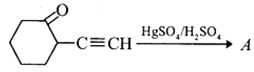
A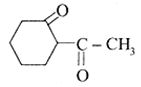
B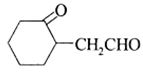
C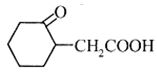
D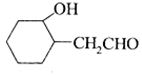
Solution
(C) The reaction of an alkyne with $HgSO_4/H_2SO_4$ is a hydration reaction.
In this reaction,the triple bond is converted into an enol intermediate,which then undergoes tautomerization to form a stable aldehyde or ketone.
For the given substrate,the terminal alkyne group $-C \equiv CH$ attached to the cyclohexanone ring undergoes hydration to form an enol,which tautomerizes to the aldehyde $-CH_2CHO$ group.
Thus,the final product $A$ is $2-$($2$-oxocyclohexyl)acetaldehyde.
In this reaction,the triple bond is converted into an enol intermediate,which then undergoes tautomerization to form a stable aldehyde or ketone.
For the given substrate,the terminal alkyne group $-C \equiv CH$ attached to the cyclohexanone ring undergoes hydration to form an enol,which tautomerizes to the aldehyde $-CH_2CHO$ group.
Thus,the final product $A$ is $2-$($2$-oxocyclohexyl)acetaldehyde.
0 likes
View Solution233
MediumMCQ
$HC \equiv CH$ $\xrightarrow[20\% \ H_2SO_4]{1\% \ HgSO_4} A$ $\xrightarrow{CH_3MgX} B$ $\xrightarrow{[O]} ?$
What is the final product of the above reaction sequence?
What is the final product of the above reaction sequence?
A
Acetic acid
B
Isopropyl alcohol
C
Acetone
D
Ethanol
Solution
(C) $1$. The hydration of ethyne $(HC \equiv CH)$ in the presence of $1\% \ HgSO_4$ and $20\% \ H_2SO_4$ (Kuccherov reaction) yields acetaldehyde $(CH_3CHO)$ as product $A$.
$2$. The reaction of acetaldehyde $(CH_3CHO)$ with a Grignard reagent $(CH_3MgX)$ followed by hydrolysis yields a secondary alcohol,propan$-2-$ol $(CH_3-CH(OH)-CH_3)$ as product $B$.
$3$. The oxidation $([O])$ of propan$-2-$ol yields acetone $(CH_3-CO-CH_3)$.
$2$. The reaction of acetaldehyde $(CH_3CHO)$ with a Grignard reagent $(CH_3MgX)$ followed by hydrolysis yields a secondary alcohol,propan$-2-$ol $(CH_3-CH(OH)-CH_3)$ as product $B$.
$3$. The oxidation $([O])$ of propan$-2-$ol yields acetone $(CH_3-CO-CH_3)$.
0 likes
View Solution234
MediumMCQ
What is the product obtained from the oxymercuration of $1-butyne$ using $HgSO_4$ and $H_2SO_4$?
A
$CH_3CH_2COCH_3$
B
$CH_3CH_2CH_2CHO$
C
$CH_3CH_2CHO + HCHO$
D
$CH_3CH_2COOH + HCHO$
Solution
(A) The hydration of $1-butyne$ $(CH_3CH_2C \equiv CH)$ in the presence of $HgSO_4$ and $H_2SO_4$ follows Markovnikov's rule.
First,an enol intermediate is formed: $CH_3CH_2C(OH)=CH_2$.
This enol undergoes tautomerization to form a more stable ketone.
The final product is $CH_3CH_2COCH_3$ $(2-butanone)$.
First,an enol intermediate is formed: $CH_3CH_2C(OH)=CH_2$.
This enol undergoes tautomerization to form a more stable ketone.
The final product is $CH_3CH_2COCH_3$ $(2-butanone)$.
0 likes
View Solution235
EasyMCQ
The number and type of bonds between two carbon atoms in $CaC_2$ are:
A
One sigma $(\sigma)$ and one pi $(\pi)$ bond
B
One sigma $(\sigma)$ and two pi $(\pi)$ bonds
C
One sigma $(\sigma)$ and one and a half pi $(\pi)$ bonds
D
One sigma $(\sigma)$ bond
Solution
(B) $CaC_2$ is an ionic compound consisting of $Ca^{2+}$ and $C_2^{2-}$ ions.
The structure of the acetylide ion $[C_2]^{2-}$ is $[:C \equiv C:]^{2-}$.
In a triple bond,there is one sigma $(\sigma)$ bond and two pi $(\pi)$ bonds.
The structure of the acetylide ion $[C_2]^{2-}$ is $[:C \equiv C:]^{2-}$.
In a triple bond,there is one sigma $(\sigma)$ bond and two pi $(\pi)$ bonds.
0 likes
View Solution236
DifficultMCQ
In order to complete the reaction $1-Pentyne$ $\xrightarrow{a} 4-Octyne$ $\xrightarrow{b} cis-4-Octene$,$a$ and $b$ will be:
$A) NaNH_2; CH_3CH_2CH_2Br : H_2, (1 \ mole) \text{ Lindlar catalyst}$
$B) NaNH_2; CH_3CH_2CH_2Br : H_2, (2 \ moles) \text{ Pd or Ni}$
$C) NaNH_2; CH_3CH_2CH_2Br : H_2, (1 \ mole) \text{ Pd or Ni}$
$D) NaNH_2; CH_3CH_2CH_2Br : BH_3, H_2O_2, OH^-$
$A) NaNH_2; CH_3CH_2CH_2Br : H_2, (1 \ mole) \text{ Lindlar catalyst}$
$B) NaNH_2; CH_3CH_2CH_2Br : H_2, (2 \ moles) \text{ Pd or Ni}$
$C) NaNH_2; CH_3CH_2CH_2Br : H_2, (1 \ mole) \text{ Pd or Ni}$
$D) NaNH_2; CH_3CH_2CH_2Br : BH_3, H_2O_2, OH^-$
A
$A$
B
$B$
C
$C$
D
$D$
Solution
(A) Step $1$: $1-Pentyne$ $(CH_3CH_2CH_2C \equiv CH)$ reacts with $NaNH_2$ to form the acetylide ion $(CH_3CH_2CH_2C \equiv C^- Na^+)$.
Step $2$: This nucleophile reacts with $n-propyl \ bromide$ $(CH_3CH_2CH_2Br)$ via $S_N2$ mechanism to yield $4-Octyne$ $(CH_3CH_2CH_2C \equiv CCH_2CH_2CH_3)$.
Step $3$: To reduce an internal alkyne to a $cis-alkene$,we use $H_2$ with a poisoned catalyst like $Lindlar \ catalyst$ ($Pd/CaCO_3/PbO$ or $Pd/BaSO_4$).
Thus,$a$ is $NaNH_2; CH_3CH_2CH_2Br$ and $b$ is $H_2, (1 \ mole) \text{ Lindlar catalyst}$.
Step $2$: This nucleophile reacts with $n-propyl \ bromide$ $(CH_3CH_2CH_2Br)$ via $S_N2$ mechanism to yield $4-Octyne$ $(CH_3CH_2CH_2C \equiv CCH_2CH_2CH_3)$.
Step $3$: To reduce an internal alkyne to a $cis-alkene$,we use $H_2$ with a poisoned catalyst like $Lindlar \ catalyst$ ($Pd/CaCO_3/PbO$ or $Pd/BaSO_4$).
Thus,$a$ is $NaNH_2; CH_3CH_2CH_2Br$ and $b$ is $H_2, (1 \ mole) \text{ Lindlar catalyst}$.
0 likes
View Solution237
DifficultMCQ
When ethyl bromide reacts with sodium acetylide,the main product is:
A
but$-1-$yne
B
but$-1-$ene
C
but$-2-$yne
D
but$-2-$ene
Solution
(A) The reaction between ethyl bromide $(C_2H_5Br)$ and sodium acetylide $(NaC \equiv CH)$ is a nucleophilic substitution reaction $(S_N2)$.
In this reaction,the acetylide ion $(C \equiv CH^-)$ acts as a nucleophile and attacks the ethyl bromide,displacing the bromide ion.
The chemical equation is:
$C_2H_5Br + NaC \equiv CH \to C_2H_5C \equiv CH + NaBr$
The product formed is $C_2H_5-C \equiv CH$,which is $but-1-yne$.
In this reaction,the acetylide ion $(C \equiv CH^-)$ acts as a nucleophile and attacks the ethyl bromide,displacing the bromide ion.
The chemical equation is:
$C_2H_5Br + NaC \equiv CH \to C_2H_5C \equiv CH + NaBr$
The product formed is $C_2H_5-C \equiv CH$,which is $but-1-yne$.
0 likes
View Solution238
DifficultMCQ
Which one is the correct order of acidity?
A
$CH \equiv CH > CH_3-C \equiv CH > CH_2=CH_2 > CH_3-CH_3$
B
$CH \equiv CH > CH_2=CH_2 > CH_3-C \equiv CH > CH_3-CH_3$
C
$CH_3-CH_3 > CH_2=CH_2 > CH_3-C \equiv CH > CH \equiv CH$
D
$CH_2=CH_2 > CH_3-CH=CH_2 > CH_3-C \equiv CH > CH \equiv CH$
Solution
(A) The acidity of hydrocarbons depends on the hybridization of the carbon atom attached to the acidic hydrogen.
The order of electronegativity of carbon is $sp > sp^2 > sp^3$.
$CH \equiv CH$ ($sp$ hybridized) is the most acidic.
$CH_3-C \equiv CH$ ($sp$ hybridized) is less acidic than $CH \equiv CH$ due to the $+I$ effect of the methyl group.
$CH_2=CH_2$ ($sp^2$ hybridized) is less acidic than alkynes.
$CH_3-CH_3$ ($sp^3$ hybridized) is the least acidic.
Therefore,the correct order is $CH \equiv CH > CH_3-C \equiv CH > CH_2=CH_2 > CH_3-CH_3$.
The order of electronegativity of carbon is $sp > sp^2 > sp^3$.
$CH \equiv CH$ ($sp$ hybridized) is the most acidic.
$CH_3-C \equiv CH$ ($sp$ hybridized) is less acidic than $CH \equiv CH$ due to the $+I$ effect of the methyl group.
$CH_2=CH_2$ ($sp^2$ hybridized) is less acidic than alkynes.
$CH_3-CH_3$ ($sp^3$ hybridized) is the least acidic.
Therefore,the correct order is $CH \equiv CH > CH_3-C \equiv CH > CH_2=CH_2 > CH_3-CH_3$.
0 likes
View Solution239
MediumMCQ
Predict the correct intermediate and product in the following reaction: $CH_3-C \equiv CH \xrightarrow[HgSO_4]{H_2O, H_2SO_4} \text{Intermediate } (A) \to \text{Product } (B)$
A
$A: CH_3-C(OH)=CH_2, B: CH_3-C(SO_4)=CH_2$
B
$A: CH_3-C(=O)-CH_3, B: CH_3-C \equiv CH$
C
$A: CH_3-C(OH)=CH_2, B: CH_3-C(=O)-CH_3$
D
$A: CH_3-C(SO_4)=CH_2, B: CH_3-C(=O)-CH_3$
Solution
(C) In the presence of $HgSO_4$ and $H_2SO_4$,alkynes undergo hydration following Markovnikov's rule.
Propyne $(CH_3-C \equiv CH)$ reacts with water to form an unstable enol intermediate,$CH_3-C(OH)=CH_2$ $(A)$.
This enol then undergoes tautomerization to form the more stable keto form,propanone $CH_3-C(=O)-CH_3$ $(B)$.
$CH_3-C \equiv CH + H_2O \xrightarrow{Hg^{2+}/H^{+}} [CH_3-C(OH)=CH_2] \to CH_3-C(=O)-CH_3$
Propyne $(CH_3-C \equiv CH)$ reacts with water to form an unstable enol intermediate,$CH_3-C(OH)=CH_2$ $(A)$.
This enol then undergoes tautomerization to form the more stable keto form,propanone $CH_3-C(=O)-CH_3$ $(B)$.
$CH_3-C \equiv CH + H_2O \xrightarrow{Hg^{2+}/H^{+}} [CH_3-C(OH)=CH_2] \to CH_3-C(=O)-CH_3$
0 likes
View Solution240
AdvancedMCQ
In the reaction
$HC \equiv CH \xrightarrow[(ii) CH_3CH_2Br]{(i) NaNH_2 / liq. NH_3} X$
$\xrightarrow[(ii) CH_3CH_2Br]{(i) NaNH_2 / liq. NH_3} Y$
$X$ and $Y$ are
$HC \equiv CH \xrightarrow[(ii) CH_3CH_2Br]{(i) NaNH_2 / liq. NH_3} X$
$\xrightarrow[(ii) CH_3CH_2Br]{(i) NaNH_2 / liq. NH_3} Y$
$X$ and $Y$ are
A
$X = 1-$butyne,$Y = 2-$hexyne
B
$X = 1-$butyne,$Y = 3-$hexyne
C
$X = 2-$butyne,$Y = 3-$hexyne
D
$X = 1-$butyne,$Y = 2-$hexyne
Solution
(B) Step $1$: Acetylene $(HC \equiv CH)$ reacts with $NaNH_2$ in liquid $NH_3$ to form the acetylide ion $(HC \equiv C^-Na^+)$,which then undergoes $S_N2$ reaction with $CH_3CH_2Br$ to form $1-$butyne $(X = CH_3CH_2C \equiv CH)$.
Step $2$: $1-$butyne $(CH_3CH_2C \equiv CH)$ reacts with $NaNH_2$ in liquid $NH_3$ to form the butynylide ion $(CH_3CH_2C \equiv C^-Na^+)$,which then undergoes $S_N2$ reaction with $CH_3CH_2Br$ to form $3-$hexyne $(Y = CH_3CH_2C \equiv CCH_2CH_3)$.
Step $2$: $1-$butyne $(CH_3CH_2C \equiv CH)$ reacts with $NaNH_2$ in liquid $NH_3$ to form the butynylide ion $(CH_3CH_2C \equiv C^-Na^+)$,which then undergoes $S_N2$ reaction with $CH_3CH_2Br$ to form $3-$hexyne $(Y = CH_3CH_2C \equiv CCH_2CH_3)$.
0 likes
View Solution241
AdvancedMCQ
Which of the following organic compounds has the same hybridization as its combustion product $(CO_2)$?
A
Ethane
B
Ethyne
C
Ethene
D
Ethanol
Solution
(B) In $CO_2$,the carbon atom is $sp$ hybridized.
Among the given options,Ethyne $(HC \equiv CH)$ also has $sp$ hybridized carbon atoms.
Ethane $(CH_3-CH_3)$ has $sp^3$ hybridization,Ethene $(CH_2=CH_2)$ has $sp^2$ hybridization,and Ethanol $(CH_3-CH_2-OH)$ has $sp^3$ hybridized carbon atoms.
Among the given options,Ethyne $(HC \equiv CH)$ also has $sp$ hybridized carbon atoms.
Ethane $(CH_3-CH_3)$ has $sp^3$ hybridization,Ethene $(CH_2=CH_2)$ has $sp^2$ hybridization,and Ethanol $(CH_3-CH_2-OH)$ has $sp^3$ hybridized carbon atoms.
0 likes
View Solution242
MediumMCQ
Which of the following reagents will be able to distinguish between $but-1-yne$ and $but-2-yne$?
A
$NaNH_2$
B
$HCl$
C
$O_2$
D
$Br_2$
Solution
(A) $But-1-yne$ $(CH_3CH_2C \equiv CH)$ contains a terminal acidic hydrogen atom attached to an $sp$ hybridized carbon atom.
$But-2-yne$ $(CH_3C \equiv CCH_3)$ does not have any terminal acidic hydrogen atom.
$NaNH_2$ is a strong base that can abstract the acidic proton from $but-1-yne$ to form a sodium acetylide salt,whereas $but-2-yne$ does not react with $NaNH_2$.
Reaction: $CH_3CH_2C \equiv CH + NaNH_2 \rightarrow CH_3CH_2C \equiv C^-Na^+ + NH_3$.
Therefore,$NaNH_2$ is the correct reagent to distinguish between them.
$But-2-yne$ $(CH_3C \equiv CCH_3)$ does not have any terminal acidic hydrogen atom.
$NaNH_2$ is a strong base that can abstract the acidic proton from $but-1-yne$ to form a sodium acetylide salt,whereas $but-2-yne$ does not react with $NaNH_2$.
Reaction: $CH_3CH_2C \equiv CH + NaNH_2 \rightarrow CH_3CH_2C \equiv C^-Na^+ + NH_3$.
Therefore,$NaNH_2$ is the correct reagent to distinguish between them.
0 likes
View Solution243
MediumMCQ
Predict the product $C$ obtained in the following reaction of $1-$butyne: $CH_3-CH_2-C \equiv CH + HCl$ $\rightarrow B$ $\xrightarrow{HI} C$
A
$CH_3-CH_2-CH_2-CH(I)(Cl)$
B
$CH_3-CH_2-CH(I)-CH_2Cl$
C
$CH_3-CH_2-C(I)(Cl)-CH_3$
D
$CH_3-CH(Cl)-CH_2-CH_2I$
Solution
(C) In the reaction of $1-$butyne with $HCl$,Markovnikov addition occurs to form $2-$chloro-$1-$butene $(B)$.
Subsequent addition of $HI$ to $B$ also follows Markovnikov's rule,where the iodine atom attaches to the carbon already containing the chlorine atom,resulting in $2-$chloro-$2-$iodobutane $(C)$.
Reaction:
$CH_3-CH_2-C \equiv CH + HCl \rightarrow CH_3-CH_2-CCl=CH_2 (B)$
$CH_3-CH_2-CCl=CH_2 + HI \rightarrow CH_3-CH_2-C(I)(Cl)-CH_3 (C)$
Subsequent addition of $HI$ to $B$ also follows Markovnikov's rule,where the iodine atom attaches to the carbon already containing the chlorine atom,resulting in $2-$chloro-$2-$iodobutane $(C)$.
Reaction:
$CH_3-CH_2-C \equiv CH + HCl \rightarrow CH_3-CH_2-CCl=CH_2 (B)$
$CH_3-CH_2-CCl=CH_2 + HI \rightarrow CH_3-CH_2-C(I)(Cl)-CH_3 (C)$
0 likes
View Solution244
DifficultMCQ
Which of the following reactions will yield $2, 2-$dibromopropane?
A
$CH_3-CH=CH_2 + HBr \rightarrow$
B
$CH_3-C \equiv CH + 2HBr \rightarrow$
C
$CH_3-CH=CHBr + HBr \rightarrow$
D
$CH \equiv CH + 2HBr \rightarrow$
Solution
(B) The reaction of propyne $(CH_3-C \equiv CH)$ with two equivalents of $HBr$ follows Markovnikov's rule.
In the first step,$H^+$ adds to the terminal carbon and $Br^-$ to the middle carbon to form $2-$bromopropene $(CH_3-C(Br)=CH_2)$.
In the second step,another $HBr$ adds following the same rule to form $2, 2-$dibromopropane $(CH_3-C(Br)_2-CH_3)$.
Reaction:
$CH_3-C \equiv CH + HBr$ $\rightarrow CH_3-C(Br)=CH_2$ $\xrightarrow{HBr} CH_3-C(Br)_2-CH_3$
In the first step,$H^+$ adds to the terminal carbon and $Br^-$ to the middle carbon to form $2-$bromopropene $(CH_3-C(Br)=CH_2)$.
In the second step,another $HBr$ adds following the same rule to form $2, 2-$dibromopropane $(CH_3-C(Br)_2-CH_3)$.
Reaction:
$CH_3-C \equiv CH + HBr$ $\rightarrow CH_3-C(Br)=CH_2$ $\xrightarrow{HBr} CH_3-C(Br)_2-CH_3$
0 likes
View Solution245
MediumMCQ
The hydrocarbon which can react with sodium in liquid ammonia is
A
$CH_3CH_2CH_2C \equiv CCH_2CH_2CH_3$
B
$CH_3CH_2C \equiv CH$
C
$CH_3CH \equiv CHCH_3$
D
$CH_3CH_2C \equiv CCH_2CH_3$
Solution
(B) Terminal alkynes contain an acidic hydrogen atom attached to an $sp$-hybridized carbon atom.
These acidic protons can be removed by strong bases like sodium metal in liquid ammonia ($NaNH_2$ is formed in situ or sodium acts as a reducing agent for the proton) to form sodium acetylides.
Among the given options,$CH_3CH_2C \equiv CH$ is a terminal alkyne,whereas the others are internal alkynes.
Therefore,$CH_3CH_2C \equiv CH$ reacts with sodium in liquid ammonia.
These acidic protons can be removed by strong bases like sodium metal in liquid ammonia ($NaNH_2$ is formed in situ or sodium acts as a reducing agent for the proton) to form sodium acetylides.
Among the given options,$CH_3CH_2C \equiv CH$ is a terminal alkyne,whereas the others are internal alkynes.
Therefore,$CH_3CH_2C \equiv CH$ reacts with sodium in liquid ammonia.
0 likes
View Solution246
MediumMCQ
The treatment of $CH_3MgX$ with $CH_3-C \equiv CH$ produces
A
$CH_3-CH=CH_2$
B
$CH_3-C \equiv C-CH_3$
C
$CH_3-CH=CH-CH_3$
D
$CH_4$
Solution
(D) $CH_3MgX$ is a Grignard reagent,which acts as a strong base.
Terminal alkynes like $CH_3-C \equiv CH$ contain an acidic hydrogen atom attached to the $sp$-hybridized carbon.
The Grignard reagent abstracts this acidic proton to form an alkane.
The reaction is: $CH_3MgX + CH_3-C \equiv CH \rightarrow CH_4 + CH_3-C \equiv C-MgX$.
Therefore,the product formed is methane $(CH_4)$.
Terminal alkynes like $CH_3-C \equiv CH$ contain an acidic hydrogen atom attached to the $sp$-hybridized carbon.
The Grignard reagent abstracts this acidic proton to form an alkane.
The reaction is: $CH_3MgX + CH_3-C \equiv CH \rightarrow CH_4 + CH_3-C \equiv C-MgX$.
Therefore,the product formed is methane $(CH_4)$.
0 likes
View Solution247
DifficultMCQ
$2-$Hexyne gives $trans-2-$hexene on treatment with:
A
$Pt/H_2$
B
$Li/NH_3$
C
$Pd/BaSO_4$
D
$LiAlH_4$
Solution
(B) The reduction of internal alkynes to $trans-$alkenes is achieved using alkali metals (like $Li$ or $Na$) in liquid ammonia $(NH_3)$.
This is known as Birch reduction or dissolving metal reduction.
$CH_3-C \equiv C-CH_2-CH_2-CH_3 \xrightarrow{Li/NH_3} \text{trans-}2\text{-hexene}$.
$Pt/H_2$ and $Pd/BaSO_4$ (Lindlar catalyst) typically result in the formation of $cis-$alkenes or complete reduction to alkanes.
This is known as Birch reduction or dissolving metal reduction.
$CH_3-C \equiv C-CH_2-CH_2-CH_3 \xrightarrow{Li/NH_3} \text{trans-}2\text{-hexene}$.
$Pt/H_2$ and $Pd/BaSO_4$ (Lindlar catalyst) typically result in the formation of $cis-$alkenes or complete reduction to alkanes.
0 likes
View Solution248
DifficultMCQ
The major organic compound formed by the reaction of $1, 1, 1-$trichloroethane with silver powder is:
A
Acetylene
B
Ethene
C
$2-$Butyne
D
$2-$Butene
Solution
(C) The reaction of $1, 1, 1-$trichloroethane $(CH_3-CCl_3)$ with silver powder $(Ag)$ is a dehalogenation reaction.
When $2$ moles of $1, 1, 1-$trichloroethane react with $6$ moles of silver powder,it undergoes coupling to form $2-$butyne.
The chemical equation is: $2 CH_3-CCl_3 + 6 Ag \rightarrow CH_3-C \equiv C-CH_3 + 6 AgCl$.
When $2$ moles of $1, 1, 1-$trichloroethane react with $6$ moles of silver powder,it undergoes coupling to form $2-$butyne.
The chemical equation is: $2 CH_3-CCl_3 + 6 Ag \rightarrow CH_3-C \equiv C-CH_3 + 6 AgCl$.
0 likes
View Solution249
MediumMCQ
Which of the following compounds does not release $CO_2$ on oxidative ozonolysis?
A
$But-1-ene$
B
$But-2-yne$
C
$Propyne$
D
$Ethene$
Solution
(B) Oxidative ozonolysis of terminal alkenes and terminal alkynes releases $CO_2$ gas.
$But-1-ene$ $(CH_3CH_2CH=CH_2)$ is a terminal alkene,so it releases $CO_2$.
$Propyne$ $(CH_3C\equiv CH)$ is a terminal alkyne,so it releases $CO_2$.
$Ethene$ $(CH_2=CH_2)$ is a terminal alkene,so it releases $CO_2$.
$But-2-yne$ $(CH_3C\equiv CCH_3)$ is an internal alkyne; upon oxidative ozonolysis,it yields two moles of acetic acid $(CH_3COOH)$ and does not release $CO_2$.
$But-1-ene$ $(CH_3CH_2CH=CH_2)$ is a terminal alkene,so it releases $CO_2$.
$Propyne$ $(CH_3C\equiv CH)$ is a terminal alkyne,so it releases $CO_2$.
$Ethene$ $(CH_2=CH_2)$ is a terminal alkene,so it releases $CO_2$.
$But-2-yne$ $(CH_3C\equiv CCH_3)$ is an internal alkyne; upon oxidative ozonolysis,it yields two moles of acetic acid $(CH_3COOH)$ and does not release $CO_2$.
0 likes
View Solution250
MediumMCQ
Which of the following carbides will produce propyne on hydrolysis?
A
$CaC_2$
B
$Al_4C_3$
C
$Mg_2C_3$
D
$Be_2C$
Solution
(C) Propyne $(CH_3C \equiv CH)$ is produced by the hydrolysis of magnesium carbide $(Mg_2C_3)$.
The chemical reaction is as follows:
$Mg_2C_3 + 4H_2O \rightarrow CH_3C \equiv CH + 2Mg(OH)_2$
$CaC_2$ produces ethyne $(C_2H_2)$,while $Al_4C_3$ and $Be_2C$ produce methane $(CH_4)$.
Conclusion: Hence,the answer option $(C)$ is correct.
The chemical reaction is as follows:
$Mg_2C_3 + 4H_2O \rightarrow CH_3C \equiv CH + 2Mg(OH)_2$
$CaC_2$ produces ethyne $(C_2H_2)$,while $Al_4C_3$ and $Be_2C$ produce methane $(CH_4)$.
Conclusion: Hence,the answer option $(C)$ is correct.
0 likes
View SolutionHydrocarbons — Alkyne · Frequently Asked Questions
1Are these Hydrocarbons questions useful for JEE and NEET?
Yes. All questions in this section are mapped to JEE Main and NEET exam patterns. Previous year questions from JEE Main, NEET, GUJCET and state-level exams are included with full solutions.
2Can I switch to Hindi or Gujarati for these questions?
Yes. Use the language tabs in the hero section or the sidebar to view the same questions and solutions in English, Hindi or Gujarati.
3How do I generate a question paper from this subtopic?
Use the Vedclass Exam Paper Generator — select the chapter and subtopic, set difficulty, and generate Sets A, B, C, D automatically. First 3 chapters of every subject are free.
Vedclass Products
For Students
Vedclass Test Series
Mock tests in real JEE/NEET style with performance analysis. 5-day free trial.
Start Free TrialFor Teachers
Exam Paper Generator
Generate Set A/B/C/D papers from this chapter in 2 minutes. 3 chapters free.
Try FreeFor Institutes
Online Exam Module
Live online exams with unlimited students, 360° analytics & white-label branding.
See DemoFor Teachers & Institutes
Generate a Hydrocarbons Exam Paper in 2 Minutes
Select subtopic & difficulty — Sets A, B, C, D auto-generated with No Repeat logic.
First 3 chapters of every subject are free — no payment required.