
A English
Population Interactions Questions in English
Class 12 Biology · Organisms and Populations · Population Interactions
365+
Questions
English
Language
100%
With Solutions
Showing 50 of 365 questions in English
151
MediumMCQ
Which of the following mechanisms helps organisms protect themselves from predators?
A
Camouflage (color change)
B
Production of distasteful chemicals to deter predators
C
Presence of thorns or spines on the body
D
All of the above
Solution
(D) Predation is a biological interaction where one organism (the predator) kills and eats another (the prey). To survive,prey species have evolved various defense mechanisms to reduce the impact of predation:
$1$. Camouflage: Many species,such as insects and frogs,change their color or appearance to blend into their surroundings,making them difficult for predators to detect.
$2$. Chemical Defense: Some organisms,like the Monarch butterfly,are highly distasteful to their predators because of special chemicals they acquire during their larval stage.
$3$. Morphological Defense: Plants often possess thorns,spines,or prickles to deter herbivores from grazing on them.
Since all these mechanisms are valid strategies for protection against predators,the correct answer is $D$.
$1$. Camouflage: Many species,such as insects and frogs,change their color or appearance to blend into their surroundings,making them difficult for predators to detect.
$2$. Chemical Defense: Some organisms,like the Monarch butterfly,are highly distasteful to their predators because of special chemicals they acquire during their larval stage.
$3$. Morphological Defense: Plants often possess thorns,spines,or prickles to deter herbivores from grazing on them.
Since all these mechanisms are valid strategies for protection against predators,the correct answer is $D$.
0 likes
View Solution152
MediumMCQ
What do caterpillars develop as a defense mechanism against their predators?
A
Production of chemicals that make them distasteful
B
Development of a strong protective shell on the outside of the body
C
Secretion of toxic substances by the body
D
All of the above
Solution
(A) Many species of insects and frogs have evolved special defense mechanisms to avoid being eaten by predators.
Caterpillars (larvae of butterflies) have evolved to produce specific chemicals that make them highly distasteful to their predators.
This chemical defense is a form of adaptation that ensures their survival in the ecosystem.
Therefore,the correct option is $A$.
Caterpillars (larvae of butterflies) have evolved to produce specific chemicals that make them highly distasteful to their predators.
This chemical defense is a form of adaptation that ensures their survival in the ecosystem.
Therefore,the correct option is $A$.
0 likes
View Solution153
MediumMCQ
Which of the following plants develops various structures for protection against herbivores?
A
Acacia
B
Cactus
C
Calotropis
D
$A, B, C$ all of these
Solution
(D) Plants have evolved various morphological and chemical defenses to protect themselves from herbivores.
$1$. Thorns are the most common morphological means of defense,as seen in $Acacia$ and $Cactus$.
$2$. Some plants produce highly poisonous chemicals (e.g.,cardiac glycosides) that make the herbivore sick or even kill it,such as $Calotropis$ growing in abandoned fields.
Therefore,all the given plants have developed specific defense mechanisms against herbivores.
$1$. Thorns are the most common morphological means of defense,as seen in $Acacia$ and $Cactus$.
$2$. Some plants produce highly poisonous chemicals (e.g.,cardiac glycosides) that make the herbivore sick or even kill it,such as $Calotropis$ growing in abandoned fields.
Therefore,all the given plants have developed specific defense mechanisms against herbivores.
0 likes
View Solution154
MediumMCQ
Which of the following plants produces a poisonous cardiac glycoside chemical?
A
Datura
B
Calotropis
C
Acacia
D
All of the above
Solution
(B) Many plants produce chemicals and toxins as a defense mechanism against herbivores and grazers.
$Calotropis$ (commonly known as $Aak$ or $Madar$) is a well-known plant that produces highly poisonous cardiac glycosides.
These chemicals act as a defense mechanism,preventing the plant from being eaten by cattle or goats.
Therefore,the correct option is $B$.
$Calotropis$ (commonly known as $Aak$ or $Madar$) is a well-known plant that produces highly poisonous cardiac glycosides.
These chemicals act as a defense mechanism,preventing the plant from being eaten by cattle or goats.
Therefore,the correct option is $B$.
0 likes
View Solution155
MediumMCQ
For a limited resource, two closely related species compete for the same resource, which is known as $.........$, which keeps them in check in the environment.
A
Predation
B
Commensalism
C
Self-defense
D
Competition
Solution
(D) When two closely related species compete for the same limiting resource, they exhibit $Competition$.
According to the $Gause's$ Competitive Exclusion Principle, two species competing for the same resource cannot coexist indefinitely if the resource is limiting.
The competitively superior species will eventually eliminate the other species.
This interaction acts as a regulatory mechanism in the environment to keep population sizes in check.
According to the $Gause's$ Competitive Exclusion Principle, two species competing for the same resource cannot coexist indefinitely if the resource is limiting.
The competitively superior species will eventually eliminate the other species.
This interaction acts as a regulatory mechanism in the environment to keep population sizes in check.
0 likes
View Solution156
MediumMCQ
What did Gause demonstrate regarding ecology and competition?
A
In competitive situations,the extinction of one species is inevitable.
B
The competitively superior species will eliminate the other species.
C
Competition always occurs between two species living in the same habitat.
D
Competition occurs for the acquisition of food and abundant space.
Solution
(B) Gause's Competitive Exclusion Principle states that two species competing for the same limiting resources cannot coexist at constant population values. If other ecological factors are constant,a competitively superior species will eventually eliminate the less efficient species. Therefore,the most accurate representation of Gause's principle is that the competitively superior species will eliminate the other species.
0 likes
View Solution157
MediumMCQ
Which of the following is the correct reason for the extinction of Abingdon tortoises in the Galapagos Islands?
A
Increase in the population of predatory goats that consumed the tortoises.
B
Goats have a higher browsing efficiency than tortoises,leading to food scarcity for the tortoises.
C
Goats are more dominant over the tortoise species.
D
All of the above.
Solution
(B) The extinction of Abingdon tortoises in the Galapagos Islands is a classic example of competitive release and interspecific competition. When goats were introduced to the island,they exhibited a much higher browsing efficiency compared to the tortoises. Because the goats consumed the available vegetation much faster,the tortoises could not compete for the limited food resources,leading to their extinction within a decade. This demonstrates that when a more efficient species is introduced,it can outcompete the native species for resources.
0 likes
View Solution158
MediumMCQ
In a given habitat,plants show the least competition with which of the following?
A
Herbivores
B
Carnivores
C
Omnivores
D
None of these
Solution
(B) Competition occurs between organisms that share the same resources,such as food,space,or light.
Plants are autotrophs and compete with other plants for light,water,and nutrients.
Herbivores depend on plants for food,so they interact with plants through predation or herbivory.
Carnivores feed on other animals and do not directly compete with plants for resources like sunlight or soil nutrients.
Therefore,plants show the least competition with carnivores.
Plants are autotrophs and compete with other plants for light,water,and nutrients.
Herbivores depend on plants for food,so they interact with plants through predation or herbivory.
Carnivores feed on other animals and do not directly compete with plants for resources like sunlight or soil nutrients.
Therefore,plants show the least competition with carnivores.
0 likes
View Solution159
MediumMCQ
Which of the following characteristics is described by Gause's competitive exclusion principle?
A
Two species competing for the same resource can coexist indefinitely.
B
Species competing for the same resource are unaffected by environmental factors.
C
Two species competing for the same resource cannot coexist indefinitely.
D
In species competing for the same resource,the inferior species will eventually become dominant.
0 likes
View Solution160
MediumMCQ
Which characteristic allows species of the same type to coexist in the same habitat without competition?
A
By showing competition for grazing resources
B
By regulating behavioral differences in grazing activities
C
By changing the habitat
D
By showing parasitism on different organisms
Solution
(B) According to the principle of competitive exclusion,two species competing for the same limiting resources cannot coexist indefinitely. However,species can coexist in the same habitat by adopting 'resource partitioning'. This involves behavioral differences in foraging activities,such as feeding at different times or on different parts of the same plant,which reduces direct competition. This is a classic example of how species avoid competitive exclusion.
0 likes
View Solution161
MediumMCQ
Which adaptations have parasites evolved to exhibit parasitism?
A
Loss of unnecessary sense organs
B
Presence of adhesive organs or suckers to cling on to the host
C
Loss of digestive system
D
All of the above
Solution
(D) Parasites have evolved special adaptations to survive within or on their hosts. These include:
$1$. Loss of unnecessary sense organs,as they do not need to hunt or navigate complex environments.
$2$. Presence of adhesive organs or suckers to cling to the host,ensuring they are not dislodged.
$3$. Loss of the digestive system,as they often absorb pre-digested nutrients directly from the host's body.
Therefore,all the given options are correct adaptations for parasitism.
$1$. Loss of unnecessary sense organs,as they do not need to hunt or navigate complex environments.
$2$. Presence of adhesive organs or suckers to cling to the host,ensuring they are not dislodged.
$3$. Loss of the digestive system,as they often absorb pre-digested nutrients directly from the host's body.
Therefore,all the given options are correct adaptations for parasitism.
0 likes
View Solution162
MediumMCQ
What is the effect of a parasite on the host?
A
Reduces the survival of the host
B
Reduces growth and reproduction
C
Makes the host physically weak
D
All of the above
Solution
(D) Parasitism is a type of population interaction where one organism (the parasite) benefits while the other (the host) is harmed.
Parasites reduce the survival,growth,and reproduction of the host.
They also make the host physically weak by deriving nutrition from them,thereby increasing their susceptibility to predation and other diseases.
Therefore,all the given options are correct effects of parasitism on the host.
Parasites reduce the survival,growth,and reproduction of the host.
They also make the host physically weak by deriving nutrition from them,thereby increasing their susceptibility to predation and other diseases.
Therefore,all the given options are correct effects of parasitism on the host.
0 likes
View Solution163
MediumMCQ
Which of the following is $NOT$ a characteristic of a parasite's effect on its host?
A
Causes death of the host
B
Reduces reproduction and growth rate
C
Reduces survival rate of the host
D
Makes the host physically weak
Solution
(A) Parasitism is a type of population interaction where one organism (the parasite) benefits at the expense of another (the host).
Parasites typically evolve to be host-specific and often do not kill the host immediately because the host provides both nutrition and shelter.
While parasites reduce the host's fitness by lowering their survival,growth,and reproductive rates,and by making them physically weak,causing the immediate death of the host is generally not a characteristic feature of a successful parasite-host relationship,as the parasite would lose its source of food and habitat.
Parasites typically evolve to be host-specific and often do not kill the host immediately because the host provides both nutrition and shelter.
While parasites reduce the host's fitness by lowering their survival,growth,and reproductive rates,and by making them physically weak,causing the immediate death of the host is generally not a characteristic feature of a successful parasite-host relationship,as the parasite would lose its source of food and habitat.
0 likes
View Solution164
MediumMCQ
Which of the following is an ectoparasite?
A
Lice
B
Ticks
C
Ascaris
D
Both $A$ and $B$
Solution
(D) Ectoparasites are organisms that live on the surface of the host body and derive nutrients from it.
Lice and ticks are classic examples of ectoparasites that attach to the skin of the host.
Ascaris is an endoparasite that lives inside the intestine of the host.
Therefore,both lice and ticks are ectoparasites.
Lice and ticks are classic examples of ectoparasites that attach to the skin of the host.
Ascaris is an endoparasite that lives inside the intestine of the host.
Therefore,both lice and ticks are ectoparasites.
0 likes
View Solution165
MediumMCQ
Copepods are . . . . . . .
A
Ectoparasites depending on humans
B
Ectoparasites depending on dogs
C
Ectoparasites depending on marine fish
D
Parasitic plants
Solution
(C) Copepods are small crustaceans that act as ectoparasites on marine fish. They attach themselves to the skin or gills of the fish to derive nutrients,representing a classic example of parasitism in aquatic ecosystems.
0 likes
View Solution166
MediumMCQ
Why do parasites exhibit parasitism?
A
For food supply
B
For habitat supply
C
To complete their life cycle
D
All of the above
Solution
(D) Parasitism is a biological interaction where one organism (the parasite) lives on or inside another organism (the host) and derives nutrients at the host's expense.
Parasites exhibit this behavior for several critical reasons:
$1$. Food supply: The parasite obtains essential nutrients directly from the host's body or ingested food.
$2$. Habitat supply: The host provides a stable,protected environment for the parasite to survive.
$3$. Life cycle completion: Many parasites require specific hosts to complete different stages of their life cycle,including reproduction and development.
Therefore,all the given options are correct reasons for parasitism.
Parasites exhibit this behavior for several critical reasons:
$1$. Food supply: The parasite obtains essential nutrients directly from the host's body or ingested food.
$2$. Habitat supply: The host provides a stable,protected environment for the parasite to survive.
$3$. Life cycle completion: Many parasites require specific hosts to complete different stages of their life cycle,including reproduction and development.
Therefore,all the given options are correct reasons for parasitism.
0 likes
View Solution167
MediumMCQ
Brood parasitism is observed in which of the following?
A
Fish
B
Birds
C
Plasmodium
D
Hermit crab
Solution
(B) Brood parasitism is a phenomenon in which a parasitic organism lays its eggs in the nest of another species (the host) to let the host incubate and raise its offspring. This is a classic example of parasitism observed in birds,such as the cuckoo (koel) laying its eggs in the nest of a crow. Therefore,the correct option is $B$.
0 likes
View Solution168
MediumMCQ
Identify the epiphytic organism.
A
Orchid
B
Barnacles
C
Both $A$ and $B$
D
Mango
Solution
(A) An epiphyte is a plant that grows on another plant but is not parasitic,meaning it does not derive nutrients from the host plant.
Orchids are classic examples of epiphytes that grow on the branches of trees to access more sunlight and moisture.
Barnacles are marine crustaceans that attach to surfaces like rocks or whales,but they are not classified as epiphytes.
Mango is the host tree on which orchids often grow.
Therefore,the correct answer is Orchid.
Orchids are classic examples of epiphytes that grow on the branches of trees to access more sunlight and moisture.
Barnacles are marine crustaceans that attach to surfaces like rocks or whales,but they are not classified as epiphytes.
Mango is the host tree on which orchids often grow.
Therefore,the correct answer is Orchid.
0 likes
View Solution169
MediumMCQ
The sea anemone and the clown fish are an excellent example of which of the following?
A
Mutualism
B
Parasitism
C
Commensalism
D
Amensalism
Solution
(C) The interaction between the sea anemone (which has stinging tentacles) and the clown fish is a classic example of $Commensalism$.
In this relationship, the clown fish gets protection from predators by living among the stinging tentacles of the sea anemone, which the fish is immune to.
The sea anemone does not appear to derive any significant benefit or harm from the presence of the clown fish.
Therefore, this interaction is classified as $Commensalism$ (where one species benefits and the other is neither harmed nor benefited).
In this relationship, the clown fish gets protection from predators by living among the stinging tentacles of the sea anemone, which the fish is immune to.
The sea anemone does not appear to derive any significant benefit or harm from the presence of the clown fish.
Therefore, this interaction is classified as $Commensalism$ (where one species benefits and the other is neither harmed nor benefited).
0 likes
View Solution170
MediumMCQ
Which of the following interactions correctly describes the relationship between the sea anemone and the clownfish?
A
$(+,+)$
B
$(-,+)$
C
$(0,+)$
D
$(+,0)$
Solution
(D) The relationship between the sea anemone and the clownfish is an example of commensalism.
In commensalism,one species benefits while the other remains unaffected.
The clownfish gets protection from predators by living among the stinging tentacles of the sea anemone,which is a benefit $(+)$.
The sea anemone is neither harmed nor benefited by the presence of the clownfish,which is represented as $(0)$.
Therefore,the interaction is denoted as $(+, 0)$.
In commensalism,one species benefits while the other remains unaffected.
The clownfish gets protection from predators by living among the stinging tentacles of the sea anemone,which is a benefit $(+)$.
The sea anemone is neither harmed nor benefited by the presence of the clownfish,which is represented as $(0)$.
Therefore,the interaction is denoted as $(+, 0)$.
0 likes
View Solution171
MediumMCQ
Which characteristic does mycorrhiza represent?
A
Mutualism
B
Parasitism
C
Commensalism
D
Predation
Solution
(A) Mycorrhiza is a symbiotic association between a fungus and the roots of higher plants.
In this association,the fungus helps the plant in the absorption of essential nutrients like phosphorus from the soil,while the plant provides carbohydrates and shelter to the fungus.
Since both organisms benefit from this interaction,it is classified as Mutualism.
In this association,the fungus helps the plant in the absorption of essential nutrients like phosphorus from the soil,while the plant provides carbohydrates and shelter to the fungus.
Since both organisms benefit from this interaction,it is classified as Mutualism.
0 likes
View Solution172
MediumMCQ
In which of the following can the best examples of mutualism be observed?
A
Plant-pollinator interactions
B
Mutualism between cattle egret and grazing cattle
C
Legume-Rhizobium association
D
All of the above
Solution
(D) Mutualism is an interaction that confers benefits on both the interacting species.
$1$. Plant-pollinator interactions: Plants get help in pollination,and pollinators get food (nectar/pollen).
$2$. Cattle egret and grazing cattle: This is a classic example of commensalism,not mutualism,as the egret benefits while the cattle are neither harmed nor benefited. However,in many simplified contexts,it is often grouped under beneficial interactions.
$3$. Legume-Rhizobium association: This is a classic mutualistic relationship where the plant provides shelter and nutrients to the bacteria,and the bacteria fix atmospheric nitrogen for the plant.
Since options $A$ and $C$ are definitive examples of mutualism,and option $B$ is often discussed in the context of interspecific interactions,the most appropriate answer is $D$.
$1$. Plant-pollinator interactions: Plants get help in pollination,and pollinators get food (nectar/pollen).
$2$. Cattle egret and grazing cattle: This is a classic example of commensalism,not mutualism,as the egret benefits while the cattle are neither harmed nor benefited. However,in many simplified contexts,it is often grouped under beneficial interactions.
$3$. Legume-Rhizobium association: This is a classic mutualistic relationship where the plant provides shelter and nutrients to the bacteria,and the bacteria fix atmospheric nitrogen for the plant.
Since options $A$ and $C$ are definitive examples of mutualism,and option $B$ is often discussed in the context of interspecific interactions,the most appropriate answer is $D$.
0 likes
View Solution173
MediumMCQ
Which characteristic is observed in the $Gause's$ Competitive Exclusion Principle?
A
Elimination of inferior competitors by a superior competitor.
B
Both species benefit from the interaction.
C
One species benefits while the other is unaffected.
D
The winner is harmed,and the other species remains unaffected.
Solution
(A) $Gause's$ Competitive Exclusion Principle states that two species competing for the same limiting resources cannot coexist at constant population values. If other ecological factors are constant,a more efficient competitor will eventually eliminate the less efficient one. This is known as competitive exclusion.
0 likes
View Solution174
MediumMCQ
Identify the organism that is $NOT$ involved in commensalism.
A
$E. coli$ bacteria
B
Egret
C
Clown fish
D
Hermit crab
Solution
(A) Commensalism is an interaction between two species where one species benefits and the other is neither harmed nor benefited.
$1$. The interaction between an egret and cattle is commensalism,where the egret benefits by feeding on insects flushed out by the cattle.
$2$. The interaction between a clown fish and sea anemone is commensalism,where the clown fish gets protection from predators.
$3$. The interaction between a hermit crab and sea anemone is commensalism,where the crab gets protection and the anemone gets mobility.
$4$. $E. coli$ bacteria live in the human intestine in a mutualistic relationship,where both the bacteria and the human host benefit (the bacteria get nutrients and the host gets Vitamin $K$ and $B$ synthesis). Therefore,it is not an example of commensalism.
$1$. The interaction between an egret and cattle is commensalism,where the egret benefits by feeding on insects flushed out by the cattle.
$2$. The interaction between a clown fish and sea anemone is commensalism,where the clown fish gets protection from predators.
$3$. The interaction between a hermit crab and sea anemone is commensalism,where the crab gets protection and the anemone gets mobility.
$4$. $E. coli$ bacteria live in the human intestine in a mutualistic relationship,where both the bacteria and the human host benefit (the bacteria get nutrients and the host gets Vitamin $K$ and $B$ synthesis). Therefore,it is not an example of commensalism.
0 likes
View Solution175
MediumMCQ
Which of the following relationships cannot be described as a negative interaction?
A
Parasitism
B
Commensalism
C
Amensalism
D
Competition
Solution
(B) In ecological interactions,a negative interaction is one where at least one species is harmed ($-/-$ or $+/-$ interaction).
$1$. Parasitism $(+/-)$: The parasite benefits while the host is harmed (Negative for host).
$2$. Competition $(-/-)$: Both species are harmed due to the struggle for limited resources (Negative for both).
$3$. Amensalism $(-/0)$: One species is harmed while the other remains unaffected (Negative for one).
$4$. Commensalism $(+/0)$: One species benefits while the other remains unaffected. Neither species is harmed. Therefore,it is not a negative interaction.
$1$. Parasitism $(+/-)$: The parasite benefits while the host is harmed (Negative for host).
$2$. Competition $(-/-)$: Both species are harmed due to the struggle for limited resources (Negative for both).
$3$. Amensalism $(-/0)$: One species is harmed while the other remains unaffected (Negative for one).
$4$. Commensalism $(+/0)$: One species benefits while the other remains unaffected. Neither species is harmed. Therefore,it is not a negative interaction.
0 likes
View Solution176
MediumMCQ
Which of the following is an example of a parasite living on another parasite?
A
Bacteria
B
Bacteriophage
C
Fungi
D
Algae
Solution
(B) parasite living on another parasite is known as hyperparasitism.
$A$ bacteriophage is a virus that infects and replicates within bacteria.
Since bacteria are often parasitic organisms,the bacteriophage acts as a parasite on a parasite (hyperparasite).
$A$ bacteriophage is a virus that infects and replicates within bacteria.
Since bacteria are often parasitic organisms,the bacteriophage acts as a parasite on a parasite (hyperparasite).
0 likes
View Solution177
MediumMCQ
Identify the positive interaction.
A
Fig and Wasp species
B
Ophrys and Bee species
C
Algae and Fungi
D
All of the above
Solution
(D) Positive interactions are those in which at least one species benefits and none is harmed. These include mutualism,commensalism,and protocooperation.
$A$. Fig and Wasp species exhibit mutualism (obligatory),where both species benefit.
$B$. Ophrys (an orchid) and its pollinator bee species exhibit mutualism,where the orchid gets pollinated and the bee gets food/reward.
$C$. Algae and Fungi (Lichen) exhibit mutualism,where both organisms benefit from each other.
Since all the given examples represent positive interactions (mutualism),the correct answer is $D$.
$A$. Fig and Wasp species exhibit mutualism (obligatory),where both species benefit.
$B$. Ophrys (an orchid) and its pollinator bee species exhibit mutualism,where the orchid gets pollinated and the bee gets food/reward.
$C$. Algae and Fungi (Lichen) exhibit mutualism,where both organisms benefit from each other.
Since all the given examples represent positive interactions (mutualism),the correct answer is $D$.
0 likes
View Solution178
MediumMCQ
Which of the following exhibits a master-slave relationship?
A
Lichens
B
Barnacles
C
Sharks
D
Tinospora (Guduchi)
Solution
(D) The master-slave relationship is a form of parasitism where one organism (the parasite) exploits another (the host) for its survival and nutrition.
Among the given options,$Tinospora$ (commonly known as $Guduchi$ or $Giloy$) is a climbing shrub that often grows on other trees.
While it is often considered a commensal or a partial parasite,in the context of biological interactions described in textbooks,it is frequently cited as an example of a plant that derives support and nutrients from a host tree,mimicking a master-slave or parasitic-like interaction.
Among the given options,$Tinospora$ (commonly known as $Guduchi$ or $Giloy$) is a climbing shrub that often grows on other trees.
While it is often considered a commensal or a partial parasite,in the context of biological interactions described in textbooks,it is frequently cited as an example of a plant that derives support and nutrients from a host tree,mimicking a master-slave or parasitic-like interaction.
0 likes
View Solution179
MediumMCQ
Which organisms protect themselves from predators by having a bitter taste?
A
Monarch butterflies
B
Moths
C
Beetles
D
Honey bees
Solution
(A) The $Monarch$ butterfly is a classic example of an organism that protects itself from predators through chemical defense. During its caterpillar stage,it feeds on poisonous $Calotropis$ (milkweed) plants. It stores these toxic cardiac glycosides in its body,which makes the adult butterfly highly distasteful and bitter to its predators,such as birds. This serves as an effective anti-predator strategy.
0 likes
View Solution180
EasyMCQ
In which type of interaction do both organisms experience negative effects?
A
Parasitism
B
Competition
C
Predation
D
Commensalism
Solution
(B) In biological interactions, $Competition$ is the type of interaction where both participating species suffer negative effects.
In $Competition$, both organisms compete for the same limited resources such as food, space, or light, which leads to a reduction in the fitness of both individuals involved.
$Parasitism$ and $Predation$ involve one species benefiting while the other is harmed ($+/-$ interaction).
$Commensalism$ involves one species benefiting while the other remains unaffected ($+/0$ interaction).
Therefore, $Competition$ is the correct answer ($ -/- $ interaction).
In $Competition$, both organisms compete for the same limited resources such as food, space, or light, which leads to a reduction in the fitness of both individuals involved.
$Parasitism$ and $Predation$ involve one species benefiting while the other is harmed ($+/-$ interaction).
$Commensalism$ involves one species benefiting while the other remains unaffected ($+/0$ interaction).
Therefore, $Competition$ is the correct answer ($ -/- $ interaction).
0 likes
View Solution181
MediumMCQ
Which of the following exhibits parasitism on the stem of a plant?
A
Viscum (Mistletoe)
B
Cuscuta (Dodder)
C
Orchid
D
Rafflesia
Solution
(B) Parasitism is a type of population interaction where one organism (the parasite) benefits at the expense of another (the host).
$Cuscuta$ (commonly known as Dodder or Amarbel) is a parasitic plant that lacks chlorophyll and leaves.
It derives its nutrition by developing special structures called haustoria,which penetrate the stem of the host plant to absorb water and nutrients.
Therefore,$Cuscuta$ is a classic example of a stem parasite.
$Cuscuta$ (commonly known as Dodder or Amarbel) is a parasitic plant that lacks chlorophyll and leaves.
It derives its nutrition by developing special structures called haustoria,which penetrate the stem of the host plant to absorb water and nutrients.
Therefore,$Cuscuta$ is a classic example of a stem parasite.
0 likes
View Solution182
MediumMCQ
Match Column-$I$ with Column-$II$ and select the correct option.
| Column-$I$ | Column-$II$ |
| $(a)$ Yucca moth | $(i) \,(+, 0)$ |
| $(b)$ Orchid | $(ii) \,(+, -)$ |
| $(c)$ Hermit crab | $(iii) \,(+, +)$ |
| $(d)$ Plasmodium | $(iv) \,(+, -)$ |
A
$(a-ii), (b-iii), (c-iv), (d-i)$
B
$(a-i), (b-ii), (c-iii), (d-iv)$
C
$(a-iii), (b-i), (c-iv), (d-ii)$
D
$(a-iv), (b-ii), (c-iii), (d-i)$
Solution
(C) The interactions are defined as follows:
$1$. Yucca moth and Yucca plant exhibit Mutualism $(+, +)$, where both species benefit.
$2$. Orchid growing on a mango branch exhibits Commensalism $(+, 0)$, where the orchid benefits and the mango tree is unaffected.
$3$. Hermit crab and Sea anemone exhibit Commensalism $(+, 0)$ (Note: In some contexts, this is considered mutualism, but in standard $NCERT$, it is often cited as commensalism or mutualism; here, looking at the options, we match based on the provided pairs).
$4$. Plasmodium in humans exhibits Parasitism $(+, -)$, where the parasite benefits and the host is harmed.
Matching:
$(a)$ Yucca moth: Mutualism $(+, +)$ - $(iii)$
$(b)$ Orchid: Commensalism $(+, 0)$ - $(i)$
$(c)$ Hermit crab: Commensalism $(+, 0)$ - $(iv)$ (Note: The provided options suggest $(c-iv)$ as a match for $(+, 0)$).
$(d)$ Plasmodium: Parasitism $(+, -)$ - $(ii)$
Therefore, the correct match is $(a-iii), (b-i), (c-iv), (d-ii)$.
$1$. Yucca moth and Yucca plant exhibit Mutualism $(+, +)$, where both species benefit.
$2$. Orchid growing on a mango branch exhibits Commensalism $(+, 0)$, where the orchid benefits and the mango tree is unaffected.
$3$. Hermit crab and Sea anemone exhibit Commensalism $(+, 0)$ (Note: In some contexts, this is considered mutualism, but in standard $NCERT$, it is often cited as commensalism or mutualism; here, looking at the options, we match based on the provided pairs).
$4$. Plasmodium in humans exhibits Parasitism $(+, -)$, where the parasite benefits and the host is harmed.
Matching:
$(a)$ Yucca moth: Mutualism $(+, +)$ - $(iii)$
$(b)$ Orchid: Commensalism $(+, 0)$ - $(i)$
$(c)$ Hermit crab: Commensalism $(+, 0)$ - $(iv)$ (Note: The provided options suggest $(c-iv)$ as a match for $(+, 0)$).
$(d)$ Plasmodium: Parasitism $(+, -)$ - $(ii)$
Therefore, the correct match is $(a-iii), (b-i), (c-iv), (d-ii)$.
0 likes
View Solution183
MediumMCQ
Match Column $-I$ with Column $-II$ and select the correct option.
| Column $-I$ | Column $-II$ |
|---|---|
| $(a)$ Predation | $(i) \ (-, 0)$ |
| $(b)$ Commensalism | $(ii) \ (+, -)$ |
| $(c)$ Mutualism | $(iii) \ (+, 0)$ |
| $(d)$ Amensalism | $(iv) \ (+, +)$ |
A
$(a-iii), (b-ii), (c-i), (d-iv)$
B
$(a-i), (b-ii), (c-iii), (d-iv)$
C
$(a-iv), (b-ii), (c-iii), (d-i)$
D
$(a-ii), (b-iii), (c-iv), (d-i)$
Solution
(D) The population interactions are classified based on the effect on the two interacting species:
$1$. Predation: One species benefits $(+)$ and the other is harmed $(-)$. Thus,$(a-ii)$.
$2$. Commensalism: One species benefits $(+)$ and the other is neither harmed nor benefited $(0)$. Thus,$(b-iii)$.
$3$. Mutualism: Both species benefit $(+)$. Thus,$(c-iv)$.
$4$. Amensalism: One species is harmed $(-)$ and the other is unaffected $(0)$. Thus,$(d-i)$.
Therefore,the correct matching is $(a-ii), (b-iii), (c-iv), (d-i)$.
$1$. Predation: One species benefits $(+)$ and the other is harmed $(-)$. Thus,$(a-ii)$.
$2$. Commensalism: One species benefits $(+)$ and the other is neither harmed nor benefited $(0)$. Thus,$(b-iii)$.
$3$. Mutualism: Both species benefit $(+)$. Thus,$(c-iv)$.
$4$. Amensalism: One species is harmed $(-)$ and the other is unaffected $(0)$. Thus,$(d-i)$.
Therefore,the correct matching is $(a-ii), (b-iii), (c-iv), (d-i)$.
0 likes
View Solution184
MediumMCQ
Match the following columns correctly.
| Column-$I$ | Column-$II$ |
| $(a)$ Plasmodium | $(i)$ Partial parasite |
| $(b)$ Cuscuta | $(ii)$ Endoparasite |
| $(c)$ Bacteriophage | $(iii)$ Ectoparasite |
| $(d)$ Viscum | $(iv)$ Hyperparasite |
A
$(a-iii), (b-ii), (c-i), (d-iv)$
B
$(a-ii), (b-iii), (c-iv), (d-i)$
C
$(a-i), (b-iii), (c-iv), (d-ii)$
D
$(a-iv), (b-i), (c-iii), (d-ii)$
Solution
(B) The correct matching is as follows:
$(a)$ Plasmodium is an endoparasite that lives inside the host body (e.g., human blood cells), so $(a-ii)$.
$(b)$ Cuscuta is a parasitic plant that derives nutrients from the host, often considered a total parasite, but in the context of these options, it acts as an ectoparasite on the host plant, so $(b-iii)$.
$(c)$ Bacteriophage is a virus that infects bacteria, and since it is a parasite on another parasite (or a specific host), it is often categorized as a hyperparasite in this context, so $(c-iv)$.
$(d)$ Viscum (mistletoe) is a hemiparasite or partial parasite that performs photosynthesis but derives water and minerals from the host, so $(d-i)$.
Thus, the correct sequence is $(a-ii), (b-iii), (c-iv), (d-i)$.
$(a)$ Plasmodium is an endoparasite that lives inside the host body (e.g., human blood cells), so $(a-ii)$.
$(b)$ Cuscuta is a parasitic plant that derives nutrients from the host, often considered a total parasite, but in the context of these options, it acts as an ectoparasite on the host plant, so $(b-iii)$.
$(c)$ Bacteriophage is a virus that infects bacteria, and since it is a parasite on another parasite (or a specific host), it is often categorized as a hyperparasite in this context, so $(c-iv)$.
$(d)$ Viscum (mistletoe) is a hemiparasite or partial parasite that performs photosynthesis but derives water and minerals from the host, so $(d-i)$.
Thus, the correct sequence is $(a-ii), (b-iii), (c-iv), (d-i)$.
0 likes
View Solution185
MediumMCQ
Select the odd one out regarding population interactions.
A
Amensalism
B
Antibiosis
C
Competition
D
Mutualism
Solution
(D) In ecology,population interactions are classified based on the benefit or harm caused to the interacting species.
$A$. Amensalism is an interaction where one species is harmed and the other is unaffected $(-/0)$.
$B$. Antibiosis is a specific form of amensalism where one organism produces substances that are harmful to another.
$C$. Competition is an interaction where both species are harmed $(-/-)$.
$D$. Mutualism is an interaction where both species benefit $(+/+)$.
Since Amensalism,Antibiosis,and Competition involve harm to at least one species,while Mutualism is a positive interaction for both,Mutualism is the odd one out.
$A$. Amensalism is an interaction where one species is harmed and the other is unaffected $(-/0)$.
$B$. Antibiosis is a specific form of amensalism where one organism produces substances that are harmful to another.
$C$. Competition is an interaction where both species are harmed $(-/-)$.
$D$. Mutualism is an interaction where both species benefit $(+/+)$.
Since Amensalism,Antibiosis,and Competition involve harm to at least one species,while Mutualism is a positive interaction for both,Mutualism is the odd one out.
0 likes
View Solution186
MediumMCQ
Identify the type of population interaction that is beneficial for both interacting species.
A
Parasitism
B
Predation
C
Amensalism
D
Mutualism
Solution
(D) In population interactions,different types of relationships exist based on whether the species involved benefit $(+)$,are harmed $(-)$,or are unaffected $(0)$.
$1$. Parasitism: One species benefits $(+)$ and the other is harmed $(-)$.
$2$. Predation: One species benefits $(+)$ and the other is harmed $(-)$.
$3$. Amensalism: One species is harmed $(-)$ and the other is unaffected $(0)$.
$4$. Mutualism: Both interacting species benefit $(+, +)$.
Therefore,the interaction that is beneficial for both species is Mutualism.
$1$. Parasitism: One species benefits $(+)$ and the other is harmed $(-)$.
$2$. Predation: One species benefits $(+)$ and the other is harmed $(-)$.
$3$. Amensalism: One species is harmed $(-)$ and the other is unaffected $(0)$.
$4$. Mutualism: Both interacting species benefit $(+, +)$.
Therefore,the interaction that is beneficial for both species is Mutualism.
0 likes
View Solution187
MediumMCQ
Identify the type of population interaction in which both interacting species benefit.
A
Mutualism
B
Commensalism
C
Parasitism
D
Predation
Solution
(A) In $Mutualism$ $(+/+)$,both interacting species benefit from the relationship.
In $Commensalism$ $(+/0)$,one species benefits while the other remains unaffected.
In $Parasitism$ $(+/-)$ and $Predation$ $(+/-)$,one species benefits while the other is harmed.
Therefore,the correct answer is $Mutualism$.
In $Commensalism$ $(+/0)$,one species benefits while the other remains unaffected.
In $Parasitism$ $(+/-)$ and $Predation$ $(+/-)$,one species benefits while the other is harmed.
Therefore,the correct answer is $Mutualism$.
0 likes
View Solution188
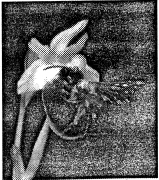
MediumMCQ
The given figure shows . . . . . . .
A
Pollination of fig flower by wasp
B
Pollination of orchid flower by bee
C
Egg-laying by wasp on fig flower
D
Pollination of fig flower by bee
Solution
(A) The provided image illustrates a classic example of mutualism between a fig plant and its pollinator,the wasp.
In this specific interaction,the wasp pollinates the fig flower while simultaneously using the fig fruit as a site for egg-laying.
Therefore,the figure represents the pollination of the fig flower by the wasp.
In this specific interaction,the wasp pollinates the fig flower while simultaneously using the fig fruit as a site for egg-laying.
Therefore,the figure represents the pollination of the fig flower by the wasp.
0 likes
View Solution189
EasyMCQ
Match the items in Column-$I$ with those in Column-$II$:
Select the correct option from the following:
| Column-$I$ | Column-$II$ |
| $(a)$ Herbivores-Plants | $(i)$ Commensalism |
| $(b)$ Mycorrhiza-Plants | $(ii)$ Mutualism |
| $(c)$ Sheep-Cattle | $(iii)$ Predation |
| $(d)$ Orchid-Tree | $(iv)$ Competition |
Select the correct option from the following:
A
$(a)-(i), (b)-(iii), (c)-(iv), (d)-(ii)$
B
$(a)-(iv), (b)-(ii), (c)-(i), (d)-(iii)$
C
$(a)-(iii), (b)-(ii), (c)-(iv), (d)-(i)$
D
$(a)-(ii), (b)-(i), (c)-(iii), (d)-(iv)$
Solution
(C) Herbivores-Plants: Predation $(+,-)$. Here, the herbivore feeds on the plant, benefiting itself while harming the plant.
$(b)$ Mycorrhiza-Plants: Mutualism $(+,+)$. This is a symbiotic association between fungi and plant roots where both partners benefit.
$(c)$ Sheep-Cattle: Competition $(-,-)$. Both species compete for the same limited resources like grass, which negatively affects both.
$(d)$ Orchid-Tree: Commensalism $(+,0)$. The orchid (epiphyte) grows on the tree to get sunlight and nutrients without harming or benefiting the tree.
$(b)$ Mycorrhiza-Plants: Mutualism $(+,+)$. This is a symbiotic association between fungi and plant roots where both partners benefit.
$(c)$ Sheep-Cattle: Competition $(-,-)$. Both species compete for the same limited resources like grass, which negatively affects both.
$(d)$ Orchid-Tree: Commensalism $(+,0)$. The orchid (epiphyte) grows on the tree to get sunlight and nutrients without harming or benefiting the tree.
0 likes
View Solution190
MediumMCQ
Match the Column-$I$ with Column-$II$:
| Column-$I$ | Column-$II$ |
|---|---|
| $(a)$ Parasitism | $(i)$ $++$ |
| $(b)$ Commensalism | $(ii)$ $+-$ |
| $(c)$ Amensalism | $(iii)$ $0+$ |
| $(d)$ Mutualism | $(iv)$ $0-$ |
A
$a-iii, b-ii, c-iv, d-i$
B
$a-i, b-ii, c-iii, d-iv$
C
$a-ii, b-iii, c-i, d-iv$
D
$a-ii, b-iii, c-iv, d-i$
Solution
(D) The correct matching is as follows:
$(a)$ Parasitism: One species benefits $(+)$ and the other is harmed $(-)$,represented as $+-$.
$(b)$ Commensalism: One species benefits $(+)$ and the other is neither harmed nor benefited $(0)$,represented as $0+$.
$(c)$ Amensalism: One species is harmed $(-)$ and the other is neither harmed nor benefited $(0)$,represented as $0-$.
$(d)$ Mutualism: Both species benefit $(+)$,represented as $++$.
Therefore,the correct sequence is $a-ii, b-iii, c-iv, d-i$. The correct option is $(D)$.
$(a)$ Parasitism: One species benefits $(+)$ and the other is harmed $(-)$,represented as $+-$.
$(b)$ Commensalism: One species benefits $(+)$ and the other is neither harmed nor benefited $(0)$,represented as $0+$.
$(c)$ Amensalism: One species is harmed $(-)$ and the other is neither harmed nor benefited $(0)$,represented as $0-$.
$(d)$ Mutualism: Both species benefit $(+)$,represented as $++$.
Therefore,the correct sequence is $a-ii, b-iii, c-iv, d-i$. The correct option is $(D)$.
0 likes
View Solution191
MediumMCQ
Match the following population interactions with their respective signs and descriptions:
| Interaction Type | Sign | Description |
|---|---|---|
| $(a)$ Parasitism | $(i) -, 0$ | $(A)$ Both get benefitted |
| $(b)$ Amensalism | $(ii) -, -$ | $(B)$ One gets harmed,other has no effect |
| $(c)$ Competition | $(iii) +, -$ | $(C)$ Both get harmed |
| $(d)$ Mutualism | $(iv) +, +$ | $(D)$ One is harmed and second is benefited |
A
$a-iii-D, b-i-B, c-ii-C, d-iv-A$
B
$a-ii-C, b-i-B, c-iii-D, d-iv-A$
C
$a-iii-D, b-i-A, c-ii-C, d-iv-B$
D
$a-iii-A, b-i-B, c-ii-D, d-iv-A$
Solution
(A) The correct matching is as follows:
$1$. Parasitism: $(+,-)$ where one is benefited and one is harmed. This matches $(iii)$ and $(D)$.
$2$. Amensalism: $(-,0)$ where one is harmed and the other is unaffected. This matches $(i)$ and $(B)$.
$3$. Competition: $(-,-)$ where both species are harmed. This matches $(ii)$ and $(C)$.
$4$. Mutualism: $(+,+)$ where both species are benefited. This matches $(iv)$ and $(A)$.
Therefore,the correct sequence is $a-iii-D, b-i-B, c-ii-C, d-iv-A$.
$1$. Parasitism: $(+,-)$ where one is benefited and one is harmed. This matches $(iii)$ and $(D)$.
$2$. Amensalism: $(-,0)$ where one is harmed and the other is unaffected. This matches $(i)$ and $(B)$.
$3$. Competition: $(-,-)$ where both species are harmed. This matches $(ii)$ and $(C)$.
$4$. Mutualism: $(+,+)$ where both species are benefited. This matches $(iv)$ and $(A)$.
Therefore,the correct sequence is $a-iii-D, b-i-B, c-ii-C, d-iv-A$.
0 likes
View Solution192
MediumMCQ
Select the correct match.
| Column $I$ $\&$ $II$ | Column $III$ |
|---|---|
| $a. (+, -)$ | $P. \text{Amensalism}$ |
| $b. (-, -)$ | $Q. \text{Commensalism}$ |
| $c. (-, 0)$ | $R. \text{Predation}$ |
| $d. (+, 0)$ | $S. \text{Competition}$ |
A
$a-R, b-S, c-P, d-Q$
B
$a-S, b-R, c-Q, d-P$
C
$a-R, b-P, c-S, d-Q$
D
$a-Q, b-S, c-P, d-R$
Solution
(A) The correct match is based on the interaction types between two species:
$1$. Predation $(a)$: One species benefits $(+)$ and the other is harmed $(-)$. So, $a-R$.
$2$. Competition $(b)$: Both species are harmed $(-, -)$. So, $b-S$.
$3$. Amensalism $(c)$: One species is harmed $(-)$ and the other is unaffected $(0)$. So, $c-P$.
$4$. Commensalism $(d)$: One species benefits $(+)$ and the other is unaffected $(0)$. So, $d-Q$.
Therefore, the correct sequence is $a-R, b-S, c-P, d-Q$.
$1$. Predation $(a)$: One species benefits $(+)$ and the other is harmed $(-)$. So, $a-R$.
$2$. Competition $(b)$: Both species are harmed $(-, -)$. So, $b-S$.
$3$. Amensalism $(c)$: One species is harmed $(-)$ and the other is unaffected $(0)$. So, $c-P$.
$4$. Commensalism $(d)$: One species benefits $(+)$ and the other is unaffected $(0)$. So, $d-Q$.
Therefore, the correct sequence is $a-R, b-S, c-P, d-Q$.
0 likes
View Solution193
MediumMCQ
Select the correct match.
| $(I)$ Interaction | $(II)$ Effect |
|---|---|
| $(a) (+, -)$ | $(P)$ Amensalism |
| $(b) (-, -)$ | $(Q)$ Commensalism |
| $(c) (-, 0)$ | $(R)$ Predation |
| $(d) (+, 0)$ | $(S)$ Competition |
A
$a-iii-S, b-ii-P, c-i-R, d-iv-Q$
B
$a-iii-R, b-ii-S, c-i-P, d-iv-Q$
C
$a-i-Q, b-iii-P, c-ii-S, d-iv-R$
D
$a-iv-Q, b-ii-P, c-iii-S, d-i-R$
Solution
(B) The interactions between species are defined by the effects on the organisms involved:
$1$. Predation $(+, -)$: One species (predator) benefits,while the other (prey) is harmed.
$2$. Competition $(-, -)$: Both species are harmed.
$3$. Amensalism $(-, 0)$: One species is harmed,while the other is unaffected.
$4$. Commensalism $(+, 0)$: One species benefits,while the other is unaffected.
Matching the given symbols:
$(a) (+, -)$ corresponds to $(iii)$ Predation $(R)$.
$(b) (-, -)$ corresponds to $(ii)$ Competition $(S)$.
$(c) (-, 0)$ corresponds to $(i)$ Amensalism $(P)$.
$(d) (+, 0)$ corresponds to $(iv)$ Commensalism $(Q)$.
Therefore,the correct match is $a-iii-R, b-ii-S, c-i-P, d-iv-Q$.
$1$. Predation $(+, -)$: One species (predator) benefits,while the other (prey) is harmed.
$2$. Competition $(-, -)$: Both species are harmed.
$3$. Amensalism $(-, 0)$: One species is harmed,while the other is unaffected.
$4$. Commensalism $(+, 0)$: One species benefits,while the other is unaffected.
Matching the given symbols:
$(a) (+, -)$ corresponds to $(iii)$ Predation $(R)$.
$(b) (-, -)$ corresponds to $(ii)$ Competition $(S)$.
$(c) (-, 0)$ corresponds to $(i)$ Amensalism $(P)$.
$(d) (+, 0)$ corresponds to $(iv)$ Commensalism $(Q)$.
Therefore,the correct match is $a-iii-R, b-ii-S, c-i-P, d-iv-Q$.
0 likes
View Solution194
MediumMCQ
Which of the following is not a defence evolved by a prey to avoid predators?
A
Ejection of noxious chemicals
B
Possession of toxic hairs
C
Mimicry of inedible objects
D
Secretion of pheromones
Solution
(D) Pheromones are chemical substances released by an animal into its environment that influence the behavior and development of other individuals of the same species,acting as chemical messengers. They are primarily used for sexual attraction,territorial marking,individual recognition,alarm signaling,communication,and expressing aggression. They are not evolved as a defense mechanism by prey to avoid predators.
0 likes
View Solution195
EasyMCQ
Why is water hyacinth called the 'Terror of Bengal'?
A
It is being used as food for fish.
B
It consumes oxygen from cultivated plants and destroys them.
C
It consumes oxygen from water and decreases $O_{2}$ concentration in water.
D
It is a weed.
Solution
(C) Water hyacinth $(Eichhornia \text{ } crassipes)$ is called the 'Terror of Bengal' because it is an invasive aquatic plant that grows at an alarming rate.
It consumes a large amount of dissolved $O_{2}$ from the water, which leads to a significant decrease in the $O_{2}$ concentration.
This depletion of oxygen causes the death of aquatic organisms, including fish, which is why it earned this name.
It consumes a large amount of dissolved $O_{2}$ from the water, which leads to a significant decrease in the $O_{2}$ concentration.
This depletion of oxygen causes the death of aquatic organisms, including fish, which is why it earned this name.
0 likes
View Solution196
EasyMCQ
Some plants have a habit of harbouring ants to save themselves from damage by other animals,which is known as:
A
Entomophily
B
Myrmecophily
C
Anemophily
D
Hydrophily
Solution
(B) Myrmecophily is a defensive mechanism involving ants. Some plants (e.g.,mango,litchi,guava) protect themselves from the attack of other animals by harbouring ants on their surfaces.
0 likes
View Solution197
MediumMCQ
Commensalism is the interaction in which
A
One species benefits and the other is neither harmed nor benefitted
B
One species does not benefit and the other is harmed
C
One species does not benefit and the other is not harmed
D
One species benefits and the other is also benefitted
Solution
(A) Commensalism is an interaction between two species in which one species benefits and the other is neither harmed nor benefitted.
$e.g.$,an orchid growing as an epiphyte on a mango branch to access sunlight in tropical regions.
$e.g.$,an orchid growing as an epiphyte on a mango branch to access sunlight in tropical regions.
0 likes
View Solution198
MediumMCQ
To avoid the competitive exclusion principle,when two similar species live in the same area,they may evolve to become more different in order to:
A
Reduce competition
B
Increase competition
C
Use other species' resources
D
Drive the other species to extinction
Solution
(A) The competitive exclusion principle states that two species competing for the same limiting resource cannot coexist at constant population values.
To avoid this,similar species often undergo resource partitioning,where they evolve to become more different in their resource utilization or behavioral patterns.
This evolutionary divergence allows them to reduce competition,thereby enabling coexistence in the same habitat.
To avoid this,similar species often undergo resource partitioning,where they evolve to become more different in their resource utilization or behavioral patterns.
This evolutionary divergence allows them to reduce competition,thereby enabling coexistence in the same habitat.
0 likes
View Solution199
MediumMCQ
If the strong partner is benefitted and the weak partner is damaged,it is known as:
A
Predation
B
Allelopathy
C
Symbiosis
D
Commensalism
Solution
(A) Predation is a biological interaction where one organism,the predator,kills and eats another organism,the prey.
In this interaction,the predator (strong partner) benefits by obtaining food,while the prey (weak partner) is harmed or killed.
This is a $+/-$ type of population interaction.
Allelopathy involves chemical inhibition,Symbiosis refers to long-term close associations (often mutualistic),and Commensalism is a $+/0$ interaction where one benefits and the other is unaffected.
In this interaction,the predator (strong partner) benefits by obtaining food,while the prey (weak partner) is harmed or killed.
This is a $+/-$ type of population interaction.
Allelopathy involves chemical inhibition,Symbiosis refers to long-term close associations (often mutualistic),and Commensalism is a $+/0$ interaction where one benefits and the other is unaffected.
0 likes
View Solution200
MediumMCQ
Find the odd one out,according to parasitism.
A
Lice
B
Plasmodium
C
Bedbug
D
Mite
Solution
(B) $Plasmodium$ is the odd one out because it is a digenetic endoparasite that lives inside the host's body (human),whereas lice,bedbugs,and mites are all blood-sucking ectoparasites that live on the surface of the host's body.
0 likes
View SolutionOrganisms and Populations — Population Interactions · Frequently Asked Questions
1Are these Organisms and Populations questions useful for JEE and NEET?
Yes. All questions in this section are mapped to JEE Main and NEET exam patterns. Previous year questions from JEE Main, NEET, GUJCET and state-level exams are included with full solutions.
2Can I switch to Hindi or Gujarati for these questions?
Yes. Use the language tabs in the hero section or the sidebar to view the same questions and solutions in English, Hindi or Gujarati.
3How do I generate a question paper from this subtopic?
Use the Vedclass Exam Paper Generator — select the chapter and subtopic, set difficulty, and generate Sets A, B, C, D automatically. First 3 chapters of every subject are free.
Vedclass Products
For Students
Vedclass Test Series
Mock tests in real JEE/NEET style with performance analysis. 5-day free trial.
Start Free TrialFor Teachers
Exam Paper Generator
Generate Set A/B/C/D papers from this chapter in 2 minutes. 3 chapters free.
Try FreeFor Institutes
Online Exam Module
Live online exams with unlimited students, 360° analytics & white-label branding.
See DemoFor Teachers & Institutes
Generate a Organisms and Populations Exam Paper in 2 Minutes
Select subtopic & difficulty — Sets A, B, C, D auto-generated with No Repeat logic.
First 3 chapters of every subject are free — no payment required.