
અ Gujarati
Mix Examples- Locomotion and Movement Questions in Gujarati
Class 11 Biology · Locomotion and Movement · Mix Examples- Locomotion and Movement
56+
Questions
Gujarati
Language
100%
With Solutions
Showing 50 of 56 questions in Gujarati
1
MediumMCQ
જો રેશમના કીડામાં નિર્મોચન (moulting) સમયે જુવેનાઈલ હોર્મોન ગેરહાજર હોય,તો તે:
A
બીજી ડિંભ અવસ્થામાં નિર્મોચન પામશે
B
પ્યુપામાં નિર્મોચન પામશે
C
પુખ્ત અવસ્થામાં નિર્મોચન પામશે
D
મૃત્યુ પામશે
Solution
(B) કીટકોમાં,કાયાંતરણની પ્રક્રિયા અંતઃસ્ત્રાવો દ્વારા નિયંત્રિત થાય છે. જુવેનાઈલ હોર્મોન $(JH)$ દરેક નિર્મોચન દરમિયાન ડિંભના લક્ષણો જાળવી રાખે છે. જ્યારે $JH$ નું સ્તર ઊંચું હોય છે,ત્યારે ડિંભ બીજી ડિંભ અવસ્થામાં નિર્મોચન પામે છે. જેમ જેમ ડિંભ મોટો થાય છે,તેમ $JH$ ની સાંદ્રતા ઘટતી જાય છે. જ્યારે નિર્મોચન દરમિયાન $JH$ ગેરહાજર હોય અથવા ખૂબ જ નીચા સ્તરે હોય,ત્યારે ડિંભ કાયાંતરણ પામે છે અને પ્યુપામાં રૂપાંતરિત થાય છે.
0 likes
View Solution2
MediumMCQ
જ્યારે પિથ્ડ (pithed) દેડકાના પગને વીજળીનો આંચકો આપવામાં આવે છે,ત્યારે શું થાય છે?
A
તેની આંખો પટપટાવે છે
B
કોઈ પ્રતિભાવ દર્શાવતું નથી
C
તેની જીભ બહાર કાઢે છે
D
આમાંથી કોઈ પણ નહીં
Solution
(B) પિથ્ડ દેડકો એટલે એવો દેડકો કે જેમાં મગજ અને કરોડરજ્જુનો નાશ કરવામાં આવ્યો હોય અથવા તેને નિષ્ક્રિય કરી દેવામાં આવ્યા હોય જેથી પીડાનો અનુભવ ન થાય.
કેન્દ્રીય ચેતાતંત્રનો નાશ થયેલ હોવાથી,દેડકો સંવેદનાત્મક માહિતી પર પ્રક્રિયા કરી શકતો નથી અથવા કોઈ સ્વૈચ્છિક કે પરાવર્તી ક્રિયા દર્શાવી શકતો નથી.
તેથી,જ્યારે પગ પર વીજળીનો આંચકો આપવામાં આવે છે,ત્યારે દેડકો કોઈ પ્રતિભાવ દર્શાવતો નથી.
કેન્દ્રીય ચેતાતંત્રનો નાશ થયેલ હોવાથી,દેડકો સંવેદનાત્મક માહિતી પર પ્રક્રિયા કરી શકતો નથી અથવા કોઈ સ્વૈચ્છિક કે પરાવર્તી ક્રિયા દર્શાવી શકતો નથી.
તેથી,જ્યારે પગ પર વીજળીનો આંચકો આપવામાં આવે છે,ત્યારે દેડકો કોઈ પ્રતિભાવ દર્શાવતો નથી.
0 likes
View Solution3
MediumMCQ
એક ફીમર (સાથળનું હાડકું) ને ત્રણ દિવસ માટે મંદ $HCl$ માં રાખવામાં આવે છે,તો તે કેવું બને છે?
A
ભંગુર
B
નરમ અને સ્થિતિસ્થાપક
C
તેના જેવું જ રહે છે
D
વધારે સખત
Solution
(B) જ્યારે હાડકાને થોડા દિવસો માટે મંદ $HCl$ માં રાખવામાં આવે છે,ત્યારે હાડકાના મેટ્રિક્સમાં રહેલા કેલ્શિયમના ક્ષારો (કેલ્શિયમ ફોસ્ફેટ અને કેલ્શિયમ કાર્બોનેટ) એસિડ દ્વારા ઓગળી જાય છે.
આ પ્રક્રિયાને હાડકાનું 'ડીકેલ્સિફિકેશન' (decalcification) કહેવામાં આવે છે.
પરિણામે,હાડકું તેની સખતાઈ ગુમાવે છે અને નરમ,લવચીક અને સ્થિતિસ્થાપક બને છે,કારણ કે તેમાં માત્ર કાર્બનિક કોલેજન તંતુઓ જ બાકી રહે છે.
આ પ્રક્રિયાને હાડકાનું 'ડીકેલ્સિફિકેશન' (decalcification) કહેવામાં આવે છે.
પરિણામે,હાડકું તેની સખતાઈ ગુમાવે છે અને નરમ,લવચીક અને સ્થિતિસ્થાપક બને છે,કારણ કે તેમાં માત્ર કાર્બનિક કોલેજન તંતુઓ જ બાકી રહે છે.
0 likes
View Solution4
MediumMCQ
દાંત એ:
A
જીવંત રચના
B
મૃત રચના
C
અંશતઃ મૃત અને અંશતઃ જીવંત રચના
D
ચોક્કસ પ્રકૃતિ જાણીતી નથી
Solution
(A) દાંતને જીવંત રચનાઓ માનવામાં આવે છે કારણ કે તેમાં પલ્પ (pulp) જેવી જીવંત પેશીઓ હોય છે,જેમાં રુધિરવાહિનીઓ,ચેતાઓ અને સંયોજક પેશીઓનો સમાવેશ થાય છે. જોકે બહારનું ઇનેમલ (enamel) નિર્જીવ (કોષવિહીન અને રુધિરવાહિનીવિહીન) હોય છે,પરંતુ દાંતની સમગ્ર રચના જીવંત ઘટકો દ્વારા આધારિત હોય છે જે તેના સ્વાસ્થ્ય અને સંવેદનશીલતાને જાળવી રાખે છે.
0 likes
View Solution5
MediumMCQ
ઊંટમાં રૂમેન (Rumen) શેના તરીકે કાર્ય કરે છે?
A
વાગોળવાનું અંગ
B
પાણી સંગ્રહ કરતું અંગ
C
$(a)$ અને $(b)$ બંને
D
આમાંથી કોઈ નહીં
Solution
(C) ઊંટમાં રૂમેન વાગોળવાની પ્રક્રિયા (cudding) ઉપરાંત પાણીના સંગ્રહસ્થાન તરીકે પણ કાર્ય કરે છે. ઊંટ તેના રૂમેનમાં આઠ ગેલન સુધી પાણીનો સંગ્રહ કરી શકે છે,જે ચયાપચયની પ્રક્રિયા અને પીધેલા પ્રવાહીમાંથી મેળવવામાં આવે છે,જે તેમને સૂકા વાતાવરણમાં જીવિત રહેવામાં મદદ કરે છે.
0 likes
View Solution6
EasyMCQ
સસ્તન પ્રાણીઓના હાડકામાં હેવર્સિયન નલિકાઓ હોય છે જે કઈ ત્રાંસી નલિકાઓ દ્વારા જોડાયેલી હોય છે?
A
બિડરની નલિકા
B
ઇન્ગ્યુઇનલ નલિકા
C
વોલ્કમેનની નલિકા
D
અર્ધવર્તુળાકાર નલિકા
Solution
(C) સસ્તન પ્રાણીઓના સઘન અસ્થિમાં,$Haversian$ નલિકાઓ અસ્થિની લાંબી ધરીને સમાંતર ચાલે છે.
આ નલિકાઓ ત્રાંસી અથવા ત્રાસી ચેનલો દ્વારા એકબીજા સાથે જોડાયેલી હોય છે જેને $Volkmann's$ નલિકાઓ કહેવામાં આવે છે.
$Volkmann's$ નલિકાઓ $Haversian$ નલિકાઓને એકબીજા સાથે,તેમજ પેરિઓસ્ટીયમ અને મજ્જા પોલાણ સાથે જોડે છે,જે રુધિરવાહિનીઓ અને ચેતાઓના પસાર થવા માટે માર્ગ પૂરો પાડે છે.
આ નલિકાઓ ત્રાંસી અથવા ત્રાસી ચેનલો દ્વારા એકબીજા સાથે જોડાયેલી હોય છે જેને $Volkmann's$ નલિકાઓ કહેવામાં આવે છે.
$Volkmann's$ નલિકાઓ $Haversian$ નલિકાઓને એકબીજા સાથે,તેમજ પેરિઓસ્ટીયમ અને મજ્જા પોલાણ સાથે જોડે છે,જે રુધિરવાહિનીઓ અને ચેતાઓના પસાર થવા માટે માર્ગ પૂરો પાડે છે.
0 likes
View Solution7
MediumMCQ
બાળકોમાં હાડકાં વધુ લવચીક અને ઓછા બરડ હોય છે કારણ કે તેમના હાડકાંમાં:
A
ક્ષારોનું પ્રમાણ વધારે અને કાર્બનિક પદાર્થોનું પ્રમાણ ઓછું હોય છે
B
કાર્બનિક પદાર્થોનું પ્રમાણ વધારે અને ક્ષારોનું પ્રમાણ ઓછું હોય છે
C
સુવિકસિત હેવર્સિયન તંત્ર હોય છે
D
મોટી સંખ્યામાં ઓસ્ટિઓબ્લાસ્ટ્સ હોય છે
Solution
(B) હાડકાં કાર્બનિક મેટ્રિક્સ (મુખ્યત્વે કોલેજન) અને અકાર્બનિક ખનિજ ક્ષારો (મુખ્યત્વે કેલ્શિયમ ફોસ્ફેટ) ના બનેલા હોય છે.
કોલેજન લવચીકતા અને મજબૂતી પ્રદાન કરે છે,જ્યારે ખનિજ ક્ષારો કઠિનતા અને મજબૂતી આપે છે.
બાળકોમાં,પુખ્ત વયના લોકોની તુલનામાં ખનિજ ક્ષારોના પ્રમાણમાં કાર્બનિક પદાર્થો (કોલેજન) નું પ્રમાણ વધારે હોય છે.
આ વધુ કાર્બનિક સામગ્રી હાડકાંને વધુ લવચીક બનાવે છે,જેનાથી તે સરળતાથી તૂટ્યા વિના વધુ દબાણ સહન કરી શકે છે.
જેમ જેમ વ્યક્તિની ઉંમર વધે છે,તેમ ખનિજનું પ્રમાણ વધે છે,જે હાડકાંને સખત બનાવે છે પરંતુ તે વધુ બરડ પણ બને છે.
કોલેજન લવચીકતા અને મજબૂતી પ્રદાન કરે છે,જ્યારે ખનિજ ક્ષારો કઠિનતા અને મજબૂતી આપે છે.
બાળકોમાં,પુખ્ત વયના લોકોની તુલનામાં ખનિજ ક્ષારોના પ્રમાણમાં કાર્બનિક પદાર્થો (કોલેજન) નું પ્રમાણ વધારે હોય છે.
આ વધુ કાર્બનિક સામગ્રી હાડકાંને વધુ લવચીક બનાવે છે,જેનાથી તે સરળતાથી તૂટ્યા વિના વધુ દબાણ સહન કરી શકે છે.
જેમ જેમ વ્યક્તિની ઉંમર વધે છે,તેમ ખનિજનું પ્રમાણ વધે છે,જે હાડકાંને સખત બનાવે છે પરંતુ તે વધુ બરડ પણ બને છે.
0 likes
View Solution8
EasyMCQ
હાડકાં કયા ખનિજ ક્ષારોના સંગ્રહસ્થાન તરીકે કાર્ય કરે છે?
A
સોડિયમ અને મેગ્નેશિયમ
B
કેલ્શિયમ અને સોડિયમ
C
કેલ્શિયમ અને મેગ્નેશિયમ
D
કોપર અને આયર્ન
Solution
(C) હાડકાં એ ચયાપચયની દ્રષ્ટિએ સક્રિય પેશી છે જે વિવિધ ખનિજ આયનો માટે હોમિયોસ્ટેટિક સંગ્રહસ્થાન તરીકે કાર્ય કરે છે.
ચોક્કસ રીતે,તે કેલ્શિયમ,મેગ્નેશિયમ અને ફોસ્ફરસનો નોંધપાત્ર જથ્થો સંગ્રહિત કરે છે.
જ્યારે શરીરને શારીરિક સંતુલન જાળવવા માટે આ ખનિજોની જરૂર હોય ત્યારે તે રુધિરમાં મુક્ત થાય છે.
તેથી,સાચો વિકલ્પ $C$ છે.
ચોક્કસ રીતે,તે કેલ્શિયમ,મેગ્નેશિયમ અને ફોસ્ફરસનો નોંધપાત્ર જથ્થો સંગ્રહિત કરે છે.
જ્યારે શરીરને શારીરિક સંતુલન જાળવવા માટે આ ખનિજોની જરૂર હોય ત્યારે તે રુધિરમાં મુક્ત થાય છે.
તેથી,સાચો વિકલ્પ $C$ છે.
0 likes
View Solution9
EasyMCQ
રાઈગર મોર્ટિસ (Rigor Mortis) સૌપ્રથમ કયા ભાગમાં જોવા મળે છે?
A
અંગો
B
ગળું
C
જડબું
D
કપાળ
Solution
(C) $Rigor \text{ } Mortis$ એ મૃત્યુ પછી સ્નાયુઓમાં થતા રાસાયણિક ફેરફારોને કારણે શરીરના સ્નાયુઓનું અક્કડ થઈ જવું છે.
તે સામાન્ય રીતે શરીરના નાના સ્નાયુઓથી શરૂ થાય છે.
જડબાના સ્નાયુઓ સૌથી પહેલા પ્રભાવિત થાય છે, ત્યારબાદ ગળું, ધડ અને અંતે અંગોમાં આ સ્થિતિ જોવા મળે છે.
તે સામાન્ય રીતે શરીરના નાના સ્નાયુઓથી શરૂ થાય છે.
જડબાના સ્નાયુઓ સૌથી પહેલા પ્રભાવિત થાય છે, ત્યારબાદ ગળું, ધડ અને અંતે અંગોમાં આ સ્થિતિ જોવા મળે છે.
0 likes
View Solution10
MediumMCQ
એન્ડોપ્લાઝમિક રેટિક્યુલમ અથવા સાર્કોપ્લાઝમિક રેટિક્યુલમ નીચેનામાંથી કઈ પ્રક્રિયામાં મુખ્ય ભૂમિકા ભજવે છે?
A
સ્નાયુ સંકોચન
B
સ્નાયુ ઉત્તેજના
C
સ્નાયુ શિથિલન
D
ઉપરોક્ત તમામ
Solution
(D) સાર્કોપ્લાઝમિક રેટિક્યુલમ $(SR)$ એ સ્નાયુ કોષોમાં જોવા મળતું વિશિષ્ટ પ્રકારનું એન્ડોપ્લાઝમિક રેટિક્યુલમ છે.
તે કેલ્શિયમ આયનો $(Ca^{2+})$ માટે સંગ્રહસ્થાન તરીકે કાર્ય કરે છે.
સ્નાયુ ઉત્તેજના દરમિયાન,કેલ્શિયમ આયનો $SR$ માંથી સાર્કોપ્લાઝમમાં મુક્ત થાય છે,જે સ્નાયુ સંકોચનને ઉત્તેજિત કરે છે.
સ્નાયુ શિથિલન દરમિયાન,આ કેલ્શિયમ આયનોને સક્રિય રીતે પાછા $SR$ માં પમ્પ કરવામાં આવે છે.
આમ,$SR$ આ તમામ પ્રક્રિયાઓમાં સામેલ હોવાથી,સાચો જવાબ $D$ છે.
તે કેલ્શિયમ આયનો $(Ca^{2+})$ માટે સંગ્રહસ્થાન તરીકે કાર્ય કરે છે.
સ્નાયુ ઉત્તેજના દરમિયાન,કેલ્શિયમ આયનો $SR$ માંથી સાર્કોપ્લાઝમમાં મુક્ત થાય છે,જે સ્નાયુ સંકોચનને ઉત્તેજિત કરે છે.
સ્નાયુ શિથિલન દરમિયાન,આ કેલ્શિયમ આયનોને સક્રિય રીતે પાછા $SR$ માં પમ્પ કરવામાં આવે છે.
આમ,$SR$ આ તમામ પ્રક્રિયાઓમાં સામેલ હોવાથી,સાચો જવાબ $D$ છે.
0 likes
View Solution11
MediumMCQ
વક્ર હાડકું (curved bone) બંધારણીય રીતે શેના માટે રચાયેલું હોય છે?
A
શરીરમાં સરળતાથી સમાઈ જવા માટે
B
શરીરના વજનના તણાવને વિવિધ બિંદુઓ પર શોષવા માટે જેથી તણાવ સમાન રીતે વહેંચાઈ જાય
C
સ્નાયુઓના જોડાણ માટે વધુ વિસ્તાર પૂરો પાડવા માટે
D
ઉપરોક્ત તમામ
Solution
(D) હાડકાંનો વળાંક,જેમ કે સાથળના હાડકા (femur) અથવા કરોડસ્તંભમાં,અનેક યાંત્રિક કાર્યો કરે છે.
$1$. તે શરીરની ગુહામાં અંગો અને રચનાઓને વધુ સારી રીતે સમાવવા માટે મદદ કરે છે.
$2$. વળાંક શરીરના વજનને કારણે આવતા યાંત્રિક તણાવને અનેક બિંદુઓ પર વહેંચવામાં મદદ કરે છે,જેથી સ્થાનિક અસ્થિભંગ અટકાવી શકાય અને સ્થિરતા જળવાઈ રહે.
$3$. વક્ર આકાર દ્વારા મળતો વધારાનો સપાટી વિસ્તાર વિવિધ સ્નાયુઓને જોડાવા માટે જગ્યા આપે છે,જે હલનચલન અને આધાર માટે જરૂરી છે.
તેથી,આપેલા તમામ વિકલ્પો સાચા છે.
$1$. તે શરીરની ગુહામાં અંગો અને રચનાઓને વધુ સારી રીતે સમાવવા માટે મદદ કરે છે.
$2$. વળાંક શરીરના વજનને કારણે આવતા યાંત્રિક તણાવને અનેક બિંદુઓ પર વહેંચવામાં મદદ કરે છે,જેથી સ્થાનિક અસ્થિભંગ અટકાવી શકાય અને સ્થિરતા જળવાઈ રહે.
$3$. વક્ર આકાર દ્વારા મળતો વધારાનો સપાટી વિસ્તાર વિવિધ સ્નાયુઓને જોડાવા માટે જગ્યા આપે છે,જે હલનચલન અને આધાર માટે જરૂરી છે.
તેથી,આપેલા તમામ વિકલ્પો સાચા છે.
0 likes
View Solution12
EasyMCQ
સ્નાયુઓ,કંડરા (tendons) અને સાંધાઓમાં જોવા મળતા ગ્રાહીઓ (receptors) કયા છે?
A
ટેલોરિસેપ્ટર્સ (Teloreceptors)
B
પ્રોપ્રિયોરિસેપ્ટર્સ (Proprioreceptors)
C
ઇન્ટરોસેપ્ટર્સ (Interoceptors)
D
આમાંથી કોઈ નહીં
Solution
(B) સાચો જવાબ $B$ છે. પ્રોપ્રિયોરિસેપ્ટર્સ એ વિશિષ્ટ સંવેદી ચેતાના છેડા છે જે સ્નાયુઓ,કંડરા,સાંધાઓ અને વેસ્ટિબ્યુલર ઉપકરણમાં ઊંડે આવેલા હોય છે. તેઓ શરીરની અંદરથી ઉદ્ભવતા ઉત્તેજનાઓ પ્રત્યે પ્રતિભાવ આપે છે અને હલનચલન,શરીરની મુદ્રા અને અવકાશી સ્થિતિ વિશે માહિતી પૂરી પાડે છે.
0 likes
View Solution13
MediumMCQ
દેડકાની આંખમાં આઈરિસ (પરિતારિકા) નું કાર્ય શું છે?
A
પ્રકાશના કિરણોનું વક્રીભવન કરવું
B
કીકી (pupil) ના કદને ઘટાડવું અને વધારવું
C
નિકટિટેટિંગ પટલને ગતિ આપવી
D
લેન્સને આગળ અને પાછળની તરફ ખસેડવું
Solution
(B) દેડકાની આંખમાં,આઈરિસ એ કીકીની આસપાસ આવેલી એક રંજકદ્રવ્યયુક્ત,સ્નાયુબદ્ધ રચના છે. તેનું મુખ્ય કાર્ય કીકીના કદને નિયંત્રિત કરીને આંખમાં પ્રવેશતા પ્રકાશના જથ્થાનું નિયમન કરવાનું છે. જ્યારે પ્રકાશની તીવ્રતા વધારે હોય ત્યારે આઈરિસ કીકીને સંકોચે છે,અને જ્યારે પ્રકાશની તીવ્રતા ઓછી હોય ત્યારે તે કીકીને વિસ્તૃત કરે છે. તેથી,સાચો વિકલ્પ $B$ છે.
0 likes
View Solution14
EasyMCQ
જ્યારે ચાલતી વખતે આખો પગ (તળિયું) જમીન પર ટેકવાય છે,જેમ કે મનુષ્યમાં,ત્યારે તેને શું કહેવામાં આવે છે?
A
પ્લાન્ટિગ્રેડ (Plantigrade)
B
ડિજિટિગ્રેડ (Digitigrade)
C
પેરિકેરિઓન (Perikaryon)
D
હેલક્સ (Hallux)
Solution
(A) સસ્તન પ્રાણીઓમાં પ્રચલનનું વર્ગીકરણ ચાલતી વખતે જમીનને સ્પર્શતા પગના ભાગના આધારે કરવામાં આવે છે.
$1$. $Plantigrade$: આ પ્રકારના પ્રચલનમાં,પગનું આખું તળિયું,જેમાં એડી અને આંગળીઓનો સમાવેશ થાય છે,તે જમીન પર રહે છે. મનુષ્યો,રીંછ અને પ્રાઈમેટ્સ આ પ્રકારનું પ્રચલન દર્શાવે છે.
$2$. $Digitigrade$: આ પ્રકારમાં,માત્ર આંગળીઓ જમીનને સ્પર્શે છે જ્યારે એડી ઊંચી રહે છે. ઉદાહરણ તરીકે બિલાડી અને કૂતરા.
$3$. $Unguligrade$: આ પ્રકારમાં,માત્ર આંગળીઓના ટેરવા (ખૂર) જમીનને સ્પર્શે છે,જે ઘોડા અને હરણમાં જોવા મળે છે.
$4$. $Perikaryon$ એ ચેતાકોષના કોષકાયને દર્શાવે છે અને $Hallux$ એ પગના અંગૂઠાને દર્શાવે છે. તેથી,આખા તળિયા પર ચાલવા માટેનો સાચો શબ્દ $Plantigrade$ છે.
$1$. $Plantigrade$: આ પ્રકારના પ્રચલનમાં,પગનું આખું તળિયું,જેમાં એડી અને આંગળીઓનો સમાવેશ થાય છે,તે જમીન પર રહે છે. મનુષ્યો,રીંછ અને પ્રાઈમેટ્સ આ પ્રકારનું પ્રચલન દર્શાવે છે.
$2$. $Digitigrade$: આ પ્રકારમાં,માત્ર આંગળીઓ જમીનને સ્પર્શે છે જ્યારે એડી ઊંચી રહે છે. ઉદાહરણ તરીકે બિલાડી અને કૂતરા.
$3$. $Unguligrade$: આ પ્રકારમાં,માત્ર આંગળીઓના ટેરવા (ખૂર) જમીનને સ્પર્શે છે,જે ઘોડા અને હરણમાં જોવા મળે છે.
$4$. $Perikaryon$ એ ચેતાકોષના કોષકાયને દર્શાવે છે અને $Hallux$ એ પગના અંગૂઠાને દર્શાવે છે. તેથી,આખા તળિયા પર ચાલવા માટેનો સાચો શબ્દ $Plantigrade$ છે.
0 likes
View Solution15
MediumMCQ
આરામ કરતી વખતે,કેટલાક વાંદરાઓ એકબીજાના વાળમાં કંઈક શોધવામાં તેમનો સમય વિતાવે છે,જે તેઓ પછી ખાઈ જાય છે. વાસ્તવમાં તેઓ શું શોધી રહ્યા હોય છે?
A
શરીરના વાળમાં ચોંટેલા ઈતરડી (ticks)
B
શરીરની જૂ
C
પરસેવો સુકાઈ ગયા પછી જમા થતા ક્ષારના કણો
D
વાળમાં ફસાયેલા ધૂળના રજકણો
Solution
(C) વર્ણવેલ વર્તનને ગ્રૂમિંગ (grooming) તરીકે ઓળખવામાં આવે છે. જોકે વાંદરાઓ ઈતરડી કે જૂ જેવા પરોપજીવીઓને દૂર કરે છે,પરંતુ આ સામાજિક ગ્રૂમિંગનો એક મોટો ભાગ પરસેવો સુકાઈ ગયા પછી ત્વચા અને વાળ પર જમા થતા ક્ષારના સ્ફટિકોને શોધવા અને ખાવાનો હોય છે. આ તેમને જરૂરી ખનિજો પૂરા પાડે છે.
0 likes
View Solution16
MediumMCQ
$Ca^{2+}$ નીચેનામાંથી કઈ પ્રક્રિયાઓમાં જરૂરી છે?
A
સ્નાયુ સંકોચન
B
રુધિર ગંઠાઈ જવાની પ્રક્રિયા
C
હાડકાનું નિર્માણ
D
ઉપરના તમામ
Solution
(D) $Ca^{2+}$ (કેલ્શિયમ આયનો) વિવિધ શારીરિક પ્રક્રિયાઓમાં મહત્વપૂર્ણ ભૂમિકા ભજવે છે:
$1$. સ્નાયુ સંકોચન: $Ca^{2+}$ ટ્રોપોનિન સાથે જોડાય છે,જે એક્ટિન તંતુઓ પરના સક્રિય સ્થાનોને ખુલ્લા કરે છે જેથી માયોસિન જોડાઈ શકે.
$2$. રુધિર ગંઠાઈ જવાની પ્રક્રિયા: $Ca^{2+}$ રુધિર ગંઠાઈ જવાની પ્રક્રિયામાં (coagulation cascade) ઘણા ગંઠન કારકો માટે સહ-કારક (cofactor) તરીકે કાર્ય કરે છે.
$3$. હાડકાનું નિર્માણ: કેલ્શિયમ ફોસ્ફેટ (હાઈડ્રોક્સિએપેટાઈટ) એ હાડકાં અને દાંતનો મુખ્ય ખનિજ ઘટક છે.
તેથી,આપેલા તમામ વિકલ્પો સાચા છે.
$1$. સ્નાયુ સંકોચન: $Ca^{2+}$ ટ્રોપોનિન સાથે જોડાય છે,જે એક્ટિન તંતુઓ પરના સક્રિય સ્થાનોને ખુલ્લા કરે છે જેથી માયોસિન જોડાઈ શકે.
$2$. રુધિર ગંઠાઈ જવાની પ્રક્રિયા: $Ca^{2+}$ રુધિર ગંઠાઈ જવાની પ્રક્રિયામાં (coagulation cascade) ઘણા ગંઠન કારકો માટે સહ-કારક (cofactor) તરીકે કાર્ય કરે છે.
$3$. હાડકાનું નિર્માણ: કેલ્શિયમ ફોસ્ફેટ (હાઈડ્રોક્સિએપેટાઈટ) એ હાડકાં અને દાંતનો મુખ્ય ખનિજ ઘટક છે.
તેથી,આપેલા તમામ વિકલ્પો સાચા છે.
0 likes
View Solution17
EasyMCQ
આપેલ ત્રણ નામો અને સમૂહો પૈકી કઈ જોડ સાચી છે?
A
સાયટોસીન,યુરેસિલ,થાયમીન - પીરીમિડિન
B
મેલિયસ (હથોડી),ઇન્કસ (એરણ),સ્ટેપ્સ (પેંગડું) - કર્ણાસ્થિઓ
C
ઈલિયમ (નિતંબાસ્થિ),ઈશ્ચિયમ (આસનાસ્થિ),પ્યુબિસ (પુરોનિતંબાસ્થિ) - નિતંબ મેખલાનાં અસ્થિઓ
D
એક્ટિન,માયોસીન,રહોડોપ્સિન - સ્નાયુલ પ્રોટીન
Solution
(A, B, C) દરેક વિકલ્પનું વિશ્લેષણ કરીએ:
$1$. $Cytosine$,$Uracil$ અને $Thymine$ એ $Pyrimidines$ છે. આ વિધાન સાચું છે.
$2$. $Malleus$,$Incus$ અને $Stapes$ એ ત્રણ કર્ણાસ્થિઓ (કાનના હાડકાં) છે. આ વિધાન પણ સાચું છે.
$3$. $Ilium$,$Ischium$ અને $Pubis$ એ ત્રણ હાડકાં છે જે જોડાઈને નિતંબ મેખલા (pelvic girdle) નું કોક્સલ અસ્થિ બનાવે છે. આ વિધાન પણ સાચું છે.
$4$. $Actin$ અને $Myosin$ એ સ્નાયુલ પ્રોટીન છે,પરંતુ $Rhodopsin$ એ આંખના નેત્રપટલમાં જોવા મળતું દ્રષ્ટિ રંજકદ્રવ્ય છે,સ્નાયુલ પ્રોટીન નથી. તેથી,આ સમૂહ ખોટો છે.
નોંધ: આ પ્રશ્નમાં વિકલ્પ $A$,$B$ અને $C$ ત્રણેય વૈજ્ઞાનિક રીતે સાચા છે.
$1$. $Cytosine$,$Uracil$ અને $Thymine$ એ $Pyrimidines$ છે. આ વિધાન સાચું છે.
$2$. $Malleus$,$Incus$ અને $Stapes$ એ ત્રણ કર્ણાસ્થિઓ (કાનના હાડકાં) છે. આ વિધાન પણ સાચું છે.
$3$. $Ilium$,$Ischium$ અને $Pubis$ એ ત્રણ હાડકાં છે જે જોડાઈને નિતંબ મેખલા (pelvic girdle) નું કોક્સલ અસ્થિ બનાવે છે. આ વિધાન પણ સાચું છે.
$4$. $Actin$ અને $Myosin$ એ સ્નાયુલ પ્રોટીન છે,પરંતુ $Rhodopsin$ એ આંખના નેત્રપટલમાં જોવા મળતું દ્રષ્ટિ રંજકદ્રવ્ય છે,સ્નાયુલ પ્રોટીન નથી. તેથી,આ સમૂહ ખોટો છે.
નોંધ: આ પ્રશ્નમાં વિકલ્પ $A$,$B$ અને $C$ ત્રણેય વૈજ્ઞાનિક રીતે સાચા છે.
0 likes
View Solution18
EasyMCQ
આપણે ચાલતી વખતે આપણા હાથ $......$ માટે હલાવીએ છીએ.
A
ઝડપી હલનચલન
B
સંતુલન
C
રુધિરાભિસરણ વધારવા
D
તણાવ દૂર કરવા
Solution
(B) જ્યારે આપણે ચાલીએ છીએ,ત્યારે આપણા હાથનું હલનચલન એ આપણા પગની ગતિના વિરોધી સંતુલન (counter-balance) તરીકે કાર્ય કરે છે. આ પ્રક્રિયા શરીરના $center$ of $gravity$ (ગુરુત્વાકર્ષણ કેન્દ્ર) ને જાળવવામાં મદદ કરે છે અને શરીરને સ્થિરતા પ્રદાન કરે છે,જેનાથી ચાલતી વખતે $balance$ (સંતુલન) જળવાઈ રહે છે.
0 likes
View Solution19
EasyMCQ
અસ્થિના મુખ્ય અકાર્બનિક ઘટકો કયા છે?
A
કેલ્શિયમ ફોસ્ફેટ
B
કેલ્શિયમ કાર્બોનેટ
C
સોડિયમ હાઈડ્રોક્સાઈડ
D
પોટેશિયમ હાઈડ્રોક્સાઈડ
Solution
(A) અસ્થિનું આધારક (matrix) કાર્બનિક અને અકાર્બનિક બંને પદાર્થોનું બનેલું હોય છે.
કાર્બનિક ઘટક મુખ્યત્વે કોલેજન તંતુઓ છે.
અકાર્બનિક ઘટક,જે અસ્થિને સખતપણું અને મજબૂતી પ્રદાન કરે છે,તે મુખ્યત્વે કેલ્શિયમના ક્ષારો,ખાસ કરીને કેલ્શિયમ ફોસ્ફેટ (હાઈડ્રોક્સિએપેટાઈટ) અને કેલ્શિયમ કાર્બોનેટનો બનેલો હોય છે.
આમાં,કેલ્શિયમ ફોસ્ફેટ એ અસ્થિના આધારકમાં જોવા મળતો સૌથી વધુ પ્રમાણમાં રહેલો અકાર્બનિક ઘટક છે.
તેથી,સાચો વિકલ્પ $A$ છે.
કાર્બનિક ઘટક મુખ્યત્વે કોલેજન તંતુઓ છે.
અકાર્બનિક ઘટક,જે અસ્થિને સખતપણું અને મજબૂતી પ્રદાન કરે છે,તે મુખ્યત્વે કેલ્શિયમના ક્ષારો,ખાસ કરીને કેલ્શિયમ ફોસ્ફેટ (હાઈડ્રોક્સિએપેટાઈટ) અને કેલ્શિયમ કાર્બોનેટનો બનેલો હોય છે.
આમાં,કેલ્શિયમ ફોસ્ફેટ એ અસ્થિના આધારકમાં જોવા મળતો સૌથી વધુ પ્રમાણમાં રહેલો અકાર્બનિક ઘટક છે.
તેથી,સાચો વિકલ્પ $A$ છે.
0 likes
View Solution20
MediumMCQ
કાસ્થિમય અસ્થિ (Endochondral bone) ના નિર્માણમાં નીચેનામાંથી શેનો સમાવેશ થાય છે?
A
અસ્થિકોષો (Osteoblasts) દ્વારા અસ્થિદ્રવ્યો જમા થાય છે અને અસ્થિશોષક (Osteoclasts) દ્વારા પુનઃશોષણ થાય છે.
B
ફક્ત અસ્થિકોષ (Osteoblasts) દ્વારા અસ્થિદ્રવ્યો જમા થાય છે.
C
અસ્થિશોષક (Osteoclasts) દ્વારા અસ્થિદ્રવ્યો જમા થાય છે અને અસ્થિકોષ (Osteoblasts) દ્વારા પુનઃશોષણ થાય છે.
D
આપેલ પૈકી કોઈ નહીં
Solution
(A) કાસ્થિમય અસ્થિભવન (Endochondral ossification) એ એવી પ્રક્રિયા છે જેના દ્વારા કાસ્થિનું અસ્થિ પેશીમાં રૂપાંતર થાય છે.
$1$. $Osteoblasts$ (અસ્થિકોષો) એ અસ્થિદ્રવ્ય (osteoid) ના સંશ્લેષણ અને જમા કરવા માટે જવાબદાર કોષો છે.
$2$. $Osteoclasts$ (અસ્થિશોષક) એ મોટા,બહુકોષકેન્દ્રી કોષો છે જે અસ્થિ પેશીના પુનઃશોષણ (વિઘટન) માટે જવાબદાર છે.
$3$. અસ્થિના ઘડતર અને વિકાસ દરમિયાન,$osteoblasts$ (અસ્થિ નિર્માણ) અને $osteoclasts$ (અસ્થિ શોષણ) ની પ્રવૃત્તિ વચ્ચે સંતુલન હોવું જરૂરી છે.
$4$. તેથી,કાસ્થિમય અસ્થિના નિર્માણ અને ઘડતરમાં $osteoblasts$ દ્વારા દ્રવ્યનું જમા થવું અને $osteoclasts$ દ્વારા તેનું પુનઃશોષણ થવું બંનેનો સમાવેશ થાય છે.
$1$. $Osteoblasts$ (અસ્થિકોષો) એ અસ્થિદ્રવ્ય (osteoid) ના સંશ્લેષણ અને જમા કરવા માટે જવાબદાર કોષો છે.
$2$. $Osteoclasts$ (અસ્થિશોષક) એ મોટા,બહુકોષકેન્દ્રી કોષો છે જે અસ્થિ પેશીના પુનઃશોષણ (વિઘટન) માટે જવાબદાર છે.
$3$. અસ્થિના ઘડતર અને વિકાસ દરમિયાન,$osteoblasts$ (અસ્થિ નિર્માણ) અને $osteoclasts$ (અસ્થિ શોષણ) ની પ્રવૃત્તિ વચ્ચે સંતુલન હોવું જરૂરી છે.
$4$. તેથી,કાસ્થિમય અસ્થિના નિર્માણ અને ઘડતરમાં $osteoblasts$ દ્વારા દ્રવ્યનું જમા થવું અને $osteoclasts$ દ્વારા તેનું પુનઃશોષણ થવું બંનેનો સમાવેશ થાય છે.
0 likes
View Solution21
EasyMCQ
વોકમેનની કેનાલ (Volkmann's canals) ....... માં જોવા મળે છે.
A
પક્ષીઓના અસ્થિઓ
B
ઉભયજીવીઓના અસ્થિઓ
C
સસ્તનના અસ્થિઓ
D
સસ્તનના કાસ્થિઓ
Solution
(C) વોકમેનની કેનાલ (જેને પરફોરેટિંગ કેનાલ તરીકે પણ ઓળખવામાં આવે છે) એ અસ્થિમાં આવેલી નાની નલિકાઓ છે જે રુધિરવાહિનીઓને પેરિઓસ્ટીયમમાંથી અસ્થિની અંદર લઈ જાય છે અને હેવર્સિયન કેનાલ સાથે જોડાય છે. આ કેનાલ સસ્તન પ્રાણીઓના સઘન અસ્થિ પેશી (compact bone tissue) ની લાક્ષણિકતા છે.
0 likes
View Solution22
MediumMCQ
સસલાના દાંત . . . . . . . હોય છે.
A
ગર્તદંતી (Thecodont)
B
દ્વિવારદંતી (Diphyodont)
C
વિષમદંતી (Heterodont)
D
ઉપરોક્ત તમામ
Solution
(D) સસલાના દાંત નીચે મુજબની લાક્ષણિકતાઓ દર્શાવે છે:
$1$. ગર્તદંતી (Thecodont): દાંત જડબાના હાડકાના ખાડાઓમાં (ગર્ત) ગોઠવાયેલા હોય છે.
$2$. દ્વિવારદંતી (Diphyodont): જીવનકાળ દરમિયાન દાંત બે વાર આવે છે (દૂધિયા દાંત અને કાયમી દાંત).
$3$. વિષમદંતી (Heterodont): દાંત વિવિધ પ્રકારના હોય છે,જેમ કે છેદક,રાક્ષી,અગ્રદાઢ અને દાઢ.
તેથી,સાચો જવાબ $D$ છે.
$1$. ગર્તદંતી (Thecodont): દાંત જડબાના હાડકાના ખાડાઓમાં (ગર્ત) ગોઠવાયેલા હોય છે.
$2$. દ્વિવારદંતી (Diphyodont): જીવનકાળ દરમિયાન દાંત બે વાર આવે છે (દૂધિયા દાંત અને કાયમી દાંત).
$3$. વિષમદંતી (Heterodont): દાંત વિવિધ પ્રકારના હોય છે,જેમ કે છેદક,રાક્ષી,અગ્રદાઢ અને દાઢ.
તેથી,સાચો જવાબ $D$ છે.
0 likes
View Solution23
MediumMCQ
સસલામાં રંજકદ્રવ્યયુક્ત સંયોજકપેશી.....માં જોવા મળે છે.
A
પોપચું
B
આંખનું રક્તકપટલ
C
ત્વચાની મેદપેશી
D
આંખની પરિતારિકા અને રક્તકપટલ
Solution
(D) સસલામાં,રંજકદ્રવ્યયુક્ત સંયોજકપેશી આંખની પરિતારિકા (Iris) અને રક્તકપટલ (Choroid) માં જોવા મળે છે. રક્તકપટલ એ આંખના ડોળાનું રુધિરવાહિનીયુક્ત અને રંજકદ્રવ્યયુક્ત સ્તર છે,જે પોષણ પૂરું પાડે છે અને પ્રકાશના આંતરિક પરાવર્તનને અટકાવે છે. પરિતારિકા એ રંજકદ્રવ્યયુક્ત અને સંકોચનશીલ રચના છે જે કીકીનું કદ નિયંત્રિત કરે છે. આ બંને રચનાઓમાં મેલાનોસાઇટ્સ હોય છે,જે લાક્ષણિક રંજકદ્રવ્ય પ્રદાન કરે છે.
0 likes
View Solution24
EasyMCQ
સસ્તન પ્રાણીઓમાં કયા દાંત પડી જાય છે?
A
કાયમી દાંત
B
હંગામી દાંત (Deciduous teeth)
C
દૂધિયા દાંત
D
$(B)$ અને $(C)$ બંને
Solution
(D) સસ્તન પ્રાણીઓમાં દાંતની ગોઠવણી 'ડાયફાયોડોન્ટ' (diphyodont) પ્રકારની હોય છે,જેનો અર્થ છે કે તેમના જીવનકાળ દરમિયાન દાંતના બે સમૂહ જોવા મળે છે.
$1$. પ્રથમ સમૂહને હંગામી દાંત (deciduous teeth) અથવા દૂધિયા દાંત (milk teeth) તરીકે ઓળખવામાં આવે છે.
$2$. આ દાંત શિશુ અવસ્થામાં આવે છે અને સમય જતાં તે પડી જાય છે અને તેની જગ્યાએ કાયમી દાંત આવે છે.
$3$. 'હંગામી દાંત' અને 'દૂધિયા દાંત' એ એક જ પ્રકારના દાંત માટે વપરાતા પર્યાયવાચી શબ્દો છે જે પડી જાય છે,તેથી સાચો જવાબ $(B)$ અને $(C)$ બંને છે.
$1$. પ્રથમ સમૂહને હંગામી દાંત (deciduous teeth) અથવા દૂધિયા દાંત (milk teeth) તરીકે ઓળખવામાં આવે છે.
$2$. આ દાંત શિશુ અવસ્થામાં આવે છે અને સમય જતાં તે પડી જાય છે અને તેની જગ્યાએ કાયમી દાંત આવે છે.
$3$. 'હંગામી દાંત' અને 'દૂધિયા દાંત' એ એક જ પ્રકારના દાંત માટે વપરાતા પર્યાયવાચી શબ્દો છે જે પડી જાય છે,તેથી સાચો જવાબ $(B)$ અને $(C)$ બંને છે.
0 likes
View Solution25
EasyMCQ
કયા સજીવમાં મૂત્રવાહિનીઓ મૂત્રજનન માર્ગ તરીકે કાર્ય કરે છે?
A
નર મનુષ્ય
B
માદા મનુષ્ય
C
નર અને માદા દેડકા બંને
D
નર દેડકા
Solution
(D) સાચો જવાબ $D$ છે.
નર દેડકામાં,મૂત્રવાહિનીઓ મૂત્રજનન માર્ગ તરીકે કાર્ય કરે છે.
આ નલિકાઓ મૂત્રપિંડમાંથી નીકળે છે અને મૂત્ર તેમજ શુક્રકોષો બંનેને અવસારણી (cloaca) સુધી પહોંચાડે છે.
તેની સરખામણીમાં,માદા દેડકામાં મૂત્રવાહિનીઓ ફક્ત મૂત્રનું વહન કરે છે,જ્યારે અંડકોષો અલગ અંડવાહિનીઓ દ્વારા વહન પામે છે.
નર દેડકામાં,મૂત્રવાહિનીઓ મૂત્રજનન માર્ગ તરીકે કાર્ય કરે છે.
આ નલિકાઓ મૂત્રપિંડમાંથી નીકળે છે અને મૂત્ર તેમજ શુક્રકોષો બંનેને અવસારણી (cloaca) સુધી પહોંચાડે છે.
તેની સરખામણીમાં,માદા દેડકામાં મૂત્રવાહિનીઓ ફક્ત મૂત્રનું વહન કરે છે,જ્યારે અંડકોષો અલગ અંડવાહિનીઓ દ્વારા વહન પામે છે.
0 likes
View Solution26
MediumMCQ
નીચેનામાંથી કઈ રચનાઓની જોડી તેમના વર્ણન સાથે યોગ્ય રીતે મેળ ખાય છે?
| વર્ણન | રચનાઓ |
| $a$. ટીબિયા અને ફિબ્યુલા | બંને ઘૂંટણના સાંધાના ભાગો બનાવે છે |
| $b$. કાસ્થિ અને કોર્નિયા | રુધિર પુરવઠો નથી પરંતુ શ્વસન જરૂરિયાત માટે ઓક્સિજનની જરૂર છે |
| $c$. ખભાનો સાંધો અને કોણીનો સાંધો | ખલ-ખિલક સાંધાના પ્રકાર |
| $d$. અગ્રદાઢ અને દાઢ | કુલ $20$ અને $3$ મૂળવાળા |
A
$a$
B
$b$
C
$c$
D
$d$
Solution
(B) સાચો વિકલ્પ $b$ છે.
કાસ્થિ એ અવાસ્ક્યુલર (રુધિરવાહિની વિહીન) સંયોજક પેશી છે, જેનો અર્થ છે કે તેમાં સીધો રુધિર પુરવઠો હોતો નથી. પોષક તત્વો અને ઓક્સિજન આસપાસના પરિ-કાસ્થિ (perichondrium) માંથી પ્રસરણ દ્વારા કોન્ડ્રોસાઇટ્સ સુધી પહોંચે છે.
તે જ રીતે, આંખનો કોર્નિયા પણ તેની પારદર્શિતા જાળવવા માટે અવાસ્ક્યુલર હોય છે, જે સીધો વાતાવરણમાંથી ઓક્સિજન અને જલીય રસ (aqueous humor) માંથી પોષક તત્વો મેળવે છે.
અન્ય વિકલ્પોનું વિશ્લેષણ:
$a$. માત્ર ટીબિયા ઘૂંટણનો સાંધો બનાવવા માટે ફીમર સાથે જોડાય છે; ફિબ્યુલા જોડાતી નથી.
$c$. ખભાનો સાંધો ખલ-ખિલક સાંધો છે, પરંતુ કોણીનો સાંધો મિજાગરા જેવો સાંધો છે.
$d$. પુખ્ત મનુષ્યમાં $8$ અગ્રદાઢ અને $12$ દાઢ હોય છે, જે કુલ $20$ દાંત થાય છે, પરંતુ તે બધાને $3$ મૂળ હોતા નથી (અગ્રદાઢને સામાન્ય રીતે $1$ કે $2$ મૂળ હોય છે).
કાસ્થિ એ અવાસ્ક્યુલર (રુધિરવાહિની વિહીન) સંયોજક પેશી છે, જેનો અર્થ છે કે તેમાં સીધો રુધિર પુરવઠો હોતો નથી. પોષક તત્વો અને ઓક્સિજન આસપાસના પરિ-કાસ્થિ (perichondrium) માંથી પ્રસરણ દ્વારા કોન્ડ્રોસાઇટ્સ સુધી પહોંચે છે.
તે જ રીતે, આંખનો કોર્નિયા પણ તેની પારદર્શિતા જાળવવા માટે અવાસ્ક્યુલર હોય છે, જે સીધો વાતાવરણમાંથી ઓક્સિજન અને જલીય રસ (aqueous humor) માંથી પોષક તત્વો મેળવે છે.
અન્ય વિકલ્પોનું વિશ્લેષણ:
$a$. માત્ર ટીબિયા ઘૂંટણનો સાંધો બનાવવા માટે ફીમર સાથે જોડાય છે; ફિબ્યુલા જોડાતી નથી.
$c$. ખભાનો સાંધો ખલ-ખિલક સાંધો છે, પરંતુ કોણીનો સાંધો મિજાગરા જેવો સાંધો છે.
$d$. પુખ્ત મનુષ્યમાં $8$ અગ્રદાઢ અને $12$ દાઢ હોય છે, જે કુલ $20$ દાંત થાય છે, પરંતુ તે બધાને $3$ મૂળ હોતા નથી (અગ્રદાઢને સામાન્ય રીતે $1$ કે $2$ મૂળ હોય છે).
0 likes
View Solution27
MediumMCQ
નીચેનામાંથી કયું કંકાલ તંત્રનું કાર્ય નથી?
A
શરીરની ગરમીનું ઉત્પાદન
B
પ્રચલન (Locomotion)
C
રક્તકણોનું ઉત્પાદન
D
ખનિજોનો સંગ્રહ
Solution
(A) કંકાલ તંત્ર ઘણા મહત્વપૂર્ણ કાર્યો કરે છે,જેમાં માળખાકીય આધાર પૂરો પાડવો,આંતરિક અંગોનું રક્ષણ કરવું,સ્નાયુઓ સાથે જોડાઈને હલનચલન (પ્રચલન) માં મદદ કરવી,$Ca^{2+}$ અને $PO_4^{3-}$ જેવા ખનિજોનો સંગ્રહ કરવો અને લાલ અસ્થિમજ્જામાં રક્તકણોનું ઉત્પાદન (રુધિરકોષોનું નિર્માણ) કરવું સામેલ છે.
શરીરની ગરમીનું ઉત્પાદન મુખ્યત્વે સ્નાયુબદ્ધ તંત્ર દ્વારા ચયાપચયની પ્રક્રિયાઓ અને સ્નાયુઓના સંકોચન દ્વારા થાય છે,કંકાલ તંત્ર દ્વારા નહીં.
તેથી,સાચો વિકલ્પ $A$ છે.
શરીરની ગરમીનું ઉત્પાદન મુખ્યત્વે સ્નાયુબદ્ધ તંત્ર દ્વારા ચયાપચયની પ્રક્રિયાઓ અને સ્નાયુઓના સંકોચન દ્વારા થાય છે,કંકાલ તંત્ર દ્વારા નહીં.
તેથી,સાચો વિકલ્પ $A$ છે.
0 likes
View Solution28
MediumMCQ
સામાન્ય માનવ કંકાલના ચોક્કસ ભાગનું નીચેનામાંથી કયું વર્ણન સાચું છે?
A
ખોપરીના પેરિએટલ અસ્થિ અને ટેમ્પોરલ અસ્થિ તંતુમય સાંધા દ્વારા જોડાયેલા હોય છે.
B
પ્રથમ કરોડરજ્જુ એ એક્સિસ છે જે ઓક્સિપિટલ કોન્ડાઈલ્સ સાથે જોડાય છે.
C
$9^{th}$ અને $10^{th}$ પાંસળીઓની જોડીને તરતી પાંસળીઓ (floating ribs) કહેવામાં આવે છે.
D
ગ્લીનોઈડ પોલાણ એ એક ખાડો છે જેમાં સાથળનું હાડકું જોડાય છે.
Solution
(A) : ખોપરીના હાડકાં સફેદ તંતુમય પેશીઓ દ્વારા જોડાયેલા હોય છે જે ખોપરીના હાડકાં વચ્ચે કોઈ હલનચલન થવા દેતા નથી. આ પ્રકારના સાંધાને તંતુમય અથવા અચલ સાંધા તરીકે વર્ગીકૃત કરવામાં આવે છે. આમ,ખોપરીના પેરિએટલ અને ટેમ્પોરલ હાડકાં તંતુમય સાંધા દ્વારા જોડાયેલા હોય છે.
$B$: પ્રથમ ગ્રીવા કરોડરજ્જુ એ એટલાસ છે,એક્સિસ નથી. એટલાસ ઓક્સિપિટલ કોન્ડાઈલ્સ સાથે જોડાય છે.
$C$: પાંસળીઓની છેલ્લી બે જોડી ($11^{th}$ અને $12^{th}$) ને તરતી પાંસળીઓ કહેવામાં આવે છે કારણ કે તેમના અગ્ર ભાગો સ્ટર્નમ અથવા અગ્ર પાંસળીની કૂર્ચા સાથે જોડાયેલા હોતા નથી.
$D$: ગ્લીનોઈડ પોલાણ એ એક ખાડો છે જેમાં હ્યુમરસ (હાથનું હાડકું) જોડાય છે,સાથળનું હાડકું (ફીમર) નહીં.
$B$: પ્રથમ ગ્રીવા કરોડરજ્જુ એ એટલાસ છે,એક્સિસ નથી. એટલાસ ઓક્સિપિટલ કોન્ડાઈલ્સ સાથે જોડાય છે.
$C$: પાંસળીઓની છેલ્લી બે જોડી ($11^{th}$ અને $12^{th}$) ને તરતી પાંસળીઓ કહેવામાં આવે છે કારણ કે તેમના અગ્ર ભાગો સ્ટર્નમ અથવા અગ્ર પાંસળીની કૂર્ચા સાથે જોડાયેલા હોતા નથી.
$D$: ગ્લીનોઈડ પોલાણ એ એક ખાડો છે જેમાં હ્યુમરસ (હાથનું હાડકું) જોડાય છે,સાથળનું હાડકું (ફીમર) નહીં.
0 likes
View Solution29
MediumMCQ
નીચેનામાંથી કયું કંકાલ તંત્રનું કાર્ય નથી?
A
ખનિજોનો સંગ્રહ
B
શરીરની ગરમીનું ઉત્પાદન
C
પ્રચલન
D
ઉપરનામાંથી કોઈ નહીં
Solution
(B) કંકાલ તંત્ર ઘણા મહત્વપૂર્ણ કાર્યો કરે છે,જેમાં માળખાકીય આધાર,આંતરિક અંગોનું રક્ષણ,ખનિજોનો સંગ્રહ (જેમ કે કેલ્શિયમ અને ફોસ્ફરસ) અને રક્તકણોનું ઉત્પાદન (હેમેટોપોએસીસ) સામેલ છે.
પ્રચલન એ કંકાલ તંત્ર અને સ્નાયુ તંત્ર વચ્ચેની આંતરક્રિયા દ્વારા પ્રાપ્ત થાય છે.
શરીરની ગરમીનું ઉત્પાદન મુખ્યત્વે સ્નાયુ તંત્રનું કાર્ય છે,જે ચયાપચયની પ્રક્રિયાઓ અને સ્નાયુઓના સંકોચન દ્વારા થાય છે,તે કંકાલ તંત્રનું સીધું કાર્ય નથી.
તેથી,શરીરની ગરમીનું ઉત્પાદન એ કંકાલ તંત્રનું કાર્ય નથી.
પ્રચલન એ કંકાલ તંત્ર અને સ્નાયુ તંત્ર વચ્ચેની આંતરક્રિયા દ્વારા પ્રાપ્ત થાય છે.
શરીરની ગરમીનું ઉત્પાદન મુખ્યત્વે સ્નાયુ તંત્રનું કાર્ય છે,જે ચયાપચયની પ્રક્રિયાઓ અને સ્નાયુઓના સંકોચન દ્વારા થાય છે,તે કંકાલ તંત્રનું સીધું કાર્ય નથી.
તેથી,શરીરની ગરમીનું ઉત્પાદન એ કંકાલ તંત્રનું કાર્ય નથી.
0 likes
View Solution30
MediumMCQ
આપેલ આકૃતિમાંથી ભાગ $A$ અને $B$ ને ઓળખો.
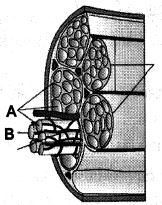
A
સ્નાયુ તંતુ અને સારકોલેમા
B
સારકોલેમા અને રુધિર કેશિકા
C
રુધિર કેશિકા અને સ્નાયુબંધ (fascicle)
D
સ્નાયુબંધ (fascicle) અને રુધિર કેશિકા
Solution
(D) કંકાલ સ્નાયુની રચનાની આપેલી આકૃતિમાં:
$A$ એ સ્નાયુબંધ (fascicle) દર્શાવે છે,જે સ્નાયુ તંતુઓનો સમૂહ છે.
$B$ એ રુધિર કેશિકા દર્શાવે છે,જે સ્નાયુ પેશીને ઓક્સિજન અને પોષક તત્વો પૂરા પાડે છે.
તેથી,સાચી ઓળખ $A$ એટલે સ્નાયુબંધ અને $B$ એટલે રુધિર કેશિકા છે.
$A$ એ સ્નાયુબંધ (fascicle) દર્શાવે છે,જે સ્નાયુ તંતુઓનો સમૂહ છે.
$B$ એ રુધિર કેશિકા દર્શાવે છે,જે સ્નાયુ પેશીને ઓક્સિજન અને પોષક તત્વો પૂરા પાડે છે.
તેથી,સાચી ઓળખ $A$ એટલે સ્નાયુબંધ અને $B$ એટલે રુધિર કેશિકા છે.
0 likes
View Solution31
MediumMCQ
લાંબા અસ્થિઓ ........ તરીકે કાર્ય કરે છે.
A
આધાર
B
આધાર,રક્તકણો અને શ્વેતકણોનું સંશ્લેષણ
C
આધાર અને રક્તકણ નિર્માણ (Erythropoiesis)
D
રક્તકણ નિર્માણ (Erythropoiesis)
Solution
(B) લાંબા અસ્થિઓ માનવ શરીરમાં બે મુખ્ય કાર્યો કરે છે:
$1$. આધાર: તે શરીરને માળખાકીય આધાર અને ટેકો પૂરો પાડે છે,જે શરીરની સ્થિતિ અને હલનચલન માટે જરૂરી છે.
$2$. રક્તકણ નિર્માણ (Erythropoiesis): લાંબા અસ્થિઓની અંદર રહેલી અસ્થિમજ્જા (bone marrow) એ રક્તકણો (erythropoiesis),શ્વેતકણો અને ત્રાકકણોના નિર્માણ માટેનું મુખ્ય સ્થાન છે.
$1$. આધાર: તે શરીરને માળખાકીય આધાર અને ટેકો પૂરો પાડે છે,જે શરીરની સ્થિતિ અને હલનચલન માટે જરૂરી છે.
$2$. રક્તકણ નિર્માણ (Erythropoiesis): લાંબા અસ્થિઓની અંદર રહેલી અસ્થિમજ્જા (bone marrow) એ રક્તકણો (erythropoiesis),શ્વેતકણો અને ત્રાકકણોના નિર્માણ માટેનું મુખ્ય સ્થાન છે.
0 likes
View Solution32
MediumMCQ
નીચેનામાંથી કયું કંકાલતંત્રનું કાર્ય નથી?
A
પ્રચલન
B
રક્તકણોનું નિર્માણ
C
ખનીજ તત્ત્વોનો સંગ્રહ
D
શરીરની ઉષ્માનું ઉત્પાદન
Solution
(D) કંકાલતંત્ર અનેક મહત્વપૂર્ણ કાર્યો કરે છે,જેમાં શરીરને આધાર આપવો,પ્રચલન (હલનચલન) માં મદદ કરવી,આંતરિક અંગોનું રક્ષણ કરવું,ખનીજ તત્ત્વો (જેમ કે કેલ્શિયમ અને ફોસ્ફરસ) નો સંગ્રહ કરવો અને રુધિરકોષોના નિર્માણ (રક્તકણો,શ્વેતકણો અને ત્રાકકણો) માટે અસ્થિમજ્જાને સ્થાન આપવું વગેરેનો સમાવેશ થાય છે.
શરીરની ઉષ્માનું ઉત્પાદન મુખ્યત્વે સ્નાયુતંત્ર દ્વારા ચયાપચયની પ્રક્રિયાઓ અને સ્નાયુઓના સંકોચન દ્વારા થાય છે,કંકાલતંત્ર દ્વારા નહીં.
શરીરની ઉષ્માનું ઉત્પાદન મુખ્યત્વે સ્નાયુતંત્ર દ્વારા ચયાપચયની પ્રક્રિયાઓ અને સ્નાયુઓના સંકોચન દ્વારા થાય છે,કંકાલતંત્ર દ્વારા નહીં.
0 likes
View Solution33
Difficult
સાચું કે ખોટું લખો. જો ખોટું હોય તો વિધાન સુધારીને સાચું બનાવો.
$(a)$ એક્ટિન પાતળા તંતુમાં હાજર હોય છે.
$(b)$ રેખિત સ્નાયુતંતુનો $H$-ઝોન જાડા અને પાતળા બંને તંતુઓનું પ્રતિનિધિત્વ કરે છે.
$(c)$ માનવ કંકાલમાં $206$ હાડકાં હોય છે.
$(d)$ મનુષ્યમાં પાંસળીઓની $11$ જોડ હોય છે.
$(e)$ ઉરોસ્થિ (Sternum) શરીરની વક્ષ બાજુએ આવેલું હોય છે.
$(a)$ એક્ટિન પાતળા તંતુમાં હાજર હોય છે.
$(b)$ રેખિત સ્નાયુતંતુનો $H$-ઝોન જાડા અને પાતળા બંને તંતુઓનું પ્રતિનિધિત્વ કરે છે.
$(c)$ માનવ કંકાલમાં $206$ હાડકાં હોય છે.
$(d)$ મનુષ્યમાં પાંસળીઓની $11$ જોડ હોય છે.
$(e)$ ઉરોસ્થિ (Sternum) શરીરની વક્ષ બાજુએ આવેલું હોય છે.
Solution
(A) સાચું.
$(b)$ ખોટું. રેખિત સ્નાયુતંતુનો $H$-ઝોન ફક્ત જાડા તંતુના મધ્ય ભાગનું પ્રતિનિધિત્વ કરે છે,જ્યાં પાતળા તંતુઓ એકબીજા પર ઓવરલેપ થતા નથી.
$(c)$ સાચું.
$(d)$ ખોટું. મનુષ્યમાં પાંસળીઓની $12$ જોડ હોય છે.
$(e)$ સાચું.
$(b)$ ખોટું. રેખિત સ્નાયુતંતુનો $H$-ઝોન ફક્ત જાડા તંતુના મધ્ય ભાગનું પ્રતિનિધિત્વ કરે છે,જ્યાં પાતળા તંતુઓ એકબીજા પર ઓવરલેપ થતા નથી.
$(c)$ સાચું.
$(d)$ ખોટું. મનુષ્યમાં પાંસળીઓની $12$ જોડ હોય છે.
$(e)$ સાચું.
0 likes
View Solution34
Difficult
તફાવત લખો (કોઈપણ બે):
$(a)$ એક્ટિન અને માયોસિન
$(b)$ લાલ અને સફેદ સ્નાયુતંતુઓ
$(c)$ અગ્રબાહુ મેખલા (Pectoral) અને પશ્ચબાહુ મેખલા (Pelvic girdle)
$(a)$ એક્ટિન અને માયોસિન
$(b)$ લાલ અને સફેદ સ્નાયુતંતુઓ
$(c)$ અગ્રબાહુ મેખલા (Pectoral) અને પશ્ચબાહુ મેખલા (Pelvic girdle)
Solution
(N/A) એક્ટિન અને માયોસિન
$(b)$ લાલ અને સફેદ સ્નાયુતંતુઓ
$(c)$ અગ્રબાહુ મેખલા અને પશ્ચબાહુ મેખલા
| એક્ટિન | માયોસિન |
|---|---|
| $(1)$ એક્ટિન એ પાતળું સંકોચનશીલ પ્રોટીન છે. | $(1)$ માયોસિન એ જાડું સંકોચનશીલ પ્રોટીન છે. |
| $(2)$ તે આછા પટ્ટામાં જોવા મળે છે અને તેને આઈસોટ્રોપિક પટ્ટો કહેવાય છે. | $(2)$ તે ઘેરા પટ્ટામાં જોવા મળે છે અને તેને એનઆઈસોટ્રોપિક પટ્ટો કહેવાય છે. |
$(b)$ લાલ અને સફેદ સ્નાયુતંતુઓ
| લાલ સ્નાયુતંતુઓ | સફેદ સ્નાયુતંતુઓ |
|---|---|
| $(1)$ આ તંતુઓ પાતળા અને કદમાં નાના હોય છે. | $(1)$ આ તંતુઓ જાડા અને કદમાં મોટા હોય છે. |
| $(2)$ તેમાં માયોગ્લોબિનનું પ્રમાણ વધુ હોવાથી તે લાલ રંગના હોય છે. | $(2)$ તેમાં માયોગ્લોબિનનું પ્રમાણ ઓછું હોવાથી તે સફેદ રંગના હોય છે. |
| $(3)$ તેમાં કણાભસૂત્રોની સંખ્યા વધુ હોય છે. | $(3)$ તેમાં કણાભસૂત્રોની સંખ્યા ઓછી હોય છે. |
| $(4)$ તેઓ લાંબા સમય સુધી ધીમું અને સતત સંકોચન કરે છે. | $(4)$ તેઓ ટૂંકા સમય માટે ઝડપી કાર્ય કરે છે. |
| $(5)$ તેઓ જારક શ્વસન દ્વારા ઉર્જા મેળવે છે. | $(5)$ તેઓ અજારક શ્વસન દ્વારા ઉર્જા મેળવે છે. |
$(c)$ અગ્રબાહુ મેખલા અને પશ્ચબાહુ મેખલા
| અગ્રબાહુ મેખલા | પશ્ચબાહુ મેખલા |
|---|---|
| $(1)$ તે અગ્ર ઉપાંગો (હાથ) ને જોડવા માટેનું કંકાલ આધાર આપે છે. | $(1)$ તે પશ્ચ ઉપાંગો (પગ) ને જોડવા માટેનું કંકાલ આધાર આપે છે. |
| $(2)$ તે બે અસ્થિઓનું બનેલું છે: ક્લેવિકલ અને સ્કેપ્યુલા. | $(2)$ તે ત્રણ અસ્થિઓનું બનેલું છે: ઈલિયમ,ઈશ્ચિયમ અને પ્યુબિસ. |
0 likes
View Solution35
EasyMCQ
કૉલમ $I$ ને કૉલમ $II$ સાથે જોડો.
| કૉલમ $I$ | કૉલમ $II$ |
|---|---|
| $(a)$ અરેખિત સ્નાયુ (Smooth muscle) | $(i)$ માયોગ્લોબિન |
| $(b)$ ટ્રોપોમાયોસિન | $(ii)$ પાતળા તંતુ (Thin filament) |
| $(c)$ રક્ત સ્નાયુ (Red muscle) | $(iii)$ સીવણ (Sutures) |
| $(d)$ ખોપરી (Skull) | $(iv)$ અનૈચ્છિક |
A
$a-iv, b-ii, c-i, d-iii$
B
$a-iii, b-ii, c-i, d-iv$
C
$a-iv, b-i, c-ii, d-iii$
D
$a-i, b-ii, c-iii, d-iv$
Solution
(A) સાચી જોડ નીચે મુજબ છે:
$1$. $(a)$ અરેખિત સ્નાયુ: આ અનૈચ્છિક સ્નાયુઓ છે જે આંતરિક અંગોની દીવાલોમાં જોવા મળે છે. તેથી,$(a-iv)$.
$2$. $(b)$ ટ્રોપોમાયોસિન: તે એક નિયમનકારી પ્રોટીન છે જે સ્નાયુ તંતુઓમાં પાતળા તંતુનો એક ઘટક છે. તેથી,$(b-ii)$.
$3$. $(c)$ રક્ત સ્નાયુ: આ સ્નાયુ તંતુઓમાં પુષ્કળ પ્રમાણમાં માયોગ્લોબિન હોય છે,જે લાલ રંગ આપે છે અને ઓક્સિજનનો સંગ્રહ કરે છે. તેથી,$(c-i)$.
$4$. $(d)$ ખોપરી: ખોપરીના હાડકાં સીવણ (sutures) નામના તંતુમય સાંધાઓ દ્વારા જોડાયેલા હોય છે,જે અચલ હોય છે. તેથી,$(d-iii)$.
આમ,સાચો ક્રમ $a-iv, b-ii, c-i, d-iii$ છે.
$1$. $(a)$ અરેખિત સ્નાયુ: આ અનૈચ્છિક સ્નાયુઓ છે જે આંતરિક અંગોની દીવાલોમાં જોવા મળે છે. તેથી,$(a-iv)$.
$2$. $(b)$ ટ્રોપોમાયોસિન: તે એક નિયમનકારી પ્રોટીન છે જે સ્નાયુ તંતુઓમાં પાતળા તંતુનો એક ઘટક છે. તેથી,$(b-ii)$.
$3$. $(c)$ રક્ત સ્નાયુ: આ સ્નાયુ તંતુઓમાં પુષ્કળ પ્રમાણમાં માયોગ્લોબિન હોય છે,જે લાલ રંગ આપે છે અને ઓક્સિજનનો સંગ્રહ કરે છે. તેથી,$(c-i)$.
$4$. $(d)$ ખોપરી: ખોપરીના હાડકાં સીવણ (sutures) નામના તંતુમય સાંધાઓ દ્વારા જોડાયેલા હોય છે,જે અચલ હોય છે. તેથી,$(d-iii)$.
આમ,સાચો ક્રમ $a-iv, b-ii, c-i, d-iii$ છે.
0 likes
View Solution36
Difficult
ખાલી જગ્યાઓ પૂરો:
$(a)$ બધા સસ્તન પ્રાણીઓમાં (થોડા અપવાદો સિવાય) ............. ગ્રીવા કશેરુકાઓ હોય છે.
$(b)$ મનુષ્યના દરેક અંગમાં આંગળીઓના હાડકાં (phalanges) ની સંખ્યા ............. છે.
$(c)$ માયોફાઈબ્રિલના પાતળા તંતુમાં $2 \,'F'$ એક્ટિન અને અન્ય બે પ્રોટીન,એટલે કે .............. અને ........... હોય છે.
$(d)$ સ્નાયુ તંતુમાં $Ca^{++}$ ............. માં સંગ્રહિત થાય છે.
$(e)$ .............. અને .............. પાંસળીઓની જોડને મુક્ત પાંસળીઓ (floating ribs) કહેવામાં આવે છે.
$(f)$ માનવ ખોપરી (cranium) ............. હાડકાંની બનેલી છે.
$(a)$ બધા સસ્તન પ્રાણીઓમાં (થોડા અપવાદો સિવાય) ............. ગ્રીવા કશેરુકાઓ હોય છે.
$(b)$ મનુષ્યના દરેક અંગમાં આંગળીઓના હાડકાં (phalanges) ની સંખ્યા ............. છે.
$(c)$ માયોફાઈબ્રિલના પાતળા તંતુમાં $2 \,'F'$ એક્ટિન અને અન્ય બે પ્રોટીન,એટલે કે .............. અને ........... હોય છે.
$(d)$ સ્નાયુ તંતુમાં $Ca^{++}$ ............. માં સંગ્રહિત થાય છે.
$(e)$ .............. અને .............. પાંસળીઓની જોડને મુક્ત પાંસળીઓ (floating ribs) કહેવામાં આવે છે.
$(f)$ માનવ ખોપરી (cranium) ............. હાડકાંની બનેલી છે.
Solution
(N/A) બધા સસ્તન પ્રાણીઓમાં (થોડા અપવાદો સિવાય) $7$ ગ્રીવા કશેરુકાઓ હોય છે.
$(b)$ મનુષ્યના દરેક અંગમાં આંગળીઓના હાડકાં (phalanges) ની સંખ્યા $14$ છે.
$(c)$ માયોફાઈબ્રિલના પાતળા તંતુમાં $2 \,'F'$ એક્ટિન અને અન્ય બે પ્રોટીન,એટલે કે ટ્રોપોનિન અને ટ્રોપોમાયોસિન હોય છે.
$(d)$ સ્નાયુ તંતુમાં,$Ca^{++}$ સાર્કોપ્લાઝમિક રેટિક્યુલમમાં સંગ્રહિત થાય છે.
$(e)$ $11$ મી અને $12$ મી પાંસળીઓની જોડને મુક્ત પાંસળીઓ (floating ribs) કહેવામાં આવે છે.
$(f)$ માનવ ખોપરી (cranium) $8$ હાડકાંની બનેલી છે.
$(b)$ મનુષ્યના દરેક અંગમાં આંગળીઓના હાડકાં (phalanges) ની સંખ્યા $14$ છે.
$(c)$ માયોફાઈબ્રિલના પાતળા તંતુમાં $2 \,'F'$ એક્ટિન અને અન્ય બે પ્રોટીન,એટલે કે ટ્રોપોનિન અને ટ્રોપોમાયોસિન હોય છે.
$(d)$ સ્નાયુ તંતુમાં,$Ca^{++}$ સાર્કોપ્લાઝમિક રેટિક્યુલમમાં સંગ્રહિત થાય છે.
$(e)$ $11$ મી અને $12$ મી પાંસળીઓની જોડને મુક્ત પાંસળીઓ (floating ribs) કહેવામાં આવે છે.
$(f)$ માનવ ખોપરી (cranium) $8$ હાડકાંની બનેલી છે.
0 likes
View Solution37
Easy
કંકાલ તંત્ર એટલે શું? સમજાવો.
Solution
(N/A) $\Rightarrow$ પ્રાણી શરીરના સખત,આધાર આપતા અને રક્ષણાત્મક ઘટકો કંકાલ અથવા કંકાલ તંત્ર બનાવે છે.
$\Rightarrow$ કંકાલ તંત્રના અભ્યાસને $\text{Osteology}$ (અસ્થિ વિજ્ઞાન) કહેવામાં આવે છે. કંકાલ તંત્ર અસ્થિઓ અને થોડી કાસ્થિઓનું બનેલું હોય છે.
$\Rightarrow$ શરીર દ્વારા દર્શાવવામાં આવતી હલનચલનમાં તેની મહત્વની ભૂમિકા છે.
$\Rightarrow$ અસ્થિ અને કાસ્થિ એ સંયોજક પેશીના વિશિષ્ટ પ્રકારો છે.
- અસ્થિમાં કેલ્શિયમ ક્ષારોની હાજરીને કારણે ખૂબ જ સખત આધારક (matrix) હોય છે,જ્યારે કાસ્થિમાં કોન્ડ્રોઇટિન ક્ષારોને કારણે થોડું નરમ અને લવચીક આધારક હોય છે.
મનુષ્યોમાં,આ તંત્ર $206$ અસ્થિઓ અને કેટલીક કાસ્થિઓનું બનેલું હોય છે.
તેને બે મુખ્ય વિભાગોમાં વહેંચવામાં આવે છે: $(i)$ અક્ષીય કંકાલ અને $(ii)$ ઉપાંગીય કંકાલ.
$\Rightarrow$ કંકાલ તંત્રના અભ્યાસને $\text{Osteology}$ (અસ્થિ વિજ્ઞાન) કહેવામાં આવે છે. કંકાલ તંત્ર અસ્થિઓ અને થોડી કાસ્થિઓનું બનેલું હોય છે.
$\Rightarrow$ શરીર દ્વારા દર્શાવવામાં આવતી હલનચલનમાં તેની મહત્વની ભૂમિકા છે.
$\Rightarrow$ અસ્થિ અને કાસ્થિ એ સંયોજક પેશીના વિશિષ્ટ પ્રકારો છે.
- અસ્થિમાં કેલ્શિયમ ક્ષારોની હાજરીને કારણે ખૂબ જ સખત આધારક (matrix) હોય છે,જ્યારે કાસ્થિમાં કોન્ડ્રોઇટિન ક્ષારોને કારણે થોડું નરમ અને લવચીક આધારક હોય છે.
મનુષ્યોમાં,આ તંત્ર $206$ અસ્થિઓ અને કેટલીક કાસ્થિઓનું બનેલું હોય છે.
તેને બે મુખ્ય વિભાગોમાં વહેંચવામાં આવે છે: $(i)$ અક્ષીય કંકાલ અને $(ii)$ ઉપાંગીય કંકાલ.
0 likes
View Solution38
EasyMCQ
પ્રચલન (Locomotion) માટે સ્નાયુતંત્રની $.......$ તંત્રો સાથે સંપૂર્ણ સંકલિત પ્રવૃત્તિની જરૂર હોય છે.
A
કંકાલ
B
ચેતા
C
કંકાલ અને ચેતા
D
પાચન
Solution
(C) પ્રચલન એ સજીવનું એક જગ્યાએથી બીજી જગ્યાએ થતું સ્વૈચ્છિક હલનચલન છે.
તે મુખ્ય ત્રણ તંત્રોની સંકલિત પ્રવૃત્તિની જરૂરિયાત ધરાવે છે:
$1$. સ્નાયુતંત્ર: હલનચલન માટે બળ પૂરું પાડે છે.
$2$. કંકાલતંત્ર: સ્નાયુઓ માટે માળખું અને જોડાણના બિંદુઓ પૂરા પાડે છે.
$3$. ચેતાતંત્ર: હલનચલન માટે જરૂરી સંકેતો અને સંકલન પૂરું પાડે છે.
તેથી,પ્રચલન માટે સ્નાયુતંત્રની કંકાલ અને ચેતાતંત્રો સાથે સંપૂર્ણ સંકલિત પ્રવૃત્તિની જરૂર હોય છે.
તે મુખ્ય ત્રણ તંત્રોની સંકલિત પ્રવૃત્તિની જરૂરિયાત ધરાવે છે:
$1$. સ્નાયુતંત્ર: હલનચલન માટે બળ પૂરું પાડે છે.
$2$. કંકાલતંત્ર: સ્નાયુઓ માટે માળખું અને જોડાણના બિંદુઓ પૂરા પાડે છે.
$3$. ચેતાતંત્ર: હલનચલન માટે જરૂરી સંકેતો અને સંકલન પૂરું પાડે છે.
તેથી,પ્રચલન માટે સ્નાયુતંત્રની કંકાલ અને ચેતાતંત્રો સાથે સંપૂર્ણ સંકલિત પ્રવૃત્તિની જરૂર હોય છે.
0 likes
View Solution39
EasyMCQ
પેક્ટોરલ (અંસમેખલા) અને પેલ્વિક (નિતંબમેખલા) મેખલા વચ્ચેનો તફાવત જણાવો.
A
પેક્ટોરલ મેખલા અગ્ર ઉપાંગોને આધાર આપે છે; પેલ્વિક મેખલા પશ્ચ ઉપાંગોને આધાર આપે છે.
B
પેક્ટોરલ મેખલા અંસફલક (scapula) અને જત્રુ (clavicle) ની બનેલી છે; પેલ્વિક મેખલા બે નિતંબ અસ્થિઓની બનેલી છે.
C
પેક્ટોરલ મેખલા હલકી અને લવચીક છે; પેલ્વિક મેખલા ભારે અને મજબૂત છે.
D
ઉપરોક્ત તમામ.
Solution
(D) પેક્ટોરલ અને પેલ્વિક મેખલા વચ્ચેના તફાવત નીચે મુજબ છે:
$1$. કાર્ય: પેક્ટોરલ મેખલા અગ્ર ઉપાંગો (હાથ) ને આધાર આપે છે,જ્યારે પેલ્વિક મેખલા પશ્ચ ઉપાંગો (પગ) ને આધાર આપે છે અને નિતંબના અંગોનું રક્ષણ કરે છે.
$2$. બંધારણ: પેક્ટોરલ મેખલા દરેક બાજુએ બે અસ્થિઓની બનેલી છે: અંસફલક (scapula) અને જત્રુ (clavicle). પેલ્વિક મેખલા બે નિતંબ અસ્થિઓની બનેલી છે,જેમાંથી દરેક ત્રણ અસ્થિઓના જોડાણથી બને છે: ઇલિયમ (ilium),ઇશિયમ (ischium) અને પ્યુબિસ (pubis).
$3$. રચના: પેક્ટોરલ મેખલા હાથની હલનચલન માટે ગતિશીલતા અને લવચીકતા પ્રદાન કરવા માટે રચાયેલ છે. તેનાથી વિપરીત,પેલ્વિક મેખલા સ્થિરતા અને શરીરના વજનને ટેકો આપવા માટે રચાયેલ છે,જે તેને ભારે અને વધુ મજબૂત બનાવે છે.
$1$. કાર્ય: પેક્ટોરલ મેખલા અગ્ર ઉપાંગો (હાથ) ને આધાર આપે છે,જ્યારે પેલ્વિક મેખલા પશ્ચ ઉપાંગો (પગ) ને આધાર આપે છે અને નિતંબના અંગોનું રક્ષણ કરે છે.
$2$. બંધારણ: પેક્ટોરલ મેખલા દરેક બાજુએ બે અસ્થિઓની બનેલી છે: અંસફલક (scapula) અને જત્રુ (clavicle). પેલ્વિક મેખલા બે નિતંબ અસ્થિઓની બનેલી છે,જેમાંથી દરેક ત્રણ અસ્થિઓના જોડાણથી બને છે: ઇલિયમ (ilium),ઇશિયમ (ischium) અને પ્યુબિસ (pubis).
$3$. રચના: પેક્ટોરલ મેખલા હાથની હલનચલન માટે ગતિશીલતા અને લવચીકતા પ્રદાન કરવા માટે રચાયેલ છે. તેનાથી વિપરીત,પેલ્વિક મેખલા સ્થિરતા અને શરીરના વજનને ટેકો આપવા માટે રચાયેલ છે,જે તેને ભારે અને વધુ મજબૂત બનાવે છે.
0 likes
View Solution40
MediumMCQ
સાદ્રશ્ય પ્રકારના પ્રશ્નો :
$(1)$ બધા પ્રચલન : હલનચલન :: બધા હલનચલન : ...........
$(2)$ શ્વાસનળીમાં આવેલા પક્ષ્મો : ધૂળના રજકણોને દૂર કરવામાં મદદ કરે છે :: માદા પ્રજનનતંત્રના પક્ષ્મલ કોષો : .........
$(1)$ બધા પ્રચલન : હલનચલન :: બધા હલનચલન : ...........
$(2)$ શ્વાસનળીમાં આવેલા પક્ષ્મો : ધૂળના રજકણોને દૂર કરવામાં મદદ કરે છે :: માદા પ્રજનનતંત્રના પક્ષ્મલ કોષો : .........
A
Not locomotion
B
Transport of ovum
C
Both $A$ and $B$
D
None of these
Solution
(C) $(1)$ બધા પ્રચલન એ હલનચલન છે, પરંતુ બધા હલનચલન એ પ્રચલન નથી. તેથી, જવાબ $\text{પ્રચલન } \text{નથી}$ આવશે.
$(2)$ શ્વાસનળીમાં આવેલા પક્ષ્મો ધૂળના રજકણોને દૂર કરવામાં મદદ કરે છે, જ્યારે માદા પ્રજનનતંત્ર (અંડવાહિની) ના પક્ષ્મલ અધિચ્છદ કોષો $\text{અંડકોષના } \text{વહન}$ માં મદદ કરે છે.
$(2)$ શ્વાસનળીમાં આવેલા પક્ષ્મો ધૂળના રજકણોને દૂર કરવામાં મદદ કરે છે, જ્યારે માદા પ્રજનનતંત્ર (અંડવાહિની) ના પક્ષ્મલ અધિચ્છદ કોષો $\text{અંડકોષના } \text{વહન}$ માં મદદ કરે છે.
0 likes
View Solution41
MediumMCQ
સાદ્રશ્ય પ્રકારના પ્રશ્નો:
$(1)$ કાંડાના અસ્થિ (Carpals) : $8$ :: ઘૂંટીના અસ્થિ (Tarsals) : ...........
$(2)$ કાસ્થિમય સાંધા : કરોડસ્તંભની કશેરુકાઓ વચ્ચે :: મિજાગરાનો સાંધો (Hinge joint) : ...........
$(1)$ કાંડાના અસ્થિ (Carpals) : $8$ :: ઘૂંટીના અસ્થિ (Tarsals) : ...........
$(2)$ કાસ્થિમય સાંધા : કરોડસ્તંભની કશેરુકાઓ વચ્ચે :: મિજાગરાનો સાંધો (Hinge joint) : ...........
A
$(1)$ $7$,$(2)$ ઘૂંટણનો સાંધો
B
$(1)$ $7$,$(2)$ કોણીનો સાંધો
C
$(1)$ $5$,$(2)$ ખભાનો સાંધો
D
$(1)$ $6$,$(2)$ નિતંબનો સાંધો
Solution
(B) $(1)$ કાંડાના અસ્થિ (Carpals) ની સંખ્યા $8$ હોય છે,જ્યારે ઘૂંટીના અસ્થિ (Tarsals) ની સંખ્યા $7$ હોય છે.
$(2)$ કાસ્થિમય સાંધા કરોડસ્તંભની કશેરુકાઓ વચ્ચે જોવા મળે છે. મિજાગરાનો સાંધો (Hinge joint) એક જ દિશામાં હલનચલન કરવા દે છે,જેમ કે કોણીનો સાંધો અથવા ઘૂંટણનો સાંધો. જીવવિજ્ઞાનના પ્રમાણિત ઉદાહરણો મુજબ,કોણીનો સાંધો એ મિજાગરાના સાંધાનું સૌથી સામાન્ય ઉદાહરણ છે.
$(2)$ કાસ્થિમય સાંધા કરોડસ્તંભની કશેરુકાઓ વચ્ચે જોવા મળે છે. મિજાગરાનો સાંધો (Hinge joint) એક જ દિશામાં હલનચલન કરવા દે છે,જેમ કે કોણીનો સાંધો અથવા ઘૂંટણનો સાંધો. જીવવિજ્ઞાનના પ્રમાણિત ઉદાહરણો મુજબ,કોણીનો સાંધો એ મિજાગરાના સાંધાનું સૌથી સામાન્ય ઉદાહરણ છે.
0 likes
View Solution42
MediumMCQ
સાદ્રશ્ય પ્રકારના પ્રશ્નો:
$(1)$ ઍક્ટિન માટેનું સક્રિય સ્થાન માયોસીનની પૂંછડી પર / માયોસીનના શીર્ષ પર હોય છે.
$(2)$ સજીવોમાં શરીરના ભાગોનું હલનચલન પ્રેરિત / સ્વયંસ્ફુરિત હોય છે.
$(1)$ ઍક્ટિન માટેનું સક્રિય સ્થાન માયોસીનની પૂંછડી પર / માયોસીનના શીર્ષ પર હોય છે.
$(2)$ સજીવોમાં શરીરના ભાગોનું હલનચલન પ્રેરિત / સ્વયંસ્ફુરિત હોય છે.
A
$(1)$ માયોસીનની પૂંછડી,$(2)$ પ્રેરિત
B
$(1)$ માયોસીનનું શીર્ષ,$(2)$ સ્વયંસ્ફુરિત
C
$(1)$ માયોસીનની પૂંછડી,$(2)$ સ્વયંસ્ફુરિત
D
$(1)$ માયોસીનનું શીર્ષ,$(2)$ પ્રેરિત
Solution
(B) $(1)$ માયોસીનના શીર્ષ પર ઍક્ટિનના જોડાણ માટેનું સક્રિય સ્થાન આવેલું હોય છે,જે સ્નાયુ સંકોચન દરમિયાન ક્રોસ-બ્રિજ બનાવવામાં મદદ કરે છે.
$(2)$ સજીવોમાં શરીરના ભાગોનું હલનચલન સ્વયંસ્ફુરિત હોય છે,જેનો અર્થ છે કે તે બાહ્ય બળો દ્વારા પ્રેરિત થવાને બદલે આંતરિક શારીરિક પ્રક્રિયાઓને કારણે થાય છે.
$(2)$ સજીવોમાં શરીરના ભાગોનું હલનચલન સ્વયંસ્ફુરિત હોય છે,જેનો અર્થ છે કે તે બાહ્ય બળો દ્વારા પ્રેરિત થવાને બદલે આંતરિક શારીરિક પ્રક્રિયાઓને કારણે થાય છે.
0 likes
View Solution43
MediumMCQ
સાદ્રશ્ય પ્રકારના પ્રશ્નો:
$(1)$ સ્નાયુસંકોચન દરમિયાન,$A$-બિંબની લંબાઈમાં કોઈ ફેરફાર થતો નથી.
$(2)$ આઠમી,નવમી અને દસમી જોડીની પાંસળીઓ કાચવતકાસ્થિ (hyaline cartilage) ની મદદથી સાતમી જોડીની પાંસળીઓ સાથે જોડાય છે. યોગ્ય શબ્દો ઓળખો.
$(1)$ સ્નાયુસંકોચન દરમિયાન,$A$-બિંબની લંબાઈમાં કોઈ ફેરફાર થતો નથી.
$(2)$ આઠમી,નવમી અને દસમી જોડીની પાંસળીઓ કાચવતકાસ્થિ (hyaline cartilage) ની મદદથી સાતમી જોડીની પાંસળીઓ સાથે જોડાય છે. યોગ્ય શબ્દો ઓળખો.
A
$(1)$ $A$-બિંબ,$(2)$ ખોટી પાંસળીઓ
B
$(1)$ $I$-બિંબ,$(2)$ મુક્ત પાંસળીઓ
C
$(1)$ $Z$-રેખા,$(2)$ સાચી પાંસળીઓ
D
$(1)$ $H$-વિસ્તાર,$(2)$ પૃષ્ઠવંશી પાંસળીઓ
Solution
(A) $(1)$ સ્નાયુસંકોચન દરમિયાન,$A$-બિંબની લંબાઈ અચળ રહે છે કારણ કે માયોસિન તંતુઓની લંબાઈમાં કોઈ ફેરફાર થતો નથી.
$(2)$ આઠમી,નવમી અને દસમી જોડીની પાંસળીઓ સીધી રીતે ઉરોસ્થિ (sternum) સાથે જોડાયેલી હોતી નથી,પરંતુ કાચવતકાસ્થિ દ્વારા સાતમી પાંસળી સાથે જોડાય છે; આ પાંસળીઓને ખોટી પાંસળીઓ (vertebrochondral ribs) કહેવામાં આવે છે.
$(2)$ આઠમી,નવમી અને દસમી જોડીની પાંસળીઓ સીધી રીતે ઉરોસ્થિ (sternum) સાથે જોડાયેલી હોતી નથી,પરંતુ કાચવતકાસ્થિ દ્વારા સાતમી પાંસળી સાથે જોડાય છે; આ પાંસળીઓને ખોટી પાંસળીઓ (vertebrochondral ribs) કહેવામાં આવે છે.
0 likes
View Solution44
EasyMCQ
નીચેના કોલમ જોડો અને સાચો વિકલ્પ પસંદ કરો.
$(a) \quad (b) \quad (c) \quad (d)$
| કોલમ-$I$ | કોલમ-$II$ |
| $(a)$ તરતી પાંસળીઓ (Floating Ribs) | $(i)$ બીજી અને સાતમી પાંસળીની વચ્ચે આવેલી |
| $(b)$ એક્રોમિયન (Acromion) | $(ii)$ હ્યુમરસનું શીર્ષ |
| $(c)$ સ્કૅપુલા (Scapula) | $(iii)$ ક્લેવિકલ (Clavicle) |
| $(d)$ ગ્લેનોઇડ ગુહા (Glenoid cavity) | $(iv)$ સ્ટર્નમ સાથે જોડાયેલી નથી |
$(a) \quad (b) \quad (c) \quad (d)$
A
$(iv) \quad (iii) \quad (i) \quad (ii)$
B
$(ii) \quad (iv) \quad (i) \quad (iii)$
C
$(i) \quad (iii) \quad (ii) \quad (iv)$
D
$(iii) \quad (ii) \quad (iv) \quad (i)$
Solution
(A) સાચી જોડીઓ નીચે મુજબ છે:
$(a)$ તરતી પાંસળીઓ: આ $11$ મી અને $12$ મી જોડીની પાંસળીઓ છે જે સ્ટર્નમ સાથે જોડાતી નથી, તેથી $(iv)$.
$(b)$ એક્રોમિયન: તે સ્કૅપુલા પરનો એક અસ્થિ પ્રવર્ધ છે જે ક્લેવિકલ સાથે જોડાય છે, તેથી $(iii)$.
$(c)$ સ્કૅપુલા: તે ઉરોદરના પૃષ્ઠ ભાગમાં બીજી અને સાતમી પાંસળીની વચ્ચે આવેલું મોટું ત્રિકોણાકાર અસ્થિ છે, તેથી $(i)$.
$(d)$ ગ્લેનોઇડ ગુહા: તે સ્કૅપુલામાં આવેલો ખાડો છે જે હ્યુમરસના શીર્ષ સાથે જોડાય છે, તેથી $(ii)$.
તેથી, સાચો ક્રમ $(a)-(iv), (b)-(iii), (c)-(i), (d)-(ii)$ છે.
$(a)$ તરતી પાંસળીઓ: આ $11$ મી અને $12$ મી જોડીની પાંસળીઓ છે જે સ્ટર્નમ સાથે જોડાતી નથી, તેથી $(iv)$.
$(b)$ એક્રોમિયન: તે સ્કૅપુલા પરનો એક અસ્થિ પ્રવર્ધ છે જે ક્લેવિકલ સાથે જોડાય છે, તેથી $(iii)$.
$(c)$ સ્કૅપુલા: તે ઉરોદરના પૃષ્ઠ ભાગમાં બીજી અને સાતમી પાંસળીની વચ્ચે આવેલું મોટું ત્રિકોણાકાર અસ્થિ છે, તેથી $(i)$.
$(d)$ ગ્લેનોઇડ ગુહા: તે સ્કૅપુલામાં આવેલો ખાડો છે જે હ્યુમરસના શીર્ષ સાથે જોડાય છે, તેથી $(ii)$.
તેથી, સાચો ક્રમ $(a)-(iv), (b)-(iii), (c)-(i), (d)-(ii)$ છે.
0 likes
View Solution45
EasyMCQ
સેલેમેન્ડર પુનઃસર્જન (regenerate) કરી શકે છે:
A
પૂંછડી
B
બાહ્ય ઝાલર
C
અંગો
D
આ તમામ
Solution
(D) સેલેમેન્ડર તેમની અદભૂત પુનઃસર્જન ક્ષમતા માટે જાણીતા છે. તેઓ ઈજા અથવા અંગ કપાઈ ગયા પછી તેમની પૂંછડી,અંગો અને બાહ્ય ઝાલર સહિત શરીરના વિવિધ ભાગોનું પુનઃસર્જન કરી શકે છે.
0 likes
View Solution46
EasyMCQ
દેડકા અને ટોડના ટેડપોલ લાર્વાના કાયાંતરણ (metamorphosis) માં નીચેનામાંથી કયા લક્ષણો લાગુ પડે છે?
A
ઝાલરનું પુનઃશોષણ અને પૂંછડીનું પુનઃશોષણ
B
ઝાલરનું પુનઃશોષણ અને પૂંછડીની લંબાઈમાં વધારો
C
ઝાલરનો સંપૂર્ણ વિકાસ અને પૂંછડીનું પુનઃશોષણ
D
ઝાલરનો જટિલ વિકાસ અને પૂંછડીની લંબાઈમાં વધારો
Solution
(A) દેડકા અને ટોડનો ટેડપોલ લાર્વા જલીય હોય છે અને તેમાં શ્વસન માટે ઝાલર અને તરવા માટે પૂંછડી હોય છે. કાયાંતરણની પ્રક્રિયા દરમિયાન,આ લાર્વા અવસ્થાના અંગોની પુખ્ત સ્થળચર અવસ્થા માટે જરૂર હોતી નથી. તેથી,ઝાલરનું પુનઃશોષણ થાય છે અને પૂંછડીનું પણ પુનઃશોષણ થાય છે,જે પુખ્ત સ્વરૂપમાં રૂપાંતરિત થવામાં મદદ કરે છે.
0 likes
View Solution47
MediumMCQ
અંતઃકંકાલનું કાર્ય કયું નથી?
A
દ્રષ્ટિ
B
સાંભળવું
C
પ્રચલન
D
$RBCs$ નું ઉત્પાદન
Solution
(A) દ્રષ્ટિ એ અંતઃકંકાલનું કાર્ય નથી,કારણ કે દ્રષ્ટિ અથવા પ્રતિબિંબ રચવાની પ્રક્રિયામાં હાડકાના કંકાલનો સમાવેશ થતો નથી.
$1)$ સાંભળવાની પ્રક્રિયામાં કાનના અસ્થિઓ ($malleus$,$incus$,અને $stapes$) ધ્વનિ તરંગોના પ્રવર્ધન માટે જવાબદાર છે,જે કંકાલ તંત્રનો ભાગ છે.
$2)$ પ્રચલન એ ઉપાંગ કંકાલની હલનચલન સાથે સંકળાયેલ છે,જે સ્નાયુઓના જોડાણ માટે માળખું પૂરું પાડે છે.
$3)$ અંતઃકંકાલમાં આવેલ અસ્થિમજ્જા $haemopoiesis$ (રુધિર કોષોનું ઉત્પાદન,જેમાં $RBCs$ નો સમાવેશ થાય છે) માટે જવાબદાર છે.
$1)$ સાંભળવાની પ્રક્રિયામાં કાનના અસ્થિઓ ($malleus$,$incus$,અને $stapes$) ધ્વનિ તરંગોના પ્રવર્ધન માટે જવાબદાર છે,જે કંકાલ તંત્રનો ભાગ છે.
$2)$ પ્રચલન એ ઉપાંગ કંકાલની હલનચલન સાથે સંકળાયેલ છે,જે સ્નાયુઓના જોડાણ માટે માળખું પૂરું પાડે છે.
$3)$ અંતઃકંકાલમાં આવેલ અસ્થિમજ્જા $haemopoiesis$ (રુધિર કોષોનું ઉત્પાદન,જેમાં $RBCs$ નો સમાવેશ થાય છે) માટે જવાબદાર છે.
0 likes
View Solution48
MediumMCQ
માનવ કંકાલ તંત્ર શેનું બનેલું છે?
A
$200 \; \text{હાડકાં}$
B
$300 \; \text{હાડકાં}$
C
$206 \; \text{હાડકાં}$
D
$250 \; \text{હાડકાં}$
Solution
(C) પુખ્ત માનવ કંકાલ તંત્ર $206$ હાડકાંનું બનેલું હોય છે.
જન્મ સમયે, માનવ કંકાલમાં આશરે $270$ હાડકાં હોય છે, પરંતુ જેમ શરીરનો વિકાસ થાય છે તેમ આમાંથી ઘણા હાડકાં એકબીજા સાથે જોડાઈ જાય છે.
આ $206$ હાડકાંને બે મુખ્ય ભાગોમાં વર્ગીકૃત કરવામાં આવે છે: અક્ષીય કંકાલ ($80$ હાડકાં) અને ઉપાંગીય કંકાલ ($126$ હાડકાં).
કાનના અસ્થિઓ (મેલિયસ, ઇન્કસ અને સ્ટેપ્સ) નો પણ આ સંખ્યામાં સમાવેશ થાય છે.
જન્મ સમયે, માનવ કંકાલમાં આશરે $270$ હાડકાં હોય છે, પરંતુ જેમ શરીરનો વિકાસ થાય છે તેમ આમાંથી ઘણા હાડકાં એકબીજા સાથે જોડાઈ જાય છે.
આ $206$ હાડકાંને બે મુખ્ય ભાગોમાં વર્ગીકૃત કરવામાં આવે છે: અક્ષીય કંકાલ ($80$ હાડકાં) અને ઉપાંગીય કંકાલ ($126$ હાડકાં).
કાનના અસ્થિઓ (મેલિયસ, ઇન્કસ અને સ્ટેપ્સ) નો પણ આ સંખ્યામાં સમાવેશ થાય છે.
0 likes
View Solution49
MediumMCQ
પ્રચલન (Locomotion) માટે કોની સંપૂર્ણ સંકલિત પ્રવૃત્તિની જરૂર હોય છે?
A
સ્નાયુતંત્ર
B
કંકાલતંત્ર
C
ચેતાતંત્ર
D
આ તમામ
Solution
(D) પ્રચલન એ એક જટિલ પ્રક્રિયા છે જેમાં શરીરની વિવિધ પ્રણાલીઓનું સંકલિત કાર્ય સામેલ છે。
$1$. $\text{સ્નાયુતંત્ર}$ હલનચલન માટે જરૂરી બળ અને સંકોચન પૂરું પાડે છે。
$2$. $\text{કંકાલતંત્ર}$ સ્નાયુઓ માટે માળખું અને આધારબિંદુઓ પૂરું પાડે છે。
$3$. $\text{ચેતાતંત્ર}$ સ્નાયુઓ યોગ્ય ક્રમમાં અને તીવ્રતામાં સંકોચાય તે માટે જરૂરી સંકેતો અને સંકલન પૂરું પાડે છે。
તેથી, પ્રચલન પ્રાપ્ત કરવા માટે આ તમામ પ્રણાલીઓએ સંપૂર્ણ સંકલિત રીતે સાથે મળીને કામ કરવું પડે છે。
$1$. $\text{સ્નાયુતંત્ર}$ હલનચલન માટે જરૂરી બળ અને સંકોચન પૂરું પાડે છે。
$2$. $\text{કંકાલતંત્ર}$ સ્નાયુઓ માટે માળખું અને આધારબિંદુઓ પૂરું પાડે છે。
$3$. $\text{ચેતાતંત્ર}$ સ્નાયુઓ યોગ્ય ક્રમમાં અને તીવ્રતામાં સંકોચાય તે માટે જરૂરી સંકેતો અને સંકલન પૂરું પાડે છે。
તેથી, પ્રચલન પ્રાપ્ત કરવા માટે આ તમામ પ્રણાલીઓએ સંપૂર્ણ સંકલિત રીતે સાથે મળીને કામ કરવું પડે છે。
0 likes
View Solution50
MediumMCQ
નીચેનામાંથી કયું વિધાન સાચું છે?
A
ખોપરીનું હલનચલન કરી શકે તેવું હાડકું મેન્ડિબલ (જડબું) છે.
B
આપણે ચાલતી વખતે સંતુલન જાળવવા માટે આપણા હાથ હલાવીએ છીએ.
C
કાસ્થિમય સાંધાઓમાં થોડી ગતિશીલતા હોય છે.
D
ઉપરોક્ત તમામ.
Solution
(D) મેન્ડિબલ એ ખોપરીનું એકમાત્ર હલનચલન કરી શકે તેવું હાડકું છે,જે ચાવવા અને બોલવા માટે મદદરૂપ થાય છે.
ચાલતી વખતે,હાથનું હલનચલન સંતુલન જાળવવામાં અને શરીરના ધડના પરિભ્રમણને રોકવામાં મદદ કરે છે.
કાસ્થિમય સાંધાઓ,જેમ કે કરોડરજ્જુના બે મણકા વચ્ચેના સાંધા,હાડકાં વચ્ચે કાસ્થિની હાજરીને કારણે મર્યાદિત ગતિશીલતા ધરાવે છે.
આ ત્રણેય વિધાનો વૈજ્ઞાનિક રીતે સાચા હોવાથી,સાચો વિકલ્પ $D$ છે.
ચાલતી વખતે,હાથનું હલનચલન સંતુલન જાળવવામાં અને શરીરના ધડના પરિભ્રમણને રોકવામાં મદદ કરે છે.
કાસ્થિમય સાંધાઓ,જેમ કે કરોડરજ્જુના બે મણકા વચ્ચેના સાંધા,હાડકાં વચ્ચે કાસ્થિની હાજરીને કારણે મર્યાદિત ગતિશીલતા ધરાવે છે.
આ ત્રણેય વિધાનો વૈજ્ઞાનિક રીતે સાચા હોવાથી,સાચો વિકલ્પ $D$ છે.
0 likes
View SolutionLocomotion and Movement — Mix Examples- Locomotion and Movement · Frequently Asked Questions
1Are these Locomotion and Movement questions useful for JEE and NEET?
Yes. All questions in this section are mapped to JEE Main and NEET exam patterns. Previous year questions from JEE Main, NEET, GUJCET and state-level exams are included with full solutions.
2Can I switch to Hindi or Gujarati for these questions?
Yes. Use the language tabs in the hero section or the sidebar to view the same questions and solutions in English, Hindi or Gujarati.
3How do I generate a question paper from this subtopic?
Use the Vedclass Exam Paper Generator — select the chapter and subtopic, set difficulty, and generate Sets A, B, C, D automatically. First 3 chapters of every subject are free.
Vedclass Products
For Students
Vedclass Test Series
Mock tests in real JEE/NEET style with performance analysis. 5-day free trial.
Start Free TrialFor Teachers
Exam Paper Generator
Generate Set A/B/C/D papers from this chapter in 2 minutes. 3 chapters free.
Try FreeFor Institutes
Online Exam Module
Live online exams with unlimited students, 360° analytics & white-label branding.
See DemoFor Teachers & Institutes
Generate a Locomotion and Movement Exam Paper in 2 Minutes
Select subtopic & difficulty — Sets A, B, C, D auto-generated with No Repeat logic.
First 3 chapters of every subject are free — no payment required.