
A English
Properties of Carboxylic Acids and Their Derivatives Questions in English
Class 12 Chemistry · 8-2.Carboxylic acids and Their derivative · Properties of Carboxylic Acids and Their Derivatives
791+
Questions
English
Language
100%
With Solutions
Showing 50 of 791 questions in English
101
MediumMCQ
What is the correct order of reactivity of carboxylic acid derivatives towards nucleophilic acyl substitution?
A
$R-CO-X > R-CO-O-CO-R > R-CO-OR > R-CONH_2$
B
$R-CO-X > R-CO-O-CO-R > R-CO-OR > R-CONH_2$
C
$R-CO-OR > R-CONH_2 > R-CO-X > R-CO-O-CO-R$
D
$R-CO-O-CO-R > R-CO-OR > R-CO-X > R-CONH_2$
Solution
(B) The reactivity of carboxylic acid derivatives towards nucleophilic acyl substitution depends on the leaving group ability of the group attached to the acyl carbon. The better the leaving group,the more reactive the derivative. The order of leaving group ability is $Cl^- > RCOO^- > RO^- > NH_2^-$. Therefore,the order of reactivity is $R-CO-Cl > R-CO-O-CO-R > R-CO-OR > R-CONH_2$.
0 likes
View Solution102
MediumMCQ
The correct order of acidic strength is:
A
$CH_2ClCOOH > HCOOH > C_2H_5COOH > CH_3COOH$
B
$CH_2ClCOOH > HCOOH > CH_3COOH > C_2H_5COOH$
C
$C_2H_5COOH > CH_3COOH > HCOOH > CH_2ClCOOH$
D
$HCOOH > CH_2ClCOOH > CH_3COOH > C_2H_5COOH$
Solution
(B) The acidic strength of carboxylic acids depends on the stability of the carboxylate anion formed after the loss of a proton.
Electron-withdrawing groups (like $-Cl$) increase acidity by stabilizing the negative charge via the inductive effect ($-I$ effect).
Electron-donating alkyl groups (like $-CH_3$,$-C_2H_5$) decrease acidity by destabilizing the negative charge via the $+I$ effect.
Comparing the compounds:
$1$. $CH_2ClCOOH$: The $-Cl$ atom exerts a strong $-I$ effect,making it the most acidic.
$2$. $HCOOH$: No alkyl group is present,so it is more acidic than the others.
$3$. $CH_3COOH$: The methyl group $(-CH_3)$ has a $+I$ effect,which is weaker than the ethyl group.
$4$. $C_2H_5COOH$: The ethyl group $(-C_2H_5)$ has a stronger $+I$ effect than the methyl group,making it the least acidic.
Thus,the correct order is $CH_2ClCOOH > HCOOH > CH_3COOH > C_2H_5COOH$.
Electron-withdrawing groups (like $-Cl$) increase acidity by stabilizing the negative charge via the inductive effect ($-I$ effect).
Electron-donating alkyl groups (like $-CH_3$,$-C_2H_5$) decrease acidity by destabilizing the negative charge via the $+I$ effect.
Comparing the compounds:
$1$. $CH_2ClCOOH$: The $-Cl$ atom exerts a strong $-I$ effect,making it the most acidic.
$2$. $HCOOH$: No alkyl group is present,so it is more acidic than the others.
$3$. $CH_3COOH$: The methyl group $(-CH_3)$ has a $+I$ effect,which is weaker than the ethyl group.
$4$. $C_2H_5COOH$: The ethyl group $(-C_2H_5)$ has a stronger $+I$ effect than the methyl group,making it the least acidic.
Thus,the correct order is $CH_2ClCOOH > HCOOH > CH_3COOH > C_2H_5COOH$.
0 likes
View Solution103
MediumMCQ
Saponification of ethyl benzoate with caustic soda as alkali gives:
A
Benzyl alcohol and ethanoic acid
B
Sodium benzoate and ethanol
C
Benzoic acid and sodium ethoxide
D
Phenol and ethanoic acid
Solution
(B) Saponification is the alkaline hydrolysis of an ester. The reaction of ethyl benzoate $(C_6H_5COOC_2H_5)$ with caustic soda $(NaOH)$ proceeds as follows:
$C_6H_5COOC_2H_5 + NaOH \xrightarrow{\Delta} C_6H_5COONa + C_2H_5OH$
Here,ethyl benzoate reacts with sodium hydroxide to form sodium benzoate $(C_6H_5COONa)$ and ethanol $(C_2H_5OH)$.
$C_6H_5COOC_2H_5 + NaOH \xrightarrow{\Delta} C_6H_5COONa + C_2H_5OH$
Here,ethyl benzoate reacts with sodium hydroxide to form sodium benzoate $(C_6H_5COONa)$ and ethanol $(C_2H_5OH)$.
0 likes
View Solution104
MediumMCQ
Lactic acid on oxidation by alkaline potassium permanganate gives
A
Tartaric acid
B
Pyruvic acid
C
Cinnamic acid
D
Propionic acid
Solution
(B) The oxidation of secondary alcohols to ketones is a standard reaction. $CH_3-CH(OH)-COOH$ (Lactic acid) is a secondary alcohol containing a carboxylic acid group.
Upon oxidation with alkaline $KMnO_4$,the secondary alcoholic group $(-CH(OH)-)$ is oxidized to a ketone group $(-CO-)$.
$CH_3-CH(OH)-COOH + [O] \xrightarrow{KMnO_4} CH_3-CO-COOH + H_2O$.
The product formed is $CH_3-CO-COOH$,which is known as Pyruvic acid.
Upon oxidation with alkaline $KMnO_4$,the secondary alcoholic group $(-CH(OH)-)$ is oxidized to a ketone group $(-CO-)$.
$CH_3-CH(OH)-COOH + [O] \xrightarrow{KMnO_4} CH_3-CO-COOH + H_2O$.
The product formed is $CH_3-CO-COOH$,which is known as Pyruvic acid.
0 likes
View Solution105
MediumMCQ
$RCOOH \xrightarrow{ } RCH_2OH$. This mode of reduction of an acid to alcohol can be effected only by:
A
$Zn/HCl$
B
$Na/\text{alcohol}$
C
Aluminium isopropoxide and isopropyl alcohol
D
$LiAlH_4$
Solution
(D) The reduction of a carboxylic acid $(RCOOH)$ to a primary alcohol $(RCH_2OH)$ requires a strong reducing agent.
$LiAlH_4$ (Lithium aluminium hydride) is a powerful reducing agent capable of reducing carboxylic acids directly to primary alcohols.
Other reagents like $Zn/HCl$ (Clemmensen reduction) reduce carbonyl groups to methylene groups,and $Na/\text{alcohol}$ (Bouveault-Blanc reduction) is typically used for esters.
Therefore,the correct option is $(D)$.
$LiAlH_4$ (Lithium aluminium hydride) is a powerful reducing agent capable of reducing carboxylic acids directly to primary alcohols.
Other reagents like $Zn/HCl$ (Clemmensen reduction) reduce carbonyl groups to methylene groups,and $Na/\text{alcohol}$ (Bouveault-Blanc reduction) is typically used for esters.
Therefore,the correct option is $(D)$.
0 likes
View Solution106
MediumMCQ
Which one of the following compounds forms a red coloured solution on treatment with neutral $FeCl_3$ solution?
A
$CH_3COCH_3$
B
$CH_3OCH_3$
C
$CH_3CH_2OH$
D
$CH_3COOH$
Solution
(D) The reaction of carboxylic acids with neutral $FeCl_3$ solution is a characteristic test for the presence of the carboxyl group.
Acetic acid $(CH_3COOH)$ reacts with neutral $FeCl_3$ to form a deep red coloured complex of ferric acetate,$[Fe(OH)_2(CH_3COO)]_n$ or $[Fe(CH_3COO)_3]$.
Other compounds listed,such as acetone $(CH_3COCH_3)$,dimethyl ether $(CH_3OCH_3)$,and ethanol $(CH_3CH_2OH)$,do not give this specific red colouration with neutral $FeCl_3$.
Acetic acid $(CH_3COOH)$ reacts with neutral $FeCl_3$ to form a deep red coloured complex of ferric acetate,$[Fe(OH)_2(CH_3COO)]_n$ or $[Fe(CH_3COO)_3]$.
Other compounds listed,such as acetone $(CH_3COCH_3)$,dimethyl ether $(CH_3OCH_3)$,and ethanol $(CH_3CH_2OH)$,do not give this specific red colouration with neutral $FeCl_3$.
0 likes
View Solution107
MediumMCQ
What are the organic products formed in the following reaction?
$C_6H_5-COOCH_3$ $\xrightarrow{1. LiAlH_4}$ $\xrightarrow{2. H_2O}$
$C_6H_5-COOCH_3$ $\xrightarrow{1. LiAlH_4}$ $\xrightarrow{2. H_2O}$
A
$C_6H_5-COOH$ and $CH_4$
B
$C_6H_5-CH_2-OH$ and $CH_4$
C
$C_6H_5-CH_3$ and $CH_3-OH$
D
$C_6H_5-CH_2-OH$ and $CH_3-OH$
Solution
(D) The reaction of an ester $(C_6H_5-COOCH_3)$ with a strong reducing agent like $LiAlH_4$ followed by hydrolysis leads to the reduction of the ester group to a primary alcohol and the release of the corresponding alcohol from the alkoxy part.
$C_6H_5-COOCH_3 + 4[H] \xrightarrow{LiAlH_4} C_6H_5-CH_2OH + CH_3OH$
Thus,the products are benzyl alcohol $(C_6H_5-CH_2-OH)$ and methanol $(CH_3-OH)$.
$C_6H_5-COOCH_3 + 4[H] \xrightarrow{LiAlH_4} C_6H_5-CH_2OH + CH_3OH$
Thus,the products are benzyl alcohol $(C_6H_5-CH_2-OH)$ and methanol $(CH_3-OH)$.
0 likes
View Solution108
MediumMCQ
The reaction between an acid and an alcohol yields:
A
Higher $C$ containing acid
B
Secondary alcohol
C
Alkane
D
Ester
Solution
(D) The reaction between a carboxylic acid and an alcohol in the presence of an acid catalyst is known as esterification.
The general reaction is: $RCOOH + R^{\prime}OH \xrightarrow{H^+} RCOOR^{\prime} + H_2O$.
The product formed is an ester.
The general reaction is: $RCOOH + R^{\prime}OH \xrightarrow{H^+} RCOOR^{\prime} + H_2O$.
The product formed is an ester.
0 likes
View Solution109
MediumMCQ
Acetyl chloride is reduced with $LiAlH_4$. The product formed is:
A
Methyl alcohol
B
Ethyl alcohol
C
Acetaldehyde
D
Acetone
Solution
(B) $LiAlH_4$ is a strong reducing agent that reduces acid chlorides directly to primary alcohols.
$CH_3COCl \xrightarrow{LiAlH_4} CH_3CH_2OH + HCl$
Therefore,the product formed is ethyl alcohol.
$CH_3COCl \xrightarrow{LiAlH_4} CH_3CH_2OH + HCl$
Therefore,the product formed is ethyl alcohol.
0 likes
View Solution110
MediumMCQ
In the preparation of an ester,the commonly used dehydrating agent is
A
Phosphorus pentoxide
B
Anhydrous calcium carbide
C
Anhydrous aluminium chloride
D
Concentrated sulphuric acid
Solution
(D) The preparation of an ester from a carboxylic acid and an alcohol is known as Fischer esterification. The reaction is reversible and is represented as: $RCOOH + R'OH \rightleftharpoons RCOOR' + H_2O$.
To shift the equilibrium in the forward direction and increase the yield of the ester,a dehydrating agent is used to remove the water produced.
Concentrated $H_2SO_4$ acts as both a catalyst and a dehydrating agent in this reaction.
To shift the equilibrium in the forward direction and increase the yield of the ester,a dehydrating agent is used to remove the water produced.
Concentrated $H_2SO_4$ acts as both a catalyst and a dehydrating agent in this reaction.
0 likes
View Solution111
MediumMCQ
In the esterification reaction of alcohols with carboxylic acids,which of the following occurs?
A
$OH^{-}$ of the acid is replaced by $C_6H_5O^{-}$
B
$H^{+}$ of the alcohol is replaced by sodium metal
C
$OH^{-}$ of the acid is replaced by chlorine
D
$OH^{-}$ of the acid is replaced by $R-COO^{-}$ group
Solution
(D) In the esterification reaction,a carboxylic acid $(RCOOH)$ reacts with an alcohol $(R'OH)$ in the presence of an acid catalyst to form an ester $(RCOOR')$ and water $(H_2O)$.
During this mechanism,the $OH^{-}$ group of the carboxylic acid is replaced by the $OR'$ group (alkoxy group) derived from the alcohol.
Therefore,the $OH^{-}$ group of the acid is replaced by the alkoxy group of the alcohol.
During this mechanism,the $OH^{-}$ group of the carboxylic acid is replaced by the $OR'$ group (alkoxy group) derived from the alcohol.
Therefore,the $OH^{-}$ group of the acid is replaced by the alkoxy group of the alcohol.
0 likes
View Solution112
MediumMCQ
Lower carboxylic acids are soluble in water due to
A
Low molecular weight
B
Hydrogen bonding
C
Dissociation into ions
D
Easy hydrolysis
Solution
(B) Carboxylic acids with low molar mass (up to $4$ carbon atoms) are freely soluble in water.
This solubility is due to the formation of intermolecular $Hydrogen$ bonds between the carboxyl group of the acid and the water molecules.
These interactions allow the acid molecules to disperse uniformly within the water solvent.
This solubility is due to the formation of intermolecular $Hydrogen$ bonds between the carboxyl group of the acid and the water molecules.
These interactions allow the acid molecules to disperse uniformly within the water solvent.
0 likes
View Solution113
MediumMCQ
Acetamide reacts with $P_2O_5$ (phosphorus pentaoxide) to give:
A
Methyl cyanide
B
Methyl cyanate
C
Ethyl cyanide
D
Ethyl isocyanate
Solution
(A) Acetamide $(CH_3CONH_2)$ undergoes dehydration in the presence of $P_2O_5$ to form methyl cyanide $(CH_3CN)$.
The reaction is:
$CH_3CONH_2 \xrightarrow{P_2O_5} CH_3C \equiv N + H_2O$
Thus,the correct product is methyl cyanide.
The reaction is:
$CH_3CONH_2 \xrightarrow{P_2O_5} CH_3C \equiv N + H_2O$
Thus,the correct product is methyl cyanide.
0 likes
View Solution114
MediumMCQ
The reaction $CH_3COOH + Cl_2 \xrightarrow{P} ClCH_2COOH + HCl$ is called
A
Hell-Volhard-Zelinsky reaction
B
Birch reaction
C
Rosenmund reaction
D
Hunsdiecker reaction
Solution
(A) . The reaction of carboxylic acids having an $\alpha$-hydrogen with $Cl_2$ or $Br_2$ in the presence of small amount of red phosphorus to give $\alpha$-halo carboxylic acids is known as the Hell-Volhard-Zelinsky reaction.
0 likes
View Solution115
MediumMCQ
Nitration of benzoic acid gives
A
$3-$nitrobenzoic acid
B
$2-$nitrobenzoic acid
C
$2, 3-$dinitrobenzoic acid
D
$2, 4-$dinitrobenzoic acid
Solution
(A) The $-COOH$ group present in benzoic acid is a deactivating and meta-directing group.
Therefore,during electrophilic substitution reactions like nitration,the incoming electrophile $(NO_2^+)$ attacks the meta-position.
Thus,the major product formed is $3-$nitrobenzoic acid (also known as $m-$nitrobenzoic acid).
Therefore,during electrophilic substitution reactions like nitration,the incoming electrophile $(NO_2^+)$ attacks the meta-position.
Thus,the major product formed is $3-$nitrobenzoic acid (also known as $m-$nitrobenzoic acid).
0 likes
View Solution116
MediumMCQ
The reagent used for converting ethanoic acid to ethanol is
A
$LiAlH_4$
B
$KMnO_4$
C
$PCl_3$
D
$K_2Cr_2O_7 / H^{+}$
Solution
(A) The reduction of carboxylic acids to primary alcohols requires a strong reducing agent.
$LiAlH_4$ (Lithium aluminium hydride) is a powerful reducing agent capable of reducing ethanoic acid $(CH_3COOH)$ to ethanol $(CH_3CH_2OH)$.
The reaction is:
$CH_3COOH + 4[H] \xrightarrow{LiAlH_4} CH_3CH_2OH + H_2O$
$LiAlH_4$ (Lithium aluminium hydride) is a powerful reducing agent capable of reducing ethanoic acid $(CH_3COOH)$ to ethanol $(CH_3CH_2OH)$.
The reaction is:
$CH_3COOH + 4[H] \xrightarrow{LiAlH_4} CH_3CH_2OH + H_2O$
0 likes
View Solution117
MediumMCQ
Which one of the following has the maximum acid strength?
A
$o-$nitrobenzoic acid
B
$m-$nitrobenzoic acid
C
$p-$nitrobenzoic acid
D
$p-$nitrophenol
Solution
(A) The acid strength of substituted benzoic acids is influenced by the electronic effects of the substituents.
$1$. The $-NO_2$ group is a strong electron-withdrawing group ($-I$ and $-M$ effects),which increases the acidity of benzoic acid by stabilizing the carboxylate anion.
$2$. $o-$nitrobenzoic acid exhibits the ortho-effect,which significantly enhances its acidity compared to the meta and para isomers.
$3$. Among the given options,$o-$nitrobenzoic acid has the highest acid strength due to the combined effect of the $-I$ effect and the ortho-effect.
$4$. $p-$nitrophenol is a phenol,which is significantly less acidic than carboxylic acids.
Therefore,the correct order of acidity is $o-$nitrobenzoic acid > $p-$nitrobenzoic acid > $m-$nitrobenzoic acid > $p-$nitrophenol.
$1$. The $-NO_2$ group is a strong electron-withdrawing group ($-I$ and $-M$ effects),which increases the acidity of benzoic acid by stabilizing the carboxylate anion.
$2$. $o-$nitrobenzoic acid exhibits the ortho-effect,which significantly enhances its acidity compared to the meta and para isomers.
$3$. Among the given options,$o-$nitrobenzoic acid has the highest acid strength due to the combined effect of the $-I$ effect and the ortho-effect.
$4$. $p-$nitrophenol is a phenol,which is significantly less acidic than carboxylic acids.
Therefore,the correct order of acidity is $o-$nitrobenzoic acid > $p-$nitrobenzoic acid > $m-$nitrobenzoic acid > $p-$nitrophenol.
0 likes
View Solution118
MediumMCQ
When benzoic acid is treated with $PCl_5$ at $100 \ ^oC$,it gives
A
Benzoyl chloride
B
$o-$chlorobenzoic acid
C
$p-$chlorobenzoic acid
D
Benzyl chloride
Solution
(A) The reaction of benzoic acid $(C_6H_5COOH)$ with phosphorus pentachloride $(PCl_5)$ is a standard nucleophilic acyl substitution reaction.
The hydroxyl group $(-OH)$ of the carboxylic acid is replaced by a chlorine atom $(-Cl)$,resulting in the formation of benzoyl chloride $(C_6H_5COCl)$.
The reaction is: $C_6H_5COOH + PCl_5 \rightarrow C_6H_5COCl + POCl_3 + HCl$.
The hydroxyl group $(-OH)$ of the carboxylic acid is replaced by a chlorine atom $(-Cl)$,resulting in the formation of benzoyl chloride $(C_6H_5COCl)$.
The reaction is: $C_6H_5COOH + PCl_5 \rightarrow C_6H_5COCl + POCl_3 + HCl$.
0 likes
View Solution119
MediumMCQ
Oxalic acid on being heated up to $90^\circ C$ with conc. $H_2SO_4$ forms:
A
$HCOOH + CO_2$
B
$CO_2 + H_2O$
C
$CO_2 + CO + H_2O$
D
$HCOOH + CO$
Solution
(C) Oxalic acid $(HOOC-COOH)$ undergoes dehydration in the presence of concentrated $H_2SO_4$,which acts as a dehydrating agent.
The reaction produces a mixture of carbon monoxide $(CO)$,carbon dioxide $(CO_2)$,and water $(H_2O)$.
The chemical equation is: $HOOC-COOH \xrightarrow{conc. H_2SO_4, \Delta} CO + CO_2 + H_2O$
The reaction produces a mixture of carbon monoxide $(CO)$,carbon dioxide $(CO_2)$,and water $(H_2O)$.
The chemical equation is: $HOOC-COOH \xrightarrow{conc. H_2SO_4, \Delta} CO + CO_2 + H_2O$
0 likes
View Solution120
MediumMCQ
Benzoic acid is less acidic than salicylic acid because of:
A
Hydrogen bond
B
Inductive effect
C
Resonance
D
All of these
Solution
(A) Salicylic acid ($2$-hydroxybenzoic acid) is more acidic than benzoic acid.
This is primarily due to the stabilization of the conjugate base (salicylate ion) by intramolecular hydrogen bonding between the ortho-hydroxy group and the carboxylate group.
Therefore,the correct option is $A$.
This is primarily due to the stabilization of the conjugate base (salicylate ion) by intramolecular hydrogen bonding between the ortho-hydroxy group and the carboxylate group.
Therefore,the correct option is $A$.
0 likes
View Solution121
MediumMCQ
Acetamide is
A
Acidic
B
Basic
C
Neutral
D
Amphoteric
Solution
(D) Acetamide $(CH_3CONH_2)$ is an amphoteric compound because it can act as both a weak acid and a weak base.
$1$. As a base: It reacts with strong acids like $HCl$ to form a salt: $CH_3CONH_2 + HCl \to CH_3CONH_3^+ Cl^-$.
$2$. As an acid: It reacts with strong bases or metal oxides like $HgO$ to form metallic derivatives: $2CH_3CONH_2 + HgO \to (CH_3CONH)_2Hg + H_2O$.
Therefore,the correct option is $D$.
$1$. As a base: It reacts with strong acids like $HCl$ to form a salt: $CH_3CONH_2 + HCl \to CH_3CONH_3^+ Cl^-$.
$2$. As an acid: It reacts with strong bases or metal oxides like $HgO$ to form metallic derivatives: $2CH_3CONH_2 + HgO \to (CH_3CONH)_2Hg + H_2O$.
Therefore,the correct option is $D$.
0 likes
View Solution122
MediumMCQ
Treatment of benzoic acid with $Cl_2/FeCl_3$ will give
A
$p-$chlorobenzoic acid
B
$o-$chlorobenzoic acid
C
$2, 4-$dichlorobenzoic acid
D
$m-$chlorobenzoic acid
Solution
(D) The $-COOH$ group present in benzoic acid is a deactivating group and is meta-directing for electrophilic aromatic substitution reactions.
Therefore,when benzoic acid reacts with $Cl_2$ in the presence of a Lewis acid catalyst like $FeCl_3$,the chlorine atom is substituted at the meta-position,resulting in the formation of $m-$chlorobenzoic acid.
Therefore,when benzoic acid reacts with $Cl_2$ in the presence of a Lewis acid catalyst like $FeCl_3$,the chlorine atom is substituted at the meta-position,resulting in the formation of $m-$chlorobenzoic acid.
0 likes
View Solution123
MediumMCQ
Which of the following is the correct order of increasing strengths of carboxylic acids?
A
$CH_2FCOOH < CH_3COOH < CH_2ClCOOH < CCl_3COOH$
B
$CH_3COOH < CH_2ClCOOH < CH_2FCOOH < CCl_3COOH$
C
$CH_2ClCOOH < CH_2FCOOH < CCl_3COOH < CH_3COOH$
D
$CCl_3COOH < CH_2ClCOOH < CH_2FCOOH < CH_3COOH$
Solution
(B) The acidity of carboxylic acids is determined by the stability of the conjugate base (carboxylate ion). Electron-withdrawing groups (EWGs) stabilize the carboxylate ion through the inductive effect ($-I$ effect),thereby increasing acidity.
$1$. $CH_3COOH$: No $EWG$,least acidic.
$2$. $CH_2ClCOOH$: Contains one $Cl$ atom ($-I$ effect).
$3$. $CH_2FCOOH$: Contains one $F$ atom (stronger $-I$ effect than $Cl$).
$4$. $CCl_3COOH$: Contains three $Cl$ atoms,providing the strongest $-I$ effect,making it the most acidic.
Thus,the correct order of increasing acid strength is: $CH_3COOH < CH_2ClCOOH < CH_2FCOOH < CCl_3COOH$.
$1$. $CH_3COOH$: No $EWG$,least acidic.
$2$. $CH_2ClCOOH$: Contains one $Cl$ atom ($-I$ effect).
$3$. $CH_2FCOOH$: Contains one $F$ atom (stronger $-I$ effect than $Cl$).
$4$. $CCl_3COOH$: Contains three $Cl$ atoms,providing the strongest $-I$ effect,making it the most acidic.
Thus,the correct order of increasing acid strength is: $CH_3COOH < CH_2ClCOOH < CH_2FCOOH < CCl_3COOH$.
0 likes
View Solution124
MediumMCQ
The weakest acid among the following is
A
$CH_3COOH$
B
$Cl_2CHCOOH$
C
$ClCH_2COOH$
D
$Cl_3CCOOH$
Solution
(A) The acidity of carboxylic acids is influenced by the inductive effect of substituents attached to the alpha-carbon.
Electron-withdrawing groups like $Cl$ increase the acidity by stabilizing the carboxylate anion through the $-I$ effect.
As the number of chlorine atoms increases,the $-I$ effect increases,thereby increasing the acidic strength.
The order of acidic strength is: $CH_3COOH < ClCH_2COOH < Cl_2CHCOOH < Cl_3CCOOH$.
Therefore,$CH_3COOH$ is the weakest acid.
Electron-withdrawing groups like $Cl$ increase the acidity by stabilizing the carboxylate anion through the $-I$ effect.
As the number of chlorine atoms increases,the $-I$ effect increases,thereby increasing the acidic strength.
The order of acidic strength is: $CH_3COOH < ClCH_2COOH < Cl_2CHCOOH < Cl_3CCOOH$.
Therefore,$CH_3COOH$ is the weakest acid.
0 likes
View Solution125
MediumMCQ
Consider the acidity of the following carboxylic acids. Which of the following orders is correct?
$A$. $PhCOOH$
$B$. $o-NO_2C_6H_4COOH$
$C$. $p-NO_2C_6H_4COOH$
$D$. $m-NO_2C_6H_4COOH$
$A$. $PhCOOH$
$B$. $o-NO_2C_6H_4COOH$
$C$. $p-NO_2C_6H_4COOH$
$D$. $m-NO_2C_6H_4COOH$
A
$B > D > A > C$
B
$B > C > D > A$
C
$A > B > C > D$
D
$B > D > C > A$
Solution
(B) The acidity of substituted benzoic acids depends on the electronic effects of the substituents.
$1$. The $-NO_2$ group is a strong electron-withdrawing group ($-I$ and $-M$ effects),which increases the acidity of benzoic acid compared to $PhCOOH$ $(A)$.
$2$. Due to the ortho effect,the ortho-substituted isomer $(B)$ is the most acidic among the nitrobenzoic acids.
$3$. For the meta and para isomers,the $-NO_2$ group at the para position $(C)$ exerts both $-I$ and $-M$ effects,whereas at the meta position $(D)$,it exerts only the $-I$ effect. However,the $-M$ effect is stronger at the para position,making $p-NO_2C_6H_4COOH$ more acidic than $m-NO_2C_6H_4COOH$.
$4$. Therefore,the correct order of acidity is: $o-NO_2C_6H_4COOH (B) > p-NO_2C_6H_4COOH (C) > m-NO_2C_6H_4COOH (D) > PhCOOH (A)$.
Thus,the correct option is $B$.
$1$. The $-NO_2$ group is a strong electron-withdrawing group ($-I$ and $-M$ effects),which increases the acidity of benzoic acid compared to $PhCOOH$ $(A)$.
$2$. Due to the ortho effect,the ortho-substituted isomer $(B)$ is the most acidic among the nitrobenzoic acids.
$3$. For the meta and para isomers,the $-NO_2$ group at the para position $(C)$ exerts both $-I$ and $-M$ effects,whereas at the meta position $(D)$,it exerts only the $-I$ effect. However,the $-M$ effect is stronger at the para position,making $p-NO_2C_6H_4COOH$ more acidic than $m-NO_2C_6H_4COOH$.
$4$. Therefore,the correct order of acidity is: $o-NO_2C_6H_4COOH (B) > p-NO_2C_6H_4COOH (C) > m-NO_2C_6H_4COOH (D) > PhCOOH (A)$.
Thus,the correct option is $B$.
0 likes
View Solution126
MediumMCQ
The reaction of an ester $RCOOR'$ with an alcohol $R''OH$ in the presence of an acid gives
A
$RCOOH$
B
$R'COOH$
C
$R''COOR$
D
$RCOOR''$
Solution
(D) The reaction is known as transesterification or alcoholysis.
In this reaction,the alkoxy group of the ester is replaced by the alkoxy group of the alcohol in the presence of an acid catalyst.
The reaction is represented as: $RCOOR' + R''OH \overset{H^{\oplus}}{\longleftrightarrow} RCOOR'' + R'OH$.
Therefore,the product formed is $RCOOR''$.
In this reaction,the alkoxy group of the ester is replaced by the alkoxy group of the alcohol in the presence of an acid catalyst.
The reaction is represented as: $RCOOR' + R''OH \overset{H^{\oplus}}{\longleftrightarrow} RCOOR'' + R'OH$.
Therefore,the product formed is $RCOOR''$.
0 likes
View Solution127
MediumMCQ
$RCOOH$ on treatment with $PCl_5$ and $KCN$,is subjected to hydrolysis followed by Clemmensen's reduction,the product obtained is
A
$RCH_2-COCl$
B
$RCH_2-COOH$
C
$RCOCN$
D
$RCN$
Solution
(B) $RCOOH + PCl_5 \to RCOCl + POCl_3 + HCl$
$RCOCl + KCN \to RCOCN + KCl$
$RCOCN + 2H_2O \xrightarrow{H^+} RCOCOOH + NH_3$
$RCOCOOH \xrightarrow{Zn(Hg)/HCl} RCH_2COOH$
The final product obtained is $RCH_2COOH$.
$RCOCl + KCN \to RCOCN + KCl$
$RCOCN + 2H_2O \xrightarrow{H^+} RCOCOOH + NH_3$
$RCOCOOH \xrightarrow{Zn(Hg)/HCl} RCH_2COOH$
The final product obtained is $RCH_2COOH$.
0 likes
View Solution128
MediumMCQ
The reagent which does not give acid chloride on treating with a carboxylic acid is
A
$PCl_5$
B
$Cl_2$
C
$SOCl_2$
D
$PCl_3$
Solution
(B) $PCl_5$,$SOCl_2$,and $PCl_3$ are standard chlorinating agents used to convert carboxylic acids into acid chlorides $(RCOCl)$.
$CH_3COOH + PCl_5 \to CH_3COCl + POCl_3 + HCl$
$CH_3COOH + SOCl_2 \to CH_3COCl + SO_2 + HCl$
$3CH_3COOH + PCl_3 \to 3CH_3COCl + H_3PO_3$
However,$Cl_2$ (chlorine gas) in the presence of red phosphorus (Hell-Volhard-Zelinsky reaction) reacts with carboxylic acids to substitute an $\alpha$-hydrogen atom,resulting in $\alpha$-chloro carboxylic acid,not an acid chloride.
$CH_3COOH + Cl_2 \xrightarrow{\text{Red } P} CH_2ClCOOH + HCl$
$CH_3COOH + PCl_5 \to CH_3COCl + POCl_3 + HCl$
$CH_3COOH + SOCl_2 \to CH_3COCl + SO_2 + HCl$
$3CH_3COOH + PCl_3 \to 3CH_3COCl + H_3PO_3$
However,$Cl_2$ (chlorine gas) in the presence of red phosphorus (Hell-Volhard-Zelinsky reaction) reacts with carboxylic acids to substitute an $\alpha$-hydrogen atom,resulting in $\alpha$-chloro carboxylic acid,not an acid chloride.
$CH_3COOH + Cl_2 \xrightarrow{\text{Red } P} CH_2ClCOOH + HCl$
0 likes
View Solution129
DifficultMCQ
An organic compound is boiled with alcoholic potash. The product is cooled and acidified with $HCl$. $A$ white solid separates out. The starting compound may be
A
Ethyl benzoate
B
Ethyl formate
C
Ethyl acetate
D
Methyl acetate
Solution
(A) The reaction involves the alkaline hydrolysis (saponification) of an ester followed by acidification.
$C_6H_5COOC_2H_5 + KOH \text{ (alc)} \to C_6H_5COOK + C_2H_5OH$
Upon adding $HCl$,the potassium salt of the acid is converted into the corresponding carboxylic acid:
$C_6H_5COOK + HCl \to C_6H_5COOH (\text{white solid}) + KCl$
Since $C_6H_5COOH$ (benzoic acid) is a white solid that precipitates upon acidification,the starting compound is ethyl benzoate.
$C_6H_5COOC_2H_5 + KOH \text{ (alc)} \to C_6H_5COOK + C_2H_5OH$
Upon adding $HCl$,the potassium salt of the acid is converted into the corresponding carboxylic acid:
$C_6H_5COOK + HCl \to C_6H_5COOH (\text{white solid}) + KCl$
Since $C_6H_5COOH$ (benzoic acid) is a white solid that precipitates upon acidification,the starting compound is ethyl benzoate.
0 likes
View Solution130
MediumMCQ
The $OH$ group of an alcohol or the $-COOH$ group of a carboxylic acid can be replaced by $-Cl$ using:
A
Chlorine
B
Hydrochloric acid
C
Phosphorus pentachloride
D
Hypochlorous acid
Solution
(C) The reaction of alcohols and carboxylic acids with $PCl_5$ (phosphorus pentachloride) results in the substitution of the hydroxyl group $(-OH)$ or the carboxyl group $(-COOH)$ with a chlorine atom $(-Cl)$.
For alcohols: $R-OH + PCl_5 \to R-Cl + POCl_3 + HCl$
For carboxylic acids: $R-COOH + PCl_5 \to R-COCl + POCl_3 + HCl$
Therefore,the correct reagent is phosphorus pentachloride.
For alcohols: $R-OH + PCl_5 \to R-Cl + POCl_3 + HCl$
For carboxylic acids: $R-COOH + PCl_5 \to R-COCl + POCl_3 + HCl$
Therefore,the correct reagent is phosphorus pentachloride.
0 likes
View Solution131
MediumMCQ
Benedict’s solution is not reduced by
A
Formaldehyde
B
Acetaldehyde
C
Glucose
D
Acetic anhydride
Solution
(D) $Benedict's$ solution is a mild oxidizing agent that reacts with aldehydes and $\alpha$-hydroxy ketones (like glucose) to form a red precipitate of $Cu_2O$.
Acetic anhydride is a derivative of a carboxylic acid and does not contain a free aldehyde group,therefore it does not reduce $Benedict's$ solution.
Acetic anhydride is a derivative of a carboxylic acid and does not contain a free aldehyde group,therefore it does not reduce $Benedict's$ solution.
0 likes
View Solution132
MediumMCQ
Acetic acid reacts with $PCl_5$ to form
A
$CH_3COCl$
B
$CHCl_2COOH$
C
$CH_2ClCOOH$
D
$CH_3COOCl$
Solution
(A) When acetic acid $(CH_3COOH)$ reacts with phosphorus pentachloride $(PCl_5)$,the hydroxyl group $(-OH)$ of the carboxylic acid is replaced by a chlorine atom.
The reaction is:
$CH_3COOH + PCl_5 \to CH_3COCl + POCl_3 + HCl$
The products formed are acetyl chloride $(CH_3COCl)$,phosphoryl chloride $(POCl_3)$,and hydrogen chloride $(HCl)$.
The reaction is:
$CH_3COOH + PCl_5 \to CH_3COCl + POCl_3 + HCl$
The products formed are acetyl chloride $(CH_3COCl)$,phosphoryl chloride $(POCl_3)$,and hydrogen chloride $(HCl)$.
0 likes
View Solution133
DifficultMCQ
$CH_3COOC_2H_5$ with excess of $C_2H_5MgBr$ and hydrolysis gives:
A
$CH_3-CO-C_2H_5$
B
$CH_3-C(OH)(C_2H_5)_2$
C
$CH_3-CO-CH_3$
D
$CH_3-C(=O)(C_2H_5)-CH_3$
Solution
(B) $CH_3COOC_2H_5$ reacts with two equivalents of $C_2H_5MgBr$.
The first equivalent converts the ester to a ketone $(CH_3COCH_2CH_3)$.
The second equivalent reacts with the ketone to form a tertiary alcohol,$3-methylpentan-3-ol$.
Reaction: $CH_3COOC_2H_5 + 2C_2H_5MgBr \xrightarrow{H_2O} CH_3-C(OH)(C_2H_5)_2 + C_2H_5OH$.
The first equivalent converts the ester to a ketone $(CH_3COCH_2CH_3)$.
The second equivalent reacts with the ketone to form a tertiary alcohol,$3-methylpentan-3-ol$.
Reaction: $CH_3COOC_2H_5 + 2C_2H_5MgBr \xrightarrow{H_2O} CH_3-C(OH)(C_2H_5)_2 + C_2H_5OH$.
0 likes
View Solution134
MediumMCQ
What is the percentage of acetic acid present in vinegar?
A
$6 - 10 \%$
B
$70 - 80 \%$
C
$7 - 8 \%$
D
$90 - 100 \%$
Solution
(A) Vinegar is defined as a $6 - 10 \%$ aqueous solution of acetic acid $(CH_3COOH)$. Therefore,the correct option is $A$.
0 likes
View Solution135
MediumMCQ
Fruity smell is given by
A
Esters
B
Alcohols
C
Chloroform
D
Acid anhydrides
Solution
(A) Esters are known for their characteristic pleasant,fruity odors. Many esters are used in the perfume and flavoring industries due to this property,for example,benzyl acetate.
0 likes
View Solution136
MediumMCQ
What happens when $2-$hydroxybenzoic acid is distilled with zinc dust? It gives:
A
Phenol
B
Benzoic acid
C
Benzaldehyde
D
$A$ polymeric compound
Solution
(B) When $2-$hydroxybenzoic acid (salicylic acid) is distilled with zinc dust,the phenolic $-OH$ group is removed by reduction,resulting in the formation of benzoic acid $(C_6H_5COOH)$.
0 likes
View Solution137
DifficultMCQ
$CH_3CO_2C_2H_5$ on reaction with sodium ethoxide in ethanol gives $A$,which on heating in the presence of acid gives $B$. Compound $B$ is
A
$CH_3COCH_2COOH$
B
$CH_3COCH_3$
C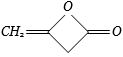
D
$CH_2=C(OC_2H_5)_2$
Solution
(C) Step $I$: Ethyl acetate $(CH_3CO_2C_2H_5)$ undergoes Claisen condensation in the presence of sodium ethoxide $(NaOC_2H_5)$ to form ethyl acetoacetate $(CH_3COCH_2COOC_2H_5)$,which is compound $A$.
Step $II$: Ethyl acetoacetate,when heated in the presence of an acid,undergoes decarboxylation and dehydration/rearrangement to form the cyclic compound shown in the provided image (a derivative of cyclobutanone or similar cyclic structure as per the reaction mechanism provided in the image).
Step $II$: Ethyl acetoacetate,when heated in the presence of an acid,undergoes decarboxylation and dehydration/rearrangement to form the cyclic compound shown in the provided image (a derivative of cyclobutanone or similar cyclic structure as per the reaction mechanism provided in the image).
0 likes
View Solution138
MediumMCQ
Among the following acids,which has the lowest $pK_a$ value?
A
$CH_3COOH$
B
$HCOOH$
C
$(CH_3)_2CHCOOH$
D
$CH_3CH_2COOH$
Solution
(B) The $pK_a$ value is inversely proportional to the acid dissociation constant $(K_a)$,i.e.,$pK_a = -\log(K_a)$.
Therefore,the acid with the highest $K_a$ value will have the lowest $pK_a$ value.
Among the given carboxylic acids,formic acid $(HCOOH)$ is the strongest acid because the hydrogen atom attached to the carboxyl group exerts no electron-donating inductive effect ($+I$ effect),whereas alkyl groups in other options ($CH_3-$,$CH_3CH_2-$,$(CH_3)_2CH-$) exert a $+I$ effect,which destabilizes the carboxylate anion and decreases acidity.
Thus,$HCOOH$ has the highest $K_a$ and the lowest $pK_a$ value.
Therefore,the acid with the highest $K_a$ value will have the lowest $pK_a$ value.
Among the given carboxylic acids,formic acid $(HCOOH)$ is the strongest acid because the hydrogen atom attached to the carboxyl group exerts no electron-donating inductive effect ($+I$ effect),whereas alkyl groups in other options ($CH_3-$,$CH_3CH_2-$,$(CH_3)_2CH-$) exert a $+I$ effect,which destabilizes the carboxylate anion and decreases acidity.
Thus,$HCOOH$ has the highest $K_a$ and the lowest $pK_a$ value.
0 likes
View Solution139
DifficultMCQ
$X$ is heated with soda lime and gives ethane. $X$ is
A
Ethanoic acid
B
Methanoic acid
C
Propanoic acid
D
Either $(a)$ or $(c)$
Solution
(C) The reaction of a carboxylic acid with soda lime $(NaOH + CaO)$ is known as decarboxylation.
In this process,the carboxylic acid loses a molecule of $CO_2$ to form an alkane with one carbon atom less than the parent acid.
To obtain ethane ($C_2H_6$,which has $2$ carbon atoms),the starting carboxylic acid must have $3$ carbon atoms.
Therefore,$X$ is propanoic acid $(C_2H_5COOH)$.
Reaction: $C_2H_5COOH + NaOH \xrightarrow{CaO} C_2H_6 + Na_2CO_3$.
In this process,the carboxylic acid loses a molecule of $CO_2$ to form an alkane with one carbon atom less than the parent acid.
To obtain ethane ($C_2H_6$,which has $2$ carbon atoms),the starting carboxylic acid must have $3$ carbon atoms.
Therefore,$X$ is propanoic acid $(C_2H_5COOH)$.
Reaction: $C_2H_5COOH + NaOH \xrightarrow{CaO} C_2H_6 + Na_2CO_3$.
0 likes
View Solution140
MediumMCQ
Order of hydrolysis for the following:
$I$. $RCOCl$
$II$. $RCOOR$
$III$. $RCONH_2$
$IV$. $(RCO)_2O$
$I$. $RCOCl$
$II$. $RCOOR$
$III$. $RCONH_2$
$IV$. $(RCO)_2O$
A
$I > IV > II > III$
B
$I > II > III > IV$
C
$I > III > II > IV$
D
$IV > III > II > I$
Solution
(A) The hydrolysis of acid derivatives depends on the leaving group ability of the group attached to the acyl group $(RCO-)$.
The leaving group ability follows the order: $Cl^- > RCOO^- > RO^- > NH_2^-$.
Therefore,the reactivity towards nucleophilic acyl substitution (hydrolysis) follows the order:
$RCOCl > (RCO)_2O > RCOOR > RCONH_2$.
Thus,the correct order is $I > IV > II > III$.
The leaving group ability follows the order: $Cl^- > RCOO^- > RO^- > NH_2^-$.
Therefore,the reactivity towards nucleophilic acyl substitution (hydrolysis) follows the order:
$RCOCl > (RCO)_2O > RCOOR > RCONH_2$.
Thus,the correct order is $I > IV > II > III$.
0 likes
View Solution141
MediumMCQ
$A$ carboxylic acid is converted into its anhydride using:
A
Thionyl chloride
B
Sulphur chloride
C
Sulphuric acid
D
Phosphorus pentoxide
Solution
(D) Carboxylic acids undergo dehydration to form acid anhydrides when heated with strong dehydrating agents such as phosphorus pentoxide $(P_2O_5)$.
$2R-COOH \xrightarrow{P_2O_5, \Delta} (RCO)_2O + H_2O$
$2R-COOH \xrightarrow{P_2O_5, \Delta} (RCO)_2O + H_2O$
0 likes
View Solution142
MediumMCQ
Which of the following has the most acidic proton?
A
$CH_3COCH_3$
B
$(CH_3)_2C = CH_2$
C
$CH_3COCH_2COCH_3$
D
$(CH_3CO)_3CH$
Solution
(D) The acidity of a proton depends on the stability of the conjugate base formed after the removal of the proton.
In $(CH_3CO)_3CH$,the central carbon is attached to three electron-withdrawing acetyl groups $(-COCH_3)$.
Upon removal of the proton,the resulting carbanion is stabilized by resonance across three carbonyl groups,making it the most stable conjugate base among the given options.
Therefore,$(CH_3CO)_3CH$ has the most acidic proton.
In $(CH_3CO)_3CH$,the central carbon is attached to three electron-withdrawing acetyl groups $(-COCH_3)$.
Upon removal of the proton,the resulting carbanion is stabilized by resonance across three carbonyl groups,making it the most stable conjugate base among the given options.
Therefore,$(CH_3CO)_3CH$ has the most acidic proton.
0 likes
View Solution143
MediumMCQ
Carboxylic acids are more acidic than phenol and alcohol because of
A
Intermolecular hydrogen bonding
B
Formation of dimers
C
Highly acidic hydrogen
D
Resonance stabilization of their conjugate base
Solution
(D) $(d)$ Carboxylic acids are more acidic than phenols and alcohols because the carboxylate ion, which is the conjugate base of a carboxylic acid, is stabilized by resonance. In the carboxylate ion, the negative charge is delocalized over two electronegative oxygen atoms, making it significantly more stable than the phenoxide or alkoxide ions.
0 likes
View Solution144
MediumMCQ
When propionic acid is treated with aqueous sodium bicarbonate,$CO_2$ is liberated. The '$C$' of $CO_2$ comes from:
A
Methyl group
B
Carboxylic acid group
C
Methylene group
D
Bicarbonate
Solution
(D) The reaction between propionic acid and sodium bicarbonate is an acid-base reaction:
$CH_3CH_2COOH_{(aq)} + NaHCO_{3(aq)} \to CH_3CH_2COONa_{(aq)} + H_2O_{(l)} + CO_{2(g)}$
In this reaction,the carboxylic acid $(R-COOH)$ acts as a proton donor,and the bicarbonate ion $(HCO_3^-)$ acts as a base.
The $HCO_3^-$ ion accepts a proton to form carbonic acid $(H_2CO_3)$,which then decomposes into $H_2O$ and $CO_2$.
Therefore,the carbon atom in the evolved $CO_2$ gas originates from the bicarbonate ion $(NaHCO_3)$.
Thus,the correct option is $(D)$.
$CH_3CH_2COOH_{(aq)} + NaHCO_{3(aq)} \to CH_3CH_2COONa_{(aq)} + H_2O_{(l)} + CO_{2(g)}$
In this reaction,the carboxylic acid $(R-COOH)$ acts as a proton donor,and the bicarbonate ion $(HCO_3^-)$ acts as a base.
The $HCO_3^-$ ion accepts a proton to form carbonic acid $(H_2CO_3)$,which then decomposes into $H_2O$ and $CO_2$.
Therefore,the carbon atom in the evolved $CO_2$ gas originates from the bicarbonate ion $(NaHCO_3)$.
Thus,the correct option is $(D)$.
0 likes
View Solution145
DifficultMCQ
Identify the correct order of boiling points of the following compounds: $CH_3CH_2CH_2CH_2OH$ $(1)$,$CH_3CH_2CH_2CHO$ $(2)$,$CH_3CH_2CH_2COOH$ $(3)$.
A
$1 > 2 > 3$
B
$3 > 1 > 2$
C
$1 > 3 > 2$
D
$3 > 2 > 1$
Solution
(B) The boiling point depends on the intermolecular forces present in the compounds.
$CH_3CH_2CH_2COOH$ $(3)$ contains a carboxylic acid group,which forms strong intermolecular hydrogen bonds,often existing as dimers,leading to the highest boiling point.
$CH_3CH_2CH_2CH_2OH$ $(1)$ contains a hydroxyl group,which also forms intermolecular hydrogen bonds,but they are generally weaker than those in carboxylic acids.
$CH_3CH_2CH_2CHO$ $(2)$ contains an aldehyde group,which is polar but cannot form intermolecular hydrogen bonds,resulting in the lowest boiling point among the three.
Therefore,the correct order of boiling points is $3 > 1 > 2$.
$CH_3CH_2CH_2COOH$ $(3)$ contains a carboxylic acid group,which forms strong intermolecular hydrogen bonds,often existing as dimers,leading to the highest boiling point.
$CH_3CH_2CH_2CH_2OH$ $(1)$ contains a hydroxyl group,which also forms intermolecular hydrogen bonds,but they are generally weaker than those in carboxylic acids.
$CH_3CH_2CH_2CHO$ $(2)$ contains an aldehyde group,which is polar but cannot form intermolecular hydrogen bonds,resulting in the lowest boiling point among the three.
Therefore,the correct order of boiling points is $3 > 1 > 2$.
0 likes
View Solution146
MediumMCQ
Iodoform test is not given by:
A
Acetone
B
Ethyl alcohol
C
None of these
D
Acetic acid
Solution
(D) The iodoform test is given by compounds containing either a methyl ketone group $(CH_3-CO-)$ or a methyl carbinol group $(CH_3-CH(OH)-)$.
$1.$ Acetone $(CH_3-CO-CH_3)$ and Ethyl alcohol $(CH_3-CH_2-OH)$ both give a positive iodoform test.
$2.$ Acetic acid $(CH_3-COOH)$ does not give the iodoform test because the hydroxyl group attached to the carbonyl carbon prevents the reaction.
$1.$ Acetone $(CH_3-CO-CH_3)$ and Ethyl alcohol $(CH_3-CH_2-OH)$ both give a positive iodoform test.
$2.$ Acetic acid $(CH_3-COOH)$ does not give the iodoform test because the hydroxyl group attached to the carbonyl carbon prevents the reaction.
0 likes
View Solution147
MediumMCQ
On heating acetamide in the presence of $P_2O_5$,which of the following is formed?
A
Ammonium acetate
B
Acetonitrile
C
$NH_3$
D
Methylamine
Solution
(B) When acetamide $(CH_3CONH_2)$ is heated in the presence of a dehydrating agent like $P_2O_5$,it undergoes dehydration to form acetonitrile $(CH_3CN)$.
Reaction: $CH_3CONH_2 \xrightarrow{P_2O_5} CH_3-C\equiv N + H_2O$
Therefore,the correct option is $B$.
Reaction: $CH_3CONH_2 \xrightarrow{P_2O_5} CH_3-C\equiv N + H_2O$
Therefore,the correct option is $B$.
0 likes
View Solution148
DifficultMCQ
The refluxing of $(CH_3)_2NCOCH_3$ with acid gives
A
$(CH_3)_2NH + CH_3COOH$
B
$(CH_3)_2NCOOH + CH_4$
C
$2CH_3OH + CH_3CONH_2$
D
$2CH_3NH_2 + CH_3COOH$
Solution
(A) The compound $(CH_3)_2NCOCH_3$ is an $N,N$-dimethylacetamide,which is an amide.
Acid-catalyzed hydrolysis (refluxing with acid) of an amide breaks the $C-N$ bond to yield a carboxylic acid and an amine (or its salt).
The reaction is: $(CH_3)_2NCOCH_3 + H_2O \xrightarrow{H^+} (CH_3)_2NH + CH_3COOH$.
Thus,the products are dimethylamine $(CH_3)_2NH$ and acetic acid $CH_3COOH$.
Acid-catalyzed hydrolysis (refluxing with acid) of an amide breaks the $C-N$ bond to yield a carboxylic acid and an amine (or its salt).
The reaction is: $(CH_3)_2NCOCH_3 + H_2O \xrightarrow{H^+} (CH_3)_2NH + CH_3COOH$.
Thus,the products are dimethylamine $(CH_3)_2NH$ and acetic acid $CH_3COOH$.
0 likes
View Solution149
DifficultMCQ
Benzamide on reaction with $POCl_3$ gives
A
Aniline
B
Chlorobenzene
C
Benzyl amine
D
Benzonitrile
Solution
(D) When benzamide $(C_6H_5CONH_2)$ is treated with a dehydrating agent like phosphorus oxychloride $(POCl_3)$,it undergoes dehydration to form benzonitrile $(C_6H_5CN)$.
The reaction is as follows:
$C_6H_5CONH_2 \xrightarrow{POCl_3, \Delta} C_6H_5CN + H_2O$
Therefore,the correct option is $(D)$.
The reaction is as follows:
$C_6H_5CONH_2 \xrightarrow{POCl_3, \Delta} C_6H_5CN + H_2O$
Therefore,the correct option is $(D)$.
0 likes
View Solution150
EasyMCQ
An ester used as medicine is
A
Ethyl acetate
B
Methyl acetate
C
Methyl salicylate
D
Ethyl benzoate
Solution
(C) $Methyl \ salicylate$ is commonly known as oil of wintergreen.
It is used as a medicine,specifically in topical ointments for pain relief due to its analgesic and anti-inflammatory properties.
It is used as a medicine,specifically in topical ointments for pain relief due to its analgesic and anti-inflammatory properties.
0 likes
View Solution8-2.Carboxylic acids and Their derivative — Properties of Carboxylic Acids and Their Derivatives · Frequently Asked Questions
1Are these 8-2.Carboxylic acids and Their derivative questions useful for JEE and NEET?
Yes. All questions in this section are mapped to JEE Main and NEET exam patterns. Previous year questions from JEE Main, NEET, GUJCET and state-level exams are included with full solutions.
2Can I switch to Hindi or Gujarati for these questions?
Yes. Use the language tabs in the hero section or the sidebar to view the same questions and solutions in English, Hindi or Gujarati.
3How do I generate a question paper from this subtopic?
Use the Vedclass Exam Paper Generator — select the chapter and subtopic, set difficulty, and generate Sets A, B, C, D automatically. First 3 chapters of every subject are free.
Vedclass Products
For Students
Vedclass Test Series
Mock tests in real JEE/NEET style with performance analysis. 5-day free trial.
Start Free TrialFor Teachers
Exam Paper Generator
Generate Set A/B/C/D papers from this chapter in 2 minutes. 3 chapters free.
Try FreeFor Institutes
Online Exam Module
Live online exams with unlimited students, 360° analytics & white-label branding.
See DemoFor Teachers & Institutes
Generate a 8-2.Carboxylic acids and Their derivative Exam Paper in 2 Minutes
Select subtopic & difficulty — Sets A, B, C, D auto-generated with No Repeat logic.
First 3 chapters of every subject are free — no payment required.