
A English
Pollination Questions in English
Class 12 Biology · Sexual Reproduction in Flowering Plants · Pollination
270+
Questions
English
Language
100%
With Solutions
Showing 49 of 270 questions in English
1
MediumMCQ
In maize,pollination is
A
Anemophilous
B
Ornithophilous
C
Malacophilous
D
Entomophilous
Solution
(A) In maize,pollination occurs through the agency of wind,which is known as anemophily.
Maize plants produce large amounts of light,non-sticky pollen grains that are easily carried by wind currents to the feathery stigmas.
Maize plants produce large amounts of light,non-sticky pollen grains that are easily carried by wind currents to the feathery stigmas.
0 likes
View Solution2
MediumMCQ
In which characters do air-pollinated flowers differ from insect-pollinated ones?
A
Small perianth and sticky pollen
B
Small coloured perianth and heavy pollen grains
C
Coloured perianth and large pollen grains
D
Reduced perianth and light,non-sticky pollen grains
Solution
(D) Air-pollinated flowers (anemophilous) are characterized by having reduced or absent perianth (petals and sepals) because they do not need to attract pollinators.
They produce a large number of pollen grains that are light and non-sticky so that they can be easily transported by wind currents.
In contrast,insect-pollinated flowers (entomophilous) typically have large,brightly coloured perianths to attract insects and produce sticky or spiny pollen grains that adhere to the insect's body.
They produce a large number of pollen grains that are light and non-sticky so that they can be easily transported by wind currents.
In contrast,insect-pollinated flowers (entomophilous) typically have large,brightly coloured perianths to attract insects and produce sticky or spiny pollen grains that adhere to the insect's body.
0 likes
View Solution3
MediumMCQ
In $Ficus$ (Peepal),pollination is effected by:
A
Air
B
Water
C
Insects
D
Birds
Solution
(C) The correct answer is $C$. In $Ficus$ (fig),pollination is carried out by a specific type of wasp known as the gall wasp (e.g.,$Blastophaga$).
This is a classic example of an obligate mutualistic relationship where the plant and the insect are completely dependent on each other for their life cycles.
The wasp lays its eggs inside the fig inflorescence (hypanthodium),and while doing so,it facilitates the transfer of pollen grains,ensuring pollination.
This is a classic example of an obligate mutualistic relationship where the plant and the insect are completely dependent on each other for their life cycles.
The wasp lays its eggs inside the fig inflorescence (hypanthodium),and while doing so,it facilitates the transfer of pollen grains,ensuring pollination.
0 likes
View Solution4
MediumMCQ
Pollen kit is present in
A
Anemophilous flowers
B
Entomophilous flowers
C
Ornithophilous flowers
D
Hydrophilous flowers
Solution
(B) The correct answer is $B$.
$Pollen$ $kit$ is a sticky,oily layer found on the surface of pollen grains in insect-pollinated flowers,known as $Entomophilous$ flowers.
This layer helps the pollen grains adhere to the bodies of insects,facilitating cross-pollination.
It also protects the pollen from ultraviolet radiation and helps in the recognition of compatible stigmas.
$Pollen$ $kit$ is a sticky,oily layer found on the surface of pollen grains in insect-pollinated flowers,known as $Entomophilous$ flowers.
This layer helps the pollen grains adhere to the bodies of insects,facilitating cross-pollination.
It also protects the pollen from ultraviolet radiation and helps in the recognition of compatible stigmas.
0 likes
View Solution5
MediumMCQ
Pollination occurs when a pollen grain
A
Matures and has three nuclei
B
Lands on a stigma
C
Releases its sperm nuclei
D
Releases its pollen tube nucleus
Solution
(B) Pollination is defined as the transfer of pollen grains from the anther to the stigma of a pistil. Therefore,the process of pollination is considered to have occurred when the pollen grain successfully lands on the stigma of a flower.
0 likes
View Solution6
MediumMCQ
In which type of flowers,is the stigma rough and sticky?
A
Wind pollinated
B
Insect pollinated
C
Water pollinated
D
All the above
Solution
(B) The correct answer is $B$.
In insect-pollinated flowers (entomophilous flowers),the stigma is typically rough,sticky,and often lobed to facilitate the adherence of pollen grains brought by insects.
In contrast,wind-pollinated flowers (anemophilous) often have large,feathery,or branched stigmas to trap pollen grains floating in the air,but they are not necessarily 'rough' in the same way as insect-pollinated ones.
In insect-pollinated flowers (entomophilous flowers),the stigma is typically rough,sticky,and often lobed to facilitate the adherence of pollen grains brought by insects.
In contrast,wind-pollinated flowers (anemophilous) often have large,feathery,or branched stigmas to trap pollen grains floating in the air,but they are not necessarily 'rough' in the same way as insect-pollinated ones.
0 likes
View Solution7
MediumMCQ
Pollination by wind is called
A
Geitonogamy
B
Anemophily
C
Autogamy
D
None of the above
Solution
(B) Pollination is the transfer of pollen grains from the anther to the stigma of a flower.
When pollination is achieved by abiotic agents like wind,it is known as $Anemophily$.
$Geitonogamy$ refers to the transfer of pollen grains from the anther to the stigma of another flower of the same plant.
$Autogamy$ refers to the transfer of pollen grains from the anther to the stigma of the same flower.
Therefore,the correct term for wind pollination is $Anemophily$.
When pollination is achieved by abiotic agents like wind,it is known as $Anemophily$.
$Geitonogamy$ refers to the transfer of pollen grains from the anther to the stigma of another flower of the same plant.
$Autogamy$ refers to the transfer of pollen grains from the anther to the stigma of the same flower.
Therefore,the correct term for wind pollination is $Anemophily$.
0 likes
View Solution8
MediumMCQ
When pollen grains of a flower pollinate the stigma of another flower of the same plant,it is called
A
Dichogamy
B
Herkogamy
C
Geitonogamy
D
Autogamy
Solution
(C) The transfer of pollen grains from the anther of one flower to the stigma of another flower on the same plant is known as $Geitonogamy$.
Although $Geitonogamy$ is functionally cross-pollination involving a pollinating agent,genetically it is similar to $Autogamy$ because the pollen grains come from the same plant.
Although $Geitonogamy$ is functionally cross-pollination involving a pollinating agent,genetically it is similar to $Autogamy$ because the pollen grains come from the same plant.
0 likes
View Solution9
EasyMCQ
Pollination by slugs and snails is called:
A
Ornithophilous
B
Malacophilous
C
Anemophilous
D
Chiropterophilous
Solution
(B) The correct answer is $B$.
Pollination by snails and slugs is known as $Malacophily$.
$Ornithophilous$ refers to pollination by birds.
$Anemophilous$ refers to pollination by wind.
$Chiropterophilous$ refers to pollination by bats.
An example of a plant pollinated by snails is $Arisaema$ (cobra plant).
Pollination by snails and slugs is known as $Malacophily$.
$Ornithophilous$ refers to pollination by birds.
$Anemophilous$ refers to pollination by wind.
$Chiropterophilous$ refers to pollination by bats.
An example of a plant pollinated by snails is $Arisaema$ (cobra plant).
0 likes
View Solution10
MediumMCQ
The correct definition of pollination is:
A
Transfer of pollen grains from anther to stigma
B
Germination of pollen grains
C
Growth of pollen tube in ovule
D
Visits of insects to flowers
Solution
(A) Pollination is defined as the process of transfer of pollen grains from the anther to the stigma of a pistil. This is a crucial step in the sexual reproduction of flowering plants,as it facilitates fertilization.
0 likes
View Solution11
MediumMCQ
Self-pollination means:
A
Occurrence of male and female sex organs in the same flower
B
Germination of pollens within the anther
C
Transference of pollens from anther to the stigma within the same flower
D
Transference of pollens from one flower to another on the same plant
Solution
(C) Self-pollination,specifically autogamy,is defined as the transfer of pollen grains from the anther to the stigma of the same flower.
This process ensures that the genetic material remains within the same floral unit.
Option $C$ correctly describes this biological phenomenon.
Option $D$ refers to geitonogamy,which is a type of pollination between two flowers on the same plant.
This process ensures that the genetic material remains within the same floral unit.
Option $C$ correctly describes this biological phenomenon.
Option $D$ refers to geitonogamy,which is a type of pollination between two flowers on the same plant.
0 likes
View Solution12
MediumMCQ
Fig is pollinated by
A
Wind
B
Self
C
Water
D
Insects $(Blastophaga \, grossorum)$
Solution
(D) The pollination in $Ficus$ (Fig) is a classic example of obligate mutualism between the plant and a specific insect pollinator.
$Ficus$ species are pollinated by tiny wasps belonging to the family $Agaonidae$, specifically the genus $Blastophaga$ (e.g., $Blastophaga \, grossorum$).
The plant provides a safe breeding ground (the syconium inflorescence) for the wasp, and in return, the wasp facilitates the transfer of pollen grains from male flowers to female flowers within the syconium.
$Ficus$ species are pollinated by tiny wasps belonging to the family $Agaonidae$, specifically the genus $Blastophaga$ (e.g., $Blastophaga \, grossorum$).
The plant provides a safe breeding ground (the syconium inflorescence) for the wasp, and in return, the wasp facilitates the transfer of pollen grains from male flowers to female flowers within the syconium.
0 likes
View Solution13
EasyMCQ
The insect $Blastophaga$ $grossorum$ is associated with the pollination of
A
Mango
B
Paddy
C
Beans
D
Ficus
Solution
(D) The insect $Blastophaga$ $grossorum$ (also known as the fig wasp) has a symbiotic relationship with the $Ficus$ (fig) plant.
This is a classic example of obligate mutualism where the fig wasp pollinates the $Ficus$ flowers while the $Ficus$ provides a protected environment and food for the wasp's larvae.
Therefore, the correct option is $D$.
This is a classic example of obligate mutualism where the fig wasp pollinates the $Ficus$ flowers while the $Ficus$ provides a protected environment and food for the wasp's larvae.
Therefore, the correct option is $D$.
0 likes
View Solution14
MediumMCQ
Pollination by water is seen in
A
Nelumbium
B
Vallisneria
C
Eichornia
D
Nymphaea
Solution
(B) $Vallisneria$ is a submerged,dioecious,freshwater plant where pollination occurs through water (epihydrophily). In $Vallisneria$,the female flower reaches the surface of the water by a long stalk,and the male flowers or pollen grains are released onto the surface,which are then carried by water currents to the female flower. In contrast,$Nelumbium$,$Eichornia$,and $Nymphaea$ are aquatic plants,but they are pollinated by insects or wind,not by water.
0 likes
View Solution15
MediumMCQ
In which of the following does pollination take place by a lever mechanism?
A
Salvia
B
Ficus
C
Antirrhinum
D
Ocimum
Solution
(A) In $Salvia$,pollination occurs through a specialized lever mechanism (also known as the turn-pipe mechanism).
When a bee enters the flower to collect nectar,it pushes against the sterile lobe of the stamen,which acts as a lever.
This action causes the fertile lobe of the stamen to descend and strike the back of the bee,depositing pollen grains on it.
When this bee visits another flower,the pollen is transferred to the stigma,ensuring cross-pollination.
When a bee enters the flower to collect nectar,it pushes against the sterile lobe of the stamen,which acts as a lever.
This action causes the fertile lobe of the stamen to descend and strike the back of the bee,depositing pollen grains on it.
When this bee visits another flower,the pollen is transferred to the stigma,ensuring cross-pollination.
0 likes
View Solution16
EasyMCQ
In sausage tree $(Kigelia \text{ } africana)$, the pollination takes place by:
A
Birds
B
Bats
C
Wind
D
Insects
Solution
(B) The correct answer is $B$.
Chiropterophily is the process of pollination by bats.
$Kigelia \text{ } africana$ (sausage tree) and $Adansonia$ (baobab) are classic examples of plants that are pollinated by bats.
Chiropterophily is the process of pollination by bats.
$Kigelia \text{ } africana$ (sausage tree) and $Adansonia$ (baobab) are classic examples of plants that are pollinated by bats.
0 likes
View Solution17
MediumMCQ
The type of pollination that occurs within a single flower is known as:
A
Herkogamy
B
Cleistogamy
C
Dichogamy
D
Dicliny
Solution
(B) $Cleistogamy$ is a phenomenon where flowers do not open at all. In such flowers,the anthers and stigma lie close to each other. When anthers dehisce in the flower buds,pollen grains come in contact with the stigma to effect pollination. Thus,$Cleistogamy$ ensures self-pollination within a single flower.
0 likes
View Solution18
MediumMCQ
$A$ close relation between flower and pollinating agent is best exhibited by
A
Cocos
B
Salvia
C
Yucca
D
Avena
Solution
(C) The correct answer is $C$. While $Salvia$ exhibits a specialized 'Lever mechanism' for pollination by bees,the question refers to a 'close relation' often implying obligate mutualism. However,in the context of standard biology curriculum,$Yucca$ is the classic example of an obligate mutualistic relationship where the moth $Pronuba$ and the $Yucca$ flower cannot complete their life cycles without each other. $Salvia$ is also a valid example of specialized pollination,but $Yucca$ represents the most profound evolutionary 'close relation' (obligate mutualism).
0 likes
View Solution19
MediumMCQ
Pollination characteristically occurs in
A
Angiosperms and fungi
B
Angiosperms and gymnosperms
C
Pteridophytes and angiosperms
D
Bryophytes and angiosperms
Solution
(B) Pollination is the process of transfer of pollen grains from the anther to the stigma of a pistil.
This process is a characteristic feature of seed-bearing plants,which include both Angiosperms (flowering plants) and Gymnosperms (naked-seeded plants).
In Angiosperms,pollination occurs on the stigma,while in Gymnosperms,it occurs directly on the exposed ovules.
This process is a characteristic feature of seed-bearing plants,which include both Angiosperms (flowering plants) and Gymnosperms (naked-seeded plants).
In Angiosperms,pollination occurs on the stigma,while in Gymnosperms,it occurs directly on the exposed ovules.
0 likes
View Solution20
MediumMCQ
The transfer of pollen grains from the stamen to the stigma of the same flower is known as:
A
Autogamy
B
Allogamy
C
Geitonogamy
D
Xenogamy
Solution
(A) The transfer of pollen grains from the anther to the stigma of the same flower is called $Autogamy$.
$Autogamy$ is a type of self-pollination where the flower is bisexual and the pollen grains land on the stigma of the same flower.
$Autogamy$ is a type of self-pollination where the flower is bisexual and the pollen grains land on the stigma of the same flower.
0 likes
View Solution21
MediumMCQ
Progeny produced as a result of cross-pollination:
A
Shows a high degree of variability and is evolutionarily important
B
Is sterile
C
Has recessive characters
D
Is homozygous with phenotypic uniformity
Solution
(A) Cross-pollination involves the transfer of pollen grains from the anther of one flower to the stigma of another flower on a different plant of the same species.
This process promotes genetic recombination and increases genetic diversity within the population.
As a result,the progeny produced exhibit a high degree of variability,which is crucial for adaptation and evolution.
Therefore,cross-pollination is evolutionarily significant as it allows for the introduction of new gene combinations.
This process promotes genetic recombination and increases genetic diversity within the population.
As a result,the progeny produced exhibit a high degree of variability,which is crucial for adaptation and evolution.
Therefore,cross-pollination is evolutionarily significant as it allows for the introduction of new gene combinations.
0 likes
View Solution22
MediumMCQ
Which of the following types of gynoecium is associated with wind pollination?
A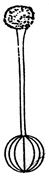
B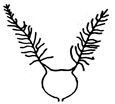
C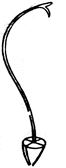
D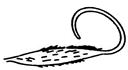
Solution
(B) In wind-pollinated plants (anemophily),the flowers often have large,feathery,or branched stigmas to easily trap airborne pollen grains. Among the given options,the structure shown in option $B$ represents a feathery stigma,which is a characteristic adaptation for wind pollination.
0 likes
View Solution23
EasyMCQ
The pollination by birds is called
A
Ornithophily
B
Chiropterophily
C
Entomophily
D
Malacophily
Solution
(A) Pollination is the transfer of pollen grains from the anther to the stigma of a flower.
Different agents are responsible for pollination in plants.
$1$. Ornithophily: Pollination by birds.
$2$. Chiropterophily: Pollination by bats.
$3$. Entomophily: Pollination by insects.
$4$. Malacophily: Pollination by snails or slugs.
Therefore,the correct answer is Ornithophily.
Different agents are responsible for pollination in plants.
$1$. Ornithophily: Pollination by birds.
$2$. Chiropterophily: Pollination by bats.
$3$. Entomophily: Pollination by insects.
$4$. Malacophily: Pollination by snails or slugs.
Therefore,the correct answer is Ornithophily.
0 likes
View Solution24
MediumMCQ
Feathery stigma is present in
A
Wheat
B
Pea
C
Caesalpinia
D
Datura
Solution
(A) feathery stigma is a characteristic adaptation for anemophily (wind pollination). In wind-pollinated plants like grasses (e.g.,Wheat),the stigma is feathery to easily trap pollen grains carried by the wind. Pea,Caesalpinia,and Datura are typically insect-pollinated and possess different stigma structures.
0 likes
View Solution25
MediumMCQ
Pollination which occurs in closed flowers is known as
A
Allogamy
B
Cleistogamy
C
Dicliny
D
Protogyny
Solution
(B) The correct answer is $B$.
Cleistogamy is a condition in which flowers do not open at all.
In these flowers,the anthers and stigma lie close to each other.
When anthers dehisce in the flower buds,pollen grains come in contact with the stigma to effect pollination.
Thus,cleistogamous flowers are invariably autogamous as there is no chance of cross-pollination.
Cleistogamy is a condition in which flowers do not open at all.
In these flowers,the anthers and stigma lie close to each other.
When anthers dehisce in the flower buds,pollen grains come in contact with the stigma to effect pollination.
Thus,cleistogamous flowers are invariably autogamous as there is no chance of cross-pollination.
0 likes
View Solution26
MediumMCQ
Pollination is best defined as:
A
Transfer of pollen from anther to stigma
B
Germination of pollen grains
C
Growth of pollen tube in ovule
D
Visiting flowers by insects
Solution
(A) Pollination is the process of transfer of pollen grains from the anther to the stigma of a pistil.
It is a crucial event in the sexual reproduction of flowering plants,as it facilitates the meeting of male and female gametes.
Option $A$ correctly describes this biological process.
It is a crucial event in the sexual reproduction of flowering plants,as it facilitates the meeting of male and female gametes.
Option $A$ correctly describes this biological process.
0 likes
View Solution27
MediumMCQ
Cross-pollination in crop plants is known as:
A
Autogamy
B
Allogamy
C
Cleistogamy
D
Chasmogamy
Solution
(B) Cross-pollination is the transfer of pollen grains from the anther of one flower to the stigma of another flower of a different plant of the same species.
This process is biologically referred to as $Allogamy$.
$Autogamy$ refers to self-pollination within the same flower.
$Cleistogamy$ is a condition where flowers do not open,ensuring self-pollination.
$Chasmogamy$ refers to pollination in open flowers,which can be either self or cross-pollination.
This process is biologically referred to as $Allogamy$.
$Autogamy$ refers to self-pollination within the same flower.
$Cleistogamy$ is a condition where flowers do not open,ensuring self-pollination.
$Chasmogamy$ refers to pollination in open flowers,which can be either self or cross-pollination.
0 likes
View Solution28
MediumMCQ
The mature stigma is either rough or sticky in
A
All types of flowers
B
Water pollinated flowers
C
Wind pollinated flowers
D
Insect pollinated flowers
Solution
(D) In insect-pollinated flowers,the stigma is often sticky to trap pollen grains effectively.
In wind-pollinated flowers,the stigma is often large and feathery to easily trap airborne pollen grains.
However,the specific characteristic of being 'rough or sticky' is a common adaptation in insect-pollinated flowers to ensure that pollen grains adhere to the stigma surface upon contact.
In wind-pollinated flowers,the stigma is often large and feathery to easily trap airborne pollen grains.
However,the specific characteristic of being 'rough or sticky' is a common adaptation in insect-pollinated flowers to ensure that pollen grains adhere to the stigma surface upon contact.
0 likes
View Solution29
EasyMCQ
Pollination by insects is called
A
Entomophily
B
Chiropterophily
C
Anemophily
D
Zoophily
Solution
(A) Pollination is the transfer of pollen grains from the anther to the stigma of a flower.
$1$. Entomophily: Pollination that occurs through the agency of insects.
$2$. Chiropterophily: Pollination that occurs through the agency of bats.
$3$. Anemophily: Pollination that occurs through the agency of wind.
$4$. Zoophily: $A$ general term for pollination that occurs through the agency of any animal.
Therefore,pollination by insects is specifically known as Entomophily.
$1$. Entomophily: Pollination that occurs through the agency of insects.
$2$. Chiropterophily: Pollination that occurs through the agency of bats.
$3$. Anemophily: Pollination that occurs through the agency of wind.
$4$. Zoophily: $A$ general term for pollination that occurs through the agency of any animal.
Therefore,pollination by insects is specifically known as Entomophily.
0 likes
View Solution30
MediumMCQ
Anemophilous pollination is mainly observed in
A
Gramineae
B
Annonaceae
C
Papilionaceae
D
Euphorbiaceae
Solution
(A) Anemophilous pollination refers to pollination by wind.
In the family $Gramineae$ (also known as $Poaceae$),flowers are small,inconspicuous,and often lack showy petals or nectar,which are adaptations for wind pollination.
The pollen grains in these plants are produced in large quantities,and they are small,light,smooth,and dry,allowing them to be easily carried by wind currents.
In the family $Gramineae$ (also known as $Poaceae$),flowers are small,inconspicuous,and often lack showy petals or nectar,which are adaptations for wind pollination.
The pollen grains in these plants are produced in large quantities,and they are small,light,smooth,and dry,allowing them to be easily carried by wind currents.
0 likes
View Solution31
MediumMCQ
Cheiropterophily is the process of pollination by
A
Water
B
Bat
C
Insect
D
Bird
Solution
(B) Pollination is the transfer of pollen grains from the anther to the stigma of a flower. Different agents are involved in this process.
Cheiropterophily refers to the pollination of flowers by bats.
- Hydrophily is pollination by water.
- Entomophily is pollination by insects.
- Ornithophily is pollination by birds.
Therefore,the correct option is $B$.
Cheiropterophily refers to the pollination of flowers by bats.
- Hydrophily is pollination by water.
- Entomophily is pollination by insects.
- Ornithophily is pollination by birds.
Therefore,the correct option is $B$.
0 likes
View Solution32
MediumMCQ
When anthers and stigma mature at the same time,it is called:
A
Protandry
B
Homogamy
C
Isogamy
D
Dichogamy
Solution
(B) When the anthers (male reproductive part) and the stigma (female reproductive part) of a flower mature simultaneously,the condition is known as $Homogamy$. This synchronization facilitates self-pollination. In contrast,$Dichogamy$ is a condition where they mature at different times,which promotes cross-pollination. $Protandry$ is a type of $Dichogamy$ where anthers mature before the stigma.
0 likes
View Solution33
MediumMCQ
The process of transfer of pollen grains from anther to the stigmatic surface of a flower with the help of water is called:
A
Anemophily
B
Zoophily
C
Hydrophily
D
Ornithophily
Solution
(C) Pollination is the transfer of pollen grains from the anther to the stigma of a flower.
When this process occurs with the help of water,it is known as Hydrophily.
$1$. Anemophily: Pollination by wind.
$2$. Zoophily: Pollination by animals.
$3$. Hydrophily: Pollination by water.
$4$. Ornithophily: Pollination by birds.
Therefore,the correct option is $C$.
When this process occurs with the help of water,it is known as Hydrophily.
$1$. Anemophily: Pollination by wind.
$2$. Zoophily: Pollination by animals.
$3$. Hydrophily: Pollination by water.
$4$. Ornithophily: Pollination by birds.
Therefore,the correct option is $C$.
0 likes
View Solution34
MediumMCQ
Bisexual flowers that never open in their lifetime are called ....
A
Homogamous
B
Heterogamous
C
Hypanthodium
D
Cleistogamous
Solution
(D) Cleistogamous flowers are bisexual flowers that do not open at all.
In these flowers,the anthers and stigma lie close to each other.
When anthers dehisce in the flower buds,pollen grains come in contact with the stigma to effect pollination.
Thus,cleistogamous flowers are invariably autogamous as there is no chance of cross-pollination landing on the stigma.
Examples include $Viola$ (common pansy),$Oxalis$,and $Commelina$.
In these flowers,the anthers and stigma lie close to each other.
When anthers dehisce in the flower buds,pollen grains come in contact with the stigma to effect pollination.
Thus,cleistogamous flowers are invariably autogamous as there is no chance of cross-pollination landing on the stigma.
Examples include $Viola$ (common pansy),$Oxalis$,and $Commelina$.
0 likes
View Solution35
EasyMCQ
What is self-pollination?
A
Transfer of pollen grains from the anther to the stigma of the same flower.
B
Transfer of pollen grains from a flower of one plant to a flower of another plant.
C
Presence of both male and female reproductive organs in the same flower.
D
Production of pollen grains.
Solution
(A) Self-pollination,also known as autogamy,is the process where pollen grains are transferred from the anther to the stigma of the same flower. This ensures reproductive success in plants where cross-pollination might be difficult.
0 likes
View Solution36
MediumMCQ
The stigma of an insect-pollinated flower is usually:
A
Sticky
B
Rough
C
Fibrous
D
Smooth
Solution
(A) In insect-pollinated flowers (entomophilous flowers),the pollen grains are often sticky or spiny to adhere to the body of the insect. Correspondingly,the stigma of these flowers is also sticky to ensure that the pollen grains brought by the insect get trapped and adhere to the stigma surface during pollination. This adaptation increases the efficiency of pollination.
0 likes
View Solution37
MediumMCQ
Wind-pollinated flowers are characterized by:
A
Small,nectar-producing,and having dry pollen grains
B
Small,brightly colored,and producing a large number of pollen grains
C
Small,producing a large number of dry pollen grains
D
Producing abundant nectar and pollen grains
Solution
(C) Wind-pollinated flowers (anemophilous flowers) exhibit specific adaptations to facilitate pollination by wind:
$1$. The flowers are generally small and inconspicuous,as they do not need to attract pollinators.
$2$. They produce a very large number of pollen grains to compensate for the wastage during wind dispersal.
$3$. The pollen grains are light and non-sticky (dry) so that they can be easily transported by wind currents.
$4$. They do not produce nectar or fragrance,as these are meant to attract biotic pollinators.
Therefore,option $C$ is the correct description.
$1$. The flowers are generally small and inconspicuous,as they do not need to attract pollinators.
$2$. They produce a very large number of pollen grains to compensate for the wastage during wind dispersal.
$3$. The pollen grains are light and non-sticky (dry) so that they can be easily transported by wind currents.
$4$. They do not produce nectar or fragrance,as these are meant to attract biotic pollinators.
Therefore,option $C$ is the correct description.
0 likes
View Solution38
MediumMCQ
Pollination by birds is observed in plants with:
A
Yellow flowers with nectar glands
B
Fragrant flowers
C
Flowers with attractive colors
D
Modified petals
Solution
(A) Pollination by birds is known as $Ornithophily$. Birds are attracted to flowers that are brightly colored (often red,orange,or yellow) and produce large amounts of nectar. These flowers typically lack a strong scent because birds have a poor sense of smell. Therefore,flowers adapted for bird pollination are characterized by their bright colors and the presence of nectar glands to provide food for the birds.
0 likes
View Solution39
MediumMCQ
The transfer of pollen grains from the anther of one flower to the stigma of another flower of the same plant is called ....
A
Autogamy
B
Xenogamy
C
Geitonogamy
D
Karyogamy
Solution
(C) The transfer of pollen grains from the anther of one flower to the stigma of another flower of the same plant is known as $Geitonogamy$.
$1$. $Autogamy$ is the transfer of pollen grains from the anther to the stigma of the same flower.
$2$. $Geitonogamy$ is the transfer of pollen grains from the anther of one flower to the stigma of another flower of the same plant. Although it is functionally cross-pollination involving a pollinating agent,genetically it is similar to autogamy since the pollen grains come from the same plant.
$3$. $Xenogamy$ is the transfer of pollen grains from the anther to the stigma of a different plant.
$4$. $Karyogamy$ refers to the fusion of two nuclei during fertilization.
$1$. $Autogamy$ is the transfer of pollen grains from the anther to the stigma of the same flower.
$2$. $Geitonogamy$ is the transfer of pollen grains from the anther of one flower to the stigma of another flower of the same plant. Although it is functionally cross-pollination involving a pollinating agent,genetically it is similar to autogamy since the pollen grains come from the same plant.
$3$. $Xenogamy$ is the transfer of pollen grains from the anther to the stigma of a different plant.
$4$. $Karyogamy$ refers to the fusion of two nuclei during fertilization.
0 likes
View Solution40
MediumMCQ
Entomophilous flowers generally possess:
A
Brightly colored pollen in large quantities
B
Dry pollen with a smooth surface
C
Sticky pollen and a rough surface stigma
D
Nectar-rich,dull-colored,fragrant pollen
Solution
(C) Entomophilous flowers (insect-pollinated) have specific adaptations to attract insects and ensure successful pollination.
$1$. These flowers are usually brightly colored,fragrant,and rich in nectar to attract insects.
$2$. The pollen grains are often sticky (due to pollenkitt) and have a rough surface to easily adhere to the body of the insect.
$3$. The stigma is also sticky and often rough to catch the pollen grains brought by the insects.
$4$. Therefore,the presence of sticky pollen and a rough surface stigma is a characteristic feature of entomophilous flowers.
$1$. These flowers are usually brightly colored,fragrant,and rich in nectar to attract insects.
$2$. The pollen grains are often sticky (due to pollenkitt) and have a rough surface to easily adhere to the body of the insect.
$3$. The stigma is also sticky and often rough to catch the pollen grains brought by the insects.
$4$. Therefore,the presence of sticky pollen and a rough surface stigma is a characteristic feature of entomophilous flowers.
1 likes
View Solution41
EasyMCQ
The transfer of pollen grains from the anther to the stigma of another flower of the same plant is called .....
A
Xenogamy
B
Autogamy
C
Geitonogamy
D
Allogamy
Solution
(C) The transfer of pollen grains from the anther to the stigma of another flower of the same plant is known as $Geitonogamy$.
$1$. $Autogamy$ is the transfer of pollen grains from the anther to the stigma of the same flower.
$2$. $Geitonogamy$ is functionally cross-pollination involving a pollinating agent,but genetically it is similar to autogamy since the pollen grains come from the same plant.
$3$. $Xenogamy$ is the transfer of pollen grains from the anther to the stigma of a different plant.
$1$. $Autogamy$ is the transfer of pollen grains from the anther to the stigma of the same flower.
$2$. $Geitonogamy$ is functionally cross-pollination involving a pollinating agent,but genetically it is similar to autogamy since the pollen grains come from the same plant.
$3$. $Xenogamy$ is the transfer of pollen grains from the anther to the stigma of a different plant.
0 likes
View Solution42
EasyMCQ
Which of the following is a bisexual and self-pollinating flower that never opens?
A
Chasmogamous
B
Apogamous
C
Cleistogamous
D
Polyembryonic
Solution
(C) Cleistogamous flowers are bisexual flowers that do not open at all. In these flowers,the anthers and stigma lie close to each other. When anthers dehisce in the flower buds,pollen grains come in contact with the stigma to effect pollination. Thus,cleistogamous flowers are invariably autogamous as there is no chance of cross-pollination landing on the stigma. Examples include $Viola$ (common pansy),$Oxalis$,and $Commelina$.
0 likes
View Solution43
EasyMCQ
The transfer of pollen grains from the anther to the stigma of another flower of the same plant is genetically known as:
A
Autogamy
B
Xenogamy
C
Geitonogamy
D
Dichogamy
Solution
(C) The transfer of pollen grains from the anther to the stigma of another flower of the same plant is called $Geitonogamy$.
Even though $Geitonogamy$ is functionally cross-pollination involving a pollinating agent,genetically it is similar to $Autogamy$ because the pollen grains come from the same plant.
Even though $Geitonogamy$ is functionally cross-pollination involving a pollinating agent,genetically it is similar to $Autogamy$ because the pollen grains come from the same plant.
0 likes
View Solution44
MediumMCQ
The most classic example of a mutualistic relationship between a flower and its pollinator can be demonstrated by:
A
Cocos
B
Salvia
C
Yucca
D
Avena
Solution
(C) The relationship between the $Yucca$ plant and the moth $Pronuba$ is a classic example of obligate mutualism.
In this relationship,the moth cannot complete its life cycle without the $Yucca$ flower,as it lays its eggs in the locule of the ovary.
In return,the moth pollinates the $Yucca$ flower while collecting pollen.
This ensures that both species benefit and depend on each other for survival and reproduction.
In this relationship,the moth cannot complete its life cycle without the $Yucca$ flower,as it lays its eggs in the locule of the ovary.
In return,the moth pollinates the $Yucca$ flower while collecting pollen.
This ensures that both species benefit and depend on each other for survival and reproduction.
0 likes
View Solution45
MediumMCQ
An example of epihydrophily is.......
A
Zostera
B
Vallisneria
C
Ceratophyllum
D
Nymphaea
Solution
(B) Epihydrophily is a type of pollination that occurs on the surface of the water.
In $Vallisneria$,the female flower reaches the surface of the water by a long stalk,and the male flowers or pollen grains are released onto the surface of the water,where they are carried passively by water currents to reach the female flower.
$Zostera$ exhibits hypohydrophily (pollination occurs below the water surface).
$Ceratophyllum$ and $Nymphaea$ are not examples of epihydrophily.
In $Vallisneria$,the female flower reaches the surface of the water by a long stalk,and the male flowers or pollen grains are released onto the surface of the water,where they are carried passively by water currents to reach the female flower.
$Zostera$ exhibits hypohydrophily (pollination occurs below the water surface).
$Ceratophyllum$ and $Nymphaea$ are not examples of epihydrophily.
0 likes
View Solution46
EasyMCQ
Pollination in which pollen grains from one flower are transferred to the stigma of another flower on the same plant is called ....
A
Xenogamy
B
Autogamy
C
Geitonogamy
D
Allogamy
Solution
(C) Pollination is the transfer of pollen grains from the anther to the stigma of a flower.
$1$. Autogamy: Transfer of pollen grains from the anther to the stigma of the same flower.
$2$. Geitonogamy: Transfer of pollen grains from the anther of one flower to the stigma of another flower on the same plant. It is functionally cross-pollination involving a pollinating agent,but genetically it is similar to autogamy since the pollen grains come from the same plant.
$3$. Xenogamy: Transfer of pollen grains from the anther to the stigma of a different plant. This brings genetically different types of pollen grains to the stigma.
$1$. Autogamy: Transfer of pollen grains from the anther to the stigma of the same flower.
$2$. Geitonogamy: Transfer of pollen grains from the anther of one flower to the stigma of another flower on the same plant. It is functionally cross-pollination involving a pollinating agent,but genetically it is similar to autogamy since the pollen grains come from the same plant.
$3$. Xenogamy: Transfer of pollen grains from the anther to the stigma of a different plant. This brings genetically different types of pollen grains to the stigma.
0 likes
View Solution47
EasyMCQ
The entry of the pollen tube into the ovule through the micropyle is called .....
A
Porogamy
B
Mesogamy
C
Semigamy
D
Chalazogamy
Solution
(A) The entry of the pollen tube into the ovule can occur in three ways:
$1$. $Porogamy$: The pollen tube enters through the micropyle.
$2$. $Mesogamy$: The pollen tube enters through the integuments or the funiculus.
$3$. $Chalazogamy$: The pollen tube enters through the chalaza.
Since the question specifies entry through the micropyle,the correct term is $Porogamy$.
$1$. $Porogamy$: The pollen tube enters through the micropyle.
$2$. $Mesogamy$: The pollen tube enters through the integuments or the funiculus.
$3$. $Chalazogamy$: The pollen tube enters through the chalaza.
Since the question specifies entry through the micropyle,the correct term is $Porogamy$.
0 likes
View Solution48
MediumMCQ
When the anther and stigma mature at the same time,it is called.....
A
Dichogamy
B
Allogamy
C
Xenogamy
D
Homogamy
Solution
(D) Homogamy is a condition in bisexual flowers where the anther and the stigma mature at the same time. This synchronization facilitates self-pollination (autogamy) as the pollen grains are released when the stigma is receptive.
0 likes
View Solution49
MediumMCQ
The "lever mechanism" for pollination and the "turn-pipe mechanism" are characteristic features of which of the following?
A
Antirrhinum
B
Ocimum
C
Salvia
D
Ficus
Solution
(C) The "lever mechanism" (also known as the turntable mechanism) is a specialized adaptation for pollination found in the genus $Salvia$.
In $Salvia$, the stamens are modified into a lever-like structure. When an insect (usually a bee) enters the flower to collect nectar, it pushes against the lower sterile lobe of the stamen.
This action causes the fertile upper lobe to swing downwards and deposit pollen onto the back of the insect.
This mechanism ensures cross-pollination as the pollen-laden insect visits another flower.
In $Salvia$, the stamens are modified into a lever-like structure. When an insect (usually a bee) enters the flower to collect nectar, it pushes against the lower sterile lobe of the stamen.
This action causes the fertile upper lobe to swing downwards and deposit pollen onto the back of the insect.
This mechanism ensures cross-pollination as the pollen-laden insect visits another flower.
0 likes
View SolutionSexual Reproduction in Flowering Plants — Pollination · Frequently Asked Questions
1Are these Sexual Reproduction in Flowering Plants questions useful for JEE and NEET?
Yes. All questions in this section are mapped to JEE Main and NEET exam patterns. Previous year questions from JEE Main, NEET, GUJCET and state-level exams are included with full solutions.
2Can I switch to Hindi or Gujarati for these questions?
Yes. Use the language tabs in the hero section or the sidebar to view the same questions and solutions in English, Hindi or Gujarati.
3How do I generate a question paper from this subtopic?
Use the Vedclass Exam Paper Generator — select the chapter and subtopic, set difficulty, and generate Sets A, B, C, D automatically. First 3 chapters of every subject are free.
Vedclass Products
For Students
Vedclass Test Series
Mock tests in real JEE/NEET style with performance analysis. 5-day free trial.
Start Free TrialFor Teachers
Exam Paper Generator
Generate Set A/B/C/D papers from this chapter in 2 minutes. 3 chapters free.
Try FreeFor Institutes
Online Exam Module
Live online exams with unlimited students, 360° analytics & white-label branding.
See DemoFor Teachers & Institutes
Generate a Sexual Reproduction in Flowering Plants Exam Paper in 2 Minutes
Select subtopic & difficulty — Sets A, B, C, D auto-generated with No Repeat logic.
First 3 chapters of every subject are free — no payment required.