
A English
Defination of Function Questions in English
Class 11 Mathematics · Relations and Functions · Defination of Function
28+
Questions
English
Language
100%
With Solutions
Showing 27 of 28 questions in English
1
MediumMCQ
Which of the following is $NOT$ a function?
A
B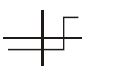
C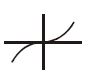
D
Solution
(D) relation is a function if every input $x$ has exactly one output $y$. This is tested using the Vertical Line Test. If any vertical line intersects the graph at more than one point,it is $NOT$ a function.
$A$: $A$ parabola is a function.
$B$: $A$ step function is a function.
$C$: $A$ cubic function is a function.
$D$: $A$ vertical line passing through the origin represents the relation $x = 0$. For $x = 0$,there are infinitely many values of $y$. Thus,it fails the Vertical Line Test and is $NOT$ a function.
$A$: $A$ parabola is a function.
$B$: $A$ step function is a function.
$C$: $A$ cubic function is a function.
$D$: $A$ vertical line passing through the origin represents the relation $x = 0$. For $x = 0$,there are infinitely many values of $y$. Thus,it fails the Vertical Line Test and is $NOT$ a function.
0 likes
View Solution2
AdvancedMCQ
Which of the following represents a function?
A
$y = \sqrt{x} - |x|; \, x \in R$
B
$y = \sqrt{x} - |x|; \, x \ge 1$
C
$x = y^2$
D
None of these
Solution
(B) relation $f: A \to B$ is a function if every element in the domain $A$ has a unique image in the codomain $B$.
$1$. For option $A$: $y = \sqrt{x} - |x|$. If $x < 0$,$\sqrt{x}$ is not defined in the set of real numbers $R$. Thus,it is not a function on $R$.
$2$. For option $B$: $y = \sqrt{x} - |x|$ with $x \ge 1$. For every $x$ in the domain $[1, \infty)$,there exists a unique real value $y$. Therefore,this represents a function.
$3$. For option $C$: $x = y^2$. This implies $y = \pm \sqrt{x}$. For a single value of $x > 0$,there are two values of $y$. Thus,it is not a function.
Conclusion: Option $B$ is the correct representation of a function.
$1$. For option $A$: $y = \sqrt{x} - |x|$. If $x < 0$,$\sqrt{x}$ is not defined in the set of real numbers $R$. Thus,it is not a function on $R$.
$2$. For option $B$: $y = \sqrt{x} - |x|$ with $x \ge 1$. For every $x$ in the domain $[1, \infty)$,there exists a unique real value $y$. Therefore,this represents a function.
$3$. For option $C$: $x = y^2$. This implies $y = \pm \sqrt{x}$. For a single value of $x > 0$,there are two values of $y$. Thus,it is not a function.
Conclusion: Option $B$ is the correct representation of a function.
0 likes
View Solution3
DifficultMCQ
Statement $1$ : If $A$ and $B$ are two sets having $p$ and $q$ elements respectively,where $q > p$. Then the total number of functions from set $A$ to set $B$ is $q^p$.
Statement $2$ : The total number of selections of $p$ different objects out of $q$ objects is ${}^qC_p$.
Statement $2$ : The total number of selections of $p$ different objects out of $q$ objects is ${}^qC_p$.
A
Statement $1$ is true,Statement $2$ is false.
B
Statement $1$ is true,Statement $2$ is true,Statement $2$ is not a correct explanation of Statement $1$.
C
Statement $1$ is false,Statement $2$ is true.
D
Statement $1$ is true,Statement $2$ is true,Statement $2$ is a correct explanation of Statement $1$.
Solution
(B) Statement-$1$: The number of functions from a set $A$ with $n(A) = p$ elements to a set $B$ with $n(B) = q$ elements is given by $q^p$. This is a standard result in set theory. Thus,Statement-$1$ is true.
Statement-$2$: The number of ways to select $p$ objects from $q$ distinct objects is given by the combination formula ${}^qC_p = \frac{q!}{p!(q-p)!}$. This is a true statement.
However,Statement-$2$ describes the number of combinations,which is a fundamental counting principle,but it does not explain why the number of functions from $A$ to $B$ is $q^p$. The number of functions is derived from the fact that each of the $p$ elements in $A$ has $q$ choices in $B$. Therefore,Statement-$2$ is not the correct explanation for Statement-$1$.
Statement-$2$: The number of ways to select $p$ objects from $q$ distinct objects is given by the combination formula ${}^qC_p = \frac{q!}{p!(q-p)!}$. This is a true statement.
However,Statement-$2$ describes the number of combinations,which is a fundamental counting principle,but it does not explain why the number of functions from $A$ to $B$ is $q^p$. The number of functions is derived from the fact that each of the $p$ elements in $A$ has $q$ choices in $B$. Therefore,Statement-$2$ is not the correct explanation for Statement-$1$.
0 likes
View Solution4
Easy
Let $N$ be the set of natural numbers and the relation $R$ be defined on $N$ such that $R = \{(x, y) : y = 2x, x, y \in N \}$. What is the domain,codomain,and range of $R$? Is this relation a function?
Solution
(N/A) The domain of $R$ is the set of natural numbers $N$.
The codomain of $R$ is the set of natural numbers $N$.
The range of $R$ is the set of even natural numbers,i.e.,$\{2, 4, 6, \dots \}$.
Since every element $x \in N$ has a unique image $y = 2x$ in $N$,this relation is a function.
The codomain of $R$ is the set of natural numbers $N$.
The range of $R$ is the set of even natural numbers,i.e.,$\{2, 4, 6, \dots \}$.
Since every element $x \in N$ has a unique image $y = 2x$ in $N$,this relation is a function.
0 likes
View Solution5
EasyMCQ
Examine the following relation and state whether it is a function or not,giving reasons:
$R = \{(2, 1), (3, 1), (4, 2)\}$
$R = \{(2, 1), (3, 1), (4, 2)\}$
A
It is a function because each element in the domain has a unique image.
B
It is not a function because the element $1$ is repeated in the range.
C
It is not a function because the element $2$ is repeated in the domain.
D
It is not a function because the relation is not one-to-one.
Solution
(A) relation $R$ from a set $A$ to a set $B$ is a function if every element of $A$ has one and only one image in $B$.
In the given relation $R = \{(2, 1), (3, 1), (4, 2)\}$,the domain is $\{2, 3, 4\}$.
For each element in the domain:
- The image of $2$ is $1$.
- The image of $3$ is $1$.
- The image of $4$ is $2$.
Since each element in the domain has a unique image in the codomain,the relation $R$ is a function.
In the given relation $R = \{(2, 1), (3, 1), (4, 2)\}$,the domain is $\{2, 3, 4\}$.
For each element in the domain:
- The image of $2$ is $1$.
- The image of $3$ is $1$.
- The image of $4$ is $2$.
Since each element in the domain has a unique image in the codomain,the relation $R$ is a function.
0 likes
View Solution6
EasyMCQ
Examine the following relation and state whether it is a function or not,giving reasons: $R = \{(2, 2), (2, 4), (3, 3), (4, 4)\}$
A
Yes,it is a function.
B
No,it is not a function.
C
It is a bijective function.
D
It is a constant function.
Solution
(B) relation $R$ from a set $A$ to a set $B$ is a function if every element of $A$ has one and only one image in $B$.
In the given relation $R = \{(2, 2), (2, 4), (3, 3), (4, 4)\}$,the element $2$ is associated with two different images,$2$ and $4$.
Since the same first element $2$ corresponds to two different images,this relation is not a function.
In the given relation $R = \{(2, 2), (2, 4), (3, 3), (4, 4)\}$,the element $2$ is associated with two different images,$2$ and $4$.
Since the same first element $2$ corresponds to two different images,this relation is not a function.
0 likes
View Solution7
EasyMCQ
Examine the following relation and state whether it is a function or not,giving reasons:
$R = \{(1, 2), (2, 3), (3, 4), (4, 5), (5, 6), (6, 7)\}$
$R = \{(1, 2), (2, 3), (3, 4), (4, 5), (5, 6), (6, 7)\}$
A
It is a function because every element in the domain has a unique image in the codomain.
B
It is not a function because the domain elements are not distinct.
C
It is a function because the range elements are distinct.
D
It is not a function because the relation is not symmetric.
Solution
(A) relation $R$ from a set $A$ to a set $B$ is a function if every element of $A$ has one and only one image in $B$.
In the given relation $R = \{(1, 2), (2, 3), (3, 4), (4, 5), (5, 6), (6, 7)\}$,each element of the domain $\{1, 2, 3, 4, 5, 6\}$ is associated with a unique element in the range $\{2, 3, 4, 5, 6, 7\}$.
Since no two ordered pairs have the same first element,every input has exactly one output.
Therefore,the relation is a function.
In the given relation $R = \{(1, 2), (2, 3), (3, 4), (4, 5), (5, 6), (6, 7)\}$,each element of the domain $\{1, 2, 3, 4, 5, 6\}$ is associated with a unique element in the range $\{2, 3, 4, 5, 6, 7\}$.
Since no two ordered pairs have the same first element,every input has exactly one output.
Therefore,the relation is a function.
0 likes
View Solution8
Easy
Let $N$ be the set of natural numbers. Define a function $f: N \rightarrow N$ by $f(x) = 2x + 1$. Using this definition,complete the table given below.
| $x$ | $1$ | $2$ | $3$ | $4$ | $5$ | $6$ | $7$ |
| $y$ | $f(1) = \dots$ | $f(2) = \dots$ | $f(3) = \dots$ | $f(4) = \dots$ | $f(5) = \dots$ | $f(6) = \dots$ | $f(7) = \dots$ |
Solution
(N/A) To complete the table,we substitute each value of $x$ into the function $f(x) = 2x + 1$:
| $x$ | $1$ | $2$ | $3$ | $4$ | $5$ | $6$ | $7$ |
| $y$ | $f(1) = 3$ | $f(2) = 5$ | $f(3) = 7$ | $f(4) = 9$ | $f(5) = 11$ | $f(6) = 13$ | $f(7) = 15$ |
0 likes
View Solution9
Medium
Which of the following relations are functions? Give reasons. If it is a function,determine its domain and range.
$\{(2,1), (5,1), (8,1), (11,1), (14,1), (17,1)\}$
$\{(2,1), (5,1), (8,1), (11,1), (14,1), (17,1)\}$
Solution
(N/A) The given relation is $R = \{(2,1), (5,1), (8,1), (11,1), (14,1), (17,1)\}$.
Since each element in the domain $\{2, 5, 8, 11, 14, 17\}$ has a unique image in the codomain,this relation is a function.
Domain $= \{2, 5, 8, 11, 14, 17\}$
Range $= \{1\}$
Since each element in the domain $\{2, 5, 8, 11, 14, 17\}$ has a unique image in the codomain,this relation is a function.
Domain $= \{2, 5, 8, 11, 14, 17\}$
Range $= \{1\}$
0 likes
View Solution10
Medium
Which of the following relations are functions? Give reasons. If it is a function,determine its domain and range.
$\{(2,1), (4,2), (6,3), (8,4), (10,5), (12,6), (14,7)\}$
$\{(2,1), (4,2), (6,3), (8,4), (10,5), (12,6), (14,7)\}$
Solution
(N/A) The given relation is $R = \{(2,1), (4,2), (6,3), (8,4), (10,5), (12,6), (14,7)\}$.
$A$ relation is a function if every element of the domain has a unique image in the codomain.
In this relation,each first element $(2, 4, 6, 8, 10, 12, 14)$ is associated with exactly one unique second element ($1, 2, 3, 4, 5, 6, 7$ respectively).
Therefore,the given relation is a function.
The domain is the set of all first elements: $\text{Domain} = \{2, 4, 6, 8, 10, 12, 14\}$.
The range is the set of all second elements: $\text{Range} = \{1, 2, 3, 4, 5, 6, 7\}$.
$A$ relation is a function if every element of the domain has a unique image in the codomain.
In this relation,each first element $(2, 4, 6, 8, 10, 12, 14)$ is associated with exactly one unique second element ($1, 2, 3, 4, 5, 6, 7$ respectively).
Therefore,the given relation is a function.
The domain is the set of all first elements: $\text{Domain} = \{2, 4, 6, 8, 10, 12, 14\}$.
The range is the set of all second elements: $\text{Range} = \{1, 2, 3, 4, 5, 6, 7\}$.
0 likes
View Solution11
EasyMCQ
$A$ function $f$ is defined by $f(x) = 2x - 5$. Find the values of $f(0)$,$f(7)$,and $f(-3)$.
A
$f(0) = -5, f(7) = 9, f(-3) = -11$
B
$f(0) = -5, f(7) = 14, f(-3) = -6$
C
$f(0) = 5, f(7) = 9, f(-3) = -11$
D
$f(0) = -5, f(7) = 9, f(-3) = -111$
Solution
(A) The given function is $f(x) = 2x - 5$.
To find $f(0)$,substitute $x = 0$:
$f(0) = 2(0) - 5 = 0 - 5 = -5$.
To find $f(7)$,substitute $x = 7$:
$f(7) = 2(7) - 5 = 14 - 5 = 9$.
To find $f(-3)$,substitute $x = -3$:
$f(-3) = 2(-3) - 5 = -6 - 5 = -11$.
To find $f(0)$,substitute $x = 0$:
$f(0) = 2(0) - 5 = 0 - 5 = -5$.
To find $f(7)$,substitute $x = 7$:
$f(7) = 2(7) - 5 = 14 - 5 = 9$.
To find $f(-3)$,substitute $x = -3$:
$f(-3) = 2(-3) - 5 = -6 - 5 = -11$.
0 likes
View Solution12
EasyMCQ
$A$ function $f$ is defined by $f(x) = 2x - 5$. Find the value of $f(7)$.
A
$9$
B
$10$
C
$11$
D
$12$
Solution
(A) The given function is $f(x) = 2x - 5$.
To find $f(7)$,substitute $x = 7$ into the function:
$f(7) = 2(7) - 5$
$f(7) = 14 - 5$
$f(7) = 9$
To find $f(7)$,substitute $x = 7$ into the function:
$f(7) = 2(7) - 5$
$f(7) = 14 - 5$
$f(7) = 9$
0 likes
View Solution13
EasyMCQ
$A$ function $f$ is defined by $f(x) = 2x - 5$. Find the value of $f(-3)$.
A
$-11$
B
$-1$
C
$1$
D
$11$
Solution
(A) The given function is $f(x) = 2x - 5$.
To find $f(-3)$,substitute $x = -3$ into the function:
$f(-3) = 2(-3) - 5$
$f(-3) = -6 - 5$
$f(-3) = -11$
To find $f(-3)$,substitute $x = -3$ into the function:
$f(-3) = 2(-3) - 5$
$f(-3) = -6 - 5$
$f(-3) = -11$
0 likes
View Solution14
EasyMCQ
The function $t$ which maps temperature in degree Celsius into temperature in degree Fahrenheit is defined by $t(C) = \frac{9C}{5} + 32$. Find $t(0)$.
A
$32$
B
$0$
C
$9/5$
D
$160/9$
Solution
(A) The given function is $t(C) = \frac{9C}{5} + 32$.
To find $t(0)$,substitute $C = 0$ into the function:
$t(0) = \frac{9(0)}{5} + 32$
$t(0) = 0 + 32$
$t(0) = 32$
To find $t(0)$,substitute $C = 0$ into the function:
$t(0) = \frac{9(0)}{5} + 32$
$t(0) = 0 + 32$
$t(0) = 32$
0 likes
View Solution15
EasyMCQ
The function $t$ which maps temperature in degree Celsius into temperature in degree Fahrenheit is defined by $t(C) = \frac{9C}{5} + 32$. Find $t(-10)$.
A
$14$
B
$16$
C
$18$
D
$20$
Solution
(A) The given function is $t(C) = \frac{9C}{5} + 32$.
To find $t(-10)$,substitute $C = -10$ into the function:
$t(-10) = \frac{9 \times (-10)}{5} + 32$
$t(-10) = 9 \times (-2) + 32$
$t(-10) = -18 + 32$
$t(-10) = 14$
To find $t(-10)$,substitute $C = -10$ into the function:
$t(-10) = \frac{9 \times (-10)}{5} + 32$
$t(-10) = 9 \times (-2) + 32$
$t(-10) = -18 + 32$
$t(-10) = 14$
0 likes
View Solution16
EasyMCQ
The function $t$,which maps temperature in degree Celsius into temperature in degree Fahrenheit,is defined by $t(C) = \frac{9C}{5} + 32$. Find the value of $C$ when $t(C) = 212$.
A
$100$
B
$90$
C
$80$
D
$110$
Solution
(A) The given function is $t(C) = \frac{9C}{5} + 32$.
It is given that $t(C) = 212$.
Substituting the value in the equation:
$212 = \frac{9C}{5} + 32$
Subtracting $32$ from both sides:
$212 - 32 = \frac{9C}{5}$
$180 = \frac{9C}{5}$
Multiplying both sides by $5$:
$180 \times 5 = 9C$
$900 = 9C$
Dividing by $9$:
$C = \frac{900}{9} = 100$
Thus,the value of $C$ when $t(C) = 212$ is $100$.
It is given that $t(C) = 212$.
Substituting the value in the equation:
$212 = \frac{9C}{5} + 32$
Subtracting $32$ from both sides:
$212 - 32 = \frac{9C}{5}$
$180 = \frac{9C}{5}$
Multiplying both sides by $5$:
$180 \times 5 = 9C$
$900 = 9C$
Dividing by $9$:
$C = \frac{900}{9} = 100$
Thus,the value of $C$ when $t(C) = 212$ is $100$.
0 likes
View Solution17
Medium
The relation $f$ is defined by $f(x) = \begin{cases} x^2, & 0 \le x \le 3 \\ 3x, & 3 \le x \le 10 \end{cases}$. The relation $g$ is defined by $g(x) = \begin{cases} x^2, & 0 \le x \le 2 \\ 3x, & 2 \le x \le 10 \end{cases}$. Show that $f$ is a function and $g$ is not a function.
Solution
(N/A) For a relation to be a function,every element in the domain must have a unique image.
For $f(x)$:
At $x = 3$,the first part gives $f(3) = 3^2 = 9$.
The second part gives $f(3) = 3 \times 3 = 9$.
Since both parts yield the same value $9$ at $x = 3$,$f(x)$ is a function.
For $g(x)$:
At $x = 2$,the first part gives $g(2) = 2^2 = 4$.
The second part gives $g(2) = 3 \times 2 = 6$.
Since $x = 2$ has two different images ($4$ and $6$),$g(x)$ is not a function.
For $f(x)$:
At $x = 3$,the first part gives $f(3) = 3^2 = 9$.
The second part gives $f(3) = 3 \times 3 = 9$.
Since both parts yield the same value $9$ at $x = 3$,$f(x)$ is a function.
For $g(x)$:
At $x = 2$,the first part gives $g(2) = 2^2 = 4$.
The second part gives $g(2) = 3 \times 2 = 6$.
Since $x = 2$ has two different images ($4$ and $6$),$g(x)$ is not a function.
0 likes
View Solution18
Medium
Let $A = \{1, 2, 3, 4\}$,$B = \{1, 5, 9, 11, 15, 16\}$ and $f = \{(1, 5), (2, 9), (3, 1), (4, 5), (2, 11)\}$. Is $f$ a function from $A$ to $B$? Justify your answer.
Solution
(B) relation $f$ from a set $A$ to a set $B$ is a function if every element of $A$ has one and only one image in $B$.
Given $f = \{(1, 5), (2, 9), (3, 1), (4, 5), (2, 11)\}$.
Here,the element $2 \in A$ is associated with two different images in $B$,which are $9$ and $11$ (i.e.,$f(2) = 9$ and $f(2) = 11$).
Since an element of the domain cannot have more than one image in the codomain,$f$ is not a function.
Given $f = \{(1, 5), (2, 9), (3, 1), (4, 5), (2, 11)\}$.
Here,the element $2 \in A$ is associated with two different images in $B$,which are $9$ and $11$ (i.e.,$f(2) = 9$ and $f(2) = 11$).
Since an element of the domain cannot have more than one image in the codomain,$f$ is not a function.
0 likes
View Solution19
Medium
Let $f$ be the subset of $Z \times Z$ defined by $f = \{(ab, a+b) : a, b \in Z\}$. Is $f$ a function from $Z$ to $Z$? Justify your answer.
Solution
(N/A) The relation $f$ is defined as $f = \{(ab, a+b) : a, b \in Z\}$.
$A$ relation $f$ from a set $A$ to a set $B$ is a function if every element of $A$ has a unique image in $B$.
Consider the elements $a=2, b=6$ and $a=-2, b=-6$ in $Z$.
For $a=2, b=6$,we have $(ab, a+b) = (2 \times 6, 2+6) = (12, 8) \in f$.
For $a=-2, b=-6$,we have $(ab, a+b) = (-2 \times -6, -2-6) = (12, -8) \in f$.
Since the same first element $12$ corresponds to two different images $8$ and $-8$,the relation $f$ is not a function.
$A$ relation $f$ from a set $A$ to a set $B$ is a function if every element of $A$ has a unique image in $B$.
Consider the elements $a=2, b=6$ and $a=-2, b=-6$ in $Z$.
For $a=2, b=6$,we have $(ab, a+b) = (2 \times 6, 2+6) = (12, 8) \in f$.
For $a=-2, b=-6$,we have $(ab, a+b) = (-2 \times -6, -2-6) = (12, -8) \in f$.
Since the same first element $12$ corresponds to two different images $8$ and $-8$,the relation $f$ is not a function.
0 likes
View Solution20
DifficultMCQ
Let $f(x)$ be a polynomial with integer coefficients satisfying $f(1)=5$ and $f(2)=7$. The smallest possible positive value of $f(12)$ is
A
$5$
B
$7$
C
$27$
D
$15$
Solution
(C) For any polynomial $f(x)$ with integer coefficients,the property $(a-b)$ divides $(f(a)-f(b))$ holds for any distinct integers $a$ and $b$.
Given $f(1)=5$ and $f(2)=7$,we have $(2-1)$ divides $(f(2)-f(1))$,which is $1$ divides $(7-5)=2$. This is always true.
For $f(12)$,we have $(12-1)$ divides $(f(12)-f(1)) \implies 11$ divides $(f(12)-5)$.
Also,$(12-2)$ divides $(f(12)-f(2)) \implies 10$ divides $(f(12)-7)$.
Let $f(12) = k$. Then $k \equiv 5 \pmod{11}$ and $k \equiv 7 \pmod{10}$.
From $k \equiv 7 \pmod{10}$,$k$ can be $7, 17, 27, 37, \dots$.
Checking these values for $k \equiv 5 \pmod{11}$:
$7 \equiv 7 \pmod{11}$
$17 \equiv 6 \pmod{11}$
$27 \equiv 5 \pmod{11}$.
Thus,the smallest positive value is $27$.
Given $f(1)=5$ and $f(2)=7$,we have $(2-1)$ divides $(f(2)-f(1))$,which is $1$ divides $(7-5)=2$. This is always true.
For $f(12)$,we have $(12-1)$ divides $(f(12)-f(1)) \implies 11$ divides $(f(12)-5)$.
Also,$(12-2)$ divides $(f(12)-f(2)) \implies 10$ divides $(f(12)-7)$.
Let $f(12) = k$. Then $k \equiv 5 \pmod{11}$ and $k \equiv 7 \pmod{10}$.
From $k \equiv 7 \pmod{10}$,$k$ can be $7, 17, 27, 37, \dots$.
Checking these values for $k \equiv 5 \pmod{11}$:
$7 \equiv 7 \pmod{11}$
$17 \equiv 6 \pmod{11}$
$27 \equiv 5 \pmod{11}$.
Thus,the smallest positive value is $27$.
0 likes
View Solution21
AdvancedMCQ
The number of relations $R$ from an $m$-element set $A$ to an $n$-element set $B$ satisfying the condition $(a, b_1) \in R, (a, b_2) \in R \Rightarrow b_1 = b_2$ for $a \in A, b_1, b_2 \in B$ is
A
$n^m$
B
$2^{m+n}-2^m-2^n$
C
$mn$
D
$(n+1)^m$
Solution
(A) The given condition $(a, b_1) \in R$ and $(a, b_2) \in R \Rightarrow b_1 = b_2$ is the definition of a function from set $A$ to set $B$.
In a function,every element $a \in A$ must be mapped to exactly one element $b \in B$.
Since there are $m$ elements in set $A$ and each element has $n$ choices in set $B$,the total number of such relations (which are functions) is $n \times n \times \dots \times n$ ($m$ times).
Therefore,the total number of such relations is $n^m$.
In a function,every element $a \in A$ must be mapped to exactly one element $b \in B$.
Since there are $m$ elements in set $A$ and each element has $n$ choices in set $B$,the total number of such relations (which are functions) is $n \times n \times \dots \times n$ ($m$ times).
Therefore,the total number of such relations is $n^m$.
0 likes
View Solution22
EasyMCQ
Let $A = \{a, b, c, d\}$ and $B = \{1, 2, 3\}$. The relations $R_1, R_2, R_3, R_4$ are defined as follows:
$R_1 = \{(a, 1), (b, 2), (c, 1), (d, 2)\}$
$R_2 = \{(a, 1), (b, 1), (c, 1), (d, 1)\}$
$R_3 = \{(a, 2), (b, 3), (c, 2), (d, 2)\}$
$R_4 = \{(a, 1), (b, 2), (a, 2), (d, 3)\}$
Which of the following is true?
$R_1 = \{(a, 1), (b, 2), (c, 1), (d, 2)\}$
$R_2 = \{(a, 1), (b, 1), (c, 1), (d, 1)\}$
$R_3 = \{(a, 2), (b, 3), (c, 2), (d, 2)\}$
$R_4 = \{(a, 1), (b, 2), (a, 2), (d, 3)\}$
Which of the following is true?
A
Only $R_3$ and $R_4$ are not functions
B
Only $R_1$ and $R_2$ are not functions
C
Only $R_3$ is not a function
D
Only $R_4$ is not a function
Solution
(D) relation $f$ from set $A$ to set $B$ is a function if every element of $A$ has a unique image in $B$.
For $R_1$: Each element of $A$ has exactly one image in $B$. Thus,$R_1$ is a function.
For $R_2$: Each element of $A$ has exactly one image in $B$. Thus,$R_2$ is a function.
For $R_3$: Each element of $A$ has exactly one image in $B$. Thus,$R_3$ is a function.
For $R_4$: The element $a \in A$ is mapped to two different values,$1$ and $2$ (i.e.,$(a, 1) \in R_4$ and $(a, 2) \in R_4$).
Since an element cannot have two distinct images,$R_4$ is not a function.
Therefore,only $R_4$ is not a function.
For $R_1$: Each element of $A$ has exactly one image in $B$. Thus,$R_1$ is a function.
For $R_2$: Each element of $A$ has exactly one image in $B$. Thus,$R_2$ is a function.
For $R_3$: Each element of $A$ has exactly one image in $B$. Thus,$R_3$ is a function.
For $R_4$: The element $a \in A$ is mapped to two different values,$1$ and $2$ (i.e.,$(a, 1) \in R_4$ and $(a, 2) \in R_4$).
Since an element cannot have two distinct images,$R_4$ is not a function.
Therefore,only $R_4$ is not a function.
0 likes
View Solution23
EasyMCQ
Let $f: R \rightarrow R$ be defined by $f(x)=x^2+1$. Then,the pre-images of $17$ and $-3$ respectively are
A
$\phi, \{4, -4\}$
B
$\{3, -3\}, \phi$
C
$\{4, -4\}, \phi$
D
$\{4, -4\}, \{2, -2\}$
Solution
(C) To find the pre-image of $17$,we set $f(x) = 17$:
$x^2 + 1 = 17$
$x^2 = 16$
$x = \pm 4$
So,the pre-image of $17$ is $\{4, -4\}$.
To find the pre-image of $-3$,we set $f(x) = -3$:
$x^2 + 1 = -3$
$x^2 = -4$
Since the square of a real number cannot be negative,there is no real value of $x$ such that $f(x) = -3$.
Thus,the pre-image of $-3$ is $\phi$ (the empty set).
Therefore,the pre-images are $\{4, -4\}$ and $\phi$.
$x^2 + 1 = 17$
$x^2 = 16$
$x = \pm 4$
So,the pre-image of $17$ is $\{4, -4\}$.
To find the pre-image of $-3$,we set $f(x) = -3$:
$x^2 + 1 = -3$
$x^2 = -4$
Since the square of a real number cannot be negative,there is no real value of $x$ such that $f(x) = -3$.
Thus,the pre-image of $-3$ is $\phi$ (the empty set).
Therefore,the pre-images are $\{4, -4\}$ and $\phi$.
0 likes
View Solution24
MediumMCQ
If $f(x) = x^4 - 2x^3 + 3x^2 - ax + b$ is divided by $(x - 1)$ and $(x + 1)$,the remainders are $5$ and $19$,respectively. If $f(x)$ is divided by $(x - 2)$,the remainder is:
A
$8$
B
$5$
C
$10$
D
$12$
Solution
(C) Given $f(x) = x^4 - 2x^3 + 3x^2 - ax + b$.
By the Remainder Theorem,$f(1) = 5$ and $f(-1) = 19$.
For $f(1) = 5$:
$1 - 2 + 3 - a + b = 5 \implies 2 - a + b = 5 \implies b - a = 3$ (Eq. $i$).
For $f(-1) = 19$:
$1 + 2 + 3 + a + b = 19 \implies 6 + a + b = 19 \implies a + b = 13$ (Eq. $ii$).
Adding Eq. $i$ and Eq. $ii$:
$(b - a) + (a + b) = 3 + 13 \implies 2b = 16 \implies b = 8$.
Substituting $b = 8$ into Eq. $ii$:
$a + 8 = 13 \implies a = 5$.
Thus,$f(x) = x^4 - 2x^3 + 3x^2 - 5x + 8$.
To find the remainder when $f(x)$ is divided by $(x - 2)$,we calculate $f(2)$:
$f(2) = (2)^4 - 2(2)^3 + 3(2)^2 - 5(2) + 8$
$f(2) = 16 - 16 + 12 - 10 + 8 = 10$.
Therefore,the remainder is $10$.
By the Remainder Theorem,$f(1) = 5$ and $f(-1) = 19$.
For $f(1) = 5$:
$1 - 2 + 3 - a + b = 5 \implies 2 - a + b = 5 \implies b - a = 3$ (Eq. $i$).
For $f(-1) = 19$:
$1 + 2 + 3 + a + b = 19 \implies 6 + a + b = 19 \implies a + b = 13$ (Eq. $ii$).
Adding Eq. $i$ and Eq. $ii$:
$(b - a) + (a + b) = 3 + 13 \implies 2b = 16 \implies b = 8$.
Substituting $b = 8$ into Eq. $ii$:
$a + 8 = 13 \implies a = 5$.
Thus,$f(x) = x^4 - 2x^3 + 3x^2 - 5x + 8$.
To find the remainder when $f(x)$ is divided by $(x - 2)$,we calculate $f(2)$:
$f(2) = (2)^4 - 2(2)^3 + 3(2)^2 - 5(2) + 8$
$f(2) = 16 - 16 + 12 - 10 + 8 = 10$.
Therefore,the remainder is $10$.
0 likes
View Solution25
EasyMCQ
If $f$ is a relation from the set of positive real numbers to the set of positive real numbers defined by $f(x) = 3x^2 - 2$,then $f$ is
A
one-one but not onto
B
onto but not one-one
C
a bijection
D
not a function
Solution
(D) Given the relation $f: R_{+} \rightarrow R_{+}$ defined by $f(x) = 3x^2 - 2$.
For $f$ to be a function,every element $x$ in the domain $R_{+}$ must have a unique image $f(x)$ in the codomain $R_{+}$.
Given $x \in (0, \infty)$,we have $x^2 > 0$,so $3x^2 > 0$.
Thus,$f(x) = 3x^2 - 2 > -2$.
This means the range of $f$ is $(-2, \infty)$.
Since the codomain is given as $R_{+} = (0, \infty)$,and the range $(-2, \infty)$ is not a subset of the codomain $(0, \infty)$ (for example,if $x=0.5$,$f(0.5) = 3(0.25) - 2 = 0.75 - 2 = -1.25$,which is not in $R_{+}$),the relation $f$ does not map every element of the domain to an element in the codomain.
Therefore,$f$ is not a function.
For $f$ to be a function,every element $x$ in the domain $R_{+}$ must have a unique image $f(x)$ in the codomain $R_{+}$.
Given $x \in (0, \infty)$,we have $x^2 > 0$,so $3x^2 > 0$.
Thus,$f(x) = 3x^2 - 2 > -2$.
This means the range of $f$ is $(-2, \infty)$.
Since the codomain is given as $R_{+} = (0, \infty)$,and the range $(-2, \infty)$ is not a subset of the codomain $(0, \infty)$ (for example,if $x=0.5$,$f(0.5) = 3(0.25) - 2 = 0.75 - 2 = -1.25$,which is not in $R_{+}$),the relation $f$ does not map every element of the domain to an element in the codomain.
Therefore,$f$ is not a function.
0 likes
View Solution26
EasyMCQ
Let $f: X \rightarrow Y$ be a function and $A_y = f^{-1}(\{y\})$ for $y \in Y$. Then $A_i \cap A_j = \phi$ $(i \neq j)$ for all $i, j \in Y$ and $\bigcup_{y \in Y} A_y = X$,if
A
$f$ is an onto function only
B
$f$ is a one-one function only
C
$f$ is any function
D
$X$ and $Y$ are finite sets only
Solution
(C) Given $f: X \rightarrow Y$ is a function.
By definition,$A_y = f^{-1}(\{y\}) = \{x \in X : f(x) = y\}$.
This set $A_y$ represents the preimage of the element $y$ under the function $f$.
For any two distinct elements $i, j \in Y$ where $i \neq j$,the sets $A_i$ and $A_j$ are disjoint because a function maps each element of the domain to exactly one element in the codomain. Thus,$A_i \cap A_j = \phi$.
Furthermore,the union of all preimages $A_y$ for all $y \in Y$ covers the entire domain $X$,i.e.,$\bigcup_{y \in Y} A_y = X$.
These properties hold true for any function $f: X \rightarrow Y$.
Therefore,option $(C)$ is correct.
By definition,$A_y = f^{-1}(\{y\}) = \{x \in X : f(x) = y\}$.
This set $A_y$ represents the preimage of the element $y$ under the function $f$.
For any two distinct elements $i, j \in Y$ where $i \neq j$,the sets $A_i$ and $A_j$ are disjoint because a function maps each element of the domain to exactly one element in the codomain. Thus,$A_i \cap A_j = \phi$.
Furthermore,the union of all preimages $A_y$ for all $y \in Y$ covers the entire domain $X$,i.e.,$\bigcup_{y \in Y} A_y = X$.
These properties hold true for any function $f: X \rightarrow Y$.
Therefore,option $(C)$ is correct.
0 likes
View Solution27
MediumMCQ
If $Q$ denotes the set of all rational numbers and $f\left(\frac{p}{q}\right)=\sqrt{p^2-q^2}$ for any $\frac{p}{q} \in Q$,then observe the following statements.
$I$. $f\left(\frac{p}{q}\right)$ is real for each $\frac{p}{q} \in Q$.
$II$. $f\left(\frac{p}{q}\right)$ is a complex number for each $\frac{p}{q} \in Q$.
Which of the following is correct?
$I$. $f\left(\frac{p}{q}\right)$ is real for each $\frac{p}{q} \in Q$.
$II$. $f\left(\frac{p}{q}\right)$ is a complex number for each $\frac{p}{q} \in Q$.
Which of the following is correct?
A
Both $I$ and $II$ are true
B
$I$ is true,$II$ is false
C
$I$ is false,$II$ is true
D
Both $I$ and $II$ are false
Solution
(C) Given,$f\left(\frac{p}{q}\right)=\sqrt{p^2-q^2}$ for $\frac{p}{q} \in Q$.
If $p < q$,then $p^2 - q^2 < 0$.
Since the square root of a negative number is not a real number,statement $I$ is false.
However,the square root of a negative number is a complex number (specifically,an imaginary number),so statement $II$ is true.
Therefore,$I$ is false and $II$ is true.
If $p < q$,then $p^2 - q^2 < 0$.
Since the square root of a negative number is not a real number,statement $I$ is false.
However,the square root of a negative number is a complex number (specifically,an imaginary number),so statement $II$ is true.
Therefore,$I$ is false and $II$ is true.
0 likes
View SolutionRelations and Functions — Defination of Function · Frequently Asked Questions
1Are these Relations and Functions questions useful for JEE and NEET?
Yes. All questions in this section are mapped to JEE Main and NEET exam patterns. Previous year questions from JEE Main, NEET, GUJCET and state-level exams are included with full solutions.
2Can I switch to Hindi or Gujarati for these questions?
Yes. Use the language tabs in the hero section or the sidebar to view the same questions and solutions in English, Hindi or Gujarati.
3How do I generate a question paper from this subtopic?
Use the Vedclass Exam Paper Generator — select the chapter and subtopic, set difficulty, and generate Sets A, B, C, D automatically. First 3 chapters of every subject are free.
Vedclass Products
For Students
Vedclass Test Series
Mock tests in real JEE/NEET style with performance analysis. 5-day free trial.
Start Free TrialFor Teachers
Exam Paper Generator
Generate Set A/B/C/D papers from this chapter in 2 minutes. 3 chapters free.
Try FreeFor Institutes
Online Exam Module
Live online exams with unlimited students, 360° analytics & white-label branding.
See DemoFor Teachers & Institutes
Generate a Relations and Functions Exam Paper in 2 Minutes
Select subtopic & difficulty — Sets A, B, C, D auto-generated with No Repeat logic.
First 3 chapters of every subject are free — no payment required.