
A English
Nitrogen family Questions in English
Class 12 Chemistry · p-Block Elements (Class 12) · Nitrogen family
1110+
Questions
English
Language
100%
With Solutions
Showing 48 of 1110 questions in English
151
MediumMCQ
The number of $P-O-P$ bridges in the structure of phosphorus pentoxide $(P_4O_{10})$ and phosphorus trioxide $(P_4O_6)$ are respectively:
A
$6, 6$
B
$5, 5$
C
$5, 6$
D
$6, 5$
Solution
(A) The structure of phosphorus trioxide $(P_4O_6)$ consists of four phosphorus atoms at the corners of a tetrahedron,with six oxygen atoms bridging the edges between them. Thus,it has $6$ $P-O-P$ bridges.
In phosphorus pentoxide $(P_4O_{10})$,each phosphorus atom is further bonded to an additional terminal oxygen atom via a coordinate bond. The core structure remains the same as $P_4O_6$,meaning it also contains $6$ $P-O-P$ bridges.
Therefore,the number of $P-O-P$ bridges in both $P_4O_{10}$ and $P_4O_6$ is $6$ each.
In phosphorus pentoxide $(P_4O_{10})$,each phosphorus atom is further bonded to an additional terminal oxygen atom via a coordinate bond. The core structure remains the same as $P_4O_6$,meaning it also contains $6$ $P-O-P$ bridges.
Therefore,the number of $P-O-P$ bridges in both $P_4O_{10}$ and $P_4O_6$ is $6$ each.
0 likes
View Solution152
MediumMCQ
What is the chemical formula of sodium pyrophosphate?
A
$Na_2P_2O_7$
B
$Na_4P_2O_7$
C
$NaPO_4$
D
$Na_2PO_2$
Solution
(B) Sodium pyrophosphate is derived from pyrophosphoric acid,which has the formula $H_4P_2O_7$.
By replacing the four hydrogen atoms with sodium ions,we obtain the salt $Na_4P_2O_7$.
By replacing the four hydrogen atoms with sodium ions,we obtain the salt $Na_4P_2O_7$.
0 likes
View Solution153
MediumMCQ
Which of the following oxides of nitrogen is solid in nature at room temperature?
A
$NO$
B
$N_2O$
C
$N_2O_3$
D
$N_2O_5$
Solution
(D) $N_2O_5$ (dinitrogen pentoxide) is a white crystalline solid at room temperature,whereas $NO$,$N_2O$,and $N_2O_3$ are gases or liquids under standard conditions.
0 likes
View Solution154
EasyMCQ
The reaction,which forms nitric oxide $(NO)$,is:
A
$C$ and $O_2$
B
$Cu$ and $N_2O$
C
$Na$ and $NH_3$
D
$Cu$ and $HNO_3$ (dilute)
Solution
(D) The reaction of dilute nitric acid $(HNO_3)$ with copper $(Cu)$ produces nitric oxide $(NO)$.
The balanced chemical equation is:
$3Cu + 8HNO_3 (\text{dilute}) \rightarrow 3Cu(NO_3)_2 + 2NO + 4H_2O$
Therefore,the correct option is $(D)$.
The balanced chemical equation is:
$3Cu + 8HNO_3 (\text{dilute}) \rightarrow 3Cu(NO_3)_2 + 2NO + 4H_2O$
Therefore,the correct option is $(D)$.
0 likes
View Solution155
EasyMCQ
Which one of the following can be used as an anaesthetic?
A
$N_2O$
B
$NO$
C
$NCl_3$
D
$NO_2$
Solution
(A) $N_2O$ (nitrous oxide) is used as an anaesthetic in dentistry and surgery because of its mild anaesthetic and analgesic properties,often referred to as laughing gas.
0 likes
View Solution156
EasyMCQ
What may be expected to happen when phosphine gas is mixed with chlorine gas?
A
The mixture only cools down
B
$PCl_3$ and $HCl$ are formed and the mixture warms up
C
$PCl_5$ and $HCl$ are formed and the mixture warms up
D
$PH_3 \cdot Cl_2$ is formed with warming up
Solution
(C) When phosphine $(PH_3)$ is mixed with chlorine gas $(Cl_2)$,it reacts vigorously to form phosphorus pentachloride $(PCl_5)$ and hydrogen chloride $(HCl)$.
The balanced chemical equation is: $PH_3 + 4Cl_2 \to PCl_5 + 3HCl$.
This reaction is highly exothermic,meaning the mixture warms up.
The balanced chemical equation is: $PH_3 + 4Cl_2 \to PCl_5 + 3HCl$.
This reaction is highly exothermic,meaning the mixture warms up.
0 likes
View Solution157
EasyMCQ
When ammonia reacts with sodium hypochlorite,the product containing nitrogen is:
A
$N_2$
B
$N_2O$
C
$NH_2OH$
D
$NO_2$
Solution
(A) The reaction between ammonia $(NH_3)$ and sodium hypochlorite $(NaOCl)$ is a well-known method for the preparation of hydrazine $(N_2H_4)$.
The chemical equation is: $2NH_3 + NaOCl \rightarrow N_2H_4 + NaCl + H_2O$.
However,in the presence of excess sodium hypochlorite or under certain conditions,hydrazine can be further oxidized to nitrogen gas $(N_2)$.
Given the options provided,$N_2$ is the most stable nitrogen-containing product formed in this reaction pathway.
The chemical equation is: $2NH_3 + NaOCl \rightarrow N_2H_4 + NaCl + H_2O$.
However,in the presence of excess sodium hypochlorite or under certain conditions,hydrazine can be further oxidized to nitrogen gas $(N_2)$.
Given the options provided,$N_2$ is the most stable nitrogen-containing product formed in this reaction pathway.
0 likes
View Solution158
MediumMCQ
Inertness of $N_2$ gas is due to
A
No vacant $d$-orbital
B
High dissociation energy
C
High electronegativity
D
None
Solution
(B) The nitrogen molecule $(N_2)$ consists of two nitrogen atoms linked by a triple bond $(N \equiv N)$.
The bond dissociation energy of this triple bond is extremely high $(941.4 \ kJ \ mol^{-1})$.
Due to this exceptionally high bond dissociation energy,$N_2$ is chemically inert under standard conditions.
Therefore,the correct option is $B$.
The bond dissociation energy of this triple bond is extremely high $(941.4 \ kJ \ mol^{-1})$.
Due to this exceptionally high bond dissociation energy,$N_2$ is chemically inert under standard conditions.
Therefore,the correct option is $B$.
0 likes
View Solution159
MediumMCQ
Which of the following elements shows a maximum valency of $5$?
A
Phosphorus
B
Tin
C
Antimony
D
Bismuth
Solution
(A) The elements of Group $15$ (Nitrogen family) have a valence shell electronic configuration of $ns^2 np^3$.
They can exhibit a maximum covalency of $5$ due to the presence of vacant $d$-orbitals in elements like Phosphorus $(P)$,Arsenic $(As)$,Antimony $(Sb)$,and Bismuth $(Bi)$.
Among the given options,Phosphorus $(P)$ is the most common example that exhibits a valency of $5$ in compounds like $PCl_5$.
They can exhibit a maximum covalency of $5$ due to the presence of vacant $d$-orbitals in elements like Phosphorus $(P)$,Arsenic $(As)$,Antimony $(Sb)$,and Bismuth $(Bi)$.
Among the given options,Phosphorus $(P)$ is the most common example that exhibits a valency of $5$ in compounds like $PCl_5$.
0 likes
View Solution160
MediumMCQ
The number of $P-O-P$ bonds in cyclic metaphosphoric acid is
A
Zero
B
Two
C
Three
D
Four
Solution
(C) Cyclic metaphosphoric acid is represented by the formula $(HPO_3)_3$ or $H_3P_3O_9$.
In its cyclic structure,three $PO_4$ tetrahedra are linked together by sharing oxygen atoms.
This structure contains a six-membered ring consisting of alternating $P$ and $O$ atoms,resulting in $3$ $P-O-P$ bonds.
In its cyclic structure,three $PO_4$ tetrahedra are linked together by sharing oxygen atoms.
This structure contains a six-membered ring consisting of alternating $P$ and $O$ atoms,resulting in $3$ $P-O-P$ bonds.
0 likes
View Solution161
MediumMCQ
Which compound is related to Haber's process?
A
$CO_2$
B
$H_2$
C
$NO_2$
D
$NH_3$
Solution
(D) The Haber's process is the industrial method for the production of ammonia $(NH_3)$.
In this process,nitrogen gas $(N_2)$ and hydrogen gas $(H_2)$ react in the presence of an iron catalyst to produce ammonia: $N_2(g) + 3H_2(g) \rightleftharpoons 2NH_3(g)$.
In this process,nitrogen gas $(N_2)$ and hydrogen gas $(H_2)$ react in the presence of an iron catalyst to produce ammonia: $N_2(g) + 3H_2(g) \rightleftharpoons 2NH_3(g)$.
0 likes
View Solution162
MediumMCQ
Ammonia is dried over
A
Quick lime
B
Slaked lime
C
Anhy. $CaCl_2$
D
None of these
Solution
(A) Ammonia is prepared by heating a mixture of calcium hydroxide and ammonium chloride.
$Ca(OH)_{2(s)} + 2NH_4Cl_{(s)} \rightarrow CaCl_{2(s)} + 2H_2O_{(l)} + 2NH_{3(g)}$
Concentrated sulphuric acid $(H_2SO_4)$ and anhydrous calcium chloride $(CaCl_2)$ are not used to dry ammonia because they react with it.
Ammonia is a basic gas,so it reacts with acidic drying agents like $H_2SO_4$ and forms an adduct with $CaCl_2$ $(CaCl_2 \cdot 8NH_3)$.
The gas is passed through fresh quicklime ($CaO$,solid calcium oxide lumps) to effectively dry it.
Ammonia is collected by upward delivery as it is lighter than air.
$Ca(OH)_{2(s)} + 2NH_4Cl_{(s)} \rightarrow CaCl_{2(s)} + 2H_2O_{(l)} + 2NH_{3(g)}$
Concentrated sulphuric acid $(H_2SO_4)$ and anhydrous calcium chloride $(CaCl_2)$ are not used to dry ammonia because they react with it.
Ammonia is a basic gas,so it reacts with acidic drying agents like $H_2SO_4$ and forms an adduct with $CaCl_2$ $(CaCl_2 \cdot 8NH_3)$.
The gas is passed through fresh quicklime ($CaO$,solid calcium oxide lumps) to effectively dry it.
Ammonia is collected by upward delivery as it is lighter than air.
0 likes
View Solution163
MediumMCQ
The structural formula of hypophosphorus acid is
A
B
C
D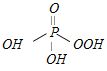
Solution
(A) Hypophosphorus acid is $H_3PO_2$.
In its structure,the central phosphorus atom is bonded to one oxygen atom by a double bond $(P=O)$,one hydroxyl group $(-OH)$,and two hydrogen atoms directly attached to the phosphorus atom $(P-H)$.
This structure is represented by option $A$.
In its structure,the central phosphorus atom is bonded to one oxygen atom by a double bond $(P=O)$,one hydroxyl group $(-OH)$,and two hydrogen atoms directly attached to the phosphorus atom $(P-H)$.
This structure is represented by option $A$.
0 likes
View Solution164
MediumMCQ
Which oxide of nitrogen is obtained on heating ammonium nitrate at $250 \, ^oC$?
A
Nitric oxide
B
Nitrous oxide
C
Nitrogen dioxide
D
Dinitrogen oxide
Solution
(B) The thermal decomposition of ammonium nitrate $(NH_4NO_3)$ at $250 \, ^oC$ yields nitrous oxide $(N_2O)$ and water vapor.
The balanced chemical equation is:
$NH_4NO_3(s) \xrightarrow{\Delta} N_2O(g) + 2H_2O(g)$
Thus,the correct option is $B$.
The balanced chemical equation is:
$NH_4NO_3(s) \xrightarrow{\Delta} N_2O(g) + 2H_2O(g)$
Thus,the correct option is $B$.
0 likes
View Solution165
EasyMCQ
The oxidation number of phosphorus varies from
A
$-1$ to $+3$
B
$-3$ to $+3$
C
$-3$ to $+5$
D
$-5$ to $+1$
Solution
(C) The oxidation state of phosphorus $(P)$ in its compounds ranges from $-3$ to $+5$.
For example,in $PH_3$,the oxidation state of $P$ is $-3$.
In $H_3PO_4$,the oxidation state of $P$ is $+5$.
For example,in $PH_3$,the oxidation state of $P$ is $-3$.
In $H_3PO_4$,the oxidation state of $P$ is $+5$.
0 likes
View Solution166
MediumMCQ
Which of the following compounds does not exist?
A
$SbCl_3$
B
$BiCl_5$
C
$SbCl_5$
D
$AsCl_5$
Solution
(B) The correct answer is $(B)$.
$BiCl_5$ does not exist because the $+3$ oxidation state of $Bi$ is significantly more stable than the $+5$ oxidation state due to the inert pair effect,which makes the formation of $Bi(V)$ compounds thermodynamically unfavorable.
$BiCl_5$ does not exist because the $+3$ oxidation state of $Bi$ is significantly more stable than the $+5$ oxidation state due to the inert pair effect,which makes the formation of $Bi(V)$ compounds thermodynamically unfavorable.
0 likes
View Solution167
MediumMCQ
Which one of the following hydrides is least stable?
A
$AsH_3$
B
$SbH_3$
C
$NH_3$
D
$PH_3$
Solution
(B) The thermal stability of the hydrides of Group $15$ elements decreases down the group as the size of the central atom increases,which leads to a decrease in the bond dissociation energy.
The order of stability is: $NH_3 > PH_3 > AsH_3 > SbH_3 > BiH_3$.
Therefore,$SbH_3$ is the least stable among the given options.
The order of stability is: $NH_3 > PH_3 > AsH_3 > SbH_3 > BiH_3$.
Therefore,$SbH_3$ is the least stable among the given options.
0 likes
View Solution168
MediumMCQ
Which element from group $15$ ($V$ group) forms the most basic compound with hydrogen?
A
Nitrogen
B
Bismuth
C
Arsenic
D
Phosphorus
Solution
(A) The basicity of hydrides of group $15$ elements $(NH_3, PH_3, AsH_3, SbH_3, BiH_3)$ depends on the availability of the lone pair of electrons on the central atom.
As we move down the group,the atomic size increases and the electron density on the central atom decreases,making the lone pair less available for donation.
Therefore,the basicity decreases down the group.
$NH_3$ has the highest electron density on the nitrogen atom,making it the most basic hydride among them.
As we move down the group,the atomic size increases and the electron density on the central atom decreases,making the lone pair less available for donation.
Therefore,the basicity decreases down the group.
$NH_3$ has the highest electron density on the nitrogen atom,making it the most basic hydride among them.
0 likes
View Solution169
EasyMCQ
The atomic number of $N$ is $7$. The atomic number of the $3$rd member of the nitrogen family is:
A
$23$
B
$15$
C
$33$
D
$43$
Solution
(C) The nitrogen family (Group $15$ elements) consists of Nitrogen $(N)$,Phosphorus $(P)$,Arsenic $(As)$,Antimony $(Sb)$,and Bismuth $(Bi)$.
The $3$rd member of the nitrogen family is Arsenic $(As)$,which has an atomic number of $33$.
| $I$. Element | $II$. Atomic Number |
| $1$. $N$ | $7$ |
| $2$. $P$ | $15$ |
| $3$. $As$ | $33$ |
| $4$. $Sb$ | $51$ |
| $5$. $Bi$ | $83$ |
The $3$rd member of the nitrogen family is Arsenic $(As)$,which has an atomic number of $33$.
0 likes
View Solution170
MediumMCQ
Which of the following compounds is a tribasic acid?
A
$H_3PO_2$
B
$H_3PO_3$
C
$H_3PO_4$
D
$H_4P_2O_7$
Solution
(C) $H_3PO_4$ (orthophosphoric acid) is a tribasic acid because it contains three replaceable hydrogen atoms attached to oxygen atoms as $P-OH$ groups.
The structure is $O=P(OH)_3$.
The structure is $O=P(OH)_3$.
0 likes
View Solution171
EasyMCQ
On heating ammonium dichromate,the gas evolved is
A
Oxygen
B
Ammonia
C
Nitrous oxide
D
Nitrogen
Solution
(D) The thermal decomposition of ammonium dichromate is given by the following reaction:
$(NH_4)_2Cr_2O_7 \to N_2 + Cr_2O_3 + 4H_2O$
As shown in the equation,the gas evolved is nitrogen $(N_2)$.
$(NH_4)_2Cr_2O_7 \to N_2 + Cr_2O_3 + 4H_2O$
As shown in the equation,the gas evolved is nitrogen $(N_2)$.
0 likes
View Solution172
MediumMCQ
Ammonia on reaction with hypochlorite anion,can form
A
$NO$
B
$NH_4Cl$
C
$N_2H_4$
D
Both $(b)$ and $(c)$
Solution
(D) The reaction of ammonia $(NH_3)$ with hypochlorite anion $(OCl^-)$ is a method for the preparation of hydrazine $(N_2H_4)$.
The balanced chemical equation is:
$2NH_3 + OCl^- \to N_2H_4 + Cl^- + H_2O$
However,in the presence of excess ammonia and specific conditions,the reaction can also produce ammonium chloride $(NH_4Cl)$ as a byproduct.
Therefore,both $NH_4Cl$ and $N_2H_4$ can be formed.
The balanced chemical equation is:
$2NH_3 + OCl^- \to N_2H_4 + Cl^- + H_2O$
However,in the presence of excess ammonia and specific conditions,the reaction can also produce ammonium chloride $(NH_4Cl)$ as a byproduct.
Therefore,both $NH_4Cl$ and $N_2H_4$ can be formed.
0 likes
View Solution173
MediumMCQ
Which of the following elements forms a strongly acidic oxide?
A
$P$
B
$As$
C
$Sb$
D
$Bi$
Solution
(A) The acidic character of oxides in Group $15$ decreases down the group as the metallic character increases.
$P$ (Phosphorus) is a non-metal and forms a strongly acidic oxide $(P_4O_{10})$.
$As$ (Arsenic) and $Sb$ (Antimony) form amphoteric oxides.
$Bi$ (Bismuth) forms a basic oxide.
Therefore,the correct option is $(A)$.
$P$ (Phosphorus) is a non-metal and forms a strongly acidic oxide $(P_4O_{10})$.
$As$ (Arsenic) and $Sb$ (Antimony) form amphoteric oxides.
$Bi$ (Bismuth) forms a basic oxide.
Therefore,the correct option is $(A)$.
0 likes
View Solution174
EasyMCQ
In group $15$ of the periodic table,nitrogen forms only a trihalide,but other elements form pentahalides also. The reason is:
A
Nitrogen has less affinity towards halogens
B
Nitrogen halides are covalent
C
Nitrogen undergoes $d^2sp^3$ hybridization
D
Nitrogen does not have $d$-orbitals
Solution
(D) The electronic configuration of nitrogen $(Z=7)$ is $1s^2, 2s^2, 2p^3$.
Nitrogen belongs to the second period and lacks $d$-orbitals in its valence shell.
Because of the absence of vacant $d$-orbitals,nitrogen cannot expand its octet to form pentahalides (like $NF_5$).
Other elements of group $15$ (like $P, As, Sb$) possess vacant $d$-orbitals,allowing them to exhibit a higher covalency of $5$ and form pentahalides.
Nitrogen belongs to the second period and lacks $d$-orbitals in its valence shell.
Because of the absence of vacant $d$-orbitals,nitrogen cannot expand its octet to form pentahalides (like $NF_5$).
Other elements of group $15$ (like $P, As, Sb$) possess vacant $d$-orbitals,allowing them to exhibit a higher covalency of $5$ and form pentahalides.
0 likes
View Solution175
MediumMCQ
In the nitrogen family,the $H-M-H$ bond angle in the hydrides $MH_3$ gradually becomes closer to $90^o$ on going from $N$ to $Sb$. This shows that gradually:
A
The basic strength of hydrides increases
B
Almost pure $p$-orbitals are used for $M-H$ bonding
C
The bond energies of $M-H$ bond increase
D
The bond pairs of electrons become nearer to the central atom
Solution
(B) As we move from $NH_3$ to $SbH_3$,the electronegativity of the central atom $M$ decreases.
Due to the decrease in electronegativity,the bond pair of electrons shifts away from the central atom towards the hydrogen atom.
According to Drago's rule,as the electronegativity of the central atom decreases,the hybridization of the central atom becomes less significant,and the $M-H$ bonds are formed using almost pure $p$-orbitals of the central atom.
Since $p$-orbitals are oriented at $90^o$ to each other,the bond angle approaches $90^o$.
Due to the decrease in electronegativity,the bond pair of electrons shifts away from the central atom towards the hydrogen atom.
According to Drago's rule,as the electronegativity of the central atom decreases,the hybridization of the central atom becomes less significant,and the $M-H$ bonds are formed using almost pure $p$-orbitals of the central atom.
Since $p$-orbitals are oriented at $90^o$ to each other,the bond angle approaches $90^o$.
0 likes
View Solution176
MediumMCQ
Which of the following tendencies remains unchanged on going down in the nitrogen family (Group-$15$)?
A
Highest oxidation state
B
Non-metallic character
C
Stability of hydrides
D
Physical state
Solution
(A) The highest oxidation state for elements in Group-$15$ is $+5$,which remains unchanged as we move down the group.
0 likes
View Solution177
MediumMCQ
Which of the following oxy acids of phosphorus is a reducing agent and monobasic?
A
$H_3PO_2$
B
$H_3PO_3$
C
$H_3PO_4$
D
$H_4P_2O_6$
Solution
(A) . Hypophosphorus acid $(H_3PO_2)$ is a monobasic acid which acts as a strong reducing agent.
In this molecule,two $P-H$ bonds are responsible for its reducing character,and one $O-H$ bond is responsible for its monobasic acid character.
In this molecule,two $P-H$ bonds are responsible for its reducing character,and one $O-H$ bond is responsible for its monobasic acid character.
0 likes
View Solution178
EasyMCQ
Nitrous oxide is known as
A
Breathing gas
B
Laughing gas
C
Exercising gas
D
Laboratory gas
Solution
(B) $N_2O$ (Nitrous oxide) is commonly known as Laughing gas because it induces euphoria and laughter when inhaled.
0 likes
View Solution179
MediumMCQ
In the reaction $4HNO_3 + P_4O_{10} \to 4HPO_3 + x$,the product $x$ is
A
$N_2O_3$
B
$N_2O_5$
C
$NO_2$
D
$H_2O$
Solution
(B) The balanced chemical equation for the reaction between nitric acid $(HNO_3)$ and phosphorus pentoxide $(P_4O_{10})$ is:
$4HNO_3 + P_4O_{10} \to 4HPO_3 + 2N_2O_5$
Comparing this with the given reaction $4HNO_3 + P_4O_{10} \to 4HPO_3 + x$,we find that $x = 2N_2O_5$.
Therefore,the product $x$ is dinitrogen pentoxide $(N_2O_5)$.
$4HNO_3 + P_4O_{10} \to 4HPO_3 + 2N_2O_5$
Comparing this with the given reaction $4HNO_3 + P_4O_{10} \to 4HPO_3 + x$,we find that $x = 2N_2O_5$.
Therefore,the product $x$ is dinitrogen pentoxide $(N_2O_5)$.
0 likes
View Solution180
EasyMCQ
The number of hydrogen atom$(s)$ attached directly to the phosphorus atom in hypophosphorous acid $(H_3PO_2)$ is:
A
Zero
B
Two
C
One
D
Three
Solution
(B) The chemical formula of hypophosphorous acid is $H_3PO_2$.
In its structure,the phosphorus atom is bonded to one oxygen atom via a double bond $(P=O)$,one hydroxyl group $(-OH)$,and two hydrogen atoms directly ($P-H$ bonds).
Therefore,there are $2$ hydrogen atoms directly attached to the phosphorus atom.
In its structure,the phosphorus atom is bonded to one oxygen atom via a double bond $(P=O)$,one hydroxyl group $(-OH)$,and two hydrogen atoms directly ($P-H$ bonds).
Therefore,there are $2$ hydrogen atoms directly attached to the phosphorus atom.
0 likes
View Solution181
MediumMCQ
Which blue liquid is obtained on reacting equimolar amounts of two gases at $-30\,^oC$?
A
$N_2O$
B
$N_2O_3$
C
$N_2O_4$
D
$N_2O_5$
Solution
(B) The reaction between equimolar amounts of nitric oxide $(NO)$ and nitrogen dioxide $(NO_2)$ at low temperatures $(-30\,^oC)$ produces dinitrogen trioxide $(N_2O_3)$,which exists as a blue liquid.
The chemical equation is: $NO_{(g)} + NO_{2_{(g)}} \xrightarrow{-30\,^oC} N_2O_{3_{(l)}} \text{ (Blue liquid)}$
The chemical equation is: $NO_{(g)} + NO_{2_{(g)}} \xrightarrow{-30\,^oC} N_2O_{3_{(l)}} \text{ (Blue liquid)}$
0 likes
View Solution182
MediumMCQ
Which is the most thermodynamically stable allotropic form of phosphorus?
A
Red
B
White
C
Black
D
Yellow
Solution
(C) Black phosphorus is the most thermodynamically stable allotropic form of phosphorus.
This is because it has a highly ordered polymeric structure and the highest ignition temperature among all phosphorus allotropes.
This is because it has a highly ordered polymeric structure and the highest ignition temperature among all phosphorus allotropes.
0 likes
View Solution183
MediumMCQ
The element which forms oxides in all oxidation states from $+I$ to $+V$ is
A
$N$
B
$P$
C
$As$
D
$Sb$
Solution
(A) Nitrogen is unique among the group $15$ elements because it can form a wide variety of oxides in all oxidation states from $+I$ to $+V$.
These include $N_2O$ $(+I)$,$NO$ $(+II)$,$N_2O_3$ $(+III)$,$NO_2$ $(+IV)$,and $N_2O_5$ $(+V)$.
These include $N_2O$ $(+I)$,$NO$ $(+II)$,$N_2O_3$ $(+III)$,$NO_2$ $(+IV)$,and $N_2O_5$ $(+V)$.
0 likes
View Solution184
MediumMCQ
The boiling points of the following hydrides follow the order of:
A
$NH_3 > AsH_3 > PH_3 > SbH_3$
B
$SbH_3 > AsH_3 > PH_3 > NH_3$
C
$SbH_3 > NH_3 > AsH_3 > PH_3$
D
$NH_3 > PH_3 > AsH_3 > SbH_3$
Solution
(C) The boiling points of the hydrides of Group $15$ elements are influenced by both molecular mass and hydrogen bonding.
$SbH_3$ has the highest boiling point due to its large molecular mass and strong van der Waals forces.
$NH_3$ has a higher boiling point than $AsH_3$ and $PH_3$ due to the presence of intermolecular hydrogen bonding.
$AsH_3$ and $PH_3$ follow the trend based on molecular mass.
The boiling points are: $SbH_3 (254 \ K) > NH_3 (238 \ K) > AsH_3 (211 \ K) > PH_3 (185 \ K)$.
Thus,the correct order is $SbH_3 > NH_3 > AsH_3 > PH_3$.
$SbH_3$ has the highest boiling point due to its large molecular mass and strong van der Waals forces.
$NH_3$ has a higher boiling point than $AsH_3$ and $PH_3$ due to the presence of intermolecular hydrogen bonding.
$AsH_3$ and $PH_3$ follow the trend based on molecular mass.
The boiling points are: $SbH_3 (254 \ K) > NH_3 (238 \ K) > AsH_3 (211 \ K) > PH_3 (185 \ K)$.
Thus,the correct order is $SbH_3 > NH_3 > AsH_3 > PH_3$.
0 likes
View Solution185
MediumMCQ
In the electrothermal process,the compound displaced by silica from calcium phosphate is
A
Calcium
B
Phosphine
C
Phosphorus
D
Phosphorus pentoxide
Solution
(D) In the electrothermal process,calcium phosphate $(Ca_3(PO_4)_2)$ is heated with silica $(SiO_2)$ and coke $(C)$.
The silica displaces phosphorus pentoxide $(P_2O_5)$ from calcium phosphate.
The reaction is: $Ca_3(PO_4)_2 + 3SiO_2 \to 3CaSiO_3 + P_2O_5$.
Subsequently,$P_2O_5$ is reduced by coke to form phosphorus $(P_4)$.
The silica displaces phosphorus pentoxide $(P_2O_5)$ from calcium phosphate.
The reaction is: $Ca_3(PO_4)_2 + 3SiO_2 \to 3CaSiO_3 + P_2O_5$.
Subsequently,$P_2O_5$ is reduced by coke to form phosphorus $(P_4)$.
0 likes
View Solution186
MediumMCQ
Number of $P-O$ bonds in $P_4O_{10}$ is
A
$17$
B
$16$
C
$15$
D
$6$
Solution
(B) The structure of $P_4O_{10}$ consists of a central $P_4$ tetrahedron where each $P$ atom is bonded to three oxygen atoms forming $P-O-P$ bridges,and each $P$ atom is also double-bonded to a terminal oxygen atom $(P=O)$.
There are $6$ $P-O-P$ bridges (involving $12$ $P-O$ single bonds) and $4$ $P=O$ bonds.
Total number of $P-O$ bonds (including both single and double bonds) is $12 + 4 = 16$.
There are $6$ $P-O-P$ bridges (involving $12$ $P-O$ single bonds) and $4$ $P=O$ bonds.
Total number of $P-O$ bonds (including both single and double bonds) is $12 + 4 = 16$.
0 likes
View Solution187
MediumMCQ
Which of the following is a mixed anhydride?
A
$NO$
B
$NO_2$
C
$N_2O_5$
D
$N_2O$
Solution
(B) $NO_2$ is a mixed anhydride because it reacts with water to form two different acids,nitrous acid $(HNO_2)$ and nitric acid $(HNO_3)$.
The reaction is: $2NO_2 + H_2O \to HNO_2 + HNO_3$.
The reaction is: $2NO_2 + H_2O \to HNO_2 + HNO_3$.
0 likes
View Solution188
EasyMCQ
Which of the following elements forms a new compound when exposed to air?
A
$H_2O$ in air
B
$O_2$ in air
C
$N_2$ in air
D
Phosphorus in air
Solution
(D) White phosphorus $(P_4)$ is highly reactive and spontaneously ignites in air to form phosphorus pentoxide $(P_4O_{10})$,which is a new compound. The reaction is: $P_4 + 5O_2 \rightarrow P_4O_{10}$.
0 likes
View Solution189
MediumMCQ
Superphosphate is the mixture of
A
Calcium phosphate and dil. $H_2SO_4$
B
Sodium phosphate and dil. $H_2SO_4$
C
Potassium phosphate and dil. $H_2SO_4$
D
None of these
Solution
(A) Superphosphate is formed by the reaction of calcium phosphate,$Ca_3(PO_4)_2$,with dilute sulphuric acid,$H_2SO_4$.
The chemical reaction is: $Ca_3(PO_4)_2 + 2H_2SO_4 \rightarrow Ca(H_2PO_4)_2 + 2CaSO_4$.
The resulting mixture of calcium dihydrogen phosphate and calcium sulphate is known as superphosphate of lime.
The chemical reaction is: $Ca_3(PO_4)_2 + 2H_2SO_4 \rightarrow Ca(H_2PO_4)_2 + 2CaSO_4$.
The resulting mixture of calcium dihydrogen phosphate and calcium sulphate is known as superphosphate of lime.
0 likes
View Solution190
MediumMCQ
When $PbO_2$ reacts with conc. $HNO_3$,the gas evolved is:
A
$NO_2$
B
$O_2$
C
$N_2$
D
$N_2O$
Solution
(B) $PbO_2$ acts as a strong oxidizing agent. When it reacts with concentrated $HNO_3$,it undergoes reduction while oxidizing the acid or water present,leading to the evolution of oxygen gas. The reaction is: $2PbO_2 + 4HNO_3 \rightarrow 2Pb(NO_3)_2 + 2H_2O + O_2 \uparrow$. Therefore,the correct option is $B$.
0 likes
View Solution191
MediumMCQ
Which of the following oxides is the most acidic?
A
$N_2O_5$
B
$P_2O_5$
C
$As_2O_5$
D
$Sb_2O_5$
Solution
(A) The acidic character of oxides of elements in the same group decreases as we move down the group.
This is because the metallic character increases down the group,which leads to a decrease in the non-metallic character and electronegativity.
Since $N$,$P$,$As$,and $Sb$ belong to Group $15$,the order of acidic strength is $N_2O_5 > P_2O_5 > As_2O_5 > Sb_2O_5$.
Therefore,$N_2O_5$ is the most acidic oxide.
This is because the metallic character increases down the group,which leads to a decrease in the non-metallic character and electronegativity.
Since $N$,$P$,$As$,and $Sb$ belong to Group $15$,the order of acidic strength is $N_2O_5 > P_2O_5 > As_2O_5 > Sb_2O_5$.
Therefore,$N_2O_5$ is the most acidic oxide.
0 likes
View Solution192
EasyMCQ
Which of the following oxides is diamagnetic?
A
$NO$
B
$N_2O_4$
C
$N_2O_5$
D
$N_2O$
Solution
(B) The magnetic property of a molecule depends on the presence of unpaired electrons.
$NO$ has $11$ valence electrons (odd number),making it paramagnetic.
$N_2O_4$ has an even number of electrons and all electrons are paired,making it diamagnetic.
$N_2O_5$ is diamagnetic,but $N_2O_4$ is the most commonly cited example of a diamagnetic nitrogen oxide in this context.
$N_2O$ is also diamagnetic,but $N_2O_4$ is the standard answer for this specific question type in textbooks.
Therefore,the correct option is $B$.
$NO$ has $11$ valence electrons (odd number),making it paramagnetic.
$N_2O_4$ has an even number of electrons and all electrons are paired,making it diamagnetic.
$N_2O_5$ is diamagnetic,but $N_2O_4$ is the most commonly cited example of a diamagnetic nitrogen oxide in this context.
$N_2O$ is also diamagnetic,but $N_2O_4$ is the standard answer for this specific question type in textbooks.
Therefore,the correct option is $B$.
0 likes
View Solution193
MediumMCQ
Nitrogen is liberated by the thermal decomposition of only:
A
$NH_4NO_2$
B
$NaN_3$
C
$(NH_4)_2Cr_2O_7$
D
All the three
Solution
(D) The thermal decomposition reactions for the given compounds are as follows:
$1$. $NH_4NO_2 \xrightarrow{\Delta} N_2 + 2H_2O$
$2$. $2NaN_3 \xrightarrow{\Delta} 2Na + 3N_2$
$3$. $(NH_4)_2Cr_2O_7 \xrightarrow{\Delta} N_2 + Cr_2O_3 + 4H_2O$
Since all three compounds liberate $N_2$ gas upon thermal decomposition,the correct option is $D$.
$1$. $NH_4NO_2 \xrightarrow{\Delta} N_2 + 2H_2O$
$2$. $2NaN_3 \xrightarrow{\Delta} 2Na + 3N_2$
$3$. $(NH_4)_2Cr_2O_7 \xrightarrow{\Delta} N_2 + Cr_2O_3 + 4H_2O$
Since all three compounds liberate $N_2$ gas upon thermal decomposition,the correct option is $D$.
0 likes
View Solution194
MediumMCQ
Red phosphorus is less reactive than yellow phosphorus because
A
Its colour is red
B
It is highly polymerised
C
It is hard
D
It is insoluble in $C_2H_5OH$
Solution
(B) Yellow phosphorus consists of discrete $P_4$ tetrahedral molecules with high angular strain,making it highly reactive.
In contrast,red phosphorus exists as a polymeric chain structure where $P_4$ tetrahedra are linked together.
This polymeric structure reduces the strain and makes it significantly less reactive than yellow phosphorus.
In contrast,red phosphorus exists as a polymeric chain structure where $P_4$ tetrahedra are linked together.
This polymeric structure reduces the strain and makes it significantly less reactive than yellow phosphorus.
0 likes
View Solution195
MediumMCQ
Which of the following halides is most acidic?
A
$PCl_3$
B
$SbCl_3$
C
$BiCl_3$
D
$CCl_4$
Solution
(A) The acidity of halides of group $15$ elements depends on the tendency of the central atom to accept a lone pair of electrons (Lewis acidity).
As we move down the group,the size of the central atom increases and its electronegativity decreases.
$PCl_3$ has the smallest central atom with the highest electronegativity among the given group $15$ halides,making it the most effective at accepting electron pairs.
Therefore,$PCl_3$ is the most acidic.
As we move down the group,the size of the central atom increases and its electronegativity decreases.
$PCl_3$ has the smallest central atom with the highest electronegativity among the given group $15$ halides,making it the most effective at accepting electron pairs.
Therefore,$PCl_3$ is the most acidic.
0 likes
View Solution196
MediumMCQ
$H_3PO_2$ is the formula for one of the phosphorus acids. Its name and basicity are respectively:
A
Phosphorus acid and two
B
Hypophosphorus acid and two
C
Hypophosphorus acid and one
D
Hypophosphoric acid and two
Solution
(C) The chemical formula $H_3PO_2$ corresponds to hypophosphorus acid (also known as phosphinic acid).
In its structure,there is only one $P-OH$ group,which means only one hydrogen atom is ionizable.
Therefore,the basicity of $H_3PO_2$ is $1$.
In its structure,there is only one $P-OH$ group,which means only one hydrogen atom is ionizable.
Therefore,the basicity of $H_3PO_2$ is $1$.
0 likes
View Solution197
MediumMCQ
Which of the following oxides of nitrogen is paramagnetic?
A
$N_2O_3$
B
$N_2O$
C
$NO_2$
D
$N_2O_5$
Solution
(C) The electronic configuration of $NO_2$ involves a total of $17$ valence electrons.
Since the total number of valence electrons is odd,there is an unpaired electron present on the nitrogen atom.
Due to the presence of this unpaired electron,$NO_2$ is paramagnetic in nature.
Other oxides like $N_2O_3$,$N_2O$,and $N_2O_5$ have an even number of electrons and are diamagnetic.
Since the total number of valence electrons is odd,there is an unpaired electron present on the nitrogen atom.
Due to the presence of this unpaired electron,$NO_2$ is paramagnetic in nature.
Other oxides like $N_2O_3$,$N_2O$,and $N_2O_5$ have an even number of electrons and are diamagnetic.
0 likes
View Solution198
MediumMCQ
On mixing two colourless gases,a deep brown colour is observed. The gases are
A
$N_2O$ and $O_2$
B
$NO$ and $O_2$
C
$N_2O_3$ and $O_2$
D
None of these
Solution
(B) The reaction between nitric oxide $(NO)$ and oxygen $(O_2)$ produces nitrogen dioxide $(NO_2)$,which is a deep brown coloured gas.
The chemical equation is: $2NO(g) + O_2(g) \to 2NO_2(g)$ (Deep brown gas).
The chemical equation is: $2NO(g) + O_2(g) \to 2NO_2(g)$ (Deep brown gas).
0 likes
View Solutionp-Block Elements (Class 12) — Nitrogen family · Frequently Asked Questions
1Are these p-Block Elements (Class 12) questions useful for JEE and NEET?
Yes. All questions in this section are mapped to JEE Main and NEET exam patterns. Previous year questions from JEE Main, NEET, GUJCET and state-level exams are included with full solutions.
2Can I switch to Hindi or Gujarati for these questions?
Yes. Use the language tabs in the hero section or the sidebar to view the same questions and solutions in English, Hindi or Gujarati.
3How do I generate a question paper from this subtopic?
Use the Vedclass Exam Paper Generator — select the chapter and subtopic, set difficulty, and generate Sets A, B, C, D automatically. First 3 chapters of every subject are free.
Vedclass Products
For Students
Vedclass Test Series
Mock tests in real JEE/NEET style with performance analysis. 5-day free trial.
Start Free TrialFor Teachers
Exam Paper Generator
Generate Set A/B/C/D papers from this chapter in 2 minutes. 3 chapters free.
Try FreeFor Institutes
Online Exam Module
Live online exams with unlimited students, 360° analytics & white-label branding.
See DemoFor Teachers & Institutes
Generate a p-Block Elements (Class 12) Exam Paper in 2 Minutes
Select subtopic & difficulty — Sets A, B, C, D auto-generated with No Repeat logic.
First 3 chapters of every subject are free — no payment required.