
A English
Diseases caused by Fungi Questions in English
Class 12 Biology · Human Health and Disease · Diseases caused by Fungi
53+
Questions
English
Language
100%
With Solutions
Showing 50 of 53 questions in English
1
EasyMCQ
Coccidioidomycosis is caused by:
A
Coccidioides
B
Cryptococcus
C
Fusarium
D
Curvularia
Solution
(A) Coccidioidomycosis, also known as Valley Fever, is a fungal infection caused by the inhalation of spores of the genus $Coccidioides$.
Specifically, the species $Coccidioides$ $\text{immitis}$ and $Coccidioides$ $\text{posadasii}$ are the primary causative agents.
These fungi are typically found in the soil of arid and semi-arid regions.
Specifically, the species $Coccidioides$ $\text{immitis}$ and $Coccidioides$ $\text{posadasii}$ are the primary causative agents.
These fungi are typically found in the soil of arid and semi-arid regions.
0 likes
View Solution2
MediumMCQ
Which of the following is not correctly matched?
A
Root knot disease - $Meloidogyne \ javanica$
B
Smut of bajra - $Tolysporium \ penicillariae$
C
Covered smut of barley - $Ustilago \ nuda$
D
Late blight of potato - $Phytophthora \ infestans$
Solution
(C) The correct option is $C$.
Covered smut of barley is caused by the fungus $Ustilago \ hordei$,not $Ustilago \ nuda$.
$Ustilago \ nuda$ is responsible for the loose smut of barley.
Therefore,the pair in option $C$ is incorrectly matched.
Covered smut of barley is caused by the fungus $Ustilago \ hordei$,not $Ustilago \ nuda$.
$Ustilago \ nuda$ is responsible for the loose smut of barley.
Therefore,the pair in option $C$ is incorrectly matched.
0 likes
View Solution3
EasyMCQ
The fungus that may cause disease in human beings is
A
Puccinia
B
Aspergillus
C
Cystopus
D
Rhizopus
Solution
(B) $Aspergillus$ is a genus of fungi that can cause diseases in humans,such as aspergillosis.
Furthermore,certain species of $Aspergillus$ produce toxic secondary metabolites known as aflatoxins,which are potent carcinogens and can lead to cancer in human beings.
Furthermore,certain species of $Aspergillus$ produce toxic secondary metabolites known as aflatoxins,which are potent carcinogens and can lead to cancer in human beings.
0 likes
View Solution4
EasyMCQ
Covered smut of Sorghum is caused by
A
Sphacelotheca cruenta
B
Sphacelotheca sorghi
C
Sphacelotheca reiliana
D
Tolyposporium ehrenbergii
Solution
(B) The covered smut of Sorghum is a seed-borne disease caused by the fungus $Sphacelotheca$ $sorghi$.
This pathogen infects the ovaries of the host plant,replacing the grain with a mass of dark spores enclosed within a persistent membrane,which is why it is referred to as 'covered' smut.
This pathogen infects the ovaries of the host plant,replacing the grain with a mass of dark spores enclosed within a persistent membrane,which is why it is referred to as 'covered' smut.
0 likes
View Solution5
MediumMCQ
The diseases produced by the fungus $Ustilago$ are known as smuts because:
A
They parasitize cereals
B
The affected host becomes completely black
C
Their mycelium is black
D
They produce a sooty mass of spores
Solution
(D) The fungi belonging to the genus $Ustilago$ are commonly known as smut fungi.
They are called 'smuts' because they produce a large,dark,powdery,sooty mass of spores (teliospores) on the infected parts of the host plant,such as the grains or inflorescence.
These spores give the affected plant parts a charred or burnt appearance,resembling soot.
They are called 'smuts' because they produce a large,dark,powdery,sooty mass of spores (teliospores) on the infected parts of the host plant,such as the grains or inflorescence.
These spores give the affected plant parts a charred or burnt appearance,resembling soot.
0 likes
View Solution6
EasyMCQ
The disease caused by $Mucor$ in human beings is:
A
Torulosis
B
Mucormycosis
C
Moniliasis
D
None of these
Solution
(B) $Mucor$ species,such as $Mucor$ $pusillus$ and $Mucor$ $ramosissimus$,are known to cause a fungal infection in humans known as Mucormycosis. This infection can affect various internal organs,including the lungs,the alimentary canal,and the nervous system.
0 likes
View Solution7
EasyMCQ
Which disease is caused by $Rhizopus$ $sp.$?
A
Early blight of potato
B
Damping off of seedlings
C
Soft rot in sweet potato
D
Blast disease in rice
Solution
(C) $Rhizopus$ species are saprophytic fungi that commonly cause post-harvest diseases. Specifically,$Rhizopus$ $stolonifer$ is known to cause soft rot in sweet potatoes,strawberries,and apples by secreting enzymes that break down plant cell walls,leading to the softening and decay of the tissue.
0 likes
View Solution8
MediumMCQ
Which of the following fungal diseases spreads by seeds and flowers?
A
Corn stunt
B
Covered smut
C
Potato root
D
Loose smut of wheat
Solution
(D) The correct answer is $D$. Loose smut of wheat is caused by the fungus $Ustilago$ $tritici$. This disease is internally seed-borne, where the pathogen infects the developing ovary of the flower, remains dormant in the seed, and manifests when the infected seed is planted in the next season.
0 likes
View Solution9
MediumMCQ
Ringworm of the scalp is caused by
A
Microsporum
B
Aspergillus
C
Penicillium
D
Alternaria
Solution
(A) Ringworm is a common fungal infection of the skin,scalp,and nails.
It is caused by fungi belonging to the genera $Microsporum$,$Trichophyton$,and $Epidermophyton$.
Specifically,$Microsporum$ species are frequently associated with ringworm of the scalp (tinea capitis).
Therefore,the correct option is $A$.
It is caused by fungi belonging to the genera $Microsporum$,$Trichophyton$,and $Epidermophyton$.
Specifically,$Microsporum$ species are frequently associated with ringworm of the scalp (tinea capitis).
Therefore,the correct option is $A$.
0 likes
View Solution10
MediumMCQ
Which of the following is a common fungal disease in humans?
A
Cholera
B
Plague
C
Typhoid
D
Ringworm
Solution
(D) Ringworm is a common fungal infection of the skin in humans.
It is caused by fungi belonging to the genera $Microsporum$,$Trichophyton$,and $Epidermophyton$.
Cholera,Plague,and Typhoid are bacterial diseases.
It is caused by fungi belonging to the genera $Microsporum$,$Trichophyton$,and $Epidermophyton$.
Cholera,Plague,and Typhoid are bacterial diseases.
0 likes
View Solution11
MediumMCQ
Aspergillosis is caused by .......
A
Virus
B
Bacteria
C
Fungi
D
Mycoplasma
Solution
(C) Aspergillosis is a disease caused by the inhalation of spores of the fungus $Aspergillus$.
It primarily affects the respiratory system,particularly in individuals with weakened immune systems or underlying lung conditions.
Since $Aspergillus$ belongs to the kingdom Fungi,the correct answer is Fungi.
It primarily affects the respiratory system,particularly in individuals with weakened immune systems or underlying lung conditions.
Since $Aspergillus$ belongs to the kingdom Fungi,the correct answer is Fungi.
0 likes
View Solution12
MediumMCQ
Ringworm in humans is caused by .........
A
Viruses
B
Bacteria
C
Fungi
D
Nematodes
Solution
(C) Ringworm is a common infectious disease in humans. It is caused by fungi belonging to the genera $Microsporum$,$Trichophyton$,and $Epidermophyton$. These fungi thrive in warm and moist areas of the skin,such as the folds of the skin,groin,or between the toes,leading to dry,scaly lesions on various parts of the body like the skin,nails,and scalp.
0 likes
View Solution13
EasyMCQ
The disease known as 'Orange rot' is caused by:
A
Bacteria
B
Fungi
C
Virus
D
Mycoplasma
Solution
(B) The disease known as 'Orange rot' (also referred to as 'Orange rust' in some contexts,though specifically 'Orange rot' in citrus) is primarily caused by fungal pathogens. In the context of plant pathology,many rot-related diseases in fruits are attributed to fungal infections such as $Penicillium$ species. Therefore,the correct answer is $B$ (Fungi).
0 likes
View Solution14
EasyMCQ
Trichophyton is responsible for.........
A
Elephantiasis.
B
Ringworm.
C
Larvae of filarial worm.
D
The stage of Plasmodium that enters red blood cells.
Solution
(B) $Trichophyton$,$Microsporum$,and $Epidermophyton$ are the genera of fungi responsible for ringworm infections in humans. These fungi infect the skin,nails,and scalp,causing dry,scaly lesions. Elephantiasis is caused by filarial worms like $Wuchereria$ $bancrofti$. The stage of $Plasmodium$ that enters red blood cells is the merozoite.
0 likes
View Solution15
EasyMCQ
Which of the following is an infectious disease caused by fungi?
A
Filariasis
B
Trichophyton
C
Ringworm
D
Haemolysis
Solution
(C) Ringworm is a common infectious disease in humans caused by fungi belonging to the genera $Microsporum$,$Trichophyton$,and $Epidermophyton$. It is characterized by dry,scaly lesions on various parts of the body such as the skin,nails,and scalp. $Filariasis$ is caused by helminths ($Wuchereria$ $bancrofti$),$Trichophyton$ is a genus of fungi (not a disease),and $Haemolysis$ is the breakdown of red blood cells.
0 likes
View Solution16
MediumMCQ
Ringworm is not transmitted by which of the following?
A
Using towels used by an infected person
B
Using combs used by an infected person
C
Blood of an infected person
D
Direct contact with an infected person
Solution
(C) Ringworm is a fungal infection caused by genera such as $Microsporum$,$Trichophyton$,and $Epidermophyton$.
It spreads primarily through contact with infected skin,or by sharing contaminated items like towels,clothes,or combs.
It is not a blood-borne disease; therefore,it is not transmitted through the blood of an infected person.
It spreads primarily through contact with infected skin,or by sharing contaminated items like towels,clothes,or combs.
It is not a blood-borne disease; therefore,it is not transmitted through the blood of an infected person.
0 likes
View Solution17
EasyMCQ
Which of the following fungi is $NOT$ responsible for ringworm disease in humans?
A
Microsporum
B
Aspergillus
C
Trichophyton
D
Epidermophyton
Solution
(B) Ringworm is a common infectious disease in humans caused by fungi belonging to the genera $Microsporum$,$Trichophyton$,and $Epidermophyton$.
$Aspergillus$ is a genus of fungi that can cause aspergillosis (a respiratory infection) but is not a causative agent of ringworm (dermatophytosis).
Therefore,$Aspergillus$ is the correct answer.
$Aspergillus$ is a genus of fungi that can cause aspergillosis (a respiratory infection) but is not a causative agent of ringworm (dermatophytosis).
Therefore,$Aspergillus$ is the correct answer.
0 likes
View Solution18
EasyMCQ
Which of the following fungi is not responsible for ringworm?
A
Microsporum
B
Microfilaria
C
Trichophyton
D
Epidermophyton
Solution
(B) Ringworm is a common infectious disease in humans caused by fungi belonging to the genera $Microsporum$, $Trichophyton$, and $Epidermophyton$.
$Microfilaria$ is the larval stage of the filarial worm $Wuchereria \text{ } bancrofti$, which causes filariasis (elephantiasis), not ringworm.
Therefore, $Microfilaria$ is not a fungus and is not responsible for ringworm.
$Microfilaria$ is the larval stage of the filarial worm $Wuchereria \text{ } bancrofti$, which causes filariasis (elephantiasis), not ringworm.
Therefore, $Microfilaria$ is not a fungus and is not responsible for ringworm.
0 likes
View Solution19
MediumMCQ
Microsporum is a.........
A
type of fungus.
B
type of protozoan.
C
species of bacteria.
D
spore of a virus.
Solution
(A) $Microsporum$ is a genus of fungi that causes ringworm infections in humans and animals. These fungi are dermatophytes,which means they infect the skin,hair,and nails by utilizing keratin as a nutrient source. Therefore,it is classified as a fungus.
0 likes
View Solution20
EasyMCQ
Ringworm is caused by:
A
Viral infection.
B
Bacterial infection.
C
Fungal infection.
D
Helminthic infection.
Solution
(C) Ringworm is a common infectious disease in humans. It is caused by fungi belonging to the genera $Microsporum$,$Trichophyton$,and $Epidermophyton$. These fungi infect the skin,nails,and scalp,leading to dry,scaly lesions characterized by intense itching.
0 likes
View Solution21
MediumMCQ
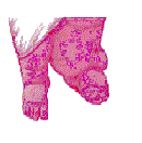
The disease shown in the figure below is caused by which pathogen?
A
Microsporum
B
Trichophyton
C
Filarial worm
D
Streptococcus
Solution
(B) The figure shows Ringworm,a fungal infection of the skin.
Ringworm is caused by fungi belonging to the genera $Microsporum$,$Trichophyton$,and $Epidermophyton$.
Among the given options,both $Microsporum$ and $Trichophyton$ are causative agents of ringworm. However,in standard $NCERT$ diagrams,this specific representation of ringworm is often associated with $Trichophyton$ or $Microsporum$. Given the options,$Trichophyton$ is a primary causative agent for such skin infections.
Therefore,the most appropriate answer is $B$.
Ringworm is caused by fungi belonging to the genera $Microsporum$,$Trichophyton$,and $Epidermophyton$.
Among the given options,both $Microsporum$ and $Trichophyton$ are causative agents of ringworm. However,in standard $NCERT$ diagrams,this specific representation of ringworm is often associated with $Trichophyton$ or $Microsporum$. Given the options,$Trichophyton$ is a primary causative agent for such skin infections.
Therefore,the most appropriate answer is $B$.
0 likes
View Solution22
EasyMCQ
Which disease is characterized by the appearance of dry,scaly lesions on various parts of the body such as the skin,nails,and scalp?
A
Filariasis
B
Ringworm
C
Malaria
D
Typhoid
Solution
(B) Ringworm is a common infectious disease in humans caused by fungi belonging to the genera $Microsporum$,$Trichophyton$,and $Epidermophyton$.
The primary symptoms include the appearance of dry,scaly lesions on various parts of the body such as the skin,nails,and scalp.
These lesions are accompanied by intense itching.
Heat and moisture help these fungi to grow,which makes them thrive in skin folds such as those in the groin or between the toes.
The primary symptoms include the appearance of dry,scaly lesions on various parts of the body such as the skin,nails,and scalp.
These lesions are accompanied by intense itching.
Heat and moisture help these fungi to grow,which makes them thrive in skin folds such as those in the groin or between the toes.
0 likes
View Solution23
EasyMCQ
How does ringworm spread?
A
It is transmitted through the use of towels,clothes,or combs used by an infected person.
B
By the bite of a female Anopheles mosquito.
C
Through water and food contaminated by the feces of patients.
D
None of the above.
Solution
(A) Ringworm is a common fungal infection of the skin caused by fungi belonging to the genera Microsporum,Trichophyton,and Epidermophyton.
These fungi are highly contagious and spread primarily through direct contact with an infected person or by sharing personal items such as towels,clothes,or combs used by an infected individual.
Therefore,option $A$ is the correct answer.
These fungi are highly contagious and spread primarily through direct contact with an infected person or by sharing personal items such as towels,clothes,or combs used by an infected individual.
Therefore,option $A$ is the correct answer.
0 likes
View Solution24
EasyMCQ
$S -$ Statement: Ringworm infection spreads through the use of towels,clothes,or combs used by an infected person.
$R -$ Reason: Ringworm is caused by filarial worms.
$R -$ Reason: Ringworm is caused by filarial worms.
A
$S$ and $R$ are both true,and $R$ is the correct explanation of $S$.
B
$S$ and $R$ are both true,but $R$ is not the correct explanation of $S$.
C
$S$ is true and $R$ is false.
D
$S$ is false and $R$ is true.
Solution
(C) $S$ is true: Ringworm is a fungal infection caused by genera like $Microsporum$,$Trichophyton$,and $Epidermophyton$. It is highly contagious and spreads through contact with contaminated items like towels,clothes,or combs used by an infected individual.
$R$ is false: Ringworm is caused by fungi,not filarial worms. Filarial worms (e.g.,$Wuchereria$ $bancrofti$) cause Filariasis (Elephantiasis),which is a completely different disease.
$R$ is false: Ringworm is caused by fungi,not filarial worms. Filarial worms (e.g.,$Wuchereria$ $bancrofti$) cause Filariasis (Elephantiasis),which is a completely different disease.
0 likes
View Solution25
MediumMCQ
Which of the following is associated with ringworm?
A
Microsporum,Trichophyton,Epidermophyton
B
Microsporum,Filarial worm,Plasmodium
C
Streptococcus pneumoniae,Rhino virus,Trichophyton
D
Salmonella typhi,Epidermophyton,Microsporum
Solution
(A) Ringworm is a common fungal infection of the skin.
It is caused by fungi belonging to the genera $Microsporum$,$Trichophyton$,and $Epidermophyton$.
These fungi thrive in warm and moist areas of the body,such as the skin folds,groin,or between the toes,and cause dry,scaly lesions on various parts of the body such as the skin,nails,and scalp.
It is caused by fungi belonging to the genera $Microsporum$,$Trichophyton$,and $Epidermophyton$.
These fungi thrive in warm and moist areas of the body,such as the skin folds,groin,or between the toes,and cause dry,scaly lesions on various parts of the body such as the skin,nails,and scalp.
0 likes
View Solution26
EasyMCQ
Which pathogen is responsible for the infectious disease ringworm in humans?
A
Microsporum
B
Micrococcus
C
Streptococcus
D
Trichomonas
Solution
(A) Ringworm is a common infectious fungal disease in humans. It is caused by fungi belonging to the genera $Microsporum$,$Trichophyton$,and $Epidermophyton$. Among the given options,$Microsporum$ is a well-known genus of fungi responsible for causing ringworm infections. $Micrococcus$ and $Streptococcus$ are bacteria,and $Trichomonas$ is a protozoan parasite.
0 likes
View Solution27
EasyMCQ
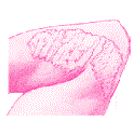
Which disease is indicated by the following figure?
A
Ringworm
B
Typhoid
C
Pneumonia
D
Filariasis
Solution
(A) The figure shows a characteristic scaly,itchy lesion on the skin,which is a classic symptom of Ringworm (Dermatophytosis).
Ringworm is caused by fungi belonging to the genera Microsporum,Trichophyton,and Epidermophyton.
These infections are generally acquired from soil or by using towels,clothes,or even the comb of infected individuals.
Therefore,the correct option is $A$.
Ringworm is caused by fungi belonging to the genera Microsporum,Trichophyton,and Epidermophyton.
These infections are generally acquired from soil or by using towels,clothes,or even the comb of infected individuals.
Therefore,the correct option is $A$.
0 likes
View Solution28
MediumMCQ
Which fungal disease is transmitted through seeds and flowers?
A
Loose smut of wheat
B
Corn stunt
C
Covered smut of barley
D
Soft rot of potato
Solution
(A) The loose smut of wheat,caused by the fungus $Ustilago$ $tritici$,is a seed-borne disease. The fungus infects the flowers of the wheat plant,and the spores are carried within the seed. When these infected seeds are planted,the fungus grows systemically within the plant,eventually producing spores in the ear of the wheat,which then spread to other plants.
0 likes
View Solution29
EasyMCQ
Which of the following is used for the control of fungi?
A
Weedicides
B
Pesticides
C
Fungicides
D
Insecticides
Solution
(C) Fungicides are chemical agents or biological organisms used to kill or inhibit the growth of fungi and their spores.
$A$. Weedicides are used to control weeds.
$B$. Pesticides are a broad category of chemicals used to control various pests.
$C$. Fungicides are specifically used to control fungal infections in crops and other organisms.
$D$. Insecticides are used to control insects.
Therefore,the correct option is $C$.
$A$. Weedicides are used to control weeds.
$B$. Pesticides are a broad category of chemicals used to control various pests.
$C$. Fungicides are specifically used to control fungal infections in crops and other organisms.
$D$. Insecticides are used to control insects.
Therefore,the correct option is $C$.
0 likes
View Solution30
MediumMCQ
Ringworm in humans is caused by
A
bacteria
B
fungi
C
nematodes
D
viruses
Solution
(B) : Ringworm (tinea) is a fungal infection of the skin,scalp,or nails. It is caused by dermatophyte fungi,specifically species of $Microsporum$,$Trichophyton$,and $Epidermophyton$. These fungi can also affect animals,which act as a source of infection for humans. The disease spreads through direct contact or via contaminated materials. Lesions often form partial or complete rings and cause intense itching. The condition is treated using antifungal agents administered orally or applied topically.
0 likes
View Solution31
EasyMCQ
Mosquito is not a vector for this disease.
A
Malaria
B
Chikungunya
C
Ringworm
D
Filariasis
Solution
(C) $1$. Malaria is transmitted by the bite of an infected female $Anopheles$ mosquito.
$2$. Chikungunya is a viral disease transmitted by the bite of infected $Aedes$ mosquitoes ($Aedes \text{ aegypti}$ and $Aedes \text{ albopictus}$).
$3$. Filariasis (Elephantiasis) is caused by filarial worms ($Wuchereria \text{ bancrofti}$ and $Wuchereria \text{ malayi}$) and is transmitted to humans through the bite of infected $Culex$ mosquitoes.
$4$. Ringworm is a fungal infection caused by fungi belonging to the genera $Microsporum$, $Trichophyton$, and $Epidermophyton$. It is spread through contact with infected individuals or contaminated soil, clothes, or combs, not by mosquitoes.
$2$. Chikungunya is a viral disease transmitted by the bite of infected $Aedes$ mosquitoes ($Aedes \text{ aegypti}$ and $Aedes \text{ albopictus}$).
$3$. Filariasis (Elephantiasis) is caused by filarial worms ($Wuchereria \text{ bancrofti}$ and $Wuchereria \text{ malayi}$) and is transmitted to humans through the bite of infected $Culex$ mosquitoes.
$4$. Ringworm is a fungal infection caused by fungi belonging to the genera $Microsporum$, $Trichophyton$, and $Epidermophyton$. It is spread through contact with infected individuals or contaminated soil, clothes, or combs, not by mosquitoes.
0 likes
View Solution32
MediumMCQ
Select the odd one out.
A
Ascariasis
B
Microsporum
C
Trychophyton
D
Epidermophyton
Solution
(A) The correct answer is $A$.
$Microsporum$,$Trychophyton$,and $Epidermophyton$ are genera of fungi responsible for ringworm infections in humans.
$Ascariasis$ is a disease caused by the helminth parasite $Ascaris$ $lumbricoides$.
Therefore,$Ascariasis$ is the odd one out as it is a helminthic disease,while the others are fungal diseases.
$Microsporum$,$Trychophyton$,and $Epidermophyton$ are genera of fungi responsible for ringworm infections in humans.
$Ascariasis$ is a disease caused by the helminth parasite $Ascaris$ $lumbricoides$.
Therefore,$Ascariasis$ is the odd one out as it is a helminthic disease,while the others are fungal diseases.
0 likes
View Solution33
EasyMCQ
Ringworm is caused by the infection of:
A
Bacteria
B
Virus
C
Fungi
D
Mosquito
Solution
(C) Ringworm is a common skin infection caused by a group of fungi known as dermatophytes,which include genera such as $Microsporum$,$Trichophyton$,and $Epidermophyton$. These fungi thrive in warm,moist areas of the skin and feed on keratin,the protein found in skin,hair,and nails. Therefore,the correct option is $C$.
0 likes
View Solution34
MediumMCQ
Fungi belonging to the genera $Microsporum$,$Trichophyton$,and $Epidermophyton$ are responsible for:
A
ringworm
B
skin allergy
C
amoebiasis
D
diarrhea
Solution
(A) The fungi belonging to the genera $Microsporum$,$Trichophyton$,and $Epidermophyton$ are responsible for ringworm,which is one of the most common infectious diseases in humans.
These fungi infect the skin,nails,and scalp,leading to dry,scaly lesions on various parts of the body.
These lesions are accompanied by intense itching.
Heat and moisture help these fungi grow,which explains why they often develop in skin folds such as those in the groin or between the toes.
These fungi infect the skin,nails,and scalp,leading to dry,scaly lesions on various parts of the body.
These lesions are accompanied by intense itching.
Heat and moisture help these fungi grow,which explains why they often develop in skin folds such as those in the groin or between the toes.
0 likes
View Solution35
EasyMCQ
Identify the odd one out.
A
Microsporum
B
Retrovirus
C
Trichophyton
D
Epidermophyton
Solution
(B) $Microsporum$,$Trichophyton$,and $Epidermophyton$ are genera of fungi responsible for causing ringworm infections in humans. These are dermatophytes that infect the skin,hair,and nails. $Retrovirus$ is a type of virus (e.g.,$HIV$) and is not a fungus. Therefore,$Retrovirus$ is the odd one out.
0 likes
View Solution36
MediumMCQ
Which of the following is not correctly matched?
A
Root knot disease - $Meloidogyne$ $javanica$
B
Smut of pearl millet - $Tolyposporium$ $penicillariae$
C
Covered smut of sorghum - $Ustilago$ $nuda$
D
Late blight of potato - $Phytophthora$ $infestans$
Solution
(C) The correct answer is $C$.
$1$. Root knot disease is caused by the nematode $Meloidogyne$ $javanica$.
$2$. Smut of pearl millet is caused by $Tolyposporium$ $penicillariae$.
$3$. Covered smut of sorghum is caused by $Sphacelotheca$ $sorghi$,whereas $Ustilago$ $nuda$ causes loose smut of wheat. Therefore,this pair is incorrectly matched.
$4$. Late blight of potato is caused by $Phytophthora$ $infestans$.
$1$. Root knot disease is caused by the nematode $Meloidogyne$ $javanica$.
$2$. Smut of pearl millet is caused by $Tolyposporium$ $penicillariae$.
$3$. Covered smut of sorghum is caused by $Sphacelotheca$ $sorghi$,whereas $Ustilago$ $nuda$ causes loose smut of wheat. Therefore,this pair is incorrectly matched.
$4$. Late blight of potato is caused by $Phytophthora$ $infestans$.
0 likes
View Solution37
MediumMCQ
Which fungal disease is transmitted through seeds and flowers?
A
Loose smut of wheat
B
Maize stunt
C
Covered smut of barley
D
Soft rot of potato
Solution
(A) The loose smut of wheat,caused by the fungus $Ustilago$ $tritici$,is a seed-borne disease. The fungus infects the flowers of the wheat plant during the flowering stage. The spores are carried by the wind to the stigma of healthy flowers,where they germinate and infect the developing ovary. The fungus then remains dormant within the seed until it is planted,at which point it grows systemically with the plant.
0 likes
View Solution38
EasyMCQ
What causes ringworm in humans?
A
Bacteria
B
Fungi
C
Nematodes
D
Viruses
Solution
(B) Ringworm is a common infectious disease in humans caused by fungi.
It is primarily caused by genera of fungi such as $Microsporum$,$Trichophyton$,and $Epidermophyton$.
These fungi infect the skin,nails,and scalp,leading to dry,scaly lesions characterized by intense itching.
It is primarily caused by genera of fungi such as $Microsporum$,$Trichophyton$,and $Epidermophyton$.
These fungi infect the skin,nails,and scalp,leading to dry,scaly lesions characterized by intense itching.
0 likes
View Solution39
Medium
Name various diseases caused by fungi in plants.
Solution
(N/A) Fungi are significant plant pathogens that cause various diseases,leading to substantial agricultural losses. Some common examples include:
$1$. $Wheat$ $rust$: Caused by $Puccinia$ $graminis$ $tritici$.
$2$. $White$ $rust$ $of$ $crucifers$: Caused by $Albugo$ $candida$.
$3$. $Late$ $blight$ $of$ $potato$: Caused by $Phytophthora$ $infestans$.
$4$. $Red$ $rot$ $of$ $sugarcane$: Caused by $Colletotrichum$ $falcatum$.
$5$. $Loose$ $smut$ $of$ $wheat$: Caused by $Ustilago$ $nuda$ $tritici$.
$1$. $Wheat$ $rust$: Caused by $Puccinia$ $graminis$ $tritici$.
$2$. $White$ $rust$ $of$ $crucifers$: Caused by $Albugo$ $candida$.
$3$. $Late$ $blight$ $of$ $potato$: Caused by $Phytophthora$ $infestans$.
$4$. $Red$ $rot$ $of$ $sugarcane$: Caused by $Colletotrichum$ $falcatum$.
$5$. $Loose$ $smut$ $of$ $wheat$: Caused by $Ustilago$ $nuda$ $tritici$.
0 likes
View Solution40
Medium
Explain the disease Ringworm.
Solution
(N/A) Ringworm is one of the most common infectious diseases in humans caused by fungi belonging to the genera $Microsporum$,$Trichophyton$,and $Epidermophyton$.
These fungi appear as dry,scaly lesions on various parts of the body such as the skin,nails,and scalp.
These lesions are characterized by intense itching.
Heat and moisture help these fungi grow,which makes them thrive in skin folds such as those in the groin or between the toes.
Ringworm is generally acquired from soil or by using towels,clothes,or even the comb of infected individuals.
These fungi appear as dry,scaly lesions on various parts of the body such as the skin,nails,and scalp.
These lesions are characterized by intense itching.
Heat and moisture help these fungi grow,which makes them thrive in skin folds such as those in the groin or between the toes.
Ringworm is generally acquired from soil or by using towels,clothes,or even the comb of infected individuals.
0 likes
View Solution41
MediumMCQ
In the condition of $AIDS$,pneumonia is caused by which of the following?
A
Protozoa
B
Fungi
C
Bacteria
D
Helminths
Solution
(B) In patients suffering from $AIDS$,the immune system is severely compromised due to the depletion of $CD4^+$ $T$-helper cells.
This makes the body highly susceptible to opportunistic infections.
$Pneumocystis$ $jirovecii$ (formerly known as $Pneumocystis$ $carinii$) is a type of fungus that causes pneumonia in $AIDS$ patients.
Since this infection occurs only when the host's immune system is weakened,it is classified as an opportunistic fungal infection.
This makes the body highly susceptible to opportunistic infections.
$Pneumocystis$ $jirovecii$ (formerly known as $Pneumocystis$ $carinii$) is a type of fungus that causes pneumonia in $AIDS$ patients.
Since this infection occurs only when the host's immune system is weakened,it is classified as an opportunistic fungal infection.
0 likes
View Solution42
MediumMCQ
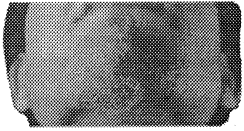
The characteristic skin lesion shown in the given image indicates a disease caused by which type of pathogen?
A
Virus
B
Fungi
C
Protozoa
D
Bacteria
Solution
(B) The image displays a ringworm infection (dermatophytosis) on the skin,which is characterized by dry,scaly lesions.
Ringworm is a common infectious disease in humans caused by fungi belonging to the genera Microsporum,Trichophyton,and Epidermophyton.
These fungi thrive in warm and moist areas of the body,such as the skin folds,groin,or between the toes.
Therefore,the correct pathogen type is fungi.
Ringworm is a common infectious disease in humans caused by fungi belonging to the genera Microsporum,Trichophyton,and Epidermophyton.
These fungi thrive in warm and moist areas of the body,such as the skin folds,groin,or between the toes.
Therefore,the correct pathogen type is fungi.
0 likes
View Solution43
EasyMCQ
Which one of the following is not a fungal disease?
A
Rust of wheat
B
Smut of bajra
C
Black rot of crucifers
D
Red rot of sugar cane
Solution
(C) Black rot of crucifers is a bacterial disease caused by the pathogen $Xanthomonas$ $campestris$.
Rust of wheat is caused by $Puccinia$ $graminis$ (fungus).
Smut of bajra is caused by $Tolysporium$ $penicillariae$ (fungus).
Red rot of sugar cane is caused by $Colletotrichum$ $falcate$ (fungus).
Therefore,the correct option is $C$.
Rust of wheat is caused by $Puccinia$ $graminis$ (fungus).
Smut of bajra is caused by $Tolysporium$ $penicillariae$ (fungus).
Red rot of sugar cane is caused by $Colletotrichum$ $falcate$ (fungus).
Therefore,the correct option is $C$.
0 likes
View Solution44
EasyMCQ
The pathogen $Microsporum$,responsible for ringworm disease in humans,belongs to which of the following groups?
A
Virus
B
Bacteria
C
Fungi
D
Protozoa
Solution
(C) $Microsporum$ is a genus of fungi that causes ringworm,tinea capitis,tinea corporis,and other dermatophytoses,which are fungal infections of the skin,nails,and hair.
0 likes
View Solution45
MediumMCQ
Ringworm is a
A
Air borne disease
B
Infectious disease
C
Non-infectious disease
D
None of these
Solution
(B) Ringworm is an infectious disease.
It is a common skin infection caused by fungi such as $Microsporum$,$Trichophyton$,and $Epidermophyton$.
These fungi can affect various parts of the body,including the scalp,skin,fingers,toes,nails,or feet,and are transmitted through contact with infected individuals or contaminated objects.
It is a common skin infection caused by fungi such as $Microsporum$,$Trichophyton$,and $Epidermophyton$.
These fungi can affect various parts of the body,including the scalp,skin,fingers,toes,nails,or feet,and are transmitted through contact with infected individuals or contaminated objects.
0 likes
View Solution46
MediumMCQ
$Microsporum$,$Trichophyton$,and $Epidermophyton$ genera of fungi are responsible for:
A
Ringworm
B
Skin allergy
C
Amoebiasis
D
Measles
Solution
(A) Fungi belonging to the genera $Microsporum$,$Trichophyton$,and $Epidermophyton$ are responsible for ringworm,which is one of the most common infectious diseases in humans.
These fungi are known as dermatophytes because they infect the skin,hair,and nails.
They thrive in warm and moist conditions,leading to the appearance of dry,scaly lesions on various parts of the body such as the skin,nails,and scalp.
These fungi are known as dermatophytes because they infect the skin,hair,and nails.
They thrive in warm and moist conditions,leading to the appearance of dry,scaly lesions on various parts of the body such as the skin,nails,and scalp.
0 likes
View Solution47
EasyMCQ
The pathogens of genera $Microsporum$,$Trichophyton$,and $Epidermophyton$ are responsible for:
A
Botulism
B
Conjunctivitis
C
Ringworm
D
Skin allergy
Solution
(C) The genera $Microsporum$,$Trichophyton$,and $Epidermophyton$ are fungi that cause a common infectious disease known as Ringworm.
Botulism is a severe form of food poisoning caused by the bacterium $Clostridium$ $botulinum$.
Conjunctivitis is an inflammation of the conjunctiva,which can be caused by viral or bacterial infections,or allergic reactions.
Skin allergy is a hypersensitive reaction of the immune system to various environmental allergens.
Botulism is a severe form of food poisoning caused by the bacterium $Clostridium$ $botulinum$.
Conjunctivitis is an inflammation of the conjunctiva,which can be caused by viral or bacterial infections,or allergic reactions.
Skin allergy is a hypersensitive reaction of the immune system to various environmental allergens.
0 likes
View Solution48
Medium
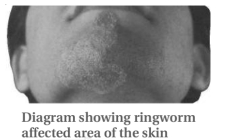
What are the causes,symptoms,and transmission of Ringworms or Tinea?
Solution
(N/A) Causes: Many fungi belonging to the genera $Microsporum$,$Trichophyton$,and $Epidermophyton$,collectively called Dermatophytes,are responsible for ringworms.
Symptoms: The appearance of dry,scaly lesions on various parts of the body such as the skin,nails,and scalp are the main symptoms of the disease. These lesions are accompanied by intense itching.
Transmission: Heat and moisture help these fungi to grow,which makes them thrive in skin folds such as those in the groin or between the toes. Ringworms are generally acquired from the soil or by using towels,clothes,or even the comb of infected individuals.
Symptoms: The appearance of dry,scaly lesions on various parts of the body such as the skin,nails,and scalp are the main symptoms of the disease. These lesions are accompanied by intense itching.
Transmission: Heat and moisture help these fungi to grow,which makes them thrive in skin folds such as those in the groin or between the toes. Ringworms are generally acquired from the soil or by using towels,clothes,or even the comb of infected individuals.
0 likes
View Solution49
EasyMCQ
Choose the incorrect option for Ringworm disease.
A
It appears as dry,scaly lesions on the skin,nails,and scalp.
B
There is intense itching in the affected area.
C
It is a fungal disease.
D
Cold and dry conditions promote the growth of fungi.
Solution
(D) Ringworm is a common infectious disease in humans caused by fungi belonging to the genera $Microsporum$,$Trichophyton$,and $Epidermophyton$.
These fungi thrive in warm and moist conditions,not cold and dry conditions.
Therefore,the statement that 'cold and dry conditions promote the growth of fungi' is incorrect.
Symptoms include the appearance of dry,scaly lesions on various parts of the body such as the skin,nails,and scalp,accompanied by intense itching.
These fungi thrive in warm and moist conditions,not cold and dry conditions.
Therefore,the statement that 'cold and dry conditions promote the growth of fungi' is incorrect.
Symptoms include the appearance of dry,scaly lesions on various parts of the body such as the skin,nails,and scalp,accompanied by intense itching.
0 likes
View Solution50
EasyMCQ
Appearance of dry,scaly lesions on various parts of the body such as skin,nails,and scalp are the main symptoms of $.......$
A
Roundworm
B
Ringworm
C
Elephantiasis
D
Ascariasis
Solution
(B) The symptoms described,such as dry,scaly lesions on the skin,nails,and scalp,are characteristic of $Ringworm$ (Dermatophytosis).
These infections are caused by fungi belonging to the genera $Microsporum$,$Trichophyton$,and $Epidermophyton$.
These fungi thrive in warm and moist conditions,which is why they often appear in skin folds.
$Roundworm$ and $Ascariasis$ refer to the same helminthic infection caused by $Ascaris$ $lumbricoides$,which affects the intestine.
$Elephantiasis$ (Filariasis) is caused by $Wuchereria$ $bancrofti$ and is characterized by chronic inflammation of the organs,usually the lymphatic vessels of the lower limbs.
These infections are caused by fungi belonging to the genera $Microsporum$,$Trichophyton$,and $Epidermophyton$.
These fungi thrive in warm and moist conditions,which is why they often appear in skin folds.
$Roundworm$ and $Ascariasis$ refer to the same helminthic infection caused by $Ascaris$ $lumbricoides$,which affects the intestine.
$Elephantiasis$ (Filariasis) is caused by $Wuchereria$ $bancrofti$ and is characterized by chronic inflammation of the organs,usually the lymphatic vessels of the lower limbs.
0 likes
View SolutionHuman Health and Disease — Diseases caused by Fungi · Frequently Asked Questions
1Are these Human Health and Disease questions useful for JEE and NEET?
Yes. All questions in this section are mapped to JEE Main and NEET exam patterns. Previous year questions from JEE Main, NEET, GUJCET and state-level exams are included with full solutions.
2Can I switch to Hindi or Gujarati for these questions?
Yes. Use the language tabs in the hero section or the sidebar to view the same questions and solutions in English, Hindi or Gujarati.
3How do I generate a question paper from this subtopic?
Use the Vedclass Exam Paper Generator — select the chapter and subtopic, set difficulty, and generate Sets A, B, C, D automatically. First 3 chapters of every subject are free.
Vedclass Products
For Students
Vedclass Test Series
Mock tests in real JEE/NEET style with performance analysis. 5-day free trial.
Start Free TrialFor Teachers
Exam Paper Generator
Generate Set A/B/C/D papers from this chapter in 2 minutes. 3 chapters free.
Try FreeFor Institutes
Online Exam Module
Live online exams with unlimited students, 360° analytics & white-label branding.
See DemoFor Teachers & Institutes
Generate a Human Health and Disease Exam Paper in 2 Minutes
Select subtopic & difficulty — Sets A, B, C, D auto-generated with No Repeat logic.
First 3 chapters of every subject are free — no payment required.