
A English
Meiosis Questions in English
Class 11 Biology · Cell Cycle and Cell Division · Meiosis
492+
Questions
English
Language
100%
With Solutions
Showing 50 of 492 questions in English
151
MediumMCQ
In which stage does the exchange of genes occur at the site of chiasmata formation?
A
Diplotene
B
Leptotene
C
Zygotene
D
Pachytene
Solution
(D) The exchange of genetic material between non-sister chromatids of homologous chromosomes is known as crossing over.
Crossing over occurs during the $Pachytene$ stage of Prophase-$I$ of Meiosis.
During this stage,the bivalent chromosomes clearly appear as tetrads.
Recombination nodules appear at the sites where crossing over occurs,which later leads to the formation of chiasmata in the subsequent $Diplotene$ stage.
Crossing over occurs during the $Pachytene$ stage of Prophase-$I$ of Meiosis.
During this stage,the bivalent chromosomes clearly appear as tetrads.
Recombination nodules appear at the sites where crossing over occurs,which later leads to the formation of chiasmata in the subsequent $Diplotene$ stage.
0 likes
View Solution152
EasyMCQ
In which stage does the condensation of chromosomes reach its maximum level?
A
Diakinesis
B
Leptotene
C
Zygotene
D
Diplotene
Solution
(A) The process of meiosis $I$ consists of several stages: Leptotene,Zygotene,Pachytene,Diplotene,and Diakinesis.
During the Leptotene stage,chromosomes begin to condense.
During the Pachytene stage,crossing over occurs.
During the Diakinesis stage,which is the final stage of prophase $I$,the condensation of chromosomes reaches its maximum level,and the nucleolus disappears,while the nuclear envelope breaks down.
During the Leptotene stage,chromosomes begin to condense.
During the Pachytene stage,crossing over occurs.
During the Diakinesis stage,which is the final stage of prophase $I$,the condensation of chromosomes reaches its maximum level,and the nucleolus disappears,while the nuclear envelope breaks down.
0 likes
View Solution153
EasyMCQ
In meiosis,the number of chromosomes is ..............
A
the same as the parent cell.
B
double that of the parent cell.
C
one-third of the parent cell.
D
half of the parent cell.
Solution
(D) Meiosis is a type of cell division that reduces the number of chromosomes in the parent cell by half and produces four gamete cells. This process is required to produce egg and sperm cells for sexual reproduction. Therefore,if a parent cell has a diploid number of chromosomes $(2n)$,the resulting daughter cells will have a haploid number of chromosomes $(n)$,which is exactly half of the parent cell.
0 likes
View Solution154
EasyMCQ
What type of gametes are produced by meiosis?
A
Diploid
B
Haploid
C
Triploid
D
Same as parents
Solution
(B) Meiosis is a type of cell division that reduces the chromosome number by half.
It occurs in germ cells to produce gametes.
Since the parent cell is diploid $(2n)$,the resulting gametes contain half the number of chromosomes,making them haploid $(n)$.
It occurs in germ cells to produce gametes.
Since the parent cell is diploid $(2n)$,the resulting gametes contain half the number of chromosomes,making them haploid $(n)$.
0 likes
View Solution155
EasyMCQ
Which of the following is the initial stage of meiosis $I$?
A
Leptotene
B
Pachytene
C
Zygotene
D
Diplotene
Solution
(A) Meiosis $I$ is divided into four main phases: Prophase $I$,Metaphase $I$,Anaphase $I$,and Telophase $I$.
Prophase $I$ is further subdivided into five stages based on chromosomal behavior: Leptotene,Zygotene,Pachytene,Diplotene,and Diakinesis.
Leptotene is the first stage of Prophase $I$,where chromosomes become visible under a light microscope as long,thin,thread-like structures.
Therefore,Leptotene is the initial stage of meiosis.
Prophase $I$ is further subdivided into five stages based on chromosomal behavior: Leptotene,Zygotene,Pachytene,Diplotene,and Diakinesis.
Leptotene is the first stage of Prophase $I$,where chromosomes become visible under a light microscope as long,thin,thread-like structures.
Therefore,Leptotene is the initial stage of meiosis.
0 likes
View Solution156
EasyMCQ
During the process of crossing over,what do homologous chromosomes exchange?
A
Chromatids
B
Centromeres
C
Genes
D
Cytoplasm
Solution
(C) Crossing over is a biological process that occurs during the $pachytene$ stage of $prophase-I$ of $meiosis$.
During this process,non-sister chromatids of homologous chromosomes exchange segments of genetic material.
This exchange results in the recombination of genes,which leads to genetic variation in the offspring.
Therefore,the exchange involves segments of $DNA$ containing genes.
During this process,non-sister chromatids of homologous chromosomes exchange segments of genetic material.
This exchange results in the recombination of genes,which leads to genetic variation in the offspring.
Therefore,the exchange involves segments of $DNA$ containing genes.
0 likes
View Solution157
MediumMCQ
How many times does a cell divide during the process of meiosis?
A
Three times
B
Two times
C
Four times
D
Once
Solution
(B) Meiosis is a specialized type of cell division that reduces the chromosome number by half,resulting in the production of four haploid daughter cells.
It involves two successive nuclear and cytoplasmic divisions,known as Meiosis-$I$ and Meiosis-$II$.
In Meiosis-$I$,the homologous chromosomes separate,and in Meiosis-$II$,the sister chromatids separate.
Therefore,the cell undergoes division twice during the entire process of meiosis.
It involves two successive nuclear and cytoplasmic divisions,known as Meiosis-$I$ and Meiosis-$II$.
In Meiosis-$I$,the homologous chromosomes separate,and in Meiosis-$II$,the sister chromatids separate.
Therefore,the cell undergoes division twice during the entire process of meiosis.
0 likes
View Solution158
MediumMCQ
Which of the following is true for the $Zygotene$ stage of $Meiosis-I$?
A
Synapsis proceeds like a zipper.
B
Chiasmata are formed.
C
Crossing over occurs between chromatids.
D
Separation proceeds towards the cellular poles.
Solution
(A) $Zygotene$ is the second stage of $Prophase-I$ in $Meiosis-I$.
During this stage,homologous chromosomes pair up,a process known as $Synapsis$.
This pairing is highly specific and occurs along the length of the chromosomes,resembling the closing of a zipper,which is facilitated by the formation of the $Synaptonemal$ $complex$.
$Chiasmata$ formation and $Crossing$ $over$ occur during the subsequent $Pachytene$ stage.
During this stage,homologous chromosomes pair up,a process known as $Synapsis$.
This pairing is highly specific and occurs along the length of the chromosomes,resembling the closing of a zipper,which is facilitated by the formation of the $Synaptonemal$ $complex$.
$Chiasmata$ formation and $Crossing$ $over$ occur during the subsequent $Pachytene$ stage.
0 likes
View Solution159
EasyMCQ
Which of the following pairs is correctly matched?
A
Zygotene - Recombination nodules visible
B
Diakinesis - Nuclear envelope formation
C
Diplotene - Exchange of genes
D
Pachytene - Chromosomes move away from each other
Solution
(A) The correct answer is $A$.
$1$. In $Zygotene$,the formation of synaptonemal complex occurs,and recombination nodules begin to appear.
$2$. $Diakinesis$ is the final stage of meiotic prophase $I$,where the nuclear envelope breaks down,not forms.
$3$. $Diplotene$ is characterized by the dissolution of the synaptonemal complex and the appearance of $Chiasmata$.
$4$. $Pachytene$ is the stage where crossing over (exchange of genetic material) occurs,not the movement of chromosomes away from each other.
$1$. In $Zygotene$,the formation of synaptonemal complex occurs,and recombination nodules begin to appear.
$2$. $Diakinesis$ is the final stage of meiotic prophase $I$,where the nuclear envelope breaks down,not forms.
$3$. $Diplotene$ is characterized by the dissolution of the synaptonemal complex and the appearance of $Chiasmata$.
$4$. $Pachytene$ is the stage where crossing over (exchange of genetic material) occurs,not the movement of chromosomes away from each other.
0 likes
View Solution160
MediumMCQ
Which of the following disappear and disintegrate by the end of $Diakinesis$?
A
Only bipolar spindle
B
Only nucleolus
C
Only nuclear envelope
D
Nucleolus and nuclear envelope
Solution
(D) During the $Diakinesis$ phase of $Meiosis-I$, the chromosomes are fully condensed and the meiotic spindle is assembled to prepare the homologous chromosomes for separation.
By the end of $Diakinesis$, the $nucleolus$ disappears and the $nuclear$ envelope breaks down.
These events mark the transition from $Prophase-I$ to $Metaphase-I$.
By the end of $Diakinesis$, the $nucleolus$ disappears and the $nuclear$ envelope breaks down.
These events mark the transition from $Prophase-I$ to $Metaphase-I$.
0 likes
View Solution161
MediumMCQ
The formation of complex structures like synaptonemal complexes during the pairing of homologous chromosomes is observed by which of the following?
A
Electron micrograph
B
Electron compound microscope
C
Electron microscope
D
Electron cardiogram
Solution
(A) The synaptonemal complex is a proteinaceous structure that forms between homologous chromosomes during the $pachytene$ stage of $prophase-I$ of $meiosis$. Because this structure is extremely fine and complex, it cannot be resolved by a standard light microscope. Its detailed structure and formation can only be visualized using an $electron$ micrograph (a photograph or image taken through an electron microscope).
0 likes
View Solution162
EasyMCQ
In Metaphase-$I$,in which direction are the centromeres oriented?
A
Towards the cellular poles
B
Towards the peripheral region
C
Towards the central region
D
Towards the equator
Solution
(A) During Metaphase-$I$ of meiosis,the homologous chromosome pairs (bivalents) align at the equatorial plate.
In this arrangement,the centromeres of the homologous chromosomes are directed towards the opposite poles of the cell.
This orientation is crucial for the subsequent separation of homologous chromosomes during Anaphase-$I$.
In this arrangement,the centromeres of the homologous chromosomes are directed towards the opposite poles of the cell.
This orientation is crucial for the subsequent separation of homologous chromosomes during Anaphase-$I$.
0 likes
View Solution163
MediumMCQ
How many times does the genetic material replicate during the process of meiosis?
A
Once
B
Four times
C
Twice
D
Genetic material does not replicate
Solution
(A) During the process of meiosis,the cell undergoes one round of $DNA$ replication ($S$-phase) followed by two successive nuclear divisions (Meiosis-$I$ and Meiosis-$II$).
Therefore,the genetic material replicates only once during the interphase preceding meiosis.
Therefore,the genetic material replicates only once during the interphase preceding meiosis.
0 likes
View Solution164
EasyMCQ
Which of the following is true for the $Diplotene$ stage?
A
Formation of the synaptonemal complex.
B
Chromosomes in the pair become bivalent.
C
Chromosomes in the pair remain attached to each other.
D
Chromosomes in the pair begin to separate from each other.
Solution
(D) The $Diplotene$ stage is a phase of $Prophase-I$ in $Meiosis-I$.
During this stage,the $Synaptonemal$ complex dissolves.
Due to this process,the homologous chromosomes begin to separate from each other,except at the sites where crossing over has occurred,which are known as $Chiasmata$.
Therefore,in the $Diplotene$ stage,the chromosomes in the pair begin to separate from each other.
During this stage,the $Synaptonemal$ complex dissolves.
Due to this process,the homologous chromosomes begin to separate from each other,except at the sites where crossing over has occurred,which are known as $Chiasmata$.
Therefore,in the $Diplotene$ stage,the chromosomes in the pair begin to separate from each other.
0 likes
View Solution165
EasyMCQ
Which phase of meiosis lasts for a very long duration?
A
Prophase-$I$
B
Prophase-$II$
C
Metaphase-$I$
D
Metaphase-$II$
Solution
(A) Meiosis-$I$ is a complex process that involves the reduction of chromosome number.
Prophase-$I$ is the longest and most complex phase of meiosis-$I$ because it is subdivided into five distinct stages: Leptotene,Zygotene,Pachytene,Diplotene,and Diakinesis.
These stages involve critical processes like synapsis,crossing over,and chiasmata formation,which require a significant amount of time compared to other phases of cell division.
Prophase-$I$ is the longest and most complex phase of meiosis-$I$ because it is subdivided into five distinct stages: Leptotene,Zygotene,Pachytene,Diplotene,and Diakinesis.
These stages involve critical processes like synapsis,crossing over,and chiasmata formation,which require a significant amount of time compared to other phases of cell division.
0 likes
View Solution166
MediumMCQ
During which phase do homologous chromosomes align at the equatorial plate of the cell?
A
Metaphase-$I$
B
Prophase
C
Metaphase
D
Prophase-$I$
Solution
(A) In meiosis,the homologous chromosomes pair up to form bivalents or tetrads during Prophase-$I$.
During Metaphase-$I$,these bivalents align at the equatorial plate (metaphase plate) of the cell.
This alignment is crucial for the subsequent separation of homologous chromosomes to opposite poles during Anaphase-$I$.
Therefore,the correct phase is Metaphase-$I$.
During Metaphase-$I$,these bivalents align at the equatorial plate (metaphase plate) of the cell.
This alignment is crucial for the subsequent separation of homologous chromosomes to opposite poles during Anaphase-$I$.
Therefore,the correct phase is Metaphase-$I$.
0 likes
View Solution167
DifficultMCQ
Match the following stages of Prophase-$I$ of meiosis with their respective characteristics:
| $I$. Leptotene | $A$. Chromosomes appear as clear bivalents/tetrads |
| $II$. Zygotene | $B$. Chromosomes appear like a thread (beaded appearance) |
| $III$. Pachytene | $C$. Chromosome condensation reaches its maximum |
| $IV$. Diakinesis | $D$. Synapsis of homologous chromosomes occurs |
A
$I-B, II-D, III-A, IV-C$
B
$I-B, II-A, III-D, IV-C$
C
$I-C, II-D, III-A, IV-B$
D
$I-D, II-B, III-A, IV-C$
Solution
(A) The correct matching is as follows:
$I$. Leptotene: During this stage, chromosomes become gradually visible under a light microscope. They appear as long, thin, thread-like structures.
$II$. Zygotene: During this stage, homologous chromosomes start pairing together, a process called synapsis.
$III$. Pachytene: During this stage, the bivalent chromosomes clearly appear as tetrads. Crossing over also occurs here.
$IV$. Diakinesis: This is the final stage of meiotic prophase-$I$. During this stage, the condensation of chromosomes reaches its maximum, and the nucleolus disappears.
Therefore, the correct sequence is $I-B, II-D, III-A, IV-C$.
$I$. Leptotene: During this stage, chromosomes become gradually visible under a light microscope. They appear as long, thin, thread-like structures.
$II$. Zygotene: During this stage, homologous chromosomes start pairing together, a process called synapsis.
$III$. Pachytene: During this stage, the bivalent chromosomes clearly appear as tetrads. Crossing over also occurs here.
$IV$. Diakinesis: This is the final stage of meiotic prophase-$I$. During this stage, the condensation of chromosomes reaches its maximum, and the nucleolus disappears.
Therefore, the correct sequence is $I-B, II-D, III-A, IV-C$.
0 likes
View Solution168
EasyMCQ
In which cells does meiosis occur?
A
Somatic cells
B
Bacterial cells
C
Reproductive cells
D
Yeast cells
Solution
(C) Meiosis is a specialized type of cell division that reduces the chromosome number by half,resulting in the production of haploid daughter cells.
It occurs exclusively in reproductive cells (germ cells) during the formation of gametes (gametogenesis).
Somatic cells undergo mitosis for growth and repair.
Bacterial cells reproduce through binary fission,which is a form of asexual reproduction.
Yeast cells typically undergo mitosis or budding,though they can undergo meiosis under specific stress conditions to form spores,but the primary site for meiosis in multicellular organisms is the reproductive tissue.
It occurs exclusively in reproductive cells (germ cells) during the formation of gametes (gametogenesis).
Somatic cells undergo mitosis for growth and repair.
Bacterial cells reproduce through binary fission,which is a form of asexual reproduction.
Yeast cells typically undergo mitosis or budding,though they can undergo meiosis under specific stress conditions to form spores,but the primary site for meiosis in multicellular organisms is the reproductive tissue.
0 likes
View Solution169
EasyMCQ
The exchange of genetic material between homologous chromosomes occurs during which process?
A
Crossing over
B
Diakinesis
C
Synapsis
D
Interphase
Solution
(A) The exchange of genetic material between non-sister chromatids of homologous chromosomes is known as $Crossing over$.
This process occurs during the $Pachytene$ stage of $Prophase-I$ in $Meiosis-I$.
$Synapsis$ is the pairing of homologous chromosomes, while $Diakinesis$ is the final stage of $Prophase-I$.
$Interphase$ is the phase where the cell prepares for division.
This process occurs during the $Pachytene$ stage of $Prophase-I$ in $Meiosis-I$.
$Synapsis$ is the pairing of homologous chromosomes, while $Diakinesis$ is the final stage of $Prophase-I$.
$Interphase$ is the phase where the cell prepares for division.
0 likes
View Solution170
EasyMCQ
Into how many sub-phases is Prophase-$I$ divided?
A
Four
B
One
C
Five
D
Two
Solution
(C) Prophase-$I$ of meiosis is a long and complex phase compared to the prophase of mitosis. It is subdivided into five distinct sub-phases based on chromosomal behavior:
$1$. Leptotene
$2$. Zygotene
$3$. Pachytene
$4$. Diplotene
$5$. Diakinesis
Therefore,the correct answer is five.
$1$. Leptotene
$2$. Zygotene
$3$. Pachytene
$4$. Diplotene
$5$. Diakinesis
Therefore,the correct answer is five.
0 likes
View Solution171
EasyMCQ
Which process involves the pairing of homologous chromosomes?
A
Crossing over
B
Synitium
C
Synapsis
D
Kinetochoresis
Solution
(C) During the $Zygotene$ stage of $Prophase-I$ in $Meiosis$,homologous chromosomes start pairing together. This process of pairing is known as $Synapsis$. The paired chromosomes are called $Bivalents$ or $Tetrads$.
0 likes
View Solution172
EasyMCQ
What is each pair of homologous chromosomes called?
A
Monad
B
Monovalent
C
Bivalent
D
Chromatid
Solution
(C) During the process of meiosis,specifically in the prophase-$I$ stage,homologous chromosomes pair up with each other. This pairing process is known as synapsis. Each pair of homologous chromosomes consists of four chromatids (two from each chromosome),and this structure is referred to as a bivalent or a tetrad. Therefore,the correct term for a pair of homologous chromosomes is a bivalent.
0 likes
View Solution173
EasyMCQ
What is a chiasmata?
A
The site of crossing over between two chromatids of homologous chromosomes.
B
The site of crossing over between two chromatids of non-homologous chromosomes.
C
The site of formation of a complex structure like synaptonemal complex.
D
$A$ chiasmata formed between chromatids of the same chromosome.
Solution
(A) chiasmata is an $X$-shaped structure that forms at the site where crossing over occurs between non-sister chromatids of homologous chromosomes during the pachytene stage of prophase-$I$ of meiosis. It becomes clearly visible during the diplotene stage as the homologous chromosomes begin to separate.
0 likes
View Solution174
EasyMCQ
What is the stage between two meiotic divisions called?
A
Interphase
B
Interkinesis
C
Prophase
D
Telophase
Solution
(B) The stage between two meiotic divisions (Meiosis-$I$ and Meiosis-$II$) is known as $Interkinesis$.
$Interkinesis$ is a short-lived resting phase that occurs after Telophase-$I$ and before Prophase-$II$.
During this stage,there is no replication of $DNA$,and the cell prepares for the second meiotic division.
$Interkinesis$ is a short-lived resting phase that occurs after Telophase-$I$ and before Prophase-$II$.
During this stage,there is no replication of $DNA$,and the cell prepares for the second meiotic division.
0 likes
View Solution175
EasyMCQ
What is formed to separate homologous chromosomes?
A
Centromere
B
Synapsis
C
Bipolar spindle
D
Chiasmata
Solution
(C) During meiosis-$I$,specifically in anaphase-$I$,the homologous chromosomes are pulled toward opposite poles of the cell. This movement is facilitated by the formation of a bipolar spindle apparatus,which attaches to the kinetochores of the chromosomes. The spindle fibers shorten,pulling the homologous chromosomes apart to opposite ends of the cell.
0 likes
View Solution176
MediumMCQ
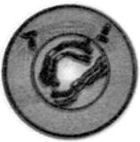
Which stage of Prophase-$I$ is represented by the given figure?
A
Leptotene
B
Zygotene
C
Pachytene
D
Diplotene
Solution
(B) The provided figure shows the pairing of homologous chromosomes,a process known as synapsis.
This pairing is characteristic of the Zygotene stage of Prophase-$I$ in Meiosis-$I$.
During this stage,homologous chromosomes align side-by-side to form bivalents or tetrads,facilitated by the formation of a synaptonemal complex.
This pairing is characteristic of the Zygotene stage of Prophase-$I$ in Meiosis-$I$.
During this stage,homologous chromosomes align side-by-side to form bivalents or tetrads,facilitated by the formation of a synaptonemal complex.
0 likes
View Solution177
MediumMCQ
The number of chiasmata depends on what?
A
Diameter of chromosomes
B
Length of chromosomes
C
Number of chromosomes
D
Width of chromosomes
Solution
(B) Chiasmata are the $X$-shaped structures that form between non-sister chromatids of homologous chromosomes during the $Diplotene$ stage of $Prophase-I$ of $Meiosis$. The formation of chiasmata is a result of crossing over. The number of chiasmata is directly proportional to the length of the chromosomes,as longer chromosomes provide more physical space and opportunities for genetic recombination events to occur.
0 likes
View Solution178
MediumMCQ
In which stage does synapsis occur?
A
Zygotene
B
Diplotene
C
Leptotene
D
Diakinesis
Solution
(A) Synapsis is the pairing of homologous chromosomes that occurs during the $Zygotene$ stage of $Prophase-I$ in $Meiosis-I$.
During this stage,chromosomes start pairing together,and this process of association is called synapsis.
The complex formed by a pair of synapsed homologous chromosomes is called a bivalent or a tetrad.
During this stage,chromosomes start pairing together,and this process of association is called synapsis.
The complex formed by a pair of synapsed homologous chromosomes is called a bivalent or a tetrad.
0 likes
View Solution179
EasyMCQ
Meiosis in a cell results in the formation of ............ . (in $cells$)
A
$4$
B
$2$
C
$8$
D
$6$
Solution
(A) Meiosis is a type of cell division that reduces the chromosome number by half, resulting in the production of four haploid daughter cells from a single diploid parent cell.
This process involves two successive nuclear divisions, known as meiosis-$I$ and meiosis-$II$, but only one round of $DNA$ replication.
Therefore, the final outcome of meiosis is the formation of $4$ genetically distinct daughter cells.
This process involves two successive nuclear divisions, known as meiosis-$I$ and meiosis-$II$, but only one round of $DNA$ replication.
Therefore, the final outcome of meiosis is the formation of $4$ genetically distinct daughter cells.
0 likes
View Solution180
MediumMCQ
The number of chiasmata depends on the ........
A
Length of chromosomes
B
Width of chromosomes
C
Diameter of chromosomes
D
Pairs
Solution
(A) Chiasmata are the $X$-shaped structures formed between non-sister chromatids of homologous chromosomes during the process of crossing over in the $Pachytene$ stage of $Meiosis-I$.
The number of chiasmata is directly proportional to the length of the chromosomes. Longer chromosomes have a higher probability of undergoing multiple crossover events,leading to a greater number of chiasmata compared to shorter chromosomes.
The number of chiasmata is directly proportional to the length of the chromosomes. Longer chromosomes have a higher probability of undergoing multiple crossover events,leading to a greater number of chiasmata compared to shorter chromosomes.
0 likes
View Solution181
EasyMCQ
Which type of cell division occurs during the formation of reproductive cells (gametes)?
A
Mitosis
B
Equational division
C
Somatogenesis
D
Meiosis
Solution
(D) The formation of reproductive cells or gametes involves a specialized type of cell division known as $Meiosis$.
$Meiosis$ is a reductional division where the chromosome number is reduced to half in the daughter cells compared to the parent cell.
This process is essential for sexual reproduction to maintain the constant chromosome number across generations after fertilization.
Mitosis,on the other hand,is an equational division that results in genetically identical daughter cells,typically used for growth and repair.
$Meiosis$ is a reductional division where the chromosome number is reduced to half in the daughter cells compared to the parent cell.
This process is essential for sexual reproduction to maintain the constant chromosome number across generations after fertilization.
Mitosis,on the other hand,is an equational division that results in genetically identical daughter cells,typically used for growth and repair.
0 likes
View Solution182
EasyMCQ
During which process does the genetic material replicate once,but the cell divides twice?
A
Cytokinesis
B
Meiosis
C
Mitosis
D
Amitosis
Solution
(B) Meiosis is a specialized type of cell division that reduces the chromosome number by half,resulting in the production of haploid daughter cells.
In meiosis,the $DNA$ replication occurs only once during the $S$-phase of interphase.
However,the cell undergoes two successive nuclear and cytoplasmic divisions,known as Meiosis-$I$ and Meiosis-$II$.
This process is essential for sexual reproduction to maintain the constant chromosome number across generations.
In meiosis,the $DNA$ replication occurs only once during the $S$-phase of interphase.
However,the cell undergoes two successive nuclear and cytoplasmic divisions,known as Meiosis-$I$ and Meiosis-$II$.
This process is essential for sexual reproduction to maintain the constant chromosome number across generations.
0 likes
View Solution183
EasyMCQ
How many times does a cell divide during meiosis?
A
$2$
B
$1$
C
$4$
D
$3$
Solution
(A) Meiosis is a specialized type of cell division that reduces the chromosome number by half,resulting in the production of haploid daughter cells.
It involves two successive nuclear and cytoplasmic divisions,known as Meiosis-$I$ and Meiosis-$II$.
Therefore,a single cell undergoes two rounds of division to produce four daughter cells.
It involves two successive nuclear and cytoplasmic divisions,known as Meiosis-$I$ and Meiosis-$II$.
Therefore,a single cell undergoes two rounds of division to produce four daughter cells.
0 likes
View Solution184
EasyMCQ
What is the first division of meiosis called?
A
Meiosis-$I$
B
Reductional division
C
Heterotypic division
D
All of the above
Solution
(D) Meiosis is a type of cell division that reduces the number of chromosomes in the parent cell by half and produces four gamete cells.
It consists of two successive nuclear divisions:
$1$. Meiosis-$I$ (Reductional division): In this phase,the chromosome number is reduced to half. It is also known as heterotypic division because the daughter cells are genetically different from the parent cell.
$2$. Meiosis-$II$ (Equational division): This phase is similar to mitosis,where the chromosome number remains the same.
Therefore,the first division of meiosis is known as Meiosis-$I$,reductional division,and heterotypic division.
Thus,the correct option is $D$.
It consists of two successive nuclear divisions:
$1$. Meiosis-$I$ (Reductional division): In this phase,the chromosome number is reduced to half. It is also known as heterotypic division because the daughter cells are genetically different from the parent cell.
$2$. Meiosis-$II$ (Equational division): This phase is similar to mitosis,where the chromosome number remains the same.
Therefore,the first division of meiosis is known as Meiosis-$I$,reductional division,and heterotypic division.
Thus,the correct option is $D$.
0 likes
View Solution185
EasyMCQ
What is another name for $Meiosis-II$?
A
Meiosis
B
Equational division
C
Heterotypic division
D
Reductional division
Solution
(B) $Meiosis-II$ is known as an equational division because the number of chromosomes in the daughter cells remains the same as that in the parent cell,similar to mitosis.
$Meiosis-I$ is called the reductional division because it reduces the chromosome number to half.
$Meiosis-I$ is called the reductional division because it reduces the chromosome number to half.
0 likes
View Solution186
EasyMCQ
Which of the following statements is consistent with the cells produced at the end of meiosis?
A
Four diploid cells are produced.
B
Two diploid cells are produced.
C
Four haploid cells are produced.
D
Two haploid cells are produced.
Solution
(C) Meiosis is a type of cell division that reduces the chromosome number by half,resulting in the production of four daughter cells.
Each of these four daughter cells is haploid $(n)$,meaning they contain half the number of chromosomes compared to the parent cell $(2n)$.
Therefore,at the end of meiosis,four haploid cells are formed.
Each of these four daughter cells is haploid $(n)$,meaning they contain half the number of chromosomes compared to the parent cell $(2n)$.
Therefore,at the end of meiosis,four haploid cells are formed.
0 likes
View Solution187
EasyMCQ
How many main phases are there in Meiosis-$I$?
A
$4$
B
$5$
C
$3$
D
$2$
Solution
(A) Meiosis-$I$ is a reductional division that consists of four main phases: Prophase-$I$,Metaphase-$I$,Anaphase-$I$,and Telophase-$I$. Therefore,there are $4$ main phases in Meiosis-$I$.
0 likes
View Solution188
MediumMCQ
Which of the following phases is the longest phase of Meiosis-$I$?
A
Prophase-$I$
B
Metaphase-$I$
C
Anaphase-$I$
D
Telophase-$I$
Solution
(A) Meiosis-$I$ is divided into four main stages: Prophase-$I$,Metaphase-$I$,Anaphase-$I$,and Telophase-$I$.
Prophase-$I$ is the most complex and longest phase of Meiosis-$I$.
It is further subdivided into five sub-stages: Leptotene,Zygotene,Pachytene,Diplotene,and Diakinesis.
Due to these complex chromosomal events like synapsis,crossing over,and chiasmata formation,Prophase-$I$ takes significantly more time compared to other phases.
Prophase-$I$ is the most complex and longest phase of Meiosis-$I$.
It is further subdivided into five sub-stages: Leptotene,Zygotene,Pachytene,Diplotene,and Diakinesis.
Due to these complex chromosomal events like synapsis,crossing over,and chiasmata formation,Prophase-$I$ takes significantly more time compared to other phases.
0 likes
View Solution189
EasyMCQ
Which of the following is $NOT$ a sub-stage of Prophase-$I$?
A
Leptotene
B
Zygotene
C
Telophase
D
Pachytene
Solution
(C) Prophase-$I$ of meiosis is a complex phase that is subdivided into five distinct stages based on chromosomal behavior: $1$. Leptotene,$2$. Zygotene,$3$. Pachytene,$4$. Diplotene,and $5$. Diakinesis.
Telophase is a stage of mitosis or the final stage of meiosis-$I$ and meiosis-$II$,but it is not a sub-stage of Prophase-$I$.
Telophase is a stage of mitosis or the final stage of meiosis-$I$ and meiosis-$II$,but it is not a sub-stage of Prophase-$I$.
0 likes
View Solution190
EasyMCQ
Which is the initial stage of meiosis?
A
Zygotene
B
Leptotene
C
Diplotene
D
Pachytene
Solution
(B) Meiosis $I$ is divided into several stages: Prophase $I$,Metaphase $I$,Anaphase $I$,and Telophase $I$.
Prophase $I$ is further subdivided into five stages based on chromosomal behavior: Leptotene,Zygotene,Pachytene,Diplotene,and Diakinesis.
Leptotene is the first stage of Prophase $I$,where chromosomes become visible under a light microscope.
Therefore,Leptotene is the initial stage of meiosis.
Prophase $I$ is further subdivided into five stages based on chromosomal behavior: Leptotene,Zygotene,Pachytene,Diplotene,and Diakinesis.
Leptotene is the first stage of Prophase $I$,where chromosomes become visible under a light microscope.
Therefore,Leptotene is the initial stage of meiosis.
0 likes
View Solution191
EasyMCQ
In which stage does synapsis occur?
A
Zygotene
B
Pachytene
C
Leptotene
D
Diplotene
Solution
(A) Synapsis is the pairing of two homologous chromosomes that occurs during meiosis.
This process takes place specifically during the $Zygotene$ stage of Prophase-$I$ in Meiosis-$I$.
During this stage,homologous chromosomes begin to pair together,forming a structure known as a synaptonemal complex.
This process takes place specifically during the $Zygotene$ stage of Prophase-$I$ in Meiosis-$I$.
During this stage,homologous chromosomes begin to pair together,forming a structure known as a synaptonemal complex.
0 likes
View Solution192
EasyMCQ
Which process occurs during the $Zygotene$ stage of meiosis?
A
Crossing over
B
Chiasmata formation
C
Synapsis
D
Interkinesis
Solution
(C) During the $Zygotene$ stage of $Prophase-I$ of meiosis, the homologous chromosomes start pairing together. This process of association is called $Synapsis$. The paired chromosomes are called $Bivalent$ or $Tetrad$ chromosomes. $Crossing$ $over$ occurs during the $Pachytene$ stage, and $Chiasmata$ formation is observed during the $Diplotene$ stage.
0 likes
View Solution193
EasyMCQ
In which stage do the bivalent chromosomes appear as tetrads?
A
Pachytene
B
Leptotene
C
Zygotene
D
Diplotene
Solution
(A) During the $Pachytene$ stage of $Meiosis-I$,the process of crossing over occurs between non-sister chromatids of homologous chromosomes.
At this stage,the bivalent chromosomes clearly appear as tetrads because the two sister chromatids of each homologous chromosome become visible,making a total of four chromatids per homologous pair.
At this stage,the bivalent chromosomes clearly appear as tetrads because the two sister chromatids of each homologous chromosome become visible,making a total of four chromatids per homologous pair.
0 likes
View Solution194
MediumMCQ
During which stage do the bivalent chromosomes clearly appear as tetrads?
A
Leptotene
B
Zygotene
C
Pachytene
D
Diplotene
Solution
(C) During the $Pachytene$ stage of $Prophase-I$ of $Meiosis$,the bivalent chromosomes become clearly visible as tetrads. This is because the process of crossing over occurs between non-sister chromatids of homologous chromosomes,and the four chromatids of the bivalent become distinct.
0 likes
View Solution195
EasyMCQ
During which stage does the chiasmata become visible?
A
Leptotene
B
Zygotene
C
Diplotene
D
Pachytene
Solution
(C) The process of meiosis $I$ involves several stages of prophase $I$.
$1$. Leptotene: Chromosomes become visible.
$2$. Zygotene: Synapsis occurs between homologous chromosomes.
$3$. Pachytene: Crossing over takes place between non-sister chromatids.
$4$. Diplotene: The synaptonemal complex dissolves,and the homologous chromosomes begin to separate from each other,except at the sites of crossovers. These $X$-shaped structures are known as chiasmata,which become clearly visible during this stage.
$1$. Leptotene: Chromosomes become visible.
$2$. Zygotene: Synapsis occurs between homologous chromosomes.
$3$. Pachytene: Crossing over takes place between non-sister chromatids.
$4$. Diplotene: The synaptonemal complex dissolves,and the homologous chromosomes begin to separate from each other,except at the sites of crossovers. These $X$-shaped structures are known as chiasmata,which become clearly visible during this stage.
0 likes
View Solution196
EasyMCQ
What is the site of crossing over between two chromatids within homologous chromosomes called?
A
Diakinesis
B
Interkinesis
C
Chiasmata
D
Recombination
Solution
(C) Crossing over is the exchange of genetic material between non-sister chromatids of homologous chromosomes during the pachytene stage of prophase-$I$ of meiosis. The $X$-shaped structure formed at the site where crossing over occurs is known as $Chiasmata$. Therefore,the correct answer is $Chiasmata$.
0 likes
View Solution197
EasyMCQ
Which process involves the exchange of genetic material between non-sister chromatids?
A
Interkinesis
B
Kinetochore
C
Leptotene
D
Crossing over
Solution
(D) Crossing over is the process that occurs during the pachytene stage of prophase-$I$ of meiosis.
During this process,non-sister chromatids of homologous chromosomes exchange genetic material.
This leads to genetic recombination,which is a source of variation in sexually reproducing organisms.
Interkinesis is the stage between meiosis-$I$ and meiosis-$II$.
Kinetochore is a protein structure on chromatids where spindle fibers attach.
Leptotene is the first stage of prophase-$I$ where chromosomes begin to condense.
During this process,non-sister chromatids of homologous chromosomes exchange genetic material.
This leads to genetic recombination,which is a source of variation in sexually reproducing organisms.
Interkinesis is the stage between meiosis-$I$ and meiosis-$II$.
Kinetochore is a protein structure on chromatids where spindle fibers attach.
Leptotene is the first stage of prophase-$I$ where chromosomes begin to condense.
0 likes
View Solution198
EasyMCQ
At the end of which stage does the nucleolus disappear?
A
Diplotene
B
Diakinesis
C
Pachytene
D
Leptotene
Solution
(B) During the process of meiosis-$I$,the prophase-$I$ is divided into five sub-stages: Leptotene,Zygotene,Pachytene,Diplotene,and Diakinesis.
Diakinesis is the final stage of meiotic prophase-$I$.
During Diakinesis,the chromosomes are fully condensed,and the meiotic spindle is assembled to prepare the homologous chromosomes for separation.
As this stage progresses towards metaphase-$I$,the nucleolus disappears and the nuclear envelope breaks down.
Diakinesis is the final stage of meiotic prophase-$I$.
During Diakinesis,the chromosomes are fully condensed,and the meiotic spindle is assembled to prepare the homologous chromosomes for separation.
As this stage progresses towards metaphase-$I$,the nucleolus disappears and the nuclear envelope breaks down.
0 likes
View Solution199
EasyMCQ
At the end of which stage does the nuclear envelope disintegrate?
A
Diplotene
B
Pachytene
C
Diakinesis
D
Leptotene
Solution
(C) The process of meiosis $I$ involves several stages in prophase $I$.
$1$. Leptotene: Chromosomes become visible.
$2$. Zygotene: Synapsis occurs.
$3$. Pachytene: Crossing over takes place.
$4$. Diplotene: Desynapsis occurs,and chiasmata become visible.
$5$. Diakinesis: This is the final stage of prophase $I$. During this stage,the chromosomes are fully condensed,the nucleolus disappears,and the nuclear envelope disintegrates to allow the spindle fibers to attach to the kinetochores of the homologous chromosomes.
$1$. Leptotene: Chromosomes become visible.
$2$. Zygotene: Synapsis occurs.
$3$. Pachytene: Crossing over takes place.
$4$. Diplotene: Desynapsis occurs,and chiasmata become visible.
$5$. Diakinesis: This is the final stage of prophase $I$. During this stage,the chromosomes are fully condensed,the nucleolus disappears,and the nuclear envelope disintegrates to allow the spindle fibers to attach to the kinetochores of the homologous chromosomes.
0 likes
View Solution200
MediumMCQ
Which process occurs at the end of diakinesis?
A
Bivalent chromosomes appear as clear tetrads.
B
Condensation of chromosomes begins.
C
The nucleolus disappears and the nuclear envelope breaks down.
D
Homologous chromosomes align at the equatorial plate in pairs.
Solution
(C) Diakinesis is the final stage of meiotic prophase-$I$.
During this stage,the chromosomes are fully condensed.
The nucleolus disappears and the nuclear envelope breaks down to prepare the cell for metaphase-$I$.
Therefore,the correct option is $C$.
During this stage,the chromosomes are fully condensed.
The nucleolus disappears and the nuclear envelope breaks down to prepare the cell for metaphase-$I$.
Therefore,the correct option is $C$.
0 likes
View SolutionCell Cycle and Cell Division — Meiosis · Frequently Asked Questions
1Are these Cell Cycle and Cell Division questions useful for JEE and NEET?
Yes. All questions in this section are mapped to JEE Main and NEET exam patterns. Previous year questions from JEE Main, NEET, GUJCET and state-level exams are included with full solutions.
2Can I switch to Hindi or Gujarati for these questions?
Yes. Use the language tabs in the hero section or the sidebar to view the same questions and solutions in English, Hindi or Gujarati.
3How do I generate a question paper from this subtopic?
Use the Vedclass Exam Paper Generator — select the chapter and subtopic, set difficulty, and generate Sets A, B, C, D automatically. First 3 chapters of every subject are free.
Vedclass Products
For Students
Vedclass Test Series
Mock tests in real JEE/NEET style with performance analysis. 5-day free trial.
Start Free TrialFor Teachers
Exam Paper Generator
Generate Set A/B/C/D papers from this chapter in 2 minutes. 3 chapters free.
Try FreeFor Institutes
Online Exam Module
Live online exams with unlimited students, 360° analytics & white-label branding.
See DemoFor Teachers & Institutes
Generate a Cell Cycle and Cell Division Exam Paper in 2 Minutes
Select subtopic & difficulty — Sets A, B, C, D auto-generated with No Repeat logic.
First 3 chapters of every subject are free — no payment required.