
A English
Mix Examples of Relation and Function Questions in English
Class 12 Mathematics · Relation and Function · Mix Examples of Relation and Function
168+
Questions
English
Language
100%
With Solutions
Showing 15 of 168 questions in English
151
DifficultMCQ
If $e^{f(x)}=\frac{10+x}{10-x}, x \in(-10,10)$ and $f(x)=k f\left(\frac{200 x}{100+x^2}\right)$,then $k$ is equal to
A
$0.5$
B
$0.6$
C
$0.7$
D
$0.8$
Solution
(A) Given $e^{f(x)}=\frac{10+x}{10-x}$.
Taking the natural logarithm on both sides,we get $f(x)=\log \left(\frac{10+x}{10-x}\right)$.
We are given the relation $f(x)=k f\left(\frac{200 x}{100+x^2}\right)$.
Substituting the expression for $f(x)$ into the right side:
$f\left(\frac{200 x}{100+x^2}\right) = \log \left( \frac{10 + \frac{200x}{100+x^2}}{10 - \frac{200x}{100+x^2}} \right)$
$= \log \left( \frac{10(100+x^2) + 200x}{10(100+x^2) - 200x} \right)$
$= \log \left( \frac{1000 + 10x^2 + 200x}{1000 + 10x^2 - 200x} \right)$
$= \log \left( \frac{10(x^2 + 20x + 100)}{10(x^2 - 20x + 100)} \right)$
$= \log \left( \frac{(x+10)^2}{(10-x)^2} \right)$
$= 2 \log \left( \frac{10+x}{10-x} \right) = 2f(x)$.
Substituting this back into the given equation: $f(x) = k \cdot 2f(x)$.
Since $f(x) \neq 0$ for $x \in (-10, 10)$,we have $1 = 2k$,which implies $k = 0.5$.
Taking the natural logarithm on both sides,we get $f(x)=\log \left(\frac{10+x}{10-x}\right)$.
We are given the relation $f(x)=k f\left(\frac{200 x}{100+x^2}\right)$.
Substituting the expression for $f(x)$ into the right side:
$f\left(\frac{200 x}{100+x^2}\right) = \log \left( \frac{10 + \frac{200x}{100+x^2}}{10 - \frac{200x}{100+x^2}} \right)$
$= \log \left( \frac{10(100+x^2) + 200x}{10(100+x^2) - 200x} \right)$
$= \log \left( \frac{1000 + 10x^2 + 200x}{1000 + 10x^2 - 200x} \right)$
$= \log \left( \frac{10(x^2 + 20x + 100)}{10(x^2 - 20x + 100)} \right)$
$= \log \left( \frac{(x+10)^2}{(10-x)^2} \right)$
$= 2 \log \left( \frac{10+x}{10-x} \right) = 2f(x)$.
Substituting this back into the given equation: $f(x) = k \cdot 2f(x)$.
Since $f(x) \neq 0$ for $x \in (-10, 10)$,we have $1 = 2k$,which implies $k = 0.5$.
0 likes
View Solution152
EasyMCQ
If $f: R \rightarrow R$ and $g: R \rightarrow R$ are given by $f(x)=|x|$ and $g(x)=[x]$ for each $x \in R$,then $\{x \in R: g(f(x)) \leq f(g(x))\}$ is equal to
A
$Z \cup(-\infty, 0)$
B
$(-\infty, 0)$
C
$Z$
D
$R$
Solution
(D) Given $f(x) = |x|$ and $g(x) = [x]$.
We need to find the set of $x \in R$ such that $g(f(x)) \leq f(g(x))$.
Substituting the functions,we get $[|x|] \leq |[x]|$.
Case $1$: If $x \geq 0$,then $|x| = x$ and $[x] \geq 0$. The inequality becomes $[x] \leq |[x]|$. Since $[x]$ is an integer and $[x] \geq 0$,$|[x]| = [x]$. Thus,$[x] \leq [x]$,which is true for all $x \geq 0$.
Case $2$: If $x < 0$,let $x = -n - f$,where $n \geq 0$ is an integer and $0 \leq f < 1$. If $f=0$,$x = -n$ (an integer),then $[|x|] = [n] = n$ and $|[x]| = |-n| = n$. So $n \leq n$ is true.
If $0 < f < 1$,then $x = -(n+f)$. $|x| = n+f$,so $[|x|] = [n+f] = n$. Also $[x] = [-(n+f)] = -(n+1)$. Then $|[x]| = |-(n+1)| = n+1$. The inequality becomes $n \leq n+1$,which is true.
Since the inequality holds for all $x \in R$,the solution set is $R$.
We need to find the set of $x \in R$ such that $g(f(x)) \leq f(g(x))$.
Substituting the functions,we get $[|x|] \leq |[x]|$.
Case $1$: If $x \geq 0$,then $|x| = x$ and $[x] \geq 0$. The inequality becomes $[x] \leq |[x]|$. Since $[x]$ is an integer and $[x] \geq 0$,$|[x]| = [x]$. Thus,$[x] \leq [x]$,which is true for all $x \geq 0$.
Case $2$: If $x < 0$,let $x = -n - f$,where $n \geq 0$ is an integer and $0 \leq f < 1$. If $f=0$,$x = -n$ (an integer),then $[|x|] = [n] = n$ and $|[x]| = |-n| = n$. So $n \leq n$ is true.
If $0 < f < 1$,then $x = -(n+f)$. $|x| = n+f$,so $[|x|] = [n+f] = n$. Also $[x] = [-(n+f)] = -(n+1)$. Then $|[x]| = |-(n+1)| = n+1$. The inequality becomes $n \leq n+1$,which is true.
Since the inequality holds for all $x \in R$,the solution set is $R$.
0 likes
View Solution153
MediumMCQ
Suppose $f: [-2, 2] \rightarrow R$ is defined by $f(x) = \begin{cases} -1, & -2 \leq x \leq 0 \\ x - 1, & 0 < x \leq 2 \end{cases}$. Then the set $\{x \in [-2, 2] : x \leq 0 \text{ and } f(|x|) = x\}$ is equal to
A
$\{-1\}$
B
$0$
C
$\{-\frac{1}{2}\}$
D
$\phi$
Solution
(C) Given the function $f(x) = \begin{cases} -1, & -2 \leq x \leq 0 \\ x - 1, & 0 < x \leq 2 \end{cases}$.
We need to find the set of values $x$ such that $x \leq 0$ and $f(|x|) = x$.
Since $x \leq 0$,we have $|x| = -x$.
Substituting this into the condition $f(|x|) = x$,we get $f(-x) = x$.
Since $x \leq 0$,it follows that $-x \geq 0$.
If $-x = 0$,then $x = 0$. Checking the condition: $f(|0|) = f(0) = -1$. But $x = 0$,so $-1 \neq 0$.
If $-x > 0$,then $-x$ falls in the interval $(0, 2]$.
Using the definition $f(t) = t - 1$ for $t \in (0, 2]$,we have $f(-x) = (-x) - 1$.
Setting this equal to $x$,we get $-x - 1 = x$.
Solving for $x$: $2x = -1$,which gives $x = -\frac{1}{2}$.
Since $-\frac{1}{2} \leq 0$,this value is valid.
Thus,the set is $\{-\frac{1}{2}\}$.
We need to find the set of values $x$ such that $x \leq 0$ and $f(|x|) = x$.
Since $x \leq 0$,we have $|x| = -x$.
Substituting this into the condition $f(|x|) = x$,we get $f(-x) = x$.
Since $x \leq 0$,it follows that $-x \geq 0$.
If $-x = 0$,then $x = 0$. Checking the condition: $f(|0|) = f(0) = -1$. But $x = 0$,so $-1 \neq 0$.
If $-x > 0$,then $-x$ falls in the interval $(0, 2]$.
Using the definition $f(t) = t - 1$ for $t \in (0, 2]$,we have $f(-x) = (-x) - 1$.
Setting this equal to $x$,we get $-x - 1 = x$.
Solving for $x$: $2x = -1$,which gives $x = -\frac{1}{2}$.
Since $-\frac{1}{2} \leq 0$,this value is valid.
Thus,the set is $\{-\frac{1}{2}\}$.
0 likes
View Solution154
MediumMCQ
Let $R$ denote the set of all real numbers and $R^{+}$ denote the set of all positive real numbers. For the subsets $A$ and $B$ of $R$,define $f: A \rightarrow B$ by $f(x) = x^2$ for $x \in A$. Match the following lists:
| Column $I$ | Column $II$ |
| :--- | :--- |
| $A$. $f$ is one-one and onto,if | $1$. $A = R^{+}, B = R$ |
| $B$. $f$ is one-one but not onto,if | $2$. $A = B = R$ |
| $C$. $f$ is onto but not one-one,if | $3$. $A = R, B = R^{+}$ |
| $D$. $f$ is neither one-one nor onto,if | $4$. $A = B = R^{+}$ |
| Column $I$ | Column $II$ |
| :--- | :--- |
| $A$. $f$ is one-one and onto,if | $1$. $A = R^{+}, B = R$ |
| $B$. $f$ is one-one but not onto,if | $2$. $A = B = R$ |
| $C$. $f$ is onto but not one-one,if | $3$. $A = R, B = R^{+}$ |
| $D$. $f$ is neither one-one nor onto,if | $4$. $A = B = R^{+}$ |
A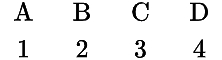
B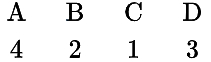
C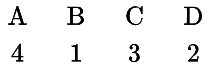
D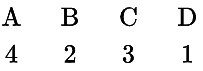
Solution
(D) The function is defined as $f(x) = x^2$.
$A$. $f$ is one-one and onto,if $A = B = R^{+}$.
For $A = R^{+}$,$f(x) = x^2$ is strictly increasing,so it is one-one. Since $B = R^{+}$,for every $y \in R^{+}$,there exists $x = \sqrt{y} \in R^{+}$ such that $f(x) = y$,so it is onto. Thus,$A \rightarrow 4$.
$B$. $f$ is one-one but not onto,if $A = R^{+}, B = R$.
For $A = R^{+}$,$f(x) = x^2$ is one-one. Since $B = R$,the range is $R^{+}$,which is a proper subset of $B$,so it is not onto. Thus,$B \rightarrow 1$.
$C$. $f$ is onto but not one-one,if $A = R, B = R^{+}$.
For $A = R$,$f(1) = 1$ and $f(-1) = 1$,so it is not one-one. Since $B = R^{+}$,for every $y \in R^{+}$,there exists $x = \pm \sqrt{y} \in R$ such that $f(x) = y$,so it is onto. Thus,$C \rightarrow 3$.
$D$. $f$ is neither one-one nor onto,if $A = B = R$.
For $A = R$,$f(1) = f(-1) = 1$,so it is not one-one. Since $B = R$,the range is $R^{+}$,which is a proper subset of $B$,so it is not onto. Thus,$D \rightarrow 2$.
Therefore,the correct matching is $A \rightarrow 4, B \rightarrow 1, C \rightarrow 3, D \rightarrow 2$.
$A$. $f$ is one-one and onto,if $A = B = R^{+}$.
For $A = R^{+}$,$f(x) = x^2$ is strictly increasing,so it is one-one. Since $B = R^{+}$,for every $y \in R^{+}$,there exists $x = \sqrt{y} \in R^{+}$ such that $f(x) = y$,so it is onto. Thus,$A \rightarrow 4$.
$B$. $f$ is one-one but not onto,if $A = R^{+}, B = R$.
For $A = R^{+}$,$f(x) = x^2$ is one-one. Since $B = R$,the range is $R^{+}$,which is a proper subset of $B$,so it is not onto. Thus,$B \rightarrow 1$.
$C$. $f$ is onto but not one-one,if $A = R, B = R^{+}$.
For $A = R$,$f(1) = 1$ and $f(-1) = 1$,so it is not one-one. Since $B = R^{+}$,for every $y \in R^{+}$,there exists $x = \pm \sqrt{y} \in R$ such that $f(x) = y$,so it is onto. Thus,$C \rightarrow 3$.
$D$. $f$ is neither one-one nor onto,if $A = B = R$.
For $A = R$,$f(1) = f(-1) = 1$,so it is not one-one. Since $B = R$,the range is $R^{+}$,which is a proper subset of $B$,so it is not onto. Thus,$D \rightarrow 2$.
Therefore,the correct matching is $A \rightarrow 4, B \rightarrow 1, C \rightarrow 3, D \rightarrow 2$.
0 likes
View Solution155
EasyMCQ
If $f(x)$ is a real-valued function defined by $f(x) = \frac{a x^{10} + b x^8 + c x^6 + d x^4 + e x^2 + 12 x + 15}{x}$ for $x \neq 0$ and $f(4) = -4$,then find the value of $f(-4)$.
A
$28$
B
$39$
C
$4$
D
$24$
Solution
(A) Given $f(x) = \frac{a x^{10} + b x^8 + c x^6 + d x^4 + e x^2 + 12 x + 15}{x}$.
Dividing each term by $x$,we get:
$f(x) = a x^9 + b x^7 + c x^5 + d x^3 + e x + 12 + \frac{15}{x}$.
Now,consider $f(-x)$:
$f(-x) = a(-x)^9 + b(-x)^7 + c(-x)^5 + d(-x)^3 + e(-x) + 12 + \frac{15}{-x}$
$f(-x) = -(a x^9 + b x^7 + c x^5 + d x^3 + e x) + 12 - \frac{15}{x}$.
Adding $f(x)$ and $f(-x)$:
$f(x) + f(-x) = (a x^9 + b x^7 + c x^5 + d x^3 + e x + 12 + \frac{15}{x}) + (-(a x^9 + b x^7 + c x^5 + d x^3 + e x) + 12 - \frac{15}{x})$
$f(x) + f(-x) = 12 + 12 = 24$.
For $x = 4$:
$f(4) + f(-4) = 24$.
Given $f(4) = -4$,we have:
$-4 + f(-4) = 24$
$f(-4) = 24 + 4 = 28$.
Dividing each term by $x$,we get:
$f(x) = a x^9 + b x^7 + c x^5 + d x^3 + e x + 12 + \frac{15}{x}$.
Now,consider $f(-x)$:
$f(-x) = a(-x)^9 + b(-x)^7 + c(-x)^5 + d(-x)^3 + e(-x) + 12 + \frac{15}{-x}$
$f(-x) = -(a x^9 + b x^7 + c x^5 + d x^3 + e x) + 12 - \frac{15}{x}$.
Adding $f(x)$ and $f(-x)$:
$f(x) + f(-x) = (a x^9 + b x^7 + c x^5 + d x^3 + e x + 12 + \frac{15}{x}) + (-(a x^9 + b x^7 + c x^5 + d x^3 + e x) + 12 - \frac{15}{x})$
$f(x) + f(-x) = 12 + 12 = 24$.
For $x = 4$:
$f(4) + f(-4) = 24$.
Given $f(4) = -4$,we have:
$-4 + f(-4) = 24$
$f(-4) = 24 + 4 = 28$.
0 likes
View Solution156
DifficultMCQ
The number of non-constant functions $f: X \to Y$ where $X = \{0, 1, 2\}$ and $Y = \{1, 2, 3, 4, 5, 6, 7, 8\}$ such that $f(i) \leq f(j)$ whenever $i < j$ is:
A
$120$
B
$92$
C
$56$
D
$112$
Solution
(D) We are given $X = \{0, 1, 2\}$ and $Y = \{1, 2, 3, 4, 5, 6, 7, 8\}$. We need to find the number of non-constant functions $f: X \to Y$ such that $f(0) \leq f(1) \leq f(2)$.
Since the function must be non-constant,we exclude the case where $f(0) = f(1) = f(2)$.
The total number of non-decreasing functions is given by the number of ways to choose $3$ elements from $Y$ with replacement,which is $\binom{n+r-1}{r} = \binom{8+3-1}{3} = \binom{10}{3} = \frac{10 \times 9 \times 8}{3 \times 2 \times 1} = 120$.
There are $8$ constant functions where $f(0) = f(1) = f(2) = k$ for $k \in \{1, 2, \dots, 8\}$.
Thus,the number of non-constant non-decreasing functions is $120 - 8 = 112$.
Alternatively,we can sum the cases:
Case $I$: $f(0) < f(1) < f(2)$. Number of ways = $\binom{8}{3} = 56$.
Case $II$: $f(0) = f(1) < f(2)$. Number of ways = $\binom{8}{2} = 28$.
Case $III$: $f(0) < f(1) = f(2)$. Number of ways = $\binom{8}{2} = 28$.
Total = $56 + 28 + 28 = 112$.
Since the function must be non-constant,we exclude the case where $f(0) = f(1) = f(2)$.
The total number of non-decreasing functions is given by the number of ways to choose $3$ elements from $Y$ with replacement,which is $\binom{n+r-1}{r} = \binom{8+3-1}{3} = \binom{10}{3} = \frac{10 \times 9 \times 8}{3 \times 2 \times 1} = 120$.
There are $8$ constant functions where $f(0) = f(1) = f(2) = k$ for $k \in \{1, 2, \dots, 8\}$.
Thus,the number of non-constant non-decreasing functions is $120 - 8 = 112$.
Alternatively,we can sum the cases:
Case $I$: $f(0) < f(1) < f(2)$. Number of ways = $\binom{8}{3} = 56$.
Case $II$: $f(0) = f(1) < f(2)$. Number of ways = $\binom{8}{2} = 28$.
Case $III$: $f(0) < f(1) = f(2)$. Number of ways = $\binom{8}{2} = 28$.
Total = $56 + 28 + 28 = 112$.
0 likes
View Solution157
MediumMCQ
If $N$ denotes the set of all positive integers and if $f: N \rightarrow N$ is defined by $f(n) = \text{the sum of positive divisors of } n$,then $f(2^k \cdot 3)$,where $k$ is a positive integer,is
A
$2^{k+1}-1$
B
$2(2^{k+1}-1)$
C
$3(2^{k+1}-1)$
D
$4(2^{k+1}-1)$
Solution
(D) The function $f(n)$ represents the sum of all positive divisors of $n$.
For a number $n = 2^k \cdot 3^1$,the divisors are the products of the divisors of $2^k$ and the divisors of $3^1$.
The sum of divisors of $2^k$ is $(1 + 2 + 2^2 + \dots + 2^k) = \frac{2^{k+1}-1}{2-1} = 2^{k+1}-1$.
The sum of divisors of $3^1$ is $(1 + 3) = 4$.
Since $f$ is a multiplicative function for coprime factors,$f(2^k \cdot 3) = f(2^k) \cdot f(3)$.
Thus,$f(2^k \cdot 3) = (2^{k+1}-1) \cdot 4 = 4(2^{k+1}-1)$.
For a number $n = 2^k \cdot 3^1$,the divisors are the products of the divisors of $2^k$ and the divisors of $3^1$.
The sum of divisors of $2^k$ is $(1 + 2 + 2^2 + \dots + 2^k) = \frac{2^{k+1}-1}{2-1} = 2^{k+1}-1$.
The sum of divisors of $3^1$ is $(1 + 3) = 4$.
Since $f$ is a multiplicative function for coprime factors,$f(2^k \cdot 3) = f(2^k) \cdot f(3)$.
Thus,$f(2^k \cdot 3) = (2^{k+1}-1) \cdot 4 = 4(2^{k+1}-1)$.
0 likes
View Solution158
MediumMCQ
$f: R \rightarrow R$ is a function defined by $f(x) = \frac{1}{e^x + 2e^{-x}}$. Assertion $(A): f(c) = \frac{1}{3}$ for some values of $c \in R$. Reason $(R): 0 < f(x) \leq \frac{1}{2\sqrt{2}}$ for all $x \in R$. Then which of the following options is correct?
A
$(A)$ and $(R)$ are true. $(R)$ is the correct explanation of $(A)$
B
$(A)$ and $(R)$ are true,but $(R)$ is not the correct explanation for $(A)$
C
$(A)$ is true but $(R)$ is false
D
$(A)$ is false but $(R)$ is true
Solution
(A) Given $f(x) = \frac{1}{e^x + 2e^{-x}}$.
Using the $AM$-$GM$ inequality for $e^x$ and $2e^{-x}$:
$\frac{e^x + 2e^{-x}}{2} \geq \sqrt{e^x \cdot 2e^{-x}} = \sqrt{2}$.
So,$e^x + 2e^{-x} \geq 2\sqrt{2}$.
Therefore,$f(x) = \frac{1}{e^x + 2e^{-x}} \leq \frac{1}{2\sqrt{2}}$.
Since $e^x + 2e^{-x} > 0$,we have $0 < f(x) \leq \frac{1}{2\sqrt{2}}$.
Thus,Reason $(R)$ is true.
Since $\frac{1}{2\sqrt{2}} \approx \frac{1}{2.828} \approx 0.3535$,and $\frac{1}{3} \approx 0.3333$,we see that $\frac{1}{3} < \frac{1}{2\sqrt{2}}$.
By the Intermediate Value Theorem,since $f(x)$ is continuous,$f(c) = \frac{1}{3}$ must hold for some $c \in R$.
Thus,Assertion $(A)$ is true and $(R)$ is the correct explanation.
Using the $AM$-$GM$ inequality for $e^x$ and $2e^{-x}$:
$\frac{e^x + 2e^{-x}}{2} \geq \sqrt{e^x \cdot 2e^{-x}} = \sqrt{2}$.
So,$e^x + 2e^{-x} \geq 2\sqrt{2}$.
Therefore,$f(x) = \frac{1}{e^x + 2e^{-x}} \leq \frac{1}{2\sqrt{2}}$.
Since $e^x + 2e^{-x} > 0$,we have $0 < f(x) \leq \frac{1}{2\sqrt{2}}$.
Thus,Reason $(R)$ is true.
Since $\frac{1}{2\sqrt{2}} \approx \frac{1}{2.828} \approx 0.3535$,and $\frac{1}{3} \approx 0.3333$,we see that $\frac{1}{3} < \frac{1}{2\sqrt{2}}$.
By the Intermediate Value Theorem,since $f(x)$ is continuous,$f(c) = \frac{1}{3}$ must hold for some $c \in R$.
Thus,Assertion $(A)$ is true and $(R)$ is the correct explanation.
0 likes
View Solution159
EasyMCQ
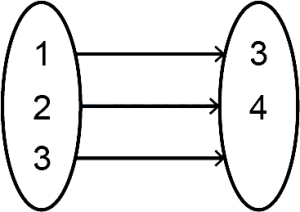
Let $f: X \rightarrow Y$ be a function and $A, B$ be non-void subsets of $Y$. Which of the following is true?
A
$f^{-1}(A) - f^{-1}(B) \supset f^{-1}(A - B)$ but the opposite does not hold.
B
$f^{-1}(A) - f^{-1}(B) \subset f^{-1}(A - B)$ but the opposite does not hold.
C
$f^{-1}(A - B) = f^{-1}(A) - f^{-1}(B)$
D
$f^{-1}(A - B) = f^{-1}(A) \cup f^{-1}(B)$
Solution
(C) By definition,$x \in f^{-1}(A - B)$ if and only if $f(x) \in A - B$.
This means $f(x) \in A$ and $f(x) \notin B$.
This is equivalent to $x \in f^{-1}(A)$ and $x \notin f^{-1}(B)$.
Therefore,$x \in f^{-1}(A) - f^{-1}(B)$.
Since this holds in both directions,we have $f^{-1}(A - B) = f^{-1}(A) - f^{-1}(B)$.
This means $f(x) \in A$ and $f(x) \notin B$.
This is equivalent to $x \in f^{-1}(A)$ and $x \notin f^{-1}(B)$.
Therefore,$x \in f^{-1}(A) - f^{-1}(B)$.
Since this holds in both directions,we have $f^{-1}(A - B) = f^{-1}(A) - f^{-1}(B)$.
0 likes
View Solution160
EasyMCQ
If $f(x) = x \left( \frac{1}{x-1} + \frac{1}{x} + \frac{1}{x+1} \right)$ for $x > 1$,then:
A
$f(x) \leq 1$
B
$1 < f(x) \leq 2$
C
$2 < f(x) \leq 3$
D
$f(x) > 3$
Solution
(D) Given function is $f(x) = x \left( \frac{1}{x-1} + \frac{1}{x} + \frac{1}{x+1} \right)$ for $x > 1$.
Simplifying the expression inside the bracket:
$f(x) = x \left( \frac{(x+1) + (x-1)}{(x-1)(x+1)} + \frac{1}{x} \right)$
$f(x) = x \left( \frac{2x}{x^2 - 1} + \frac{1}{x} \right)$
$f(x) = \frac{2x^2}{x^2 - 1} + 1$
$f(x) = \frac{2}{1 - \frac{1}{x^2}} + 1$
Since $x > 1$,we have $x^2 > 1$,which implies $0 < \frac{1}{x^2} < 1$.
Therefore,$0 < 1 - \frac{1}{x^2} < 1$,which means $\frac{1}{1 - \frac{1}{x^2}} > 1$.
Multiplying by $2$,we get $\frac{2}{1 - \frac{1}{x^2}} > 2$.
Adding $1$ to both sides,we get $f(x) > 2 + 1 = 3$.
Thus,$f(x) > 3$.
Simplifying the expression inside the bracket:
$f(x) = x \left( \frac{(x+1) + (x-1)}{(x-1)(x+1)} + \frac{1}{x} \right)$
$f(x) = x \left( \frac{2x}{x^2 - 1} + \frac{1}{x} \right)$
$f(x) = \frac{2x^2}{x^2 - 1} + 1$
$f(x) = \frac{2}{1 - \frac{1}{x^2}} + 1$
Since $x > 1$,we have $x^2 > 1$,which implies $0 < \frac{1}{x^2} < 1$.
Therefore,$0 < 1 - \frac{1}{x^2} < 1$,which means $\frac{1}{1 - \frac{1}{x^2}} > 1$.
Multiplying by $2$,we get $\frac{2}{1 - \frac{1}{x^2}} > 2$.
Adding $1$ to both sides,we get $f(x) > 2 + 1 = 3$.
Thus,$f(x) > 3$.
0 likes
View Solution161
MediumMCQ
Which of the following real-valued functions is/are not even functions?
A
$f(x) = x^{3} \sin x$
B
$f(x) = x^{2} \cos x$
C
$f(x) = e^{x} x^{3} \sin x$
D
$f(x) = x - [x]$,where $[x]$ denotes the greatest integer less than or equal to $x$
Solution
(C, D) function $f(x)$ is even if $f(-x) = f(x)$ and odd if $f(-x) = -f(x)$.
$(a)$ $f(x) = x^{3} \sin x$. Then $f(-x) = (-x)^{3} \sin(-x) = (-x^{3})(-\sin x) = x^{3} \sin x = f(x)$. Thus,$f(x)$ is even.
$(b)$ $f(x) = x^{2} \cos x$. Then $f(-x) = (-x)^{2} \cos(-x) = x^{2} \cos x = f(x)$. Thus,$f(x)$ is even.
$(c)$ $f(x) = e^{x} x^{3} \sin x$. Then $f(-x) = e^{-x} (-x)^{3} \sin(-x) = e^{-x} x^{3} \sin x \neq f(x)$. Thus,$f(x)$ is not even.
$(d)$ $f(x) = x - [x]$. Then $f(-x) = -x - [-x]$. Since $[-x] = -[x] - 1$ (for non-integer $x$),$f(-x) = -x - (-[x] - 1) = -x + [x] + 1 = 1 - (x - [x]) = 1 - f(x) \neq f(x)$. Thus,$f(x)$ is not even.
Therefore,options $(c)$ and $(d)$ are not even functions.
$(a)$ $f(x) = x^{3} \sin x$. Then $f(-x) = (-x)^{3} \sin(-x) = (-x^{3})(-\sin x) = x^{3} \sin x = f(x)$. Thus,$f(x)$ is even.
$(b)$ $f(x) = x^{2} \cos x$. Then $f(-x) = (-x)^{2} \cos(-x) = x^{2} \cos x = f(x)$. Thus,$f(x)$ is even.
$(c)$ $f(x) = e^{x} x^{3} \sin x$. Then $f(-x) = e^{-x} (-x)^{3} \sin(-x) = e^{-x} x^{3} \sin x \neq f(x)$. Thus,$f(x)$ is not even.
$(d)$ $f(x) = x - [x]$. Then $f(-x) = -x - [-x]$. Since $[-x] = -[x] - 1$ (for non-integer $x$),$f(-x) = -x - (-[x] - 1) = -x + [x] + 1 = 1 - (x - [x]) = 1 - f(x) \neq f(x)$. Thus,$f(x)$ is not even.
Therefore,options $(c)$ and $(d)$ are not even functions.
0 likes
View Solution162
DifficultMCQ
Let $f(x) = [x]^2 - [x+3] - 3, x \in \mathbb{R}$,where $[\bullet]$ is the greatest integer function. Then:
A
$f(x) > 0$ only for $x \in [4, \infty)$
B
$f(x) < 0$ only for $x \in [-1, 3)$
C
$\int_0^2 f(x) dx = -6$
D
$f(x) = 0$ for finitely many values of $x$.
Solution
(B) Given $f(x) = [x]^2 - ([x] + 3) - 3 = [x]^2 - [x] - 6$.
Factoring the expression,we get $f(x) = ([x] - 3)([x] + 2)$.
$(1)$ For $f(x) > 0$,we need $[x] > 3$ or $[x] < -2$.
This implies $x \in [4, \infty)$ or $x \in (-\infty, -2)$. Thus,option $A$ is incorrect.
$(2)$ For $f(x) < 0$,we need $-2 < [x] < 3$,which means $[x] \in \{-1, 0, 1, 2\}$.
This implies $x \in [-1, 3)$. Thus,option $B$ is correct.
$(3)$ Calculating the integral: $\int_0^2 f(x) dx = \int_0^1 f(x) dx + \int_1^2 f(x) dx$.
For $x \in [0, 1)$,$[x] = 0$,so $f(x) = 0^2 - 0 - 6 = -6$.
For $x \in [1, 2)$,$[x] = 1$,so $f(x) = 1^2 - 1 - 6 = -6$.
Thus,$\int_0^2 f(x) dx = \int_0^1 (-6) dx + \int_1^2 (-6) dx = -6 - 6 = -12$. Option $C$ is incorrect.
$(4)$ For $f(x) = 0$,we need $[x] = 3$ or $[x] = -2$.
This implies $x \in [3, 4)$ or $x \in [-2, -1)$,which contains infinitely many values. Option $D$ is incorrect.
Factoring the expression,we get $f(x) = ([x] - 3)([x] + 2)$.
$(1)$ For $f(x) > 0$,we need $[x] > 3$ or $[x] < -2$.
This implies $x \in [4, \infty)$ or $x \in (-\infty, -2)$. Thus,option $A$ is incorrect.
$(2)$ For $f(x) < 0$,we need $-2 < [x] < 3$,which means $[x] \in \{-1, 0, 1, 2\}$.
This implies $x \in [-1, 3)$. Thus,option $B$ is correct.
$(3)$ Calculating the integral: $\int_0^2 f(x) dx = \int_0^1 f(x) dx + \int_1^2 f(x) dx$.
For $x \in [0, 1)$,$[x] = 0$,so $f(x) = 0^2 - 0 - 6 = -6$.
For $x \in [1, 2)$,$[x] = 1$,so $f(x) = 1^2 - 1 - 6 = -6$.
Thus,$\int_0^2 f(x) dx = \int_0^1 (-6) dx + \int_1^2 (-6) dx = -6 - 6 = -12$. Option $C$ is incorrect.
$(4)$ For $f(x) = 0$,we need $[x] = 3$ or $[x] = -2$.
This implies $x \in [3, 4)$ or $x \in [-2, -1)$,which contains infinitely many values. Option $D$ is incorrect.
0 likes
View Solution163
DifficultMCQ
Consider two sets $A = \{ x \in \mathbb{Z} : |(| x - 3| - 3)| \leq 1 \}$ and $B = \{ x \in \mathbb{R} - \{1, 2\} : \frac{(x - 2)(x - 4)}{x - 1} \log_{e}(|x - 2|) = 0 \}$. Then the number of onto functions $f: A \rightarrow B$ is equal to:
A
$62$
B
$79$
C
$32$
D
$81$
Solution
(A) First,we find the elements of set $A$:
$|(|x - 3| - 3)| \leq 1 \implies -1 \leq |x - 3| - 3 \leq 1$
$2 \leq |x - 3| \leq 4$
This implies $2 \leq x - 3 \leq 4$ or $-4 \leq x - 3 \leq -2$
$5 \leq x \leq 7$ or $-1 \leq x \leq 1$
Since $x \in \mathbb{Z}$,$A = \{-1, 0, 1, 5, 6, 7\}$. The number of elements in $A$ is $n(A) = 6$.
Next,we find the elements of set $B$:
$\frac{(x - 2)(x - 4)}{x - 1} \log_{e}(|x - 2|) = 0$
This implies $(x - 2)(x - 4) = 0$ or $\log_{e}(|x - 2|) = 0$.
If $(x - 2)(x - 4) = 0$,then $x = 2$ or $x = 4$. Since $x \in \mathbb{R} - \{1, 2\}$,we accept $x = 4$.
If $\log_{e}(|x - 2|) = 0$,then $|x - 2| = 1$,so $x - 2 = 1$ or $x - 2 = -1$.
This gives $x = 3$ or $x = 1$. Since $x \in \mathbb{R} - \{1, 2\}$,we accept $x = 3$.
Thus,$B = \{3, 4\}$,and the number of elements in $B$ is $n(B) = 2$.
The number of onto functions from a set with $n$ elements to a set with $m$ elements is given by $m^n - \binom{m}{1}(m-1)^n + \binom{m}{2}(m-2)^n - \dots$
For $n = 6$ and $m = 2$,the number of onto functions is $2^6 - 2 = 64 - 2 = 62$.
$|(|x - 3| - 3)| \leq 1 \implies -1 \leq |x - 3| - 3 \leq 1$
$2 \leq |x - 3| \leq 4$
This implies $2 \leq x - 3 \leq 4$ or $-4 \leq x - 3 \leq -2$
$5 \leq x \leq 7$ or $-1 \leq x \leq 1$
Since $x \in \mathbb{Z}$,$A = \{-1, 0, 1, 5, 6, 7\}$. The number of elements in $A$ is $n(A) = 6$.
Next,we find the elements of set $B$:
$\frac{(x - 2)(x - 4)}{x - 1} \log_{e}(|x - 2|) = 0$
This implies $(x - 2)(x - 4) = 0$ or $\log_{e}(|x - 2|) = 0$.
If $(x - 2)(x - 4) = 0$,then $x = 2$ or $x = 4$. Since $x \in \mathbb{R} - \{1, 2\}$,we accept $x = 4$.
If $\log_{e}(|x - 2|) = 0$,then $|x - 2| = 1$,so $x - 2 = 1$ or $x - 2 = -1$.
This gives $x = 3$ or $x = 1$. Since $x \in \mathbb{R} - \{1, 2\}$,we accept $x = 3$.
Thus,$B = \{3, 4\}$,and the number of elements in $B$ is $n(B) = 2$.
The number of onto functions from a set with $n$ elements to a set with $m$ elements is given by $m^n - \binom{m}{1}(m-1)^n + \binom{m}{2}(m-2)^n - \dots$
For $n = 6$ and $m = 2$,the number of onto functions is $2^6 - 2 = 64 - 2 = 62$.
0 likes
View Solution164
DifficultMCQ
Let $A = \{1, 4, 7\}$ and $B = \{2, 3, 8\}$. Then the number of elements in the relation $R = \{((a_1, b_1), (a_2, b_2)) \in ((A \times B) \times (A \times B)) : a_1 + a_2 \text{ divides } b_2 + b_1\}$ is . . . . . . .
A
$1$
B
$2$
C
$3$
D
$8$
Solution
(D) Let $S = A \times B = \{(1,2), (1,3), (1,8), (4,2), (4,3), (4,8), (7,2), (7,3), (7,8)\}$.
The relation $R$ is defined on $S \times S$,where $|S| = 9$,so $|S \times S| = 81$.
We need to find pairs $((a_1, b_1), (a_2, b_2))$ such that $(a_1 + a_2)$ divides $(b_1 + b_2)$.
Let $x_1 = (a_1, b_1)$ and $x_2 = (a_2, b_2)$.
We test combinations of $a_1, a_2 \in \{1, 4, 7\}$ and $b_1, b_2 \in \{2, 3, 8\}$:
$1$. If $a_1+a_2=2$ (i.e.,$a_1=1, a_2=1$),then $b_1+b_2$ must be even. Possible $(b_1, b_2)$ are $(2,2), (2,8), (3,3), (8,2), (8,8)$. ($5$ pairs)
$2$. If $a_1+a_2=8$ (i.e.,$(1,7), (7,1), (4,4)$),then $b_1+b_2$ must be a multiple of $8$.
- For $(1,7)$,$b_1+b_2$ can be $8$ or $16$. Pairs: $(2,8), (8,2), (8,8)$. ($3$ pairs)
- For $(7,1)$,$b_1+b_2$ can be $8$ or $16$. Pairs: $(2,8), (8,2), (8,8)$. ($3$ pairs)
- For $(4,4)$,$b_1+b_2$ can be $8$ or $16$. Pairs: $(2,8), (8,2), (8,8)$. ($3$ pairs)
$3$. If $a_1+a_2=14$ (i.e.,$(7,7)$),then $b_1+b_2$ must be a multiple of $14$. No pair sums to $14$. ($0$ pairs)
$4$. If $a_1+a_2=5$ (i.e.,$(1,4), (4,1)$),then $b_1+b_2$ must be a multiple of $5$. Pairs: $(2,3), (3,2)$. ($2$ pairs each,total $4$ pairs)
$5$. If $a_1+a_2=11$ (i.e.,$(4,7), (7,4)$),then $b_1+b_2$ must be a multiple of $11$. No pair sums to $11$. ($0$ pairs)
Summing these up: $5 + 3 + 3 + 3 + 4 = 18$. Re-evaluating the condition $a_1+a_2$ divides $b_1+b_2$ for all $81$ pairs,the total count is $18$.
The relation $R$ is defined on $S \times S$,where $|S| = 9$,so $|S \times S| = 81$.
We need to find pairs $((a_1, b_1), (a_2, b_2))$ such that $(a_1 + a_2)$ divides $(b_1 + b_2)$.
Let $x_1 = (a_1, b_1)$ and $x_2 = (a_2, b_2)$.
We test combinations of $a_1, a_2 \in \{1, 4, 7\}$ and $b_1, b_2 \in \{2, 3, 8\}$:
$1$. If $a_1+a_2=2$ (i.e.,$a_1=1, a_2=1$),then $b_1+b_2$ must be even. Possible $(b_1, b_2)$ are $(2,2), (2,8), (3,3), (8,2), (8,8)$. ($5$ pairs)
$2$. If $a_1+a_2=8$ (i.e.,$(1,7), (7,1), (4,4)$),then $b_1+b_2$ must be a multiple of $8$.
- For $(1,7)$,$b_1+b_2$ can be $8$ or $16$. Pairs: $(2,8), (8,2), (8,8)$. ($3$ pairs)
- For $(7,1)$,$b_1+b_2$ can be $8$ or $16$. Pairs: $(2,8), (8,2), (8,8)$. ($3$ pairs)
- For $(4,4)$,$b_1+b_2$ can be $8$ or $16$. Pairs: $(2,8), (8,2), (8,8)$. ($3$ pairs)
$3$. If $a_1+a_2=14$ (i.e.,$(7,7)$),then $b_1+b_2$ must be a multiple of $14$. No pair sums to $14$. ($0$ pairs)
$4$. If $a_1+a_2=5$ (i.e.,$(1,4), (4,1)$),then $b_1+b_2$ must be a multiple of $5$. Pairs: $(2,3), (3,2)$. ($2$ pairs each,total $4$ pairs)
$5$. If $a_1+a_2=11$ (i.e.,$(4,7), (7,4)$),then $b_1+b_2$ must be a multiple of $11$. No pair sums to $11$. ($0$ pairs)
Summing these up: $5 + 3 + 3 + 3 + 4 = 18$. Re-evaluating the condition $a_1+a_2$ divides $b_1+b_2$ for all $81$ pairs,the total count is $18$.
0 likes
View Solution165
DifficultMCQ
Let $A = \{2, 3, 4, 5, 6\}$. Let $R$ be a relation on the set $A \times A$ defined by $(x, y) R (z, w)$ if and only if $x$ divides $z$ and $y \le w$. Then the number of elements in $R$ is . . . . . . .
A
$120$
B
$200$
C
$210$
D
$225$
Solution
(A) The relation $R$ is defined on $A \times A$ where $A = \{2, 3, 4, 5, 6\}$.
The condition is $(x, y) R (z, w) \iff x|z$ and $y \le w$ for $(x, y), (z, w) \in A \times A$.
The total number of such ordered pairs is given by $(\sum_{x \in A} \sum_{z \in A, x|z} 1) \times (\sum_{y \in A} \sum_{w \in A, y \le w} 1)$.
For $x|z$:
If $x=2$,$z \in \{2, 4, 6\}$ ($3$ values).
If $x=3$,$z \in \{3, 6\}$ ($2$ values).
If $x=4$,$z \in \{4\}$ ($1$ value).
If $x=5$,$z \in \{5\}$ ($1$ value).
If $x=6$,$z \in \{6\}$ ($1$ value).
Total pairs for $(x, z)$ is $3+2+1+1+1 = 8$.
For $y \le w$:
If $y=2$,$w \in \{2, 3, 4, 5, 6\}$ ($5$ values).
If $y=3$,$w \in \{3, 4, 5, 6\}$ ($4$ values).
If $y=4$,$w \in \{4, 5, 6\}$ ($3$ values).
If $y=5$,$w \in \{5, 6\}$ ($2$ values).
If $y=6$,$w \in \{6\}$ ($1$ value).
Total pairs for $(y, w)$ is $5+4+3+2+1 = 15$.
Total elements in $R = 8 \times 15 = 120$.
The condition is $(x, y) R (z, w) \iff x|z$ and $y \le w$ for $(x, y), (z, w) \in A \times A$.
The total number of such ordered pairs is given by $(\sum_{x \in A} \sum_{z \in A, x|z} 1) \times (\sum_{y \in A} \sum_{w \in A, y \le w} 1)$.
For $x|z$:
If $x=2$,$z \in \{2, 4, 6\}$ ($3$ values).
If $x=3$,$z \in \{3, 6\}$ ($2$ values).
If $x=4$,$z \in \{4\}$ ($1$ value).
If $x=5$,$z \in \{5\}$ ($1$ value).
If $x=6$,$z \in \{6\}$ ($1$ value).
Total pairs for $(x, z)$ is $3+2+1+1+1 = 8$.
For $y \le w$:
If $y=2$,$w \in \{2, 3, 4, 5, 6\}$ ($5$ values).
If $y=3$,$w \in \{3, 4, 5, 6\}$ ($4$ values).
If $y=4$,$w \in \{4, 5, 6\}$ ($3$ values).
If $y=5$,$w \in \{5, 6\}$ ($2$ values).
If $y=6$,$w \in \{6\}$ ($1$ value).
Total pairs for $(y, w)$ is $5+4+3+2+1 = 15$.
Total elements in $R = 8 \times 15 = 120$.
0 likes
View SolutionRelation and Function — Mix Examples of Relation and Function · Frequently Asked Questions
1Are these Relation and Function questions useful for JEE and NEET?
Yes. All questions in this section are mapped to JEE Main and NEET exam patterns. Previous year questions from JEE Main, NEET, GUJCET and state-level exams are included with full solutions.
2Can I switch to Hindi or Gujarati for these questions?
Yes. Use the language tabs in the hero section or the sidebar to view the same questions and solutions in English, Hindi or Gujarati.
3How do I generate a question paper from this subtopic?
Use the Vedclass Exam Paper Generator — select the chapter and subtopic, set difficulty, and generate Sets A, B, C, D automatically. First 3 chapters of every subject are free.
Vedclass Products
For Students
Vedclass Test Series
Mock tests in real JEE/NEET style with performance analysis. 5-day free trial.
Start Free TrialFor Teachers
Exam Paper Generator
Generate Set A/B/C/D papers from this chapter in 2 minutes. 3 chapters free.
Try FreeFor Institutes
Online Exam Module
Live online exams with unlimited students, 360° analytics & white-label branding.
See DemoFor Teachers & Institutes
Generate a Relation and Function Exam Paper in 2 Minutes
Select subtopic & difficulty — Sets A, B, C, D auto-generated with No Repeat logic.
First 3 chapters of every subject are free — no payment required.