
A English
Colloids, Emulsion, Gel and Their properties with application Questions in English
Class 12 Chemistry · Surface Chemistry · Colloids, Emulsion, Gel and Their properties with application
886+
Questions
English
Language
100%
With Solutions
Showing 50 of 886 questions in English
401
DifficultMCQ
Which of the following is most suitable to disperse benzene in water?
A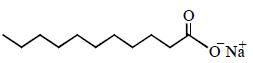
B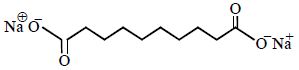
C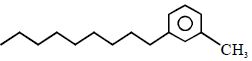
D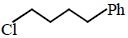
Solution
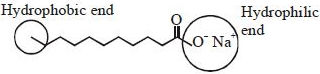
(A) To disperse an organic solvent like benzene in water,a surfactant (emulsifying agent) is required. $A$ surfactant molecule has a dual nature: a long hydrophobic hydrocarbon tail that interacts with the organic phase (benzene) and a hydrophilic polar head that interacts with the aqueous phase (water). Option $A$ represents a soap molecule (sodium salt of a long-chain fatty acid),which acts as an effective surfactant for this purpose.
0 likes
View Solution402
EasyMCQ
Point out the false statement.
A
Brownian movement and Tyndall effect are shown by colloidal systems.
B
Gold number is a measure of the protective power of a lyophilic colloid.
C
The colloidal mixture of a liquid in liquid is called gel.
D
Hardy-Schulze rule is related to coagulation power.
Solution
(C) The colloidal mixture of a liquid in a liquid is called an emulsion,not a gel. $A$ gel is a colloidal system where a liquid is dispersed in a solid.
0 likes
View Solution403
MediumMCQ
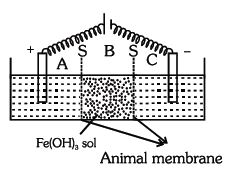
If $Fe(OH)_3$ sol is filled in container $B$,then water level in which container will increase?
A
$A$
B
$B$
C
$C$
D
No change in water level
Solution
(C) The $Fe(OH)_3$ sol is a positively charged colloid.
In the presence of an electric field,the dispersion medium (water) moves towards the cathode due to electro-osmosis.
Since container $C$ is connected to the cathode (negative electrode),the water will move through the semi-permeable animal membrane $S$ from container $B$ into container $C$.
Therefore,the water level in container $C$ will increase.
In the presence of an electric field,the dispersion medium (water) moves towards the cathode due to electro-osmosis.
Since container $C$ is connected to the cathode (negative electrode),the water will move through the semi-permeable animal membrane $S$ from container $B$ into container $C$.
Therefore,the water level in container $C$ will increase.
0 likes
View Solution404
MediumMCQ
On adding $AgNO_3$ solution into $KI$ solution,a negatively charged colloidal sol is obtained when they are in:
A
$100 \ mL$ of $0.1 \ M$ $AgNO_3 + 100 \ mL$ of $0.1 \ M$ $KI$
B
$100 \ mL$ of $0.1 \ M$ $AgNO_3 + 50 \ mL$ of $0.2 \ M$ $KI$
C
$200 \ mL$ of $0.1 \ M$ $AgNO_3 + 200 \ mL$ of $0.1 \ M$ $KI$
D
$100 \ mL$ of $0.1 \ M$ $AgNO_3 + 100 \ mL$ of $0.15 \ M$ $KI$
Solution
(D) The reaction between $AgNO_3$ and $KI$ is: $AgNO_3 + KI \rightarrow AgI(s) + KNO_3$.
$A$ negatively charged colloidal sol of $AgI$ is formed when $KI$ is in excess,as $I^-$ ions are adsorbed on the surface of $AgI$ particles.
In option $A$: $100 \ mL \times 0.1 \ M = 10 \ mmol$ of $AgNO_3$ and $10 \ mmol$ of $KI$. This results in a neutral sol.
In option $B$: $100 \ mL \times 0.1 \ M = 10 \ mmol$ of $AgNO_3$ and $50 \ mL \times 0.2 \ M = 10 \ mmol$ of $KI$. This results in a neutral sol.
In option $C$: $200 \ mL \times 0.1 \ M = 20 \ mmol$ of $AgNO_3$ and $200 \ mL \times 0.1 \ M = 20 \ mmol$ of $KI$. This results in a neutral sol.
In option $D$: $100 \ mL \times 0.1 \ M = 10 \ mmol$ of $AgNO_3$ and $100 \ mL \times 0.15 \ M = 15 \ mmol$ of $KI$. Here,$KI$ is in excess $(15 \ mmol > 10 \ mmol)$,leading to the adsorption of $I^-$ ions and the formation of a negatively charged sol.
$A$ negatively charged colloidal sol of $AgI$ is formed when $KI$ is in excess,as $I^-$ ions are adsorbed on the surface of $AgI$ particles.
In option $A$: $100 \ mL \times 0.1 \ M = 10 \ mmol$ of $AgNO_3$ and $10 \ mmol$ of $KI$. This results in a neutral sol.
In option $B$: $100 \ mL \times 0.1 \ M = 10 \ mmol$ of $AgNO_3$ and $50 \ mL \times 0.2 \ M = 10 \ mmol$ of $KI$. This results in a neutral sol.
In option $C$: $200 \ mL \times 0.1 \ M = 20 \ mmol$ of $AgNO_3$ and $200 \ mL \times 0.1 \ M = 20 \ mmol$ of $KI$. This results in a neutral sol.
In option $D$: $100 \ mL \times 0.1 \ M = 10 \ mmol$ of $AgNO_3$ and $100 \ mL \times 0.15 \ M = 15 \ mmol$ of $KI$. Here,$KI$ is in excess $(15 \ mmol > 10 \ mmol)$,leading to the adsorption of $I^-$ ions and the formation of a negatively charged sol.
0 likes
View Solution405
MediumMCQ
The gold numbers of $A, B, C$ and $D$ are $0.04, 0.002, 10$ and $25$ respectively. The protective power of $A, B, C$ and $D$ are in the order:
A
$A > B > C > D$
B
$B > A > C > D$
C
$D > C > B > A$
D
$C > A > B > D$
Solution
(B) The gold numbers of $A, B, C$ and $D$ are $0.04, 0.002, 10$ and $25$ respectively.
The protective power of a colloid is inversely proportional to its gold number.
Mathematically,$\text{Protective Power} \propto \frac{1}{\text{Gold Number}}$.
Comparing the given values:
$B (0.002) < A (0.04) < C (10) < D (25)$.
Therefore,the order of protective power is $B > A > C > D$.
The protective power of a colloid is inversely proportional to its gold number.
Mathematically,$\text{Protective Power} \propto \frac{1}{\text{Gold Number}}$.
Comparing the given values:
$B (0.002) < A (0.04) < C (10) < D (25)$.
Therefore,the order of protective power is $B > A > C > D$.
0 likes
View Solution406
MediumMCQ
Which of the following is/are not an example of $Gel$?
A
Butter
B
Milk
C
Cloud
D
$B$ and $C$ Both
Solution
(D) $Gel$ is a colloidal system in which a liquid is dispersed in a solid medium.
Butter is an example of a $Gel$ (liquid dispersed in solid).
Milk is an emulsion (liquid dispersed in liquid).
Cloud is an aerosol (liquid dispersed in gas).
Therefore,both Milk and Cloud are not examples of $Gel$.
Butter is an example of a $Gel$ (liquid dispersed in solid).
Milk is an emulsion (liquid dispersed in liquid).
Cloud is an aerosol (liquid dispersed in gas).
Therefore,both Milk and Cloud are not examples of $Gel$.
0 likes
View Solution407
MediumMCQ
$Sb_2S_3$ sol,$CdS$ sol and Gold sol are examples of:
A
Negatively charged sol
B
Positively charged sol
C
Neutral sol
D
None of these
Solution
(A) The sols of metal sulfides like $Sb_2S_3$ and $CdS$,as well as metal sols like Gold $(Au)$,are known to be negatively charged sols.
These particles adsorb anions from the dispersion medium,resulting in a negative charge on their surface.
These particles adsorb anions from the dispersion medium,resulting in a negative charge on their surface.
0 likes
View Solution408
EasyMCQ
At high concentration of soap in water,soap behaves as . . . . . . .
A
molecular colloid
B
associated colloid
C
macromolecular colloid
D
lyophilic colloid
Solution
(B) There are some substances which at low concentrations behave as normal strong electrolytes,but at higher concentrations exhibit colloidal behaviour due to the formation of aggregates.
These aggregated particles are called micelles.
These are also known as associated colloids.
The formation of micelles takes place only above a particular temperature called Kraft temperature $(T_{k})$ and above a particular concentration called critical micelle concentration $(CMC)$.
Therefore,at high concentrations in water,soap acts as an associated colloid.
These aggregated particles are called micelles.
These are also known as associated colloids.
The formation of micelles takes place only above a particular temperature called Kraft temperature $(T_{k})$ and above a particular concentration called critical micelle concentration $(CMC)$.
Therefore,at high concentrations in water,soap acts as an associated colloid.
0 likes
View Solution409
EasyMCQ
Most effective electrolyte to coagulate the positive colloid is
A
$AlCl_3$
B
$K_2SO_4$
C
$K_4[Fe(CN)_6]$
D
$SiCl_4$
Solution
(C) According to the $Hardy-Schulze$ law,the coagulating power of an electrolyte depends on the valency of the ion carrying a charge opposite to that of the colloidal particles.
For a positive colloid,the negative ion with the highest valency is the most effective coagulating agent.
Comparing the negative ions:
$Cl^-$ (valency $1$)
$SO_4^{2-}$ (valency $2$)
$[Fe(CN)_6]^{4-}$ (valency $4$)
Since $[Fe(CN)_6]^{4-}$ has the highest valency,$K_4[Fe(CN)_6]$ is the most effective electrolyte.
For a positive colloid,the negative ion with the highest valency is the most effective coagulating agent.
Comparing the negative ions:
$Cl^-$ (valency $1$)
$SO_4^{2-}$ (valency $2$)
$[Fe(CN)_6]^{4-}$ (valency $4$)
Since $[Fe(CN)_6]^{4-}$ has the highest valency,$K_4[Fe(CN)_6]$ is the most effective electrolyte.
0 likes
View Solution410
EasyMCQ
$Fe(OH)_3$ sol is:
A
Macro-molecular colloid
B
Multi-molecular colloid
C
Micelles
D
Positively charged colloid
Solution
(D) The $Fe(OH)_3$ sol is prepared by the hydrolysis of ferric chloride.
It is a classic example of a positively charged colloid.
It is classified as a multi-molecular colloid because it consists of aggregates of a large number of atoms or smaller molecules (with diameters less than $1 \ nm$) held together by van der Waals forces.
However,in the context of charge,it is specifically known as a positively charged sol.
It is a classic example of a positively charged colloid.
It is classified as a multi-molecular colloid because it consists of aggregates of a large number of atoms or smaller molecules (with diameters less than $1 \ nm$) held together by van der Waals forces.
However,in the context of charge,it is specifically known as a positively charged sol.
0 likes
View Solution411
EasyMCQ
Which of the colloidal property is not dependent on the charge of colloidal particles?
A
Electro-osmosis
B
Tyndall effect
C
Coagulation
D
Electrophoresis
Solution
(B) The $Tyndall \ effect$ is an optical property of colloids caused by the scattering of light by colloidal particles. It depends on the size of the particles and the refractive index difference between the dispersed phase and the dispersion medium,but it is not dependent on the charge of the colloidal particles.
0 likes
View Solution412
EasyMCQ
Fog is an example of a colloidal system of:
A
liquid in a gas
B
gas in a liquid
C
gas in a solid
D
solid in a liquid
Solution
(A) colloidal system is classified based on the physical state of the dispersed phase and the dispersion medium.
Fog is formed when liquid water droplets are dispersed in air (a gas).
Therefore,it is a system of $liquid$ in a $gas$ (aerosol).
Fog is formed when liquid water droplets are dispersed in air (a gas).
Therefore,it is a system of $liquid$ in a $gas$ (aerosol).
0 likes
View Solution413
EasyMCQ
Which of the following is a multimolecular colloid?
A
Lyophilic sol
B
Starch
C
Gold sol
D
Soap solution
Solution
(C) Multimolecular Colloids: When a large number of atoms or small molecules (having diameters of less than $1 \, nm$) of a substance combine together in a dispersion medium to form aggregates having size in the colloidal range,the colloidal solutions thus formed are called multimolecular colloids.
These particles are held together by Van der Waals' forces.
Examples include gold sol,sulphur sol,etc.
$A$ gold sol contains particles of various sizes composed of several atoms of gold.
Therefore,the correct answer is gold sol.
These particles are held together by Van der Waals' forces.
Examples include gold sol,sulphur sol,etc.
$A$ gold sol contains particles of various sizes composed of several atoms of gold.
Therefore,the correct answer is gold sol.
0 likes
View Solution414
EasyMCQ
Colloidal solution cannot be prepared by
A
Hydrolysis
B
Reduction of $AuCl_3$
C
Peptization
D
Electrophoresis
Solution
(D) Colloidal solutions are prepared by various methods like chemical methods (hydrolysis,reduction,oxidation,double decomposition) and physical methods (peptization,Bredig's arc method).
Electrophoresis is a phenomenon involving the movement of colloidal particles under the influence of an electric field.
It is used for the purification or characterization of colloids,not for their preparation.
Therefore,the correct answer is $D$.
Electrophoresis is a phenomenon involving the movement of colloidal particles under the influence of an electric field.
It is used for the purification or characterization of colloids,not for their preparation.
Therefore,the correct answer is $D$.
0 likes
View Solution415
EasyMCQ
During electrosmosis of $Fe(OH)_3$ sol,
A
Sol particles move towards anode
B
Sol particles move towards cathode
C
Dispersion medium moves towards anode
D
Dispersed phase moves towards cathode
Solution
(C) Electro-osmosis is a phenomenon where the movement of colloidal particles is prevented by a semi-permeable membrane,and only the dispersion medium is allowed to move under the influence of an applied electric field.
$Fe(OH)_3$ sol is a positively charged colloid.
To maintain electrical neutrality,the dispersion medium must carry a negative charge.
Therefore,under an electric field,the negatively charged dispersion medium moves towards the anode.
$Fe(OH)_3$ sol is a positively charged colloid.
To maintain electrical neutrality,the dispersion medium must carry a negative charge.
Therefore,under an electric field,the negatively charged dispersion medium moves towards the anode.
0 likes
View Solution416
MediumMCQ
The charge on $As_2S_3$ sol is due to the adsorbed
A
$H^{+}$
B
$OH^{-}$
C
$O^{2-}$
D
$S^{2-}$
Solution
(D) The $As_2S_3$ sol is a negatively charged sol.
This negative charge is acquired due to the preferential adsorption of common sulphide ions $(S^{2-})$ from the dispersion medium on the surface of the colloidal particles.
This adsorption is also responsible for the stability and peptization of the sol.
This negative charge is acquired due to the preferential adsorption of common sulphide ions $(S^{2-})$ from the dispersion medium on the surface of the colloidal particles.
This adsorption is also responsible for the stability and peptization of the sol.
0 likes
View Solution417
MediumMCQ
Which one has the highest coagulation power?
A
$K^{+}$
B
$Ca^{2+}$
C
$Al^{3+}$
D
$Sn^{4+}$
Solution
(D) According to the Hardy-Schulze rule,the coagulation power of an ion is directly proportional to the magnitude of its charge.
Greater the valence of the flocculating ion added,the greater is its power to cause precipitation.
Comparing the charges: $K^{+}$ $(+1)$,$Ca^{2+}$ $(+2)$,$Al^{3+}$ $(+3)$,$Sn^{4+}$ $(+4)$.
Since $Sn^{4+}$ has the highest charge $(+4)$,it possesses the highest coagulation power.
Greater the valence of the flocculating ion added,the greater is its power to cause precipitation.
Comparing the charges: $K^{+}$ $(+1)$,$Ca^{2+}$ $(+2)$,$Al^{3+}$ $(+3)$,$Sn^{4+}$ $(+4)$.
Since $Sn^{4+}$ has the highest charge $(+4)$,it possesses the highest coagulation power.
0 likes
View Solution418
MediumMCQ
Mixing of positively charged colloidal solution with negatively charged colloidal solution brings $ . . . . . . $. The decreasing order of coagulating power of $Na^{+}$,$Ba^{2+}$ and $Al^{3+}$ for negatively charged colloidal solution is $ . . . . . . $?
A
mutual coagulation,$Na^{+} > Ba^{2+} > Al^{3+}$
B
mutual coagulation,$Al^{3+} > Ba^{2+} > Na^{+}$
C
coagulation,$Na^{+} > Ba^{2+} > Al^{3+}$
D
peptization,$Al^{3+} > Ba^{2+} > Na^{+}$
Solution
(B) The process of settling of colloidal particles is called coagulation or precipitation of the sol.
When a positively charged colloidal solution is mixed with a negatively charged colloidal solution,they neutralize each other's charges,leading to mutual coagulation.
According to the Hardy-Schulze rule,the coagulating power of an ion is directly proportional to its valence (charge). For a negatively charged colloidal solution,the coagulating power of cations increases with their charge.
Therefore,the order of coagulating power is $Al^{3+} > Ba^{2+} > Na^{+}$.
When a positively charged colloidal solution is mixed with a negatively charged colloidal solution,they neutralize each other's charges,leading to mutual coagulation.
According to the Hardy-Schulze rule,the coagulating power of an ion is directly proportional to its valence (charge). For a negatively charged colloidal solution,the coagulating power of cations increases with their charge.
Therefore,the order of coagulating power is $Al^{3+} > Ba^{2+} > Na^{+}$.
0 likes
View Solution419
EasyMCQ
Pumice stone is an example of which type of colloidal system?
A
Solid sol
B
Solid foam
C
Foam
D
Aerosol
Solution
(B) colloidal system is classified based on the physical state of the dispersed phase and the dispersion medium.
In pumice stone,a gas is dispersed in a solid medium.
This type of colloidal system is known as a $Solid \ foam$.
In pumice stone,a gas is dispersed in a solid medium.
This type of colloidal system is known as a $Solid \ foam$.
0 likes
View Solution420
DifficultMCQ
Which colloid pair is correctly matched?
A
$[Fe(OH)_3] : Fe^{3+}$
B
$[As_2S_3] : S^{2-}$
C
$[AgI] : I^{-}$,in excess of $AgNO_3$
D
$[AgI] : Ag^{+}$,in excess of $KI$
Solution
(A) The charge on a colloidal particle is determined by the preferential adsorption of ions from the dispersion medium.
$1$. For $[Fe(OH)_3]$,the sol is positively charged due to the adsorption of $Fe^{3+}$ ions. Thus,option $A$ is correct.
$2$. For $[As_2S_3]$,the sol is negatively charged due to the adsorption of $S^{2-}$ ions. However,the standard representation is $[As_2S_3] : S^{2-}$,but option $A$ is a more direct representation of the primary charge-determining ion.
$3$. For $[AgI]$,if $AgNO_3$ is in excess,$Ag^+$ ions are adsorbed,making it positively charged $([AgI] : Ag^+)$.
$4$. For $[AgI]$,if $KI$ is in excess,$I^-$ ions are adsorbed,making it negatively charged $([AgI] : I^-)$.
Therefore,option $A$ is the correctly matched pair.
$1$. For $[Fe(OH)_3]$,the sol is positively charged due to the adsorption of $Fe^{3+}$ ions. Thus,option $A$ is correct.
$2$. For $[As_2S_3]$,the sol is negatively charged due to the adsorption of $S^{2-}$ ions. However,the standard representation is $[As_2S_3] : S^{2-}$,but option $A$ is a more direct representation of the primary charge-determining ion.
$3$. For $[AgI]$,if $AgNO_3$ is in excess,$Ag^+$ ions are adsorbed,making it positively charged $([AgI] : Ag^+)$.
$4$. For $[AgI]$,if $KI$ is in excess,$I^-$ ions are adsorbed,making it negatively charged $([AgI] : I^-)$.
Therefore,option $A$ is the correctly matched pair.
0 likes
View Solution421
EasyMCQ
Which of the following is lyophobic in nature?
A
Gelatin
B
Phosphorous $(P)$
C
Starch
D
Gum
Solution
(B) Lyophobic colloids are solvent-hating colloids that do not readily form stable colloidal solutions when mixed with the dispersion medium.
$Gelatin$,$Starch$,and $Gum$ are examples of lyophilic colloids,as they have a strong affinity for the dispersion medium (water).
$Phosphorous$ $(P)$ sol is an example of a lyophobic colloid because it does not have a natural affinity for the dispersion medium and requires special methods for preparation.
$Gelatin$,$Starch$,and $Gum$ are examples of lyophilic colloids,as they have a strong affinity for the dispersion medium (water).
$Phosphorous$ $(P)$ sol is an example of a lyophobic colloid because it does not have a natural affinity for the dispersion medium and requires special methods for preparation.
0 likes
View Solution422
MediumMCQ
Match the following types of colloids with their examples:
| Column-$I$ | Column-$II$ |
| $A$. Liquid Aerosol | $P$. Milk |
| $B$. Solid Sol | $Q$. Fog |
| $C$. Emulsion | $R$. Gel |
| $D$. Jelly | $S$. Alloy |
A
$A-S, B-R, C-P, D-Q$
B
$A-Q, B-R, C-S, D-P$
C
$A-Q, B-S, C-P, D-R$
D
$A-R, B-Q, C-S, D-P$
Solution
(C) The classification of colloids is based on the physical state of the dispersed phase and the dispersion medium:
$1$. Liquid Aerosol: Liquid dispersed in gas (e.g.,Fog) $\rightarrow A-Q$.
$2$. Solid Sol: Solid dispersed in solid (e.g.,Alloy) $\rightarrow B-S$.
$3$. Emulsion: Liquid dispersed in liquid (e.g.,Milk) $\rightarrow C-P$.
$4$. Jelly (Gel): Liquid dispersed in solid (e.g.,Gel) $\rightarrow D-R$.
Therefore,the correct matching is $A-Q, B-S, C-P, D-R$.
$1$. Liquid Aerosol: Liquid dispersed in gas (e.g.,Fog) $\rightarrow A-Q$.
$2$. Solid Sol: Solid dispersed in solid (e.g.,Alloy) $\rightarrow B-S$.
$3$. Emulsion: Liquid dispersed in liquid (e.g.,Milk) $\rightarrow C-P$.
$4$. Jelly (Gel): Liquid dispersed in solid (e.g.,Gel) $\rightarrow D-R$.
Therefore,the correct matching is $A-Q, B-S, C-P, D-R$.
0 likes
View Solution423
DifficultMCQ
Which of the following statements about colloids is false?
A
When $AgNO_3$ solution is added to $KI$ solution,a negatively charged colloidal solution is formed
B
Freezing point of colloidal solution is lower than true solution at same concentration of a solute
C
Colloidal particles can pass through ordinary filter paper
D
When excess of electrolyte is added to colloidal solution,colloidal particle will be precipitated
Solution
(B) The correct answer is $B$.
$(a)$ Colloidal particles are small enough to pass through ordinary filter paper.
$(b)$ The freezing point of a colloidal solution is the same as that of a true solution at the same molar concentration,because the number of particles in a colloidal solution is much smaller than in a true solution,leading to negligible depression in freezing point. Thus,the statement that it is lower is false.
$(c)$ When $AgNO_3$ is added to $KI$ (excess $KI$),$I^-$ ions are adsorbed on the surface of $AgI$ particles,forming a negatively charged colloid.
$(d)$ Addition of excess electrolyte causes coagulation (precipitation) of colloidal particles due to the neutralization of charge.
$(a)$ Colloidal particles are small enough to pass through ordinary filter paper.
$(b)$ The freezing point of a colloidal solution is the same as that of a true solution at the same molar concentration,because the number of particles in a colloidal solution is much smaller than in a true solution,leading to negligible depression in freezing point. Thus,the statement that it is lower is false.
$(c)$ When $AgNO_3$ is added to $KI$ (excess $KI$),$I^-$ ions are adsorbed on the surface of $AgI$ particles,forming a negatively charged colloid.
$(d)$ Addition of excess electrolyte causes coagulation (precipitation) of colloidal particles due to the neutralization of charge.
0 likes
View Solution424
MediumMCQ
Among the following,the correct statement is:
A
Brownian movement is more pronounced for smaller particles than for bigger particles.
B
Sols of metal sulphides are lyophilic.
C
Hardy-Schulze law states that bigger the size of the ions,the greater is its coagulating power.
D
One would expect charcoal to adsorb chlorine more than hydrogen sulphide.
Solution
(A) Brownian movement is the random motion of particles suspended in a fluid (a liquid or gas) resulting from their collision with the fast-moving atoms or molecules in the fluid.
Since smaller particles have less mass,they are more easily affected by these collisions,making the Brownian movement more pronounced for smaller particles compared to bigger particles.
Therefore,option $A$ is the correct statement.
Metal sulphides are lyophobic (not lyophilic).
Hardy-Schulze law states that the coagulating power of an ion depends on its valency,not its size.
Charcoal adsorbs gases that are more easily liquefiable; $H_2S$ is more easily liquefiable than $Cl_2$ (due to higher boiling point),so $H_2S$ is adsorbed more.
Since smaller particles have less mass,they are more easily affected by these collisions,making the Brownian movement more pronounced for smaller particles compared to bigger particles.
Therefore,option $A$ is the correct statement.
Metal sulphides are lyophobic (not lyophilic).
Hardy-Schulze law states that the coagulating power of an ion depends on its valency,not its size.
Charcoal adsorbs gases that are more easily liquefiable; $H_2S$ is more easily liquefiable than $Cl_2$ (due to higher boiling point),so $H_2S$ is adsorbed more.
0 likes
View Solution425
DifficultMCQ
The most appropriate method of making egg albumin sol is
A
Break an egg carefully and transfer the transparent part of the content to $100 \ mL$ of $5 \ \% \ (w/V)$ saline solution and stir well.
B
Keep the egg in boiling water for $10 \ minutes$. After removing the shell,transfer the yellow part of the content to $100 \ mL$ of $5 \ \% \ (w/V)$ saline solution and homogenize with a mechanical shaker.
C
Keep the egg in boiling water for $10 \ minutes$. After removing the shell,transfer the white part of the content to $100 \ mL$ of $5 \ \% \ (w/V)$ saline solution and homogenize with a mechanical shaker.
D
Break an egg carefully and transfer only the yellow part of the content to $100 \ mL$ of $5 \ \% \ (w/V)$ saline solution and stir well.
Solution
(A) Preparation of egg albumin sol is done in the following two steps:
$(i)$ Prepare $100 \ mL$ of $5 \ \% \ (w/V)$ solution of $NaCl$ in water in a $250 \ mL$ beaker.
$(ii)$ Break one egg in a porcelain dish,pipette out the albumin (the transparent white part),and pour it into the sodium chloride solution. Stir well to ensure the preparation of the sol.
$(i)$ Prepare $100 \ mL$ of $5 \ \% \ (w/V)$ solution of $NaCl$ in water in a $250 \ mL$ beaker.
$(ii)$ Break one egg in a porcelain dish,pipette out the albumin (the transparent white part),and pour it into the sodium chloride solution. Stir well to ensure the preparation of the sol.
0 likes
View Solution426
DifficultMCQ
Gold numbers of some colloids are: Gelatin $0.005-0.01$,Gum arabic: $0.15-0.25$; Oleate: $0.04-1.0$; Starch: $15-25$. Which among these is a better protective colloid?
A
Gelatin
B
Starch
C
Oleate
D
Gum arabic
Solution
(A) The protective power of a colloid is inversely proportional to its gold number.
$\text{Gold number} \propto \frac{1}{\text{Protective power}}$
This means that the smaller the value of the gold number of a lyophilic sol,the greater is its protective action.
Comparing the given values: Gelatin $(0.005-0.01)$ has the lowest gold number among the options.
Therefore,Gelatin is the best protective colloid.
$\text{Gold number} \propto \frac{1}{\text{Protective power}}$
This means that the smaller the value of the gold number of a lyophilic sol,the greater is its protective action.
Comparing the given values: Gelatin $(0.005-0.01)$ has the lowest gold number among the options.
Therefore,Gelatin is the best protective colloid.
0 likes
View Solution427
DifficultMCQ
Under ambient conditions,which among the following surfactants will form micelles in aqueous solution at the lowest molar concentration?
A
$CH_3-(CH_2)_8-COO^{-} Na^{+}$
B
$CH_3(CH_2)_{11}N^{+}(CH_3)_3Br^{-}$
C
$CH_3-(CH_2)_{13}-OSO_3^{-} Na^{+}$
D
$CH_3(CH_2)_{15}N^{+}(CH_3)_3Br^{-}$
Solution
(D) The Critical Micelle Concentration $(CMC)$ of a surfactant decreases as the length of the hydrophobic hydrocarbon chain increases.
This is because a longer chain increases the hydrophobic effect and the van der Waals forces of attraction between the hydrocarbon tails,which stabilizes the micelle structure.
Comparing the given options:
$A$: $C_9$ chain
$B$: $C_{12}$ chain
$C$: $C_{14}$ chain
$D$: $C_{16}$ chain
Since $CH_3(CH_2)_{15}N^{+}(CH_3)_3Br^{-}$ has the longest hydrocarbon chain $(C_{16})$,it will have the strongest hydrophobic interactions and will form micelles at the lowest molar concentration.
This is because a longer chain increases the hydrophobic effect and the van der Waals forces of attraction between the hydrocarbon tails,which stabilizes the micelle structure.
Comparing the given options:
$A$: $C_9$ chain
$B$: $C_{12}$ chain
$C$: $C_{14}$ chain
$D$: $C_{16}$ chain
Since $CH_3(CH_2)_{15}N^{+}(CH_3)_3Br^{-}$ has the longest hydrocarbon chain $(C_{16})$,it will have the strongest hydrophobic interactions and will form micelles at the lowest molar concentration.
0 likes
View Solution428
EasyMCQ
The migration of dispersion medium under the influence of an electric potential is called
A
Cataphoresis
B
Electroosmosis
C
Electrophoresis
D
Sedimentation
Solution
(B) The movement of the dispersion medium under the influence of an applied electric field is known as electro-osmosis.
In contrast,the movement of colloidal particles under an electric field is called electrophoresis or cataphoresis.
In contrast,the movement of colloidal particles under an electric field is called electrophoresis or cataphoresis.
0 likes
View Solution429
DifficultMCQ
Flocculation value of $BaCl_2$ is much less than that of $KCl$ for sol $A$ and flocculation value of $Na_2SO_4$ is much less than that of $NaBr$ for sol $B.$ The correct statement among the following is
A
Both the sols $A$ and $B$ are negatively charged.
B
Sol $A$ is positively charged and Sol $B$ is negatively charged.
C
Both the sols $A$ and $B$ are positively charged.
D
Sol $A$ is negatively charged and sol $B$ is positively charged.
Solution
(D) According to the Hardy-Schulze rule,the coagulating power of an ion is directly proportional to its valence.
For sol $A$,the flocculation value of $BaCl_2$ $(Ba^{2+})$ is less than $KCl$ $(K^+)$,which implies that the cation $Ba^{2+}$ is more effective at coagulation than $K^+$. Therefore,sol $A$ must be negatively charged.
For sol $B$,the flocculation value of $Na_2SO_4$ $(SO_4^{2-})$ is less than $NaBr$ $(Br^-)$,which implies that the anion $SO_4^{2-}$ is more effective at coagulation than $Br^-$. Therefore,sol $B$ must be positively charged.
Thus,sol $A$ is negatively charged and sol $B$ is positively charged.
For sol $A$,the flocculation value of $BaCl_2$ $(Ba^{2+})$ is less than $KCl$ $(K^+)$,which implies that the cation $Ba^{2+}$ is more effective at coagulation than $K^+$. Therefore,sol $A$ must be negatively charged.
For sol $B$,the flocculation value of $Na_2SO_4$ $(SO_4^{2-})$ is less than $NaBr$ $(Br^-)$,which implies that the anion $SO_4^{2-}$ is more effective at coagulation than $Br^-$. Therefore,sol $B$ must be positively charged.
Thus,sol $A$ is negatively charged and sol $B$ is positively charged.
0 likes
View Solution430
DifficultMCQ
Smoke is an example of
A
Solid dispersed in solid
B
Gas dispersed in liquid
C
Solid dispersed in gas
D
Gas dispersed in solid
Solution
(C) Smoke is a colloidal system where solid particles are dispersed in a gas medium.
0 likes
View Solution431
DifficultMCQ
On addition of $1 \, mL$ of $10 \% \, NaCl$ solution to $10 \, mL$ gold sol in the presence of $0.025 \, g$ of starch,the coagulation is just prevented. The gold number of starch is:
A
$2.5$
B
$25$
C
$0.25$
D
$0.025$
Solution
(B) Gold number is defined as the minimum amount of protective colloid in milligrams that prevents the coagulation of $10 \, mL$ of a standard gold sol when $1 \, mL$ of $10 \% \, NaCl$ solution is added to it.
Given mass of starch $= 0.025 \, g$.
Converting mass to milligrams: $0.025 \, g = 0.025 \times 1000 \, mg = 25 \, mg$.
Since this amount of starch just prevents the coagulation of $10 \, mL$ of gold sol,the gold number of starch is $25$.
Given mass of starch $= 0.025 \, g$.
Converting mass to milligrams: $0.025 \, g = 0.025 \times 1000 \, mg = 25 \, mg$.
Since this amount of starch just prevents the coagulation of $10 \, mL$ of gold sol,the gold number of starch is $25$.
0 likes
View Solution432
DifficultMCQ
Fog is a colloidal solution of
A
solid particles dispersed in gas
B
solid particles dispersed in a liquid
C
liquid particles dispersed in gas
D
gaseous particles dispersed in a liquid
Solution
(C) Fog is a type of aerosol where the dispersed phase is a liquid and the dispersion medium is a gas.
0 likes
View Solution433
DifficultMCQ
Colloidal solutions can be purified by
A
emulsification
B
electrodialysis
C
peptization
D
using Tyndall effect
Solution
(B) The process of removing impurities from a colloidal solution is known as purification.
Electrodialysis is a technique used to accelerate the process of dialysis by applying an electric field,which helps in the faster removal of ionic impurities from the colloidal solution.
Therefore,colloidal solutions can be purified by electrodialysis.
Electrodialysis is a technique used to accelerate the process of dialysis by applying an electric field,which helps in the faster removal of ionic impurities from the colloidal solution.
Therefore,colloidal solutions can be purified by electrodialysis.
0 likes
View Solution434
DifficultMCQ
For arsenious sulphide sol,which one of the following salt solutions will be most effective for coagulation?
A
$BaCl_2$
B
$AlCl_3$
C
$NaCl$
D
$Na_3PO_4$
Solution
(B) Arsenious sulphide $(As_2S_3)$ sol is a negatively charged colloidal sol.
According to the Hardy-Schulze rule,the coagulating power of an electrolyte depends on the valency of the oppositely charged ion.
For a negatively charged sol,the coagulating power increases with the increase in the valency of the cation.
The valencies of the cations are: $Na^+$ $(+1)$,$Ba^{2+}$ $(+2)$,and $Al^{3+}$ $(+3)$.
Since $Al^{3+}$ has the highest valency,$AlCl_3$ is the most effective coagulating agent.
According to the Hardy-Schulze rule,the coagulating power of an electrolyte depends on the valency of the oppositely charged ion.
For a negatively charged sol,the coagulating power increases with the increase in the valency of the cation.
The valencies of the cations are: $Na^+$ $(+1)$,$Ba^{2+}$ $(+2)$,and $Al^{3+}$ $(+3)$.
Since $Al^{3+}$ has the highest valency,$AlCl_3$ is the most effective coagulating agent.
0 likes
View Solution435
DifficultMCQ
Haemoglobin and gold sol are examples of
A
positively and negatively charged sols,respectively
B
positively charged sols
C
negatively charged sols
D
negatively and positively charged sols,respectively
Solution
(A) Haemoglobin is a positively charged sol at a $pH$ below its isoelectric point.
Gold sol is a well-known example of a negatively charged sol.
Gold sol is a well-known example of a negatively charged sol.
0 likes
View Solution436
DifficultMCQ
An example of a solid sol is
A
Paint
B
Gem stones
C
Butter
D
Hair cream
Solution
(B) solid sol is a colloidal system in which a solid is dispersed in a solid medium. Gem stones are examples of solid sols where colored pigments are dispersed in a solid crystalline structure.
0 likes
View Solution437
DifficultMCQ
Among the colloids cheese $(C)$,milk $(M)$ and smoke $(S)$,the correct combination of the dispersed phase and dispersion medium,respectively is
A
$C$: liquid in solid; $M$: liquid in solid; $S$: solid in gas
B
$C$: liquid in solid; $M$: liquid in liquid; $S$: solid in gas
C
$C$: solid in liquid; $M$: liquid in liquid; $S$: gas in solid
D
$C$: solid in liquid; $M$: solid in liquid; $S$: solid in gas
Solution
(B) The classification of colloids based on the physical state of the dispersed phase and dispersion medium is as follows:
$1$. Cheese $(C)$: It is a gel where liquid is dispersed in a solid medium (liquid in solid).
$2$. Milk $(M)$: It is an emulsion where liquid is dispersed in a liquid medium (liquid in liquid).
$3$. Smoke $(S)$: It is an aerosol where solid particles are dispersed in a gas medium (solid in gas).
Therefore,the correct combination is $C$: liquid in solid; $M$: liquid in liquid; $S$: solid in gas.
$1$. Cheese $(C)$: It is a gel where liquid is dispersed in a solid medium (liquid in solid).
$2$. Milk $(M)$: It is an emulsion where liquid is dispersed in a liquid medium (liquid in liquid).
$3$. Smoke $(S)$: It is an aerosol where solid particles are dispersed in a gas medium (solid in gas).
Therefore,the correct combination is $C$: liquid in solid; $M$: liquid in liquid; $S$: solid in gas.
0 likes
View Solution438
DifficultMCQ
Among the following,the false statement is
A
It is possible to cause artificial rain by throwing electrified sand carrying charge opposite to the one on clouds from an aeroplane.
B
Tyndall effect can be used to distinguish between a colloidal solution and a true solution.
C
Latex is a colloidal solution of rubber particles which are positively charged.
D
Lyophilic sol can be coagulated by adding an electrolyte.
Solution
(D) The statement in option $D$ is false because lyophilic sols are inherently stable due to strong interaction between the dispersed phase and the dispersion medium. They cannot be easily coagulated by adding small amounts of an electrolyte. Coagulation of lyophilic sols requires the addition of a large amount of electrolyte or the addition of a suitable solvent (like alcohol or acetone) to dehydrate the particles. In contrast,lyophobic sols are unstable and are easily coagulated by adding small amounts of an electrolyte. Latex is a colloidal solution of rubber particles which are negatively charged,but since the question asks for the false statement,$D$ is the most scientifically inaccurate statement regarding the ease of coagulation.
0 likes
View Solution439
DifficultMCQ
An aerosol is a type of colloid in which.......
A
solid is dispersed in gas
B
gas is dispersed in solid
C
liquid is dispersed in water
D
gas is dispersed in liquid
Solution
(A) An aerosol is a colloidal system in which a solid or liquid is dispersed in a gas.
Examples include fog (liquid in gas) and smoke (solid in gas).
Examples include fog (liquid in gas) and smoke (solid in gas).
0 likes
View Solution440
DifficultMCQ
The correct option among the following is:
A
Colloidal particles in lyophobic sols can be precipitated by electrophoresis.
B
Brownian motion in colloidal solution is faster if the viscosity of the solution is very high.
C
Colloidal medicines are more effective because they have small surface area.
D
Addition of alum to water makes it unfit for drinking.
Solution
(A) In electrophoresis,colloidal particles move towards the oppositely charged electrode and get neutralized,leading to precipitation. Thus,option $(A)$ is correct.
Brownian motion decreases as viscosity increases.
Colloidal medicines are more effective due to their large surface area.
Addition of alum to water is a standard process for purification (coagulation of impurities).
Brownian motion decreases as viscosity increases.
Colloidal medicines are more effective due to their large surface area.
Addition of alum to water is a standard process for purification (coagulation of impurities).
0 likes
View Solution441
DifficultMCQ
Peptization is defined as:
A
The process of converting soluble particles to form a colloidal solution.
B
The process of converting a precipitate into a colloidal solution.
C
The process of converting a colloidal solution into a precipitate.
D
The process of bringing colloidal molecules into a true solution.
Solution
(B) Peptization is the process of converting a freshly prepared precipitate into a colloidal solution by adding a suitable electrolyte,known as a peptizing agent.
0 likes
View Solution442
DifficultMCQ
Among the following,the $INCORRECT$ statement about colloids is
A
The range of diameters of colloidal particles is between $1$ and $1000 \ nm$
B
The osmotic pressure of a colloidal solution is of higher order than the true solution at the same concentration
C
They can scatter light
D
They are larger than small molecules and have high molar mass
Solution
(B) Colloidal particles are aggregates of molecules or ions with diameters ranging from $1 \ nm$ to $1000 \ nm$.
Because colloidal particles are much larger than the solute particles in a true solution,the number of particles in a given mass of colloid is much smaller than in a true solution.
Since osmotic pressure is a colligative property and depends on the number of particles,the osmotic pressure of a colloidal solution is of a lower order than that of a true solution at the same concentration.
Therefore,the statement in option $B$ is $INCORRECT$.
Because colloidal particles are much larger than the solute particles in a true solution,the number of particles in a given mass of colloid is much smaller than in a true solution.
Since osmotic pressure is a colligative property and depends on the number of particles,the osmotic pressure of a colloidal solution is of a lower order than that of a true solution at the same concentration.
Therefore,the statement in option $B$ is $INCORRECT$.
0 likes
View Solution443
EasyMCQ
The migration of positively charged colloidal particles under an electrical field towards the cathode is called:
A
cataphoresis
B
electrosmosis
C
sedimentation
D
electrodialysis
Solution
(A) The movement of colloidal particles under an applied electric field is known as electrophoresis.
When the colloidal particles are positively charged,they migrate towards the cathode (the negatively charged electrode).
This specific movement of positively charged particles towards the cathode is known as cataphoresis.
When the colloidal particles are positively charged,they migrate towards the cathode (the negatively charged electrode).
This specific movement of positively charged particles towards the cathode is known as cataphoresis.
0 likes
View Solution444
EasyMCQ
The most suitable electrolyte for the coagulation of arsenic sulphide sol will be
A
$AlCl_3$
B
$BaCl_2$
C
$NaCl$
D
$KCl$
Solution
(A) Arsenic sulphide $(As_2S_3)$ sol is a negatively charged sol.
According to the Hardy-Schulze rule,the coagulating power of an electrolyte depends on the valency of the active ion (the ion carrying a charge opposite to that of the sol).
For a negatively charged sol,the coagulating power of cations follows the order: $Al^{3+} > Ba^{2+} > Na^+ = K^+$.
Therefore,$AlCl_3$ is the most effective electrolyte for the coagulation of $As_2S_3$ sol.
According to the Hardy-Schulze rule,the coagulating power of an electrolyte depends on the valency of the active ion (the ion carrying a charge opposite to that of the sol).
For a negatively charged sol,the coagulating power of cations follows the order: $Al^{3+} > Ba^{2+} > Na^+ = K^+$.
Therefore,$AlCl_3$ is the most effective electrolyte for the coagulation of $As_2S_3$ sol.
0 likes
View Solution445
EasyMCQ
Which of the following will coagulate starch sol?
A
$NaCl$
B
$C_2H_5OH$
C
$BaCl_2$
D
$CaSO_4$
Solution
(B) Starch sol is a lyophilic colloid.
Lyophilic colloids are stabilized by two factors: charge and solvation (hydration).
To coagulate a lyophilic sol,both factors must be removed.
Adding an electrolyte (like $NaCl$,$BaCl_2$,or $CaSO_4$) only neutralizes the charge but does not remove the solvation layer.
However,adding a dehydrating agent like an alcohol (e.g.,$C_2H_5OH$) removes the solvation layer,leading to coagulation.
Therefore,$C_2H_5OH$ is effective in coagulating starch sol.
Lyophilic colloids are stabilized by two factors: charge and solvation (hydration).
To coagulate a lyophilic sol,both factors must be removed.
Adding an electrolyte (like $NaCl$,$BaCl_2$,or $CaSO_4$) only neutralizes the charge but does not remove the solvation layer.
However,adding a dehydrating agent like an alcohol (e.g.,$C_2H_5OH$) removes the solvation layer,leading to coagulation.
Therefore,$C_2H_5OH$ is effective in coagulating starch sol.
0 likes
View Solution446
EasyMCQ
$Fe(OH)_3$ sol is
A
Macro-molecular colloid
B
Multi-molecular colloid
C
Micelles
D
Negative colloid
Solution
(B) When a large number of atoms or smaller molecules of a substance aggregate together in a dispersion medium to form particles having sizes in the colloidal range $(1-1000 \ nm)$,the resulting colloidal systems are called multimolecular colloids.
$Fe(OH)_3$ sol is formed by the aggregation of a large number of $Fe(OH)_3$ molecules,thus it is a multimolecular colloid.
$Fe(OH)_3$ sol is formed by the aggregation of a large number of $Fe(OH)_3$ molecules,thus it is a multimolecular colloid.
0 likes
View Solution447
EasyMCQ
Which one of the following sols acts as a lyophilic colloid?
A
$As_2S_3$
B
Gelatin
C
$Au$
D
$Fe(OH)_3$
Solution
(B) Lyophilic colloids are solvent-attracting colloids. Gelatin is a protein and acts as a lyophilic colloid. It is also used as a protective colloid because it has a very low gold number.
0 likes
View Solution448
MediumMCQ
Match the following columns based on the type of colloids:
A
$A \to P, R; B \to P, R; C \to Q; D \to S$
B
$A \to P; B \to Q; C \to R; D \to S$
C
$A \to S; B \to P; C \to Q; D \to R$
D
$A \to R; B \to S; C \to P; D \to Q$
Solution
(A) The classification of colloids is as follows:
$1$. $As_2S_3$ Sol is a lyophobic colloid and also a multimolecular colloid $(A \to P, R)$.
$2$. Sulphur Sol is a lyophobic colloid and also a multimolecular colloid $(B \to P, R)$.
$3$. Starch is a macromolecular colloid $(C \to Q)$.
$4$. Soap is an associated colloid $(D \to S)$.
Therefore,the correct matching is $A \to P, R; B \to P, R; C \to Q; D \to S$.
$1$. $As_2S_3$ Sol is a lyophobic colloid and also a multimolecular colloid $(A \to P, R)$.
$2$. Sulphur Sol is a lyophobic colloid and also a multimolecular colloid $(B \to P, R)$.
$3$. Starch is a macromolecular colloid $(C \to Q)$.
$4$. Soap is an associated colloid $(D \to S)$.
Therefore,the correct matching is $A \to P, R; B \to P, R; C \to Q; D \to S$.
0 likes
View Solution449
EasyMCQ
What is Aqua dag?
A
$S$ sol
B
$P$ sol
C
$C$ sol
D
$Ag$ sol
Solution
(C) Aqua dag is a colloidal solution of graphite in water.
It is also known as $C$ sol,where $C$ stands for carbon (graphite).
It is also known as $C$ sol,where $C$ stands for carbon (graphite).
0 likes
View Solution450
MediumMCQ
From the following,which will have maximum coagulating power for $As_2S_3$ sol?
A
$0.1 \ N \ ZnSO_4$
B
$0.1 \ N \ Na_3PO_4$
C
$0.1 \ N \ AlCl_3$
D
$0.1 \ N \ Zn(NO_3)_2$
Solution
(C) The $As_2S_3$ sol is a negatively charged sol.
According to the Hardy-Schulze rule,the coagulating power of an electrolyte depends on the valency of the ion carrying a charge opposite to that of the colloidal particles.
For a negatively charged sol,the coagulating power increases with the increase in the valency of the cation.
In the given options,the cations are $Zn^{2+}$,$Na^+$,$Al^{3+}$,and $Zn^{2+}$.
The valencies are: $Zn^{2+} = +2$,$Na^+ = +1$,$Al^{3+} = +3$.
Since $Al^{3+}$ has the highest valency $(+3)$,it will have the maximum coagulating power for the negatively charged $As_2S_3$ sol.
According to the Hardy-Schulze rule,the coagulating power of an electrolyte depends on the valency of the ion carrying a charge opposite to that of the colloidal particles.
For a negatively charged sol,the coagulating power increases with the increase in the valency of the cation.
In the given options,the cations are $Zn^{2+}$,$Na^+$,$Al^{3+}$,and $Zn^{2+}$.
The valencies are: $Zn^{2+} = +2$,$Na^+ = +1$,$Al^{3+} = +3$.
Since $Al^{3+}$ has the highest valency $(+3)$,it will have the maximum coagulating power for the negatively charged $As_2S_3$ sol.
0 likes
View SolutionSurface Chemistry — Colloids, Emulsion, Gel and Their properties with application · Frequently Asked Questions
1Are these Surface Chemistry questions useful for JEE and NEET?
Yes. All questions in this section are mapped to JEE Main and NEET exam patterns. Previous year questions from JEE Main, NEET, GUJCET and state-level exams are included with full solutions.
2Can I switch to Hindi or Gujarati for these questions?
Yes. Use the language tabs in the hero section or the sidebar to view the same questions and solutions in English, Hindi or Gujarati.
3How do I generate a question paper from this subtopic?
Use the Vedclass Exam Paper Generator — select the chapter and subtopic, set difficulty, and generate Sets A, B, C, D automatically. First 3 chapters of every subject are free.
Vedclass Products
For Students
Vedclass Test Series
Mock tests in real JEE/NEET style with performance analysis. 5-day free trial.
Start Free TrialFor Teachers
Exam Paper Generator
Generate Set A/B/C/D papers from this chapter in 2 minutes. 3 chapters free.
Try FreeFor Institutes
Online Exam Module
Live online exams with unlimited students, 360° analytics & white-label branding.
See DemoFor Teachers & Institutes
Generate a Surface Chemistry Exam Paper in 2 Minutes
Select subtopic & difficulty — Sets A, B, C, D auto-generated with No Repeat logic.
First 3 chapters of every subject are free — no payment required.