
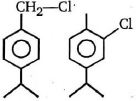
Identify the major products $(P)$ and $(Q)$ respectively for the given reaction.
- A
- B
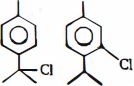
- C
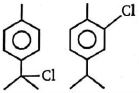
- D
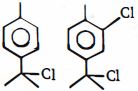
Explore More
Similar Questions
When $but-3-en-2-ol$ reacts with aqueous $HBr$,the product formed is:
The number of possible isomeric products formed when $3$-chloro-$1$-butene reacts with $HCl$ through carbocation formation is $.............$.
$A$ (organic compound) $+ O_2 \to X + Y + Z$. Compound $(A)$ in pure form does not give a precipitate with $AgNO_3$ solution. $A$ mixture containing $70\%$ of $(A)$ and $30\%$ of ether is used as an anaesthetic. Compound $(X)$ and $(Y)$ are oxides while $(Z)$ is a pungent smelling gas. $(X)$ is a neutral oxide which turns cobalt chloride paper pink. Compound $(Y)$ turns lime water milky and produces an acidic solution with water. Compounds $(A), (X), (Y)$ and $(Z)$ respectively will be:
Difficult
View SolutionThe products $(A)$ and $(B)$ respectively are:
Difficult
View SolutionWhich one of the following compounds will be most reactive for $S_N1$ reactions?
Difficult
View SolutionVedclass Products
For Students
Vedclass Test Series
Mock tests in real JEE/NEET style with performance analysis. 5-day free trial.
Start Free TrialFor Teachers
Exam Paper Generator
Generate Set A/B/C/D exam papers from 7.5L+ questions in 2 minutes. 3 chapters free.
Try FreeFor Institutes
Online Exam Module
Live online exams with unlimited students, 360° analytics & white-label branding.
See Demo