
Class 11PhysicsFluid Mechanics and Surface TensionBernoulli's Theorem and Applications of Bernoulli's Theory
EasyThe figure represents vertical sections of four wings moving horizontally in air. In which case is the force upwards?
- A
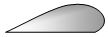
- B
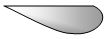
- C
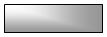
- D
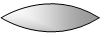
Explore More
Similar Questions
Obtain Bernoulli's equation for a fluid at rest.
Medium
View SolutionGlycerine of density $1.25 \times 10^3 \, kg \, m^{-3}$ is flowing through a conical section of a pipe. The area of cross-section of the pipe at its ends is $10 \, cm^2$ and $5 \, cm^2$, and the pressure drop across its length is $3 \, N \, m^{-2}$. The rate of flow of glycerine through the pipe is $x \times 10^{-5} \, m^3 \, s^{-1}$. The value of $x$ is $..............$.
DifficultJEE MAIN 2023
View SolutionWhat type of fluid can be applied in Bernoulli's equation?
Easy
View SolutionAs shown in the figure, a pump is designed as a horizontal cylinder with a piston having area $A$ and an outlet orifice having an area $a$. The piston moves with a constant velocity under the action of force $F$. If the density of the liquid is $\rho$, then the speed of the liquid emerging from the orifice is (assume $A \gg a$):
DifficultWBJEE 2023
View SolutionThe figures below show water flowing through a horizontal pipe from left to right. Note that the pipe in the middle is narrower. Choose the most appropriate depiction of water levels in the vertical pipes.
MediumKVPY 2018
View SolutionVedclass Products
For Students
Vedclass Test Series
Mock tests in real JEE/NEET style with performance analysis. 5-day free trial.
Start Free TrialFor Teachers
Exam Paper Generator
Generate Set A/B/C/D exam papers from 7.5L+ questions in 2 minutes. 3 chapters free.
Try FreeFor Institutes
Online Exam Module
Live online exams with unlimited students, 360° analytics & white-label branding.
See Demo