
Class 11Physics10-1.Thermometry, Thermal Expansion and CalorimetryMix Examples-Thermometry, Thermal Expansion and Calorimetry
MediumWhich of the following graphs shows the variation of thermoelectric power with temperature difference $\theta$ between the hot and cold junctions in thermocouples?
- A
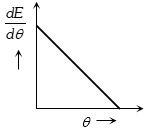
- B
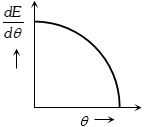
- C
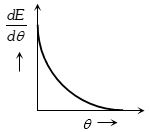
- D
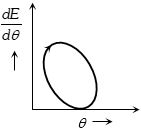
Explore More
Similar Questions
$A$ solid cube of mass $m$ at a temperature $\theta_0$ is heated at a constant rate. It becomes liquid at temperature $\theta_1$ and vapour at temperature $\theta_2$. Let $s_1$ and $s_2$ be specific heats in its solid and liquid states respectively. If $L_f$ and $L_v$ are latent heats of fusion and vaporisation respectively,then the minimum heat energy supplied to the cube until it vaporises is
MediumKCET 2024
View Solution$Assertion :$ In the pressure-temperature $(P-T)$ phase diagram of water,the slope of the melting curve is found to be negative.
$Reason :$ Ice contracts on melting to water.
$Reason :$ Ice contracts on melting to water.
$A$ block of ice at $-20\,^oC$ having a mass of $2\, kg$ is added to $3\, kg$ of water at $15\,^oC$. Neglecting heat losses and the heat capacity of the container,which of the following is true?
Medium
View SolutionThe heat required to change $1 \,kg$ of ice at $-8^{\circ} C$ into water at $20^{\circ} C$ at $1 \,atm$ of pressure is closest to .............$\,kJ$. (Assume that ice has a specific heat capacity $2.1 \,kJ / kg \cdot K$,water has a specific heat capacity $4.2 \,kJ / kg \cdot K$,and the latent heat of fusion of ice is $333 \,kJ / kg$.)
MediumKVPY 2021
View SolutionThe resistances of the platinum wire of a platinum resistance thermometer at the ice point and steam point are $8 \Omega$ and $10 \Omega$ respectively. After inserting in a hot bath of temperature $400^{\circ} C$,the resistance of the platinum wire is: (in $Omega$)
DifficultJEE MAIN 2024
View SolutionVedclass Products
For Students
Vedclass Test Series
Mock tests in real JEE/NEET style with performance analysis. 5-day free trial.
Start Free TrialFor Teachers
Exam Paper Generator
Generate Set A/B/C/D exam papers from 7.5L+ questions in 2 minutes. 3 chapters free.
Try FreeFor Institutes
Online Exam Module
Live online exams with unlimited students, 360° analytics & white-label branding.
See Demo