
Explore More
Similar Questions
An organic compound $P$ having molecular formula $C_6H_6O_3$ gives a ferric chloride test and does not have an intramolecular hydrogen bond. The compound $P$ reacts with $3$ equivalents of $NH_2OH$ to produce oxime $Q$. Treatment of $P$ with excess methyl iodide in the presence of $KOH$ produces compound $R$ as the major product. Reaction of $R$ with excess iso-butylmagnesium bromide followed by treatment with $H_3O^{+}$ gives compound $S$ as the major product. The total number of methyl $(-CH_3)$ groups in compound $S$ is . . . .
The reaction $2CH_3COOC_2H_5 \xrightarrow{C_2H_5ONa} CH_3COCH_2COOC_2H_5 + C_2H_5OH$ is called:
Difficult
View SolutionThe final product of the following reaction contains:
$CH_3 - C \equiv C - CH_2 - COCl \xrightarrow[BaSO_4]{H_2 - Pd}$
$CH_3 - C \equiv C - CH_2 - COCl \xrightarrow[BaSO_4]{H_2 - Pd}$
Difficult
View SolutionAn organic compound $X$ is oxidised by using acidified $K_2Cr_2O_7$ solution. The product obtained reacts with phenyl hydrazine but does not give the silver mirror test. The compound $X$ is,
MediumKCET 2016
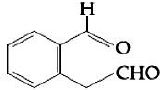
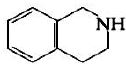
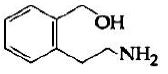
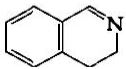
View SolutionWhat are $A$,$B$,and $C$ in the following reactions?
Vedclass Products
For Students
Vedclass Test Series
Mock tests in real JEE/NEET style with performance analysis. 5-day free trial.
Start Free TrialFor Teachers
Exam Paper Generator
Generate Set A/B/C/D exam papers from 7.5L+ questions in 2 minutes. 3 chapters free.
Try FreeFor Institutes
Online Exam Module
Live online exams with unlimited students, 360° analytics & white-label branding.
See Demo